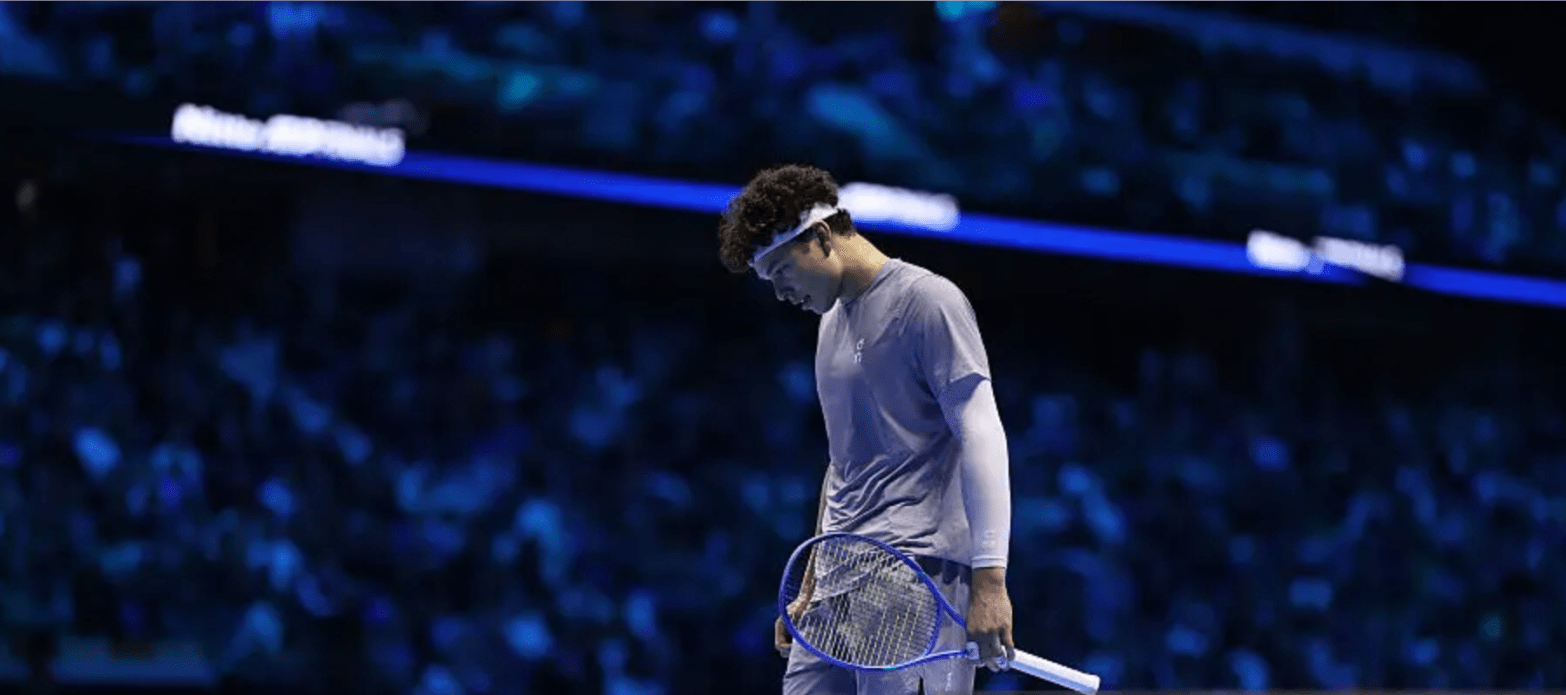
I think what his fans like about Ben Shelton the most is the energy that he brings to the individual moments he creates. He becomes untethered in these flashes, demanding of vocal appreciation in response to the furore he’s stirred up, and the whole experience is admittedly an enjoyable one. It’s quite addicting to watch. You want to be a part of the party he’s started. His game feels anchored to these specific points and he has the talent to ensure that he’s able to produce them at least a handful of times in matches, and so if you’re watching for these slices of life alone, you rarely come away disappointed.
There’s problems though, enough for me at least to hold back on my assessment of where he’ll ultimately end up. His tennis, reliant so heavily on a temporary explosiveness, advertises its weaknesses to an almost comical degree that it becomes difficult to ignore. His opponents know it too and so rather than panic when Shelton hits those frequencies he’s always searching for, they merely sit back and take it, aware as they are that the show is unlikely to last longer than a game or two. It feels easy to survive once you recognise the flow of it.
In Shelton’s final tournament of 2025 played against his fellow top 8 players, he failed to win a match. Out of the three he contested, he managed a set. In the first of these contests, with his opponent, Alexander Zverev, up a set but down three set points in the second, Shelton rushed to the net for an attempted serve-and-volley putaway, only to be caught by an excellent Zverev backhand pass down the line. Two nonsense forehand unforced errors from Shelton followed, drawing the tiebreak level, and you just knew what was happening. This was the great unravelling. The match was not yet over but the opportunity to extend it was. Zverev shook hands as a straight sets winner moments later.
Embed from Getty ImagesYou feel it with Shelton, a subtle change in temperature. He begins snatching at shots that were there, right there, just moments before, finding more of them missing and sliding away through the cracks in points he’s desperately still trying to cobble together. What was contained mere second ago, now leak through the downturn of the momentum swing he’d been excitedly riding over the past few games. His backhand crumbles beneath the weight of the pressure he’s now putting on it to keep working. The cockiness is gone and he visibly fears what’s coming. It’s a desperate process that stares him in the face, threatening him to find an answer for it as his errors become ever more familiar to those watching. How difficult must it be to wrestle with what surely feels like the inevitable?
When scrolling through my timeline a few weeks back, I came across an article posted by the official Australian Open twitter account. It boldly proclaimed Shelton to be in prime position to win his first major at the tournament come January. I smiled at the audacity of the headline as I clicked the link, finding myself reading a nice enough piece unpacking a couple of statements made by Shelton and his father in a recent interview. However, there was little detail here to convince me of his success in Melbourne. The core argument made by the reporter seemed to be reliant almost entirely on the need to find a third man to fill a perceived gap at the top of the rankings. “If not Shelton, then who?” does nothing to sway my feeling that either Jannik Sinner or Carlos Alcaraz will be taking the title. Call me unimaginative in that prediction but my crystal ball laughs in the face of suggestions of any other possible outcome at this stage. Sinner and Alcaraz don’t stop being Sinner and Alcaraz because some of us would prefer someone else. Professional tennis doesn’t deal in fan-fiction. Shelton’s poor return and backhand are very real and very difficult to simply ignore in favour of daydreams.
The certainty with which some like to name Shelton as their pick for the next person to win one of these trophies feels premature and this is coming from someone that’s very willing to buy into the hype. I love players like him, the ones that live for the moment and refuse to overthink. They earn the uncertainty their opponents must feel heading into battle against them. But players like this so rarely find themselves winning the biggest of titles because to do so requires at least a semblance of mature consistency that you don’t often see in them. Indeed, as brilliant a player as Shelton is, I like him predominantly because he reminds me of my own childhood, playing tactic-free tennis that rewarded only those amongst my group of friends that could hit the ball as hard as we could at just the right moment and laugh about it all afterwards, the arrogance of an entire life of possibilities ahead of us.
Do not get me wrong here. Shelton’s base level is enough to see him through the vast majority of matches he plays on tour. He would not be sitting where he is in the rankings if he could not live without the flashes of brilliance that define his tennis. But even at this tippy-top level, if you’re not moving up, you find yourself sitting right alongside the issues that continue to plague you. Shelton’s frustrations dwell within the valleys of the matches he’s still yet to find a way through. At 23, he’s hardly pushed for time but I find myself wondering if he’s perhaps the type to let the delusions of youth guide him past opportunities to make the most of it.
I hope he’s not. I really hope he’s not.
 Popcorn Tennis
You are correct for two reasons: 1) Ben Shelton plays tennis like the old Chip Kelly football teams did at the University of Oregon, we are not going to study the opponents weaknesses and exploit them we will just play our game and over power them. 2) Ben’s footwork has improved but he still looks like a converted very quick basketball player coming out of corners much slower than the elites like Djokovic, Sinner, and Alcaraz.
If he can slay the 2 monsters above then he become the Djokovic at the Federer-Nadal Grand Slamaganza.
LikeLiked by 1 person