We all love watching tennis (hence the reason why you’re reading an article from this website) and we all have dreamed about being in the biggest stadiums, witnessing the biggest names play live and in front of our very own eyes. This is something I’ve undertaken over the last 12 months and I have some very helpful tips for doing this on a budget.
1. Knowing when to buy tickets
Some events will have earlier bird pricing for tickets to the event. This is where you need to know what tournaments you wish to attend and plan in advance. The ATP have released a programme of next year’s events so you can start planning for next year. Unfortunately the WTA aren’t as forthcoming.
Make sure you go onto the event website and look up the ticketing section to see when they will be putting the tickets on general sale. Sometimes they won’t say but you can sign up to the tournament newsletter where they will announce that tickets have gone on sale. Similarly, follow the tournament social media accounts as they will publish when they have put the tickets out for general sale. This is a good way of getting the best cheap seats for the events you wish to attend.
2. Book well in advance
This is something I don’t think I need to say much on but the earlier you buy your transport and accommodation, the cheaper it will be. Airlines and Hoteliers have systems that increase the price of a ticket or room the closer the day of the flight/stay will occur and this will be sped up more by people purchasing these services before you. So if you can buy all these elements when you know you can go, you will save money on shopping around closer to the time of the tournament.
3. Buy tickets for days earlier in the week
This goes without saying but the earlier in the tournament you go, the cheaper the tickets will be. There are a couple advantages to going earlier as well. First, the venue will be looking its best and choices of products and services will be plentiful. Also, for grass court tournaments, the grass will be at its shiny green best in the first couple of days. Second would be the ability to see more players during the earlier days and even see players of your nationality that you can instantaneously support. However, keep in mine that most tournaments will give their top seeds first round byes and as such, unless they are playing doubles, you’ll most likely miss them. I will also add to this that if you go in the qualifying rounds, some tournaments allow fans in for free which is brilliant for sneaking in an extra day at the tennis.
4. Buy tickets for smaller courts
This is a must do if you wish to save money whilst watching the biggest names. I will for this scenario use Monte-Carlo as a case in point. The centre court of most stadiums will have the biggest names playing but will have the most expensive seat (even in the gods). However, the second or even third courts at the venue will have lesser quality names but cheaper seats.
If you go earlier in the week or go the the day before all singles matches get moved to centre court for the round of 16 or quarterfinals, you will get a great bargain as seeded players will be playing out on the second court due to there being not enough match slots on centre to play all seeded players.
This is what I achieved with Monte-Carlo. I picked up a Round 64/32 ticket for centre (Rainier III) on my first day (again the earlier in the week you go, the cheaper the centre court tickets) for the price of 60 Euros but on the next day (Round 32), I picked up tickets for the second court (Des Princes) for half the the previous day’s amount (30 Euros) and caught Cameron Norrie, Taylor Fritz, Jannik Sinner and Andrey Rublev. Arguably an absolute bargain and being on a smaller court you feel closer to the players.
5. Join loyalty programmes
Hotel and transport costs are the two most expensive items you’ll pay for next to the price of tennis tickets. It’s important to keep these costs as low as possible. For this, being a member of a hotel group or airline alliance can be incredibly helpful for lowering costs.
In Europe, there are two main accommodation groups to be aware of. They are IHG and Accor. Both these hotel groups have well known budgeted hotels under their control. Examples for IHG include the Holiday Inn and for Accor, the IBIS range of budget hotels. They also have loyalty schemes whereby the more times to stay at their hotels, the more points you build up to spend on stays at any hotel in their group. They also offer small discounts off hotel stays which can go a long way to keeping the costs down.
Similarly. for airline alliances such as Oneworld, Star Alliance and Skyteam. If you can stay with airlines from these alliances, you can build up points which can be spent on further flights. Perfect for those who wish to find a way to save up for a long haul tennis tournament option (I’m hoping to get to Indian Well’s with this system). It’s important to note though that where possible you stick with one of these groups and alliances as only with constant use and points building will you get the rewards at the end.
6. Research and use public transport to get to the venue
When traveling around the destination, you will need to find the quickest and cheapest way to get from the airport to the hotel to the tennis venue. If possible try and stay somewhat close to the venue but if not, learn the local public transport routes and the costs for tickets.
You can do this via a range of different sources. Most tennis attractions are located in major cities which will have a dedicated website that will display the routes and the type of transport that route will follow. A good way of working out the closed stop to the venue from your hotel is to use the directions feature of Good Maps. This feature will also give you an idea on journey time and where best to make any connections.
Price of transport is a factor to consider as well. Look again on the destinations transport website and see what ticket options are available. They may have a day, 2 days, weekly or monthly transport pass that you could purchase and this could save you money instead of constantly buying single tickets from one stop to another. These passes may also give you options to travel to different parts of the destination allowing you to further explore the place you are staying in.
7. Learn a few words and phrases of the native language
Unless you are based in North America and traveling around that continent, you will generally experience a different language to the native one you know. The best piece of advice would be to learn some of the language of the place you’re traveling to and use it as much as possible in conversations with locals. You will be showing a great deal of respect by doing this and the locals may be less likely to try and rip you off if you are buying something from them.
8. Be open about the kind of tournament you’re visiting
Grand Slams and ATP Masters 1000/WTA 1000 events aren’t the only tournaments you can travel to. There are lower level tour events such as 500 and 250s throughout the world that attract some of the biggest names to their venue. A very good example would be Antwerp and Marseille 250s where quarterfinal tickets can be as little as €40 for a ticket. Given the quality of players you can see, it works out as a cracking deal.
Looking even further down the tennis calendar to ATP Challengers, WTA 125 and ITF W100/80/60 events can provide high quality tennis in venues with a range of facilities. I myself attended the Surbiton trophy in May which was a Challenger 125 and an ITF W100 event in SW London. The quality of the tennis was exceptional and there was plenty of good seating on the main stands, food and drink options from an onsite catering service (granted an expensive catering service) and easy transport links to get to the venue. These tickets were £20 for the most expensive days and the number of matches you can see makes that £20 stretch incredibly far.
9. Bring as much food and drink to the venue as you can
This is the one area you will budget for thinking you’ve allocated enough and still by the end of your trip will end up spending more than the initial budget. Food and drink at tennis tournaments is expensive, especially the purpose built tennis venues. The most outrageous prices I’ve witnessed would be the €16 for a pasta pot in Monte-Carlo and £8 for a BLT sandwich at the Surbiton trophy.
If you have a tournament with a liberal policy on bringing in food and drink, then stock up on it before arriving at the venue. This will allow you to save money throughout the day as you’ll be eating and drinking your own supplies.
What you need to do is really read through the dos and don’ts section on your tournament website and work out what you can get away with. At Wimbledon for example, you can bring in two cans of beer or a bottle of wine per person. However, when I went to Queen’s, there was no allowance of bringing in alcoholic drinks and you could bring in light snacks.
***
Hope these 9 tips will help when it comes to booking your next trip to a tennis tournament!
We have arrived at the finale of the women’s tennis season, the WTA Finals. Qualification for the event has been the main talking point after the US Open.
There’s been some discourse online about who people would like to see in the Finals. Most of this is around everyone wanting to see their favourite players there, but there’s also a feeling of the lineup being a little underwhelming.
Much of this is due to the dominance of Iga Świątek, who won two of the four majors this year and lifted the trophy at four of the eight WTA 1000 titles (she didn’t even compete in two of the others). The event is very much going to be defined by whether she finds her peak form, because if she does, she’ll likely sweep the field. The only player that has qualified who has managed to beat the Pole this year is Caroline Garcia. Otherwise, Świątek has beaten almost everyone else at least once, compiling a stunning 19-1 win/loss over the rest of the WTA Finals field. So, Świątek goes in as a heavy favourite to set up a perfect ending to what has been a magnificent season for her. While it’s a tribute to the fantastic year she has had, her convincing status as favourite does suck some of the drama out of the event.
Świątek after securing her second major title of 2022. Screenshot: U.S. Open
Another reason that the field might seem lacklustre is that the winners of the other two majors in 2022 will not be present. Ash Barty retired soon after winning the Australian Open – her absence from the tour is still felt very strongly – and Wimbledon champion Elena Rybakina would have scored enough points to have qualified weeks ago, but Wimbledon didn’t offer ranking points this year. Rybakina hasn’t consistently gone deep enough in other events to achieve the necessary point total to qualify for the 2022 event.
Even setting aside Barty and Rybakina, there’s a sense that the biggest names are missing from the WTA Finals. Simona Halep could be in the star category of the participants. Her past results have elevated her ranking following time off for nose surgery, with a Wimbledon semifinal and a title in Toronto lifting her back into the top ten. That said, even if Halep hadn’t called time on the season herself, she wouldn’t be allowed to compete anyway following her provisional suspension for alleged doping.
Halep’s absence means Świątek is the only player competing in the WTA Finals who has won a major in their career. Petra Kvitová, Jelena Ostapenko and Barbora Krejčíková had outside chances to get themselves in the mix but their seasons were too patchy for varying reasons. Players like Naomi Osaka, Emma Raducanu, Garbiñe Muguruza, Victoria Azarenka, Sloane Stephens and Bianca Andreescu, whilst having moments of brilliance this year, rarely found themselves at the deep end of an event.
Though the aforementioned names might have added some star quality, it has to be said that as a representation of the 2022 season, the field we have is pretty spot on. Sure, it would have been nice to see Barty, Rybakina and Danielle Collins there given they featured in two of the four major finals this year. But the seven players that are joining Świątek have definitely earned their place, either through big headline results or consistency (a quality that continues to be underrated in tennis). The top eight all bring something exciting to the table.
The blockbuster names for this event are Świątek, Ons Jabeur, Coco Gauff and Caroline Garcia. Aside from the fact she has appeared in two major finals in 2022, Jabeur’s game style and trailblazing career always make her a headline name at any event. No one plays with the variety she has, and her willingness to go for any shot makes her very dangerous. Whilst she hasn’t managed to take down the world number one this year, she is one of the few players with the potential to mess with Świątek if they both bring their best. Jabeur is also very likable, and continues to win over crowds around the world. Name recognition from her final run in New York will help as well when she gets to Fort Worth.
Gauff has been touted as a big star since her breakout run at Wimbledon in 2019 (she was 15!), and were it not for Świątek she may well already have won a major in singles. The 18-year-old American has shown devastating tennis at points this year, but more than that she has shown how mentally strong she is. Even when not playing well, Gauff never gives up and has shown an ability to win when her game isn’t coming together, which will serve her well in the future. Aside from her Roland-Garros final, she has been regularly winning matches throughout the year, a trait that has gone a little under the radar. Furthermore, Gauff’s mature off-court demeanour is continuing to win over a lot of fans. She’s going to be making a lot of the headlines in Fort Worth.
Caroline Garcia is here because of her incredible mid-year run, which saw her win three titles on three different surfaces in three months, not to mention reach a major semi-final. Her smooth but explosive tennis won a lot of people back to her in North America as she showed the potential Andy Murray spotted in her as a teenager and the quality that had previously taken her to the top four in the rankings. Her title in Cincinnati can be seen as almost on par with winning a major, as she had to win eight consecutive matches (including qualifying) and beat three top-ten players (Sakkari, Pegula and Sabalenka) as well as a former major champion in Kvitová. Beating Świątek on clay in Poland was also extremely impressive. One stat to note is that Garcia is the only player other than Świątek and Jabeur to have a positive combined record against the WTA Finals field (Świątek is 19-1, Jabeur is 7-2 and Garcia is 4-2). Though she’s only 6th in the rankings, I’d put Garcia 3rd in terms of peak form found this year out of the field in Fort Worth.
Two players whose consistency has meant they have been mentioned throughout the year are Jessica Pegula and Daria Kasatkina. Whilst they don’t necessarily have a lot of firepower compared to many other players, they have been able to regularly bring their A-game and disrupt draws.
Pegula is almost the ultimate gatekeeper in the WTA at the moment. The stat that reflects this is that she’s lost to the eventual champion in eight out of eighteen events she has entered this year (if you add in Guadalajara, it means she was leading the pack in around half the tournaments she played). This includes the Madrid final, but even without that tournament Pegula has fallen to more eventual champions than anyone else. Given that four of these were to Świątek and another two were to Barty and Jabeur, this shows her to be playing at a very high level. It is of no surprise that her persistence paid off with a title in Guadalajara. She’s also regularly in the quarter-finals of every event she enters, which is impressive given these include majors and 1000s. In fact, she’s reached the last eight in three of the four majors in 2022, losing to the eventual champion every time. It is very much fitting that she is in the last eight for the year as well. The new American number one is setting the standard for the field in many events she enters, so it will be interesting to see how she does in Fort Worth.
Daria Kasatkina often gets dropped from people’s ideal WTA Finals fields, which I feel is harsh. She won a 500 title in San Jose and reached the semi-finals in Roland Garros, two results that deservedly made headlines. Her patient, counter-punching game works well in the current era and is the basis of her consistent performances through the year. Kasatkina has been in the mix for most of the events she’s entered so it makes sense that she be part of the Fort Worth field.
So far we’ve reviewed the star performers and the models of consistency. However, there are two wildcard participants whose qualification might raise some eyebrows: Aryna Sabalenka and Maria Sakkari.
If you told me at the beginning of the year that Aryna Sabalenka would be included in the WTA Finals field I would have been surprised. She wasn’t going that deep in tournaments and was dealing with a massive lack of confidence in her serve, a problem that could result in 20 double faults in individual matches. The fact she managed to turn things around sufficiently to reach two finals (Stuttgart and s-Hergotenbosch) and three semi-finals (Rome, Cincinnati and, most significantly, the U.S. Open) is a testament to her tenacity. Sabalenka, despite her inconsistencies, is a quality talent and her match management has improved throughout her career. She’s going to bring a lot of fire to this WTA Finals field, and her power game is definitely the big wildcard element.
Maria Sakkari is also a bit of a surprise, as like Sabalenka she is still in the top ten despite having a comparably less impressive season than in 2021. However, despite going deep in tournaments less frequently, Sakkari has had some good results. Whilst there have been plenty of early exits, the Greek has been also regularly banking match wins throughout the year. That run to the Indian Wells final was impressive, and she can be forgiven for losing to Świątek, who was really getting into the swing of her dominance. Sakkari has also been a big threat to the top players generally, her big hitting putting her in the mix when accurate.
So, this year’s WTA Finals has a lot for fans to be excited about: eight players who have proven to have shown exceptional peaks or exceptional consistency (or in Świątek’s case, both!). There’s some nice contrast in game styles, from the variety of Świątek and Jabeur to the big hitters like Sabalenka and Garcia and the counter-punchers of Gauff and Kasatkina. And there’s still plenty of star power and young talent there for those who value those aspects. Rather than hoping for something else, let’s enjoy what we have. I’m expecting it to be a highly entertaining event as always.
One of my favourite times of the year is Wimbledon. I genuinely like and look forward to the grass season. From eating fresh strawberries and cream and getting sunburned on Henman Hill, to the cheers of the audience on Centre Court and staying as late as 9 P.M. with the sun still out, to heatwaves followed by strong summer showers. If anything, Wimbledon serves as a hint that the British summer has arrived in earnest.
Today’s world is unquestionably digital. More quickly than any other innovation in human history, digital technologies have transformed civilizations. More than 63 % of the world’s total population now use the internet, except perhaps Wimbledon, the oldest tennis tournament in the world. Indeed, the oldest of them all retains the oldest ticketing system of them all. As time has gone on, I’ve grown weary of Wimbledon’s somewhat old-fashioned and retrograded ticketing system. I respect that some things are preserved because of historical ramifications. Other regulations, on the other hand, are just outdated. As Wimbledon prepares to run the yearly ballot, I decided to write down things about the system that I appreciate and things about the system that could use some tweaking.
Wimbledon Courts Explained
I realize that some of the readers have never been to Wimbledon and as such, I will briefly explain the structure of the courts so you have an idea of what I’m talking about. The grounds at Wimbledon have a total of 55 tennis courts, including the 19 grass Championship courts that are used for The Championships each year.
The Show Courts
The show courts comprise Centre Court, and Courts 1, 2, 3, 12 and 18. The famous Centre Court is the largest court at Wimbledon. Both the singles finals for men and women are played on Centre Court. The second-largest stadium is No. 1 Court. No. 2 Court has earned the nickname “The Graveyard of Champions” because it has seen the defeat of many great champions, including Serena Williams and Pete Sampras over the years. You might have heard of Court No. 3 where Kim Clijsters invited a male fan in one of her white skirts and asked him to play a point against her. Courts 12 and 18 give you the most breath-taking views of the Championship grounds. You might also remember Court 18, where the longest ever tennis match between John Isner and Nicolas Mahut in 2011 was scheduled and lasted 11 hours and 5 minutes and spanned 3 days.
The Outside Courts
The outside courts are basically Courts 4 – 17 and Court 19.
The Ticketing System
The only courts that are actively sold in the ballot, in person or online, are Centre Court, Courts 1 and 2, and some seats in court 3. The rest are on a first come, first serve basis through the ground pass. Now let’s discuss the ticketing system and see what I’m appreciating and what I’d like to see tweaking…
1. Appreciate: Wimbledon Ballot
The first way to secure tickets for Wimbledon is to enter your name in the public ballot. It is, as the name implies, a ballot, a lottery if you may. The likelihood of actually winning tickets is very low. I’m familiar with both those who succeed on their first attempt and those who keep trying every year but are unsuccessful. The verdict is appreciative because it is to a full extent a very fair first attempt at distributing tickets. It is a lottery at the end of the day, and everyone has an equal chance of winning. They do not sell all the tickets at either the first or second ballot. Hence, the fairness. If you fail to win the ballot, there are still other ways to get your tickets. They also have an overseas Ballot Entry Form for fans who do not reside in the United Kingdom.
2. Tweak: Ballot Policies
The procedure is also pretty straightforward. You must only submit one application per household. If successful, you must not sell or transfer your tickets and The AELTC designates the particular day, court, and seat. These cannot be modified. Your precise seat numbers won’t be communicated to you until just before the tournament. If you win the Public Ballot or the Second Ballot, you could end up watching the Championships on Centre Court, Court No. 1, or Court No. 2. You can decline the tickets and they will be re-balloted in the second wave if you are unable to attend on the day you are offered. The main problem is here. If you apply for the ballot and are accepted, but don’t like your tickets, that’s it. You only submit ONE myWimbledon application. If you win them and return them, you won’t be able to purchase any of the newly released tickets through myWimbledon. This is somewhat unjust. If someone is unable to arrive at the day the ballot assigned them, I think they should be able to buy tickets again using the same account. After all, they never entered the grounds using those tickets or that account. The fact that the court and seats are not revealed is acceptable at this stage as this assists the ballot to serve its intended purpose. The former policy, however, requires tweaking.
3. Appreciate: Ground Passes
I mentioned above that the only courts that are actively sold in the ballot, in person or online, are Centre Court, Courts 1 and 2, and some seats in Court 3. The rest are on a first come, first serve basis. First come, first serve basis are decided first by the ground pass and second, by court queue. Both appreciated. The ground pass costs about 27 pounds which are relatively cheap considering that it gives you access to all the action happening on the outside courts. How do you access the outside courts? You queue. At every court, they have guards managing the queue and allowing people to join the court at the change of ends or between matches and NEVER during a tie-break. Pretty much the same rule applies everywhere else. All you need to do is check where your favourite player is scheduled to play and go early to grab a good seat – if you can, of course…
4. Tweak:How To Get Grounds Passes
I added the sneaky “if you can” because the tricky part that might need a bit of tweaking is how you can actually get your grounds pass. You might have heard of the famous Wimbledon queue which I will talk about in just a bit. Wimbledon does not differentiate between people who are queueing to attend show courts and fans who just want grounds passes. Meaning it is one queue for all those people. Why does it need tweaking? I do not believe there is any necessity for fans who plan on getting a grounds pass to go as early as 5am and queue with the rest of the folk. This is especially the case because play on the outside courts start at about 11am. The queue itself begins to move at around 10am! 50% of the time I queued for the 2022 Championships, I missed the first set for the 11am play. I don’t believe that this is fair. There is also no need for one to opt to use the night bus or Uber for longer duration or more money just to arrive too early for a grounds pass. One way this could be solved is using their website. Wimbledon could decide to just sell grounds passes online, considering that most days, they don’t run out. This will remove quite a lot of headaches for the organisers. They only have to deal with show court goers, the queue will actually move a lot faster, and fans who bought the grounds passes online will be able to join the courts in good time to grab a good seat. I know for a fact that Australian Open sells grounds passes on the website. If absolutely necessary, the Championships could decide to sell a good portion of the grounds passes online AND leave some for the queue to keep the tradition alive. This would give the fans the chance to attend their 11am matches and others to “enjoy” the queue experience…
5. Appreciate: The Wimbledon Queue
The Centre Court, Court No. 1, or Court No. 2 might be yours provided you have the fortitude to wait in the renowned Wimbledon Queue. You will need to join “The Queue” if you are not fortunate enough to be receiving the top-notch Wimbledon hospitality or to be the lucky winner of a ticket in the ballot. Wimbledon consistently sells more tickets than any other significant international athletic event. Nowhere else does a day visitor need to start lining up early to get a ticket, or, if you’re unlucky, not receive a ticket at all. Needless to say, it is important that ushers inform queue members if they are getting court tickets or grounds passes, which in all fairness they do based on the number. Undoubtedly not novel advise, but unquestionably among the most crucial things to be aware of before joining the queue is that you will need to get there quite early. Early means before 5am when not all trains, buses, or tubes are running. For the sought-after Centre Court, Court 1, and Court 2 tickets they keep for day visitors, you’ll need to be there sharpish. Each person who enters the queue each day receives a Queue Card. Each person’s precise position in the queue is represented by one of these cards. Don’t rely on having a friend pick one up for you because they can only be distributed to attendees. When entering the grounds, the Queue Cards are once again examined. Each day, cards have new dates and numbers. The entire organisation is extremely strict but traditionally appreciated.
6. Tweak: Policy Of Buying Tickets Online
I managed to see Roger Federer’s historic last Wimbledon match, a Rafael Nadal match AND the Novak Djokovic dramatic 2022 match against Jannick Sinner by buying the tickets from the Wimbledon website, guess what, the day BEFORE play! Not a lot of people know this piece of information. While it is appreciated that myWimbledon allows fans to purchase tickets until the last day and allocate one chance of a pair of tickets to each household, the system of releasing tickets needs a bit of tweaking. It is 2022 and Wimbledon still does not announce WHEN the tickets are released. There is no particular rule. If you want to attend a match on a given Friday, you will have to refresh the website like your life depends on it for a couple of days before. In order to get my hands on the Federer tickets, I had to spend an entire day of panicking on the website hoping it didn’t break or I that I didn’t miss the second that they were released. A complete waste of time. To make things easier, I believe it would be more practical to announce that the remaining tickets will be released on a specific day and time and open a queue on a first come, first serve basis.
7. Tweak: Allow Fans To Select Their Seats
At the final stage of selling tickets, it should be fair to assume that fans should be able to select their seats based on the prices assigned. They’re not. At no stage during the Wimbledon selling process do fans get to open the website and navigate the court and decided if the seat available is worth the money assigned, unlike other majors. Even during the final stages of selling tickets, fans are allocated random seats at designated prices. That is the rule even for queue goers. If I’m at the beginning of the queue, whether online or in person, there should be some room for me to choose better seats considering I arrived first.
8. Appreciate: The Resale Of Show Court Tickets
Around 4 or 5 o’clock, people hang around close to Henman hill. Some ticket holders from Centre Court, No. 1 Court, and No. 2 Court, will depart before play is finished on each day of competition. Some of those who depart early will be thoughtful enough to give back their tickets for sale. The general public can then purchase these tickets for far less than their face value and sit in the allotted seat to watch show court competition for the remainder of the day. These proceeds go to charity. This implies that a select few lucky individuals may be able to obtain premium last-minute tickets to see the conclusion of some of the day’s most important games. These tickets cost £10 for No. 1 and No. 2 Court or £15 for Centre Court. I watched Ons Jabeur on Court 1 for just £10.
Finally: There are other ways to buy tickets
Ticketmaster is another option for purchasing tickets. Tickets for Centre Court and show courts are often made available a few days in advance. This is by far the most practical method of purchasing tickets. It’s also the simplest way to purchase tickets for Wimbledon. Prior to the start of the performance, tickets for Centre Court and Court 3 normally go on sale there. Day one Centre Court admission costs £60. Day three of the men’s finals will cost up to £210. It is important to keep in mind that Wimbledon tickets sell out as soon as they are made available. Therefore, log in quickly and move like your life depends on it.
Debentures are a good choice if you want more private seats. The All-England Lawn Tennis Club raises money in this manner to cover its capital expenses at Wimbledon. What are tickets for Wimbledon Debentures? In essence, they serve as a financial tool that enables you to watch Wimbledon from either the Centre Court or Court No. 1 for the time that you hold them, as well as to look to sell individual match-day tickets at any price you consider appropriate.
What is Viagogo for tickets to Wimbledon? It’s a secondary website that Wimbledon does not officially recognise, but it serves as a marketplace where Wimbledon tickets can be bought and sold by people. It goes without saying that the prices listed on this website are more than the usual price. There are a few other such secondary marketplaces where people can purchase or sell these tennis tickets as well, but one must be cautious because there might be legal repercussions associated with this.
***
And so there it is. I listed what I like and what I do not like about the Wimbledon ticketing system. Agree? Disagree? Either way, let me know what you think!
Another Laver Cup, another victory for Team Eur- oh wait! After playing second fiddle every year since the competition’s inception (which features six of the top players from Europe versus their counterparts from the rest of the globe) Team World finally captured their maiden Laver Cup, defeating Team Europe 13-8. Coming into this year’s edition in London, a plethora of pundits and fans had questioned the continued viability of the Europe vs. World format, given World’s inability to notch a victory during the first four iterations of the Laver Cup. However, this victory proves Team World can in fact compete with Team Europe and there is no need to revisit the current format, right? Not so fast. While a World win may quiet some critics of the Laver Cup’s current format, it does not change the fact that in order to maximize its potential, the Laver Cup needs to undergo a facelift of sorts in order to increase fan engagement and provide a more compelling competition.
Before I get on my soapbox discussing what does not work about the Laver Cup, let me first give the Laver Cup credit for its elements that do work very well. First and foremost is the team aspect of the competition. With the exception of those who compete for their country in Davis Cup (an international team competition that takes place throughout the season) and the newly introduced United Cup (a combined international competition with men and women taking the place of the ATP Cup at the start of the year), the ATP season is a solo endeavor with players competing week in and week out by themselves. Sure, players usually have support teams made up of coaches, fitness trainers, physios, etc., but those individuals do their work mostly behind the scenes as the players duke it out solo on the court. Laver Cup, though, offers a unique experience, allowing fierce rivals to join forces as teammates for a weekend. This has notoriously produced some incredible content for the tennis community at large, including Roger Federer and Rafael Nadal teaming up in doubles together, watching fellow players coach their teammates from the sidelines during changeovers, and of course the loads of anecdotes, pictures and videos featuring the wholesome interactions and goofy hijinks the players get up to in the run up and during the actual competition.
The team format is a win for all parties involved. The players have a chance to interact with their peers in a more relaxed, fun way than they otherwise do during the course of the season. As Novak Djokovic noted, “Life on the tour is different, you don’t get to mix up too much with your biggest rivals for obvious reasons, but Laver Cup is a competition that unites us all.” For the fans, it produces incredible content of the game’s stars coming together on and off the court.
As with all teams, a leader, coach, or in this case captain is necessary to guide their group to victory. And who better to guide the superstars of today than men who have filled those shoes before? The first five editions of the Laver Cup have featured 11-time major winner Bjorn Borg captaining Team Europe, and his rival, the notorious John McEnroe playing the role of skipper for Team World. Legends filling the role of captains for the respective sides offers several benefits. The fans who grew up watching Borg, McEnroe and other former superstars who will eventually step into captain roles get nostalgia. Younger fans who did not have the privilege of witnessing some of the game’s greats may become more interested in tennis history and those who have helped push the sport toward what it is today. And the players themselves, even if they were not old enough to watch their captains make their mark on history, still cherish the opportunity to connect with and play for those that came before them. Plus, I am sure future captains will enjoy themselves the way Borg and McEnroe have too.
In addition to these two elements, the format of the Laver Cup is very well thought out. For those unfamiliar, the event takes place over the course of a weekend and features three singles matches and a doubles match each of the three days. Each player needs to compete in singles at least once over the first two days and cannot play more than one singles match on the third day. Additionally, at least four of the six players need to participate in doubles (with no repeat pairings). Matches are best two out of three ad sets, with a ten-point tiebreak in lieu of a full third set if the players split sets. Each match win is worth one point on Friday, two points on Saturday, and three points on Sunday. The first team to 13 points wins the Laver Cup. In the event of a 12-12 tie, a set of doubles that can feature any two members from a team (the only time a previous pairing can play together again) would decide the champion.
The format and scoring system of the event naturally lend themselves to creating compelling conditions for the competition. For one, a team is not able to win the Laver Cup before Sunday even if they somehow manage to sweep all eight matches on Saturday and Sunday. This ensures that a hint of intrigue will always linger heading into Sunday even if the score seems out of reach. Additionally, the rules provide a bit of fairness to the competition making sure that no one competes too much or too little as everyone plays at least once, most of the team members play doubles, and players have a limit as to the number of times they are able to step on the court. Finally, strategy on the part of how the captains pick their players (more on this later) and set their lineups can certainly have an impact on determining which side emerges victorious. Captains have to consider what players they want to send out for the more valuable Day 2 matches versus Day 1, select who they think their most in form players are for the pivotal Day 3 matches, and create compatible doubles pairings from guys who predominantly play singles. An exception to this and an example of strategy that paid off this year was McEnroe selecting Jack Sock for Team World (a former top ten player currently ranked outside the top 100 in singles but one of the best doubles players in the world) and using him in all three of World’s doubles matches, two of which they won, en-route to winning the Laver Cup.
Finally, the event’s host location alternating between a new city in Europe and a city in another part of the world every other year is great for tennis as it allows a new community to experience the Laver Cup up close and emphasizes that professional tennis unlike almost any other sport truly traverses the globe. With the exception of this past year’s edition in London, the first four host cities of Prague, Chicago, Geneva, and Boston do not host ATP Tour level events (the same goes for the next two host cities of Vancouver and Berlin). This allows a new city and their residents the opportunity to witness top tier tennis talent up close and personal and perhaps inspire some younger fans in attendance who will make up the future of the game. Federer, a co-founder of the Laver Cup, noted himself that, “When you have an event like this [Laver Cup] in a city or in a country, it can really trickle down into the juniors if you do it really well. And I think that’s also been part of the Laver Cup’s duty in a way to leave something behind. So, they’ve also been out in the community, making sure that they give back as well.” Though the World host cities have exclusively resided in North America thus far, the plan is to eventually move the event to other cities across the globe as Laver Cup CEO Steve Zacks said in June, “Our plan has always been to take the event all over the world.” This would do wonders to keep expanding tennis’ outreach.
After five iterations of play it is evident that the Laver Cup has several great attributes that provide a good baseline from which to work with. However, if the Laver Cup wants to truly maximize the wealth of potential it has as a positive force for tennis, the event needs to largely reimagine its makeup. The first and most obvious change that has percolated through the tennis community for some time now is to do away with the current Europe vs. World format. Yes, I know this may come across as an odd time to reintroduce this argument coming off the heels of Team World’s first victory, but I caution observers from overreacting to this result and invite people to look below the surface for the reasons supporting this change.
Looking at this past year’s result, World’s breakthrough came against a physically compromised Roger Federer who for all intents in purposes was already retired, Rafael Nadal, who was at less than 100% and dealing with personal issues, Novak Djokovic, who carried a large load for Europe but was dealing with a right wrist issue during the competition, and Andy Murray, who was included on the roster more for ceremonial purposes and in acknowledgement of his career rather than current form. Though one could point out that Europe still had world #2 and U.S. Open finalist Casper Ruud, Stefanos Tsitisipas, and alternates Matteo Berrettini and Cam Norrie, Team Europe was certainly not at full strength this year. Even if one looks beyond the excuses for Europe’s loss, the fact remains that Europe still leads the head-to-head 4-1 and for good reason. Right now, nine of the top 10 players in the Pepperstone ATP rankings all hail from Europe. While this is not always the case, the top ten has been heavily Euro-dominated from the Monday after the French Open (the first set of rankings used to determine qualification spots for the Laver Cup) through the present day. Nearly three-quarters of the players who have held a top ten ranking over the course of that time period since 2017 are European. For further context, over the first five iterations of the competition, 25 top ten players have suited up for Europe while World has only had two. And though players outside the top ten can certainly beat the best players in the world, the number of European players in the top ten over this period of time and the rankings of the respective members of the last five matchups show that the 4-1 edge enjoyed by Team Europe thus far is not an anomaly.
Unfortunately for future Team Worlds, the situation does not get much rosier both in the short and long-term future. The aforementioned Ruud, Tsitsipas, and Berrettini, along with Alexander Zverev and Daniil Medvedev all have at least one major final under their belt (and a U.S. Open win in Medvedev’s case) and range in age from 23-26. In short, these guys are not going anywhere anytime soon. Unless of course they get beaten out for roster spots by younger European players including 19-year-old U.S. Open champion and world #1 Carlos Alcaraz, 21-year-old rising superstar Jannik Sinner, and other ascending prospects under 21 with future top-ten potential like Holger Runne, Lorenzo Mussetti, and Jack Draper. And that is not even mentioning current top ten players Andrey Rublev, Hubert Hurkacz, and Norrie. Clearly Europe’s stables are oozing with present and future talent. And while Team World boasts its own ascending players like Felix Auger-Alliasime, Taylor Fritz, Denis Shapovalov, and Frances Tiafoe, along with the young American trio of Sebastian Korda, Jenson Brooksby, and Brandon Nakashima, plus Taiwan’s Chun Hsin-Tseng, it does not look like future Team Worlds have the level of talent or depth necessary to make any sustained inroads against Team Europe.
Given the lack of past success Team World has enjoyed against Team Europe that seems destined to continue, it’s time to do away with a format pitting imbalanced regions of talent against each other and truly embrace what the Laver Cup is in order to provide more intrigue and a better, more engaged fan experience: The All-Star Game of tennis. Like the current Laver Cup, my new proposed version would still consist of two teams of six players plus an alternate run by a captain and follow the same scoring format and rules governing player usage while alternating cities every year. The similarities largely end there, though. The first step in assembling the two all-star teams would be to figure out who would be captaining them. After the Australian Open, the Laver Cup, in conjunction with the Tennis Hall of Fame, would release a pool of former legends of the game who are eligible to be selected as captains. Once assembled, this pool would be turned over to the fans who would vote for who they would want to see captain the teams. The top two vote getters would be named the captains for that year’s event, with a grand reveal at the start of Indian Wells. Captains would not be eligible for selection for four years after they are selected in order to reintroduce as many deserving legends as possible to the tennis community.
Regarding the selection of players, the current Laver Cup format states that three of the six players qualify based on their ranking the Monday after the French Open while the other three players are filled by captain’s picks announced by the start of the U.S. Open. Under this new proposed format, first priority would not go to the highest ranked player, but the major champions from that season instead. In a sport that seems to prioritize major titles more so than world rankings, it makes sense for an all-star emphasized Laver Cup to offer its first spots to the champions of the most difficult trophies to win in tennis. Based on the number of major champions that accept an invitation, a combination of eight total spots will be filled based on champions of the four majors first, followed by the highest ranked non-major champions after the conclusion of Wimbledon rather than the French Open (This allows more of the season to play out). The remaining four spots are specially reserved. Two of those spots are held for a captain’s wild card, where a captain can choose any player they want for their roster. The final two players will be chosen by the fans in another online vote starting after Wimbledon with the results revealed at the start of the U.S. Open. Alternates will be the next two highest ranked players who were not included among the original selected players. Once the pool of players and alternates are finalized, a live televised draft will be held after the U.S. Open where the captains take turns selecting the players who will make up their team from the available pool of players, along with their respective wild cards.
This newly imagined Laver Cup accomplishes three major goals that all all-star sports events should strive for. With regards to fan engagement, keeping the rotating host city format with cities that do not normally host ATP events combined with letting fans play a part in selecting the captains and a member of each team will cause fans to feel more connected and engaged with the event. On the part of the players, having the opportunity to join forces with other peers at the top of the game in fantasy/superteam with different hall of fame captains would serve as a nice reward and acknowledgement of their achievements throughout that season. And finally, this new format would lead to more competitive matchups between the new teams as one side will not have most if not all of the highest ranked players based on geography.
Before I start taking victory laps congratulating myself on these enhancements to the Laver Cup, there are a couple of criticisms I foresee coming that I want to address. The first, stemming from my central decision to axe the Europe vs. World format, will claim that I am mistaken in my belief that the Laver Cup is an all-star game and that its purpose is to function as tennis’ answer to the Ryder Cup (A golf competition between the United States and Europe that occurs every other year). While this argument seems compelling at first glance, it ultimately falls short. Sports are undoubtedly more enjoyable if there exists a certain degree of intrigue or uncertainty over the outcome. The Ryder Cup enjoys the success it does in part due to the evenness of the two teams. Since the current format was introduced in 1979 pitting Europe against the United States, Europe holds a slight 13-11-1 edge over the Americans. Unfortunately the Laver Cup does not seem destined to have the same level of parity enjoyed by the Ryder Cup as previously discussed. And while the old adage in sports of “anything can happen” always holds true, it becomes hard to justify the continuation of the Europe vs. World format if World struggles to make the rivalry competitive.
Additionally, even if one were to look past the competitive disadvantage World finds themselves at, the players do not feel a strong enough emotional attachment to the concept of Europe, and certainly not World, to justify continuing this unequal format. Existing international competitions already provide players the chance to represent their country in a team environment outside the regular rhythm of the ATP season. And one of if not the primary motivation of a player participating in those competitions is the pride they feel competing on behalf of their homeland. I can guarantee that representing Europe or the World is not the main motivator for a player agreeing to participate in the Laver Cup. Instead, it is the unique opportunity afforded to the top players in the world to join a team of their fellow elite peers in a more relaxed, jovial environment than they would normally experience throughout the season.
Another expected criticism would point out that all-star games in other sports will often lack a degree of competitiveness on the part of the players and that taking away the Europe vs. World format and having Laver Cup instead focus on its all-star nature would discourage players from putting in as much effort or intensity into their matches, or even show up at all. While I appreciate the spirit of this argument, it ignores a couple of different factors that would make this not the case in tennis. Starting with the comparison to other all-star games in sports such as football, basketball, and hockey for example, those sports require contact in various degrees as part of the game and the quality will inevitably suffer if physical elements are taken out of those games. All-star caliber players understandably are not going to want to risk injuring themselves in an exhibition game in order to make a hard hit, play aggressive defence, etc. Tennis naturally does not have the same degree of contact or physicality as those other sports so players would not be risking injury in the same way if they were to play the way they normally would during a regular match.
Plus, it may sound cliche but at the end of the day, the players at the Laver Cup earned their selection in part because they are elite competitors who do not like to lose. “Once a tennis player shows up, he wants to win,” noted Federer in an interview this past June discussing the Laver Cup. Even in a match with no ATP points on the line, players still hate to lose. “The players care a lot about who wins. You cannot be on the tennis court with all of these guys, top players that we all have huge respect for, and the captains on the side of the court, Rod Laver [yes that Laver] in the stands, and not care about the result,” said Andy Murray in a press conference after the first day of matches. Thus, no matter the format, expect players selected to compete in the Laver Cup to put their best foot forward when they step foot on that all-black indoor hard court.
The Laver Cup ultimately succeeds as an event in large part because it provides a different setup from the rest of the season, allowing top players to compete as teammates while coming together and bonding off the court, thus giving fans access to incredible content. And while the first five editions have proved largely successful, there is certainly room to keep improving upon a great foundation. By allowing fans to have a say in the crafting of the teams, emphasizing the top talent in the world, and having the captains draft their own all-star star teams without being bound to unequal geographic boundaries that hold no particularly strong emotional attachment, the Laver Cup could reach its full potential and truly become what Federer described it as: “An All-star weekend, but with intensity.”
Last month, the ATP released changes to the ways that the Challenger Tour (the second tier of the tour) will try to improve for next year. These changes have a purpose of making the tour simpler to follow as a fan, more financially sustainable for the players, and a wider range of events for both fans and players to experience. This article aims to evaluate each change, taking a look at the positives and negatives, and what the ATP could do to further improve the Challenger Tour.
Category Changes
The first major change would be how each event is categorized. The current system has six different levels of Challengers, these being Challenger 50, 80, 90, 100, 110, and 125. Under the new system there will now be four Challenger levels with them being Challenger 50, 75, 100, and 125. There will also be the introduction of four special Challenger 175 events that will run during the second week of the ATP Masters 1000 events in Indian Wells, Miami, Madrid and Rome due to all these events spanning over two weeks.
This, from a marketing and player planning perspective, can only be a positive. The much clearer distinction between what Challenger level is will allow players to know which event would be best for them to maximize their opportunity for playing time and ATP points. An example would be a player ranked 300 in the world seeing a Challenger 50 and Challenger 100 being played in one week and then knowing that the 100 will bring more points but will have tougher opponents whereas the 50 gives a better chance of a deep run.
My one issue with this will be the impact on the players that hold Challenger points from Challenger 80 events this season. If you take a player that won one of these events, the nearest event they could enter in terms of category would be a Challenger 75 and if they were able to defend their title in that week, they will still see a real drop of 5 points from their ranking. Now for a player ranked 1-100 in the world, this is a very small change. But for a player ranked below that, it could see their ranking drop by 10 or more positions and affect their ability to get into bigger tournaments in the future.
Increased Prize Money
The next change would be the significant increases in prize money for the Challenger tour. This will see an increase from $13.2 million in 2022 to a record $21.1 million in 2023, an increase of 60%. This includes notable increases at Challenger 100 tournaments ($106,240 to $130,000) and Challenger 75 tournaments ($53,120 to $80,000). In addition, round-by-round prize money distributions will improve earnings in the earlier rounds of events.
This can only be a good thing. I’d recommend that everyone watch the linked Youtube video from the Financial Times on the financial pressures on players in the lower levels of the ATP Tours.
An increased income from Challenger events will help bridge that and enable players to play more on the tour and attend the events they wish to play, not the ones they can afford to play. Indeed, some players can only travel around Europe if they are European or North America if they are American and Canadians. This pay increase could break this and allow players to travel further and wider. It has the potential as well of bringing more working class players into professional tennis who are financially turned off by the costs of the tour.
The only negative I can see from this brilliant policy would be the finances of the Futures Tour. The ITF M25 and M15 events are the starting blocks for Futures tennis stars on the tour. They have even less prize money than the current Challenger Tour and even more restrictions on travel options. More money is needed at this level as well to enable more players to play on the tour and allow more talent to come through. I hope the ATP and ITF keep this in mind for future changes.
The 2023 Challenger Tour is set to deliver a record of 195 events, up from 183 in 2022, creating more opportunities for players. Improvements to the calendar will also see it more closely align with the ATP Tour and deliver a better balance of tournaments in terms of both surface types and regions. In addition, a projected 170% increase in the number of Challenger 100 and 125 events will enhance player flow and mobility.
The advantage of this is that more players will have more chances to play high levels of tennis on the tour. As we have seen with the WTA Tour, the less tournaments you have, the more stacked the field will be for the events that do take place. This will also allow players to break through from the Futures Tour to the main tour more quickly as they won’t be facing incredibly tough opposition at every round of the Challenger tournaments. This, in turn, will generally help players build up momentum to make deep runs and better prepare themselves for the leap to the ATP Tour.
The only negative I could see from this is access to grass tournaments at the Challenger level. As it currently stands, there are only three grass court tournaments at the current Challenger level, with all three being in UK-based in Surbiton, Nottingham and Ilkley. These events are Challenger 125 events and as such, attract players ranked 75 to 200 in the world for the main draw. This then restricts access to a playing surface for the majority of the tour, with the only way to play on the surface being the two M25 Futures that are played after Wimbledon in late July. This is too late for many players who have moved back to clay for the Central European season or the North American hard courts. This also has an effect on players who break into the world’s top 200 who have no experience of grass and as such, find it a struggle for the first couple years on the surface. This is why it’s rare to see any youngsters make a name for themselves early on in their career on grass.
My main recommendation for improving the tour would be the viewing experience for the fan. Currently, the only ways of watching Challenger matches would be to either rock up to the event and watch from the stands or watch the pixilated livestream from the ATP website. My recommendation for the ATP would first be to upgrade the equipment used to capture the images of the courts to sort this. Second, add more camera angles to the events to professionalize the viewing experience and make it easier to watch. Thirdly and finally, add a section to the TennisTV app or to the rights packages sold to third party broadcaster to show the live streams of the Challenger events so that people at home aren’t hunched around a laptop screen to watch the matches but can access it from a couple of clicks on their smart TV.
Imagine you’re 15 years old, enrolled in a national academy for a sport, meeting your family only over weekends. One day, someone asks you, “So, what do you do?” You answer, “I am a tennis player.” The person then asks the inevitable follow-up question: “Okay, but what else?”
Sport is incredibly tough and equally rewarding. The journey to being the best is mired with questions like the above: “Is it really enough to just be a sportsperson?”, “What if I don’t succeed?” Now I implore the reader to think and imagine the strength of character and willpower it takes to go away from this nagging train of thought and give your best, knowing that unless you aren’t in the top 100 or so, your career is essentially done. Athletes are a case study in the capabilities of both the human body and the strength of the human mind. The best athletes, therefore, become household names. Now… What if I told you that the best tennis player ever actually lost his first match, 6-0 6-0?
Why do we watch the best athletes do their thing? They always bring us face-to-face with something magical that transcends our understanding of what we thought was possible. Even then, there’s something underneath all that – some sort of primal ecstasy that we get from top-level sport. Maybe we seek confirmation that the human body is capable of unimaginable things. Maybe we seek that euphoria of victory. Maybe we seek a release from our everyday life. And some athletes just make you feel all that. The ecstasy, the euphoria, the confirmation. All of it.
The most powerful opponent that any athlete faces is time. It inflicts a soul-destroying, slow motion euthanasia on them that leaves you watching, aghast. The result is always pre-determined and yet no athlete ever gives up. Until they absolutely have to.
Roger Federer’s 24-year career delivered all those moments.
***
It is difficult to know where to begin with Roger. Most people start with his 2001 victory over Pete Sampras at Wimbledon. I digress.
I would like to point out Toronto in 2002. Federer’s coach Peter Carter had passed away due to an accident in South Africa around that time. Federer lost in the first round of the tournament.
2002 Cincinnati. Federer lost in the first round.
2002 Long Island. Federer lost in the first round.
Carter’s funeral was the first one Roger ever went to. It was a wound that never really healed. Federer’s career could have very easily gone off the rails after that. Except it didn’t. Federer’s commitment from then on, was extraordinary. There was an almost terrifying focus and self-belief in him. In the wake of Peter’s death, Roger won a title for the first time in 5 months, in Vienna. From then on, he won a scarcely-believable TWENTY-THREE finals in a row.
Before Peter’s death, the narrative and criticism around Roger was that he was far too inconsistent. The words went along the lines of, “he’s great to watch but nobody will watch him if he doesn’t win.”
It took Roger all of one year to get it all together. Once he did, the rest of the tour didn’t know what had hit them. What followed was the peak of “Religious Experience” (A line taken from a Wimbledon bus driver). Roger “solved” his main rivals of the day, so abruptly outmatching them that they didn’t have answers. Andy Roddick, when asked about what chance Haas or Gonzalez had vs Federer in the Australian Open final, famously quipped, “Slim”.
Roger compiled a 74-6 season winning three slams in 2004, the first time anyone had done that since Mats Wilander in 1988. Then he went 81-4 in 2005. After that, 92-5 in 2006. A lot of what he did in these years was surreal. It invited audiences into that trip to the deep forest with a mystifying force. It was new. It was revolutionary. For a while, Federer was unstoppable. He wore a cloak of invincibility with such natural grace that it almost felt wrong that he should ever lose. Yet he did lose. Rarely, but he did. Only one player managed to beat him more than once from 2004-06. That player was named Rafael Nadal.
***
My childhood years were mostly forgettable – study, play, eat, sleep, run a few errands for the family, all the usual stuff. One lazy summer evening, I was flipping channels on the television, and I found a tennis match. A lefty and a righty were slugging it out. The righty had this majestic grace to his movement — I couldn’t even hear him run and yet he was always there, in position, to hit his shot. The lefty was everything the righty was not – you could hear him desperately run to make a shot, you could hear him grunt when he hit the shot. If the righty won a point, there was virtually no emotion displayed – it was, as if, he was meant to win all the points. If the lefty won a point, he would fist-pump wildly, turning up the volume to his celebration. This contrast was quite fascinating to me. It was deuce in a game and very finely poised. At that point, my mom calls out to me to go run an errand in the nearby store. I came back, about 10 minutes later. The score was still at deuce.
That is my earliest memory from watching a Federer-Nadal match.
The hold that these two players kept over men’s tennis is best displayed by one statistic: the first EIGHTEEN of the 22 matches between the pair was contested in a final. Nadal’s role in growing the legacy of Federer (and vice versa) has been pivotal – the two elevated tennis to never-before-seen heights. It was box office and it all hit a crescendo in THAT 2008 final at Wimbledon — hailed as one of the greatest matches ever played — a trilogy of French Open and Wimbledon finals ending in Nadal finally triumphing over Federer on grass.
With the benefit of hindsight, we can now circle this moment as when Federer stopped being the best player in the world.
Federer did return to the top of tennis rankings a year later but it was increasingly clear that he was, now, second-best to Nadal. For eight consecutive years, Federer ended the season in the top two. In five of those years, he was the best player in the world.
The 2010s was a period of… vulnerabilities and mind-blowing uncertainties for Federer. He changed coaches, beefed up his serve, changed racquets, all in order to compensate for a physical and maybe shotmaking decline. For instance, he invented a whole array of return triggers to shorten points – from a modified version of chip and charge, which he famously called SABR, to just hitting over the return from the baseline, in contrast to the slice and dice tactic in his prime. The result was a combination of the tragic and the sensational. Federer was still elite in his thirties. He conjured up a stream of nearly-but-not-quite moments as Nadal and Djokovic managed to thwart him, almost every time. Even in those defeats however, Federer reoriented what was known about longevity in tennis — he was always there, waiting for Nadal and Djokovic to slip up. It’s also a testament to the greatness of those two that they never did slip up. They remained the only players to have beaten Federer more than twice in Grand Slams in the 2010s. Federer resisted for a long time, his own competitive spirit kept him fighting against them — he even produced one of the most brilliant phases of low-margin aggressive tennis in 2017, beating Nadal four times that year (three of them, in finals and three of them in straight sets), ending with a 52-5 record, aided by putting up what was statistically one of his greatest backhand years. He returned to the top spot in the rankings in February 2018, at the ripe young age of 36. His 17-0 record to start the 2018 season was his best ever start to any season. Even in his twilight years, Federer was pushing the boundaries of even his own excellence.
Nadal and Djokovic have managed to show that Federer’s terrific thirties is indeed repeatable. But Federer showed that it was doable. That, in my opinion, is one of his biggest contributions to the sport.
Brian Phillips, very beautifully, captured the stages of a top athlete’s career. He says that every athlete has a “fast” phase and a “slow” phase. The top athletes have a “still fast” phase where you know that they’re not the force they once were, but you can’t help but admit that they’re still performing close to their best.
It seems Federer never left the “still fast” phase until his knees finally collapsed. Any assessment of Federer’s legacy needs to capture this phase of his career. Federer won 42 titles from 2004-07 – that’s roughly 11 titles every season. From 2008-2019, he won between 4-7 titles every season with the exception of 2013 and the injury shortened 2016 season. It’s easily the longest “still fast” phase that any top athlete has ever had.Federer revolutionized the true test of longevity in tennis.
The Laver Cup was the perfect send-off for Federer — the immensely powerful image of Nadal in tears over the retirement of his greatest rival, was stark proof of the impact that Federer has had on men’s tennis. It keeps throwing up a fascinating alternate reality (and purely academic) questions: If Federer wasn’t Federer, would Nadal would be Nadal? And then, would Djokovic be Djokovic? The fact that those two are still pushing each other so hard stems from their initial desire to dethrone Federer.
It really has been the greatest era of men’s tennis. Roger Federer started it all.
P.S. After winning a 6th ATP Finals title in 2011, Federer was asked about his thoughts on beating Sampras and Lendl’s record. His response? “I still don’t feel like I am better than them. I am just happy to be compared to them.”
Daniil Medvedev might just have set a record for the most abrupt mid-match retirement in the past several years. Medvedev solidly outplayed Novak Djokovic in the first set of the Astana Open semifinals, but lost a desperately close tiebreak in the second despite playing some dazzling tennis. After a dizzying exchange of drop shots, lobs, and passing shots in the first several points of the tiebreak, Medvedev shanked a forehand long with Djokovic at the net. Almost immediately afterward, he called it quits.
Djokovic said in his post-match interview that Medvedev told him he had pulled an adductor muscle in his leg. It’s a testament to Medvedev that the issue wasn’t apparent at all — late in the tiebreak, he pulled Djokovic to net with drop shots, then ripped crosscourt backhands past him on consecutive points. He made a few octopus-special gets on the opening point of the breaker. He was two points away from winning the match! The good news about the injury not affecting Medvedev’s level of play is that we can still analyze and make conclusions about the match. Hell, had Medvedev not dumped the easiest of forehand volleys into the net at 5-all in the tiebreak, he might well have won despite his physical issue.
But Djokovic wasn’t having it. His mental and physical heroics on a tennis court should be the furthest thing from shocking at this point, but how Djokovic was able to win the second set of this match will likely be debated by mathematicians for a while. Just look at Medvedev’s stats from the semifinal:
I’ll talk about the injury later, but how often do you have a stat line like Medvedev’s here and only get to one set all? Herculean stuff from Djokovic to win the second. pic.twitter.com/IuT5DLbHSl
How is it possible to have a +15 winners/unforced errors differential, make 75% of first serves, win over 60% of second serve points (against the best returner ever, by the way), win the majority of baseline points, and only win one of two sets? Despite playing most of the match with his back against the wall, Djokovic squeezed out enough crucial points in big moments to edge the second set. There was the epic rally on his serve at 4-all, 30-all in the second set when Djokovic crushed an inside-out backhand and a viciously angled forehand — both shots should have ended the point but Medvedev somehow got them back — and he stayed patient enough to fire an inside-out forehand winner. Medvedev might have biffed that easy volley in the tiebreak, but Djokovic guessed right on a backhand putaway, which forced Medvedev to hit the extra ball. Though Djokovic won the set by the skin of his teeth, he found a way through, as he has done so many times throughout his career. He’s still got it.
Screenshot: Tennis TV
Despite the incredible tennis over the two sets, the match had a sad tinge to it for me, and not just because of the ending. Djokovic and Medvedev have had tough years. The former hasn’t played that much — he barred himself from both hard court majors this year by not getting vaccinated, and has spent a big chunk of the year feeling oddly irrelevant, even as he played some world-class tennis. He might have won Wimbledon, but it wasn’t enough to rescue his season from a productivity standpoint. At the end of last year, he was tied with Nadal on 20 majors and had all the momentum, having won three of the last four while Nadal hadn’t played for the second half of the season. Now, Nadal leads 22-21, with no guarantee how many majors Djokovic will be able to play next season.
Medvedev’s 2022 story might be even more tragic. He entered the Australian Open as the most recent major champion. Djokovic wasn’t in the draw. Medvedev had beaten Nadal the last time they played, and no one else was at his level on a hard court. He beat Felix Auger-Aliassime from two sets down, saving two match points in the fourth set. He beat Stefanos Tsitsipas convincingly in the semis. He even had his foot on Nadal’s neck in the final, what with a 6-2, 7-6 (5) lead and three break points midway through the third set. But Nadal came back to win in five, Medvedev lapsing physically along the way, and he hasn’t been the same since. He spent a few weeks at world #1, the first non-Big-Four man to do so since Andy Roddick in 2004, but the achievement felt almost honorary — Medvedev was, definitionally, the best player in the world, but he wasn’t playing the best tennis in the world. A hernia sidelined him for a few weeks, then he got banned from Wimbledon along with all Russian and Belorussian players. He didn’t win a tournament until August this year. He couldn’t defend his U.S. Open title, losing handily in the fourth round.
So while the points in today’s match were exhilarating, I couldn’t shake the feeling that both Djokovic and Medvedev were trying to prove their relevance at the tail end of a season in which they failed to live up to their potential. Both men have won the Paris Masters and the World Tour Finals before; there’s not much for them to gain before the Australian Open next year. All they could do was try to build back to where they were. And they made a good go of it — the Tennis Podcast said on Twitter that the level of play was worthy of a major final. Their backhand defense out of the corners still makes me gasp, their rally tolerance still makes my legs ache sympathetically. Still, I had a nagging thought that both men were trying to prove something rather than simply playing their games.
Maybe I’m wrong — maybe Djokovic goes into 2023 in cyborg mode and starts chopping up opponents like he’s been doing for the past couple weeks. Maybe Medvedev comes back refreshed and develops better touch at net and becomes even more untouchable on a hard court. Both men are certainly capable of scaling the mountaintop again.
But I fear too much has changed since Djokovic and Medvedev played in the 2021 Paris final for them to recreate that landscape. They shared all four majors that year (three for Djokovic, one for Medvedev); this year, Djokovic won one major and Medvedev didn’t win any. Carlos Alcaraz has won a major and become world number one, and at just 19, he looks set to rule men’s tennis with an iron fist. Nadal has won two majors. In that Paris final, Djokovic and Medvedev played with a lightness at odds with the brutal rallies they were contesting. It was like they were reveling in a shared vision of the next year, in which they split all the big hard court titles and demolished everyone else who dared try to hang in a long point with them. Now that vision is gone, along with another year of each of their careers.
All that said: the stretch in the second set tiebreak was some of the best tennis I had seen all year. Six or seven of the first ten points ended with a winner. Djokovic and Medvedev were playing these utterly manic rallies, feathering drop shots and making gets from impossible positions and extending points to a stage where the rally would have screamed if it knew how, and for just a moment, it felt like no time had passed at all.
On September 11th 2022, Carlos Alcaraz fell onto his back in celebration, having served an ace to claim the US Open title, his first singles major triumph.
It has been a few weeks since the match. Whilst it was a good battle for much of it – indeed, a match worthy of a major final – it was the significance of the result that hit more. Tennis history happened in that moment, at least if things go as expected for Alcaraz, in that this may well be the first of many.
On September 23rd 2022, after watching a forehand from his opponent win them the match, Roger Federer hugged Rafael Nadal and began to cry as his near-25-year career came to an end. It was an emotional moment as everyone celebrated the man who kick started the current era of tennis.
Before anyone rolls their eyes, this is not an announcement of ‘the changing of the guard’. Novak Djokovic is not going anywhere; he’s still got at least another couple of years at the top of his game. Rafael Nadal isn’t done yet either, he’s shown that he can still produce world beating tennis, even if there is a question mark over how much longer his body will let him. In fact, we’re currently looking at an end-of-year showdown for the world number one ranking between him and Alcaraz.
Federer’s retirement and Nadal’s injury issues have heightened the feeling that the ‘Big Three’ era might finally be ending. It’s human nature to be excited by new things. We’ve seen it with the previous tennis generations who failed to challenge the supremacy of Federer, Nadal and Djokovic. Players like Grigor Dimitrov, Milos Raonic, Kei Nishikori, Stefanos Tsitsipas and Alexander Zverev have been hyped and failed to deliver a challenge. With Alcaraz and fellow generational talent Jannik Sinner, things seem to be different. The power of the ‘Big Three’ is fading through age. They are more vulnerable now, especially outside of the majors.
It was even easier to be caught up in the Alcaraz hype on the night of the US Open men’s singles final. We saw a teenager win a major title, a rare event since 1990, and also become the youngest ever ATP number one. There was a sense that the future had truly arrived. As the dust has settled after the event, that sense hasn’t fully gone away.
Let’s face it, Carlos Alcaraz is a special talent. He has incredible movement and power, yet also can deploy drop shots at the perfect time. He can hit almost any shot he wants, but knows when to use the right ones. I’ve seen very few players display the tennis IQ that he has. We’re right to get excited about him and he will be a contender for every major going forward. However, it’s not his generation’s time just yet.
Tennis eras very rarely have a neat beginning and end, despite how fans like to think. If you look at the open era, generational shifts have never been overnight. The original ‘Big Three’ of Jimmy Connors, Bjorn Borg and John McEnroe were joined by Ivan Lendl in the early 80s. Matts Wilander stepped up when Borg retired, but it was still a couple of years before the Americans faded, by that time the teenage Boris Becker and Stefan Edberg had matured enough to take their place. The same thing happened when the golden generation of Americans, lead by Pete Sampras and Andre Agassi, arrived as the 1990s began. They took over the top of the game alongside Becker and Edberg, who were still able to compete with them as their careers wound down. When Federer first took control of tennis, and even when Nadal joined him at the top, Agassi was still there and competing for big titles.
It’s interesting to write about this transition period in the aftermath of Federer’s retirement, instead of in the context of it being inevitable in the near future. That’s how it would have been had it been published in the immediate aftermath of the US Open. The fact that Alcaraz won his first major almost as Federer played his last point has a certain poetry to it. However, sometimes poetry is just that.
The future is not fully here yet, but it has begun, and it was confirmed in New York. Alcaraz has risen to replace Federer as the Swiss has bowed out. It’s very possible to say we have a new ‘Big Three’. No one should rule out Daniil Medvedev continuing to challenge or Sinner making a big breakthrough very soon. However, Djokovic at the very least is going to be a factor for another few years, and it will be fascinating to see them clash like Federer and Agassi did or even better, how Becker and Sampras did.
This is a transition period in tennis. Let’s not rush through it but enjoy what it brings.
Wednesday, September 15th, 2022 will forever go down as a somber day in the tennis community. In a video reminiscent of the grace, humility, and class he showcased on a tennis court for two decades, Swiss superstar Roger Federer told the world that he was retiring from professional tennis following the conclusion of the following weekend’s Laver Cup held in London. While not entirely surprising, given the injuries and surgeries that had marred Federer’s career over the last three years, his announcement nonetheless sent shockwaves throughout the tennis and sporting communities globally as countless players, analysts, and fans paid their respects to a man that undeniably left an indelible impact on the game he loved so dearly.
Federer’s beautiful flowing technique and laundry list of achievements that he garnered throughout his career have naturally been the subject of a plethora of articles and social media posts since his retirement announcement, attempting to recapture and reintroduce the magic of the Roger Federer experience to the world. Sifting through the deluge of physics-defying highlights the last several days has simultaneously filled me with a sense of wonderment and regret. The regret stemming from the way I had viewed Federer throughout his career: The chief foil to Rafael Nadal.
As a young child, I was indoctrinated into the fandom of Nadal by my maternal grandparents. Rafa’s raw athleticism, physicality, and unwavering determination, combined with his humility and refinement, captivated my grandparents and thus captivated me. I wanted nothing more than to watch Rafa climb to the top of the tennis world and shatter every record that stood in his path on the way to becoming the greatest. In order for this to happen though, Nadal would need to overcome the best player in the world who soon morphed into the man many considered to be the greatest player to ever step foot on a tennis court: Roger Federer. Every Nadal versus Federer encounter, particularly their magnificent major matchups, felt as if tennis’ history and legacy were being decided with every breathtaking stroke of the racket. Moments permanently etched in my mind include their colossal clash in the 2008 Wimbledon final, where Nadal finally edged out Federer on his beloved Centre Court in a five-set thriller as the sun poetically dipped beyond the horizon. I hate to admit it now but I belittled Federer for crying at the trophy ceremony on the court (in his iconic garb from that year) following his gut-wrenching loss. On the other side of the spectrum, while most of the tennis world delighted in Federer’s return to glory, conquering Nadal on the hard courts of Australia in five sets for his first major title in nearly five years, I was sick to my stomach and will forever remember the fact that Rafa was up a break 3-1 in the fifth before Federer charged back to win the final five games.
Rooting against Federer as a Nadal fan during their matchups seems justifiable given that Federer was in fact playing against my favorite player. However, my cheering against Roger Federer extended beyond his encounters with Nadal. Instead of appreciating the gifts Federer gave to the tennis world, I chiefly saw him as Nadal’s rival who needed to be stopped at any cost possible. I cannot remember a single time when I wanted Roger Federer to win when he stepped on a tennis court. Let that sentence sink in. I actively cheered against or at the very least had no positive feelings every time one of the greatest sportsmen the world has ever seen laced up his sneakers. This feeling extended all the way to what turned out to be Feder’s final tournament at last year’s Wimbledon, where he bowed out to Hubert Hurkacz in straight sets; I am fairly certain I am one of a select few non-Polish people who rooted for Hurkacz.
A month after his quarterfinal exit at Wimbledon, Federer revealed in a video he posted to Instagram that he would be undergoing a third knee surgery in 18 months in order to “feel better for the medium to long-term,” and have “a glimmer of hope to return to the tour in some shape or form.” Given his age of 40 at the time, the number of surgeries he had undergone, and the melancholy tone Federer delivered his message, fans around the world wondered whether or not the Swiss maestro would ever grace a tennis court again. However, those worries were seemingly put to rest when Federer announced in late April that he planned on returning to professional tennis for the Laver Cup in late September (an annual team competition pitting top players from Europe vs. the rest of the world that Federer helped create) and an indoor hard court tournament hosted in his hometown of Basel.
Upon hearing this news, I felt an emotion I had never felt before: a longing for Roger Federer. Although quite the cliche, the old adage of you don’t realise what you have until it’s gone certainly rang true for me. Despite the massive influx of promising young talent into the men’s game as exemplified by this year’s U.S. Open, reality had set in that the void created by Roger Federer’s absence could not hope to be filled. As the possibility of a tennis life without Federer began to cross my mind before this announcement, a wave of regret would wash over me from time to time, acknowledging that my allegiance to Nadal had blinded me from appreciating Federer in ways that I should have. I vowed that once Federer returned to the tour, I would not take any one of his scintillating steps or ferocious forehands for granted.
Unfortunately for me and the rest of the tennis community, the dream return of Federer to the tour did not materialise. Though it was a once in a lifetime scene at the Laver Cup this past weekend watching Federer team up with his longtime rivals (especially all of the incredible Big 4 content that was produced) and end his professional career crying alongside longtime-rival-turned-doubles-partner Nadal, the sad reality is that Federer’s name will never again appear in the draw of another ATP or Major tournament. I – along with the rest of the tennis world – will forever be left wanting. Once again that feeling of regret washes over me, although this time it is far more pronounced knowing that the end is not a possibility, it is certain.
Rather than simply serving as a way for me to wallow in my regret, I hope that I can pass along some advice that transcends beyond tennis to all sports so that my mistake is not tragically repeated by others. Before getting on my high horse though, I acknowledge that a certain level of dislike, animosity, or vitriol towards a rival player or team adds depth to sports fandom and some even consider it an integral part of the fan experience. Believe me, I certainly harbour some unkind thoughts and feelings towards a certain football team from Dallas and an obnoxious hockey team from Boston. Sports are also naturally zero-sum games. Not everyone can come out victorious, so it is natural to want others – particularly your favourite player or team’s biggest rival – to fail along the way. With that being said though, when your favourite team or player finds themselves locked in a rivalry with an all-time great, a once-in-a-lifetime player, be wary of letting your rooting interest cloud your ability to fully appreciate their greatness.
Otherwise, you will end up just like me: a regretful fool.
Every Tennis player has a story to tell. I’ve been listening to yours since I was a teenager.
As an Egyptian, football was the only sport I grew up watching as a kid. Team sports were big in Egypt and so was football. While I enjoyed the idea of a collective nation following one sport that we were not particularly internationally good at but absolutely adored, I always felt more connected to individual sports. The loneliness, physical and emotional demands of individual sports always intrigued me.
I always believed that the sport you choose to watch and how you choose to watch it tells a lot about your personality. You’ll always gravitate toward a sport that fits your personality. Once you are born, you will find your family, friends and nation directing you towards your native country’s sports, the ones that are regarded “street-sport” in your hometown. The sports in which your country is most likely to excel. As you become more familiar with other sports and yourself, you will gradually develop a preference for one that appeals to you – carrying your sport from your own nation with you. Similarly, your favourite player also tells people a lot about your personality, and you’ll always gravitate towards players that share the same values as you. You might like different players, appreciate different players, but your favourite, the one you will weep over when they retire, are the ones that are most similar to you. In searching for myself, I found tennis, and in searching for greatness, I found the great.
Having said that, it was 2004 when I found my father watching a sport that was not football. My interest sparked. I asked him why he was watching tennis and he said “because it has the most interesting and the best scoring system in any sport I’ve watched!” That answer was different. I never heard someone praise a sports scoring system. Mind you, my dad literally watches every sport on planet earth. However, this was the only time he asked me to join him and watch the match. We were watching Wimbledon at the time. As I watched a young, 23 years old you win his second consecutive Wimbledon, my interest peaked even further. I remember my dad telling me to remember your name, Roger Federer, as he will go down as one of the best players this sport has ever seen. The rest is history.
My dad explained to me the scoring system, how the tour worked, and we watched the rest of the season together. Needless to say, I never doubted his vision once again. I finally found a sport that fits my personality and an athlete who I thought shared the same values. You already had the Australian Open, Indian Wells and Madrid under your belt (as far as I remember) and you went on to win the Canadian Open, US Open, and the ATP Finals. It never stopped. Between 2004 and 2007, you won 28 titles between majors and ATP 1000s. I thought this must be what a God looks like…
The glory continued. I watched you win title after title, grow into a greater person than you already were. I watched you build rivalries, friendships, and your family. I was part of your journey, and you were part of mine. I never stopped supporting you and I never saw any other player.
Your tennis is an absolute that goes beyond any concept, especially from the win/ or lose concept. Your tennis goes from the basic to the perfect to the eternal.
You taught me how athletes should deal with each other and in doing so, you showed me how ugly some sports are, and how elite tennis is. You and Rafael Nadal were a force of nature. Not just two of the greatest tennis icons, but you both transcended tennis. You showed the world how humans should be like. Absolute role models. The respect. The friendship. The hard work to conquer the world. You complimented each other. You were two opposite forces that interconnected and counter-balanced to create the best version a human could be. Then came Novak Djokovic. The intensity level, the competitiveness, the desire to win at all costs is so palpable between you two. The way you three have competed with each other over the years, it felt as if the other competitors of this great sport just didn’t exist. You completed each other and made each other better. Even today, as we speak, your duels are most talked, written & GOAT-ed about. The horizon will lose its sheen once you all leave the arena behind and move on.
I followed you all these years from when you were the undisputed GOAT until now and the thing I admire most is that you could have retired on top with all the records and left them for the next generations to break. But you didn’t. You relentlessly fought against the next generations and were always the best in the world along with two other players. Even though injuries got in the way, you were bold enough to challenge the present and future with everything you had. Your greatest rival was never Novak or Nadal but time itself.
In all this glory, you never lost sight of who you were. You were humble in defeat before victory. Your rivals and every player you ever stopped from achieving their dream wept when you retired, carried you over their shoulder and praised your personal endurance and strength. They all agreed that tennis will never be the same. I have never seen this in any sport, nor will I ever see it again. You did not want to be alone when you retired, and before you asked, all your teammates and fans were around you. There isn’t a word in the dictionary that has been invented yet that describes your utter brilliance on and off the court. When they said a picture is worth a thousand words, I believe this was the one that was intended.
Since you initially made your impact in the tennis world, the bar has been set so high and the game’s popularity has skyrocketed. People have simply forgotten that you will inevitably miss months due to injury or might choose to retire, and that no one, especially your fans, especially me, have been prepared for this in the last couple of years. Some people will say it was inevitable to which I say, we still had hope and we still believed he would make a final comeback.
Current tennis players might be quicker, have more endurance, more accuracy and might even be more powerful than you at this stage, but nobody will ever love and play tennis like you. You are the reason I started watching tennis, and you are the reason I will continue to watch tennis. Because of you, tennis is magical, and I believe it is the biggest legacy a player can give to his game. Every time you stepped on the court; you inspired thousands of youngsters to reach your level. Thank you so much for what you did to the sport. I’m still not prepared to watch tennis knowing that you will not be here. Roger Federer, tennis will never be the same without you. In my book, you are the finest and will always be the best.
You will always be my GOAT.
Some people were born too late to explore the world. Some people were born too early to explore the space. I was born to see you in your glory days. If you would do it all over again, I would watch it all over again. And again. And again.
You’re not only my favourite tennis player, but you are also my all-time favourite athlete. You created a new meaning for sportsmanship.


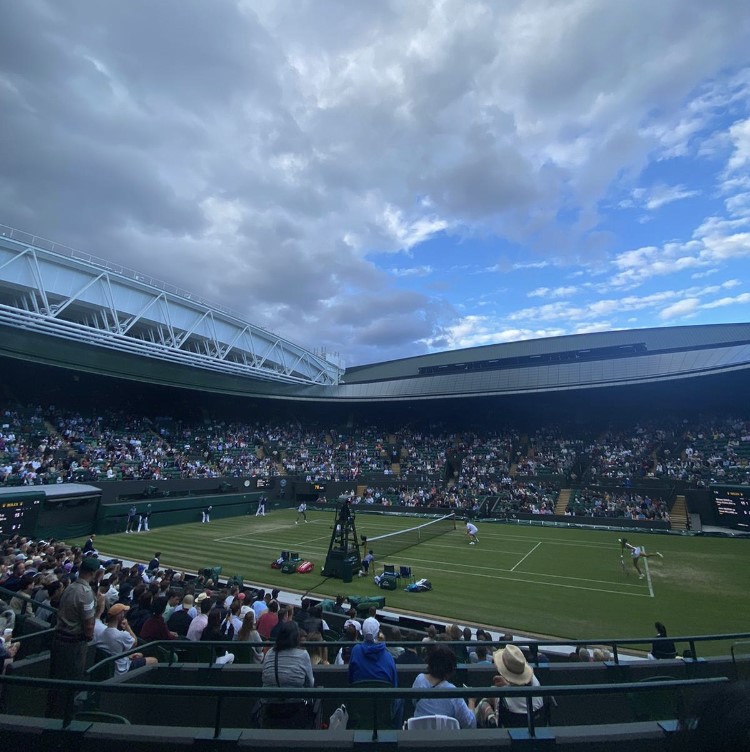
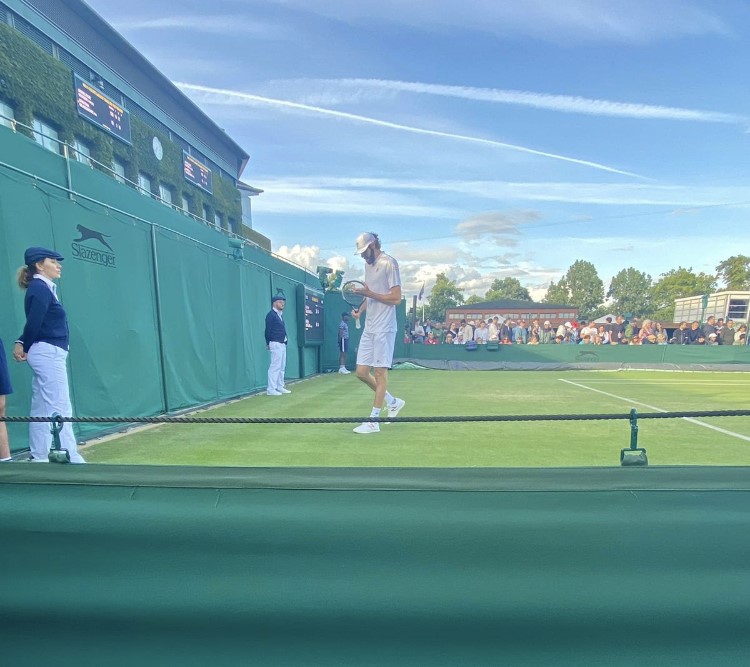


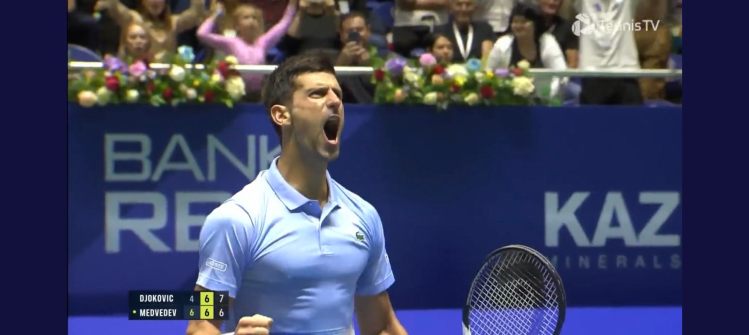

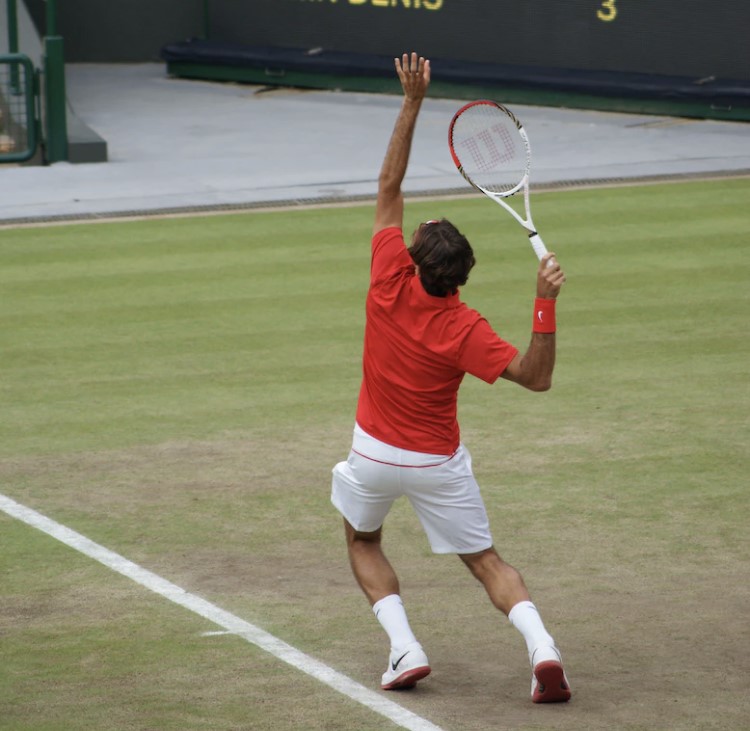

 Popcorn Tennis