Disclaimer: If your first reaction to this is “don’t you think it is a little late?”, know that the man himself is still partying drunk in Serbia.
It has been over a week since Novak Djokovic triumphed in historic fashion at the Olympics, winning the gold medal for the first time in 5 attempts and putting together what was the final piece of the proverbial puzzle that is his career. Doing so at the age of 37, on the most physically demanding surface, two months post meniscus surgery, against all odds and against the reigning Roland Garros and Wimbledon champion Carlos Alcaraz is beyond legendary. This was the tournament Djokovic had badly wanted to win all his career following successive heartbreaks, and he could not have possibly asked for a better narrative.
There are people who will try to brush this off as “of course he won. Djokovic wins all the time. What’s new?”, and that is very reductionist. There are plenty of reasons why, not the least of which is the fact that very few people gave him any serious chance of winning the gold medal for aforementioned reasons. As someone who has been following and supporting Djokovic for 17 years, let me zoom things out for you.
While this is not a chronicle on my entire journey of being a Djokovic fan and I will try to condense the timeline the best way possible, consider this to be my personal tribute to the legend. It was his Montreal 2007 title run defeating the Top 3 ranked players at the time – Andy Roddick, Rafael Nadal and Roger Federer – in succession that first made me a tennis fan. During the peak of the Fedal duopoly, I wanted to find that rookie to root for. I just love an underdog story in sport (expect another piece on this).
While Djokovic would soon enough win his maiden slam in what was a remarkably successful 2008 season, he stagnated for a couple of years. Just one big title won during 2009-10 and a period featuring plenty of head scratching defeats including the loss at Roland Garros 2010 from 2-0 up to Jurgen Melzer which Djokovic stated was an inflection point in his career as it left him distraught and resulted in a long discussion with his team on how to proceed from there. There was exponentially more disappointment than success during this period. I sat through all of it while also watching his fellow Big 4 contemporaries lifting big titles every other Sunday. At this point, it was almost laughable to the average Jane and Joe that I was a Djokovic fan and not one of Federer or Nadal. While most people just did not take him seriously as a player, I questioned his potential of becoming an all-time great while simultaneously tuning into every match of his with excitement. Through the pain of watching him being content losing to Federer and Nadal while defeating them on the odd occasion, it became clear that, deep down, he was resigned to the fact that he was simply not as good as them. So many questions were whispered regarding his fitness, being a lanky and skinny man who – a bit more frequently than normal – retired mid-match. Now, I must say that when you foolishly hold out hope for a player to achieve great heights when they have shown little-to-no signs of it, the eventual success feels so much more rewarding. Yes, this was the prelude to the legendary 2011 season. Before we proceed, try to digest this graphic.
What about 2011 Djokovic? If you watched him, you would need no introduction. 3 Grand Slam titles. 41-0 start to the season, 5 consecutive Masters 1000 titles and Year-End No.1. He surpassed all of his amassed career achievements within just one year. We are now talking about a week-in and week-out world dominator who delivered on the biggest stages against the mightiest of opposition. We saw a player who, just a year prior, was happy to lose to his rivals, turn everything around and absolutely dominate them (10-1, to be precise). The entire sporting world was looking at men’s tennis in a very different way. Any narrative before this was just quashed. The crowning moment when he really became a household name and the talk of the town all over the planet was when he won the 2012 Australian Open, defeating Andy Murray in 5 sets over 5 hours, and just over 24 hrs later outlasting his arch rival Rafael Nadal in 5 sets over 6 hours. Yes, the same man who was tapping out of matches several times when be broke out on tour. I never imagined a timeline in which I would witness Novak Djokovic being a physical beast.
Is that all? Far from it.
Another narrative that floats around is that Djokovic is somehow immune to heartbreak and that he has not tasted close defeats in big matches. Time to debunk that too. Wimbledon 2014, arguably the most important triumph in Djokovic’s career. He is tasked to face the greatest ever on grass – Federer – in the final. This, too, on the back of a 1.5 year Grand Slam drought and several heartbreaking defeats at this level, especially the 2013 Roland Garros SF one to Nadal which set him back quite a bit. He was 6-7 in slam finals at this stage and his opponent had 6 more Wimbledon titles at the time. If that does not describe an underdog, I don’t know what will. When most people were quite certain that Federer would be victorious, it was Djokovic who took the spoils. Since then, he holds a 18-6 record in slam finals. Once again, this fact itself, and not the prelude, is what people remember.
Rolling it forward to another inflection point in his career: 2018, just two years after the historic “Nole Slam” during which he won 4 consecutive majors on 3 different surfaces (only man in the Open Era to achieve this feat). Falling outside the Top 20 and not having reached a slam SF in nearly two years while his rivals were rolling back the years and dominating the sport once again, this was another very tough period. It somehow hurt more to watch Federer and Nadal sweeping the slams than it did in 2009-10 because this time, the caliber and greatness of Djokovic was on full display for years and I just felt that this did not mean that he was inferior to them. It was completely different to that time almost forgotten, way back when he held just one slam title whereas his rivals held them in the count of double digits.
Wimbledon 2018 SF, World No. 21(!) Djokovic vs World No. 1 Nadal, 7-7 AD Nadal in the 5th set with a chance to serve for the match. There comes an angled cross court forehand winner, which ultimately sealed the fate of the match, the tournament and even the “GOAT debate”. Sure, if Djokovic lost that match, history suggested that he most likely comes back to dominate again in ruthless fashion. However, he was carrying quite a bit of baggage of having lost nail biters during that season. Anyhow, Djokovic only went on to double his slam tally, complete two more career slams, claim the elusive Masters 1000 title missing from his cabinet and got his hands on that Olympic gold medal. The most sought-after title considering how he wears his patriotism on his sleeve. He had one chance, and he did it. He has “completed tennis”.
Notice a recurring theme in every significant moment in his career? Every breakthrough achievement of Djokovic has come when people least expected it to. So yes, I will make the bold statement and say that Djokovic claiming what he himself calls the biggest triumph of his career, was done so in the most Novak Djokovic way possible – against all odds.
He has, at least to reasonable people, been the undisputed GOAT of men’s tennis for more than a year now. He holds every substantial record, has won every big tournament on tour (something nobody else has managed to accomplish) and has done all of it coming through the best of opposition overall. I ask you, however, to not let the accomplishments themselves trivialize the journey which is what makes this athlete so special. To those that need a reality check that Djokovic was not born in the penthouse and also to those who have been following Djokovic’s career for a long time and needed a reminder of the same, I rest my case.
I’m not a religious man but if I were, I’d be thinking Andy Murray was sent from above to torture those of us that love him. Coming from the dead a total of 7 times across 2 days has us studying miracles and comparing them closely to this, for what much more would it need to constitute as one? I suppose we can now allow ourselves to whisper the possibility of a medal away on the wind as a wish, for nobody but our own selves and those many thousands like us will know that we’re all thinking it. We only have Murray himself to blame for such irrationality.
If their first round Olympic match felt like one that Murray and his doubles partner Dan Evans were losing until they won, then this match felt like one that got away from them right up until it didn’t. They won the first set easily and found pushback from their opponents in the second manageable. Standing two more career-ending points for Murray down in the deciding championship breaker, it felt like it was time to try and cope with the enormity of it all.
***
Following their first round win, Murray was asked how he faced down match points knowing that a loss would mean the end of his career:
“I wasn’t like “oh my God, my career is about to be over. What should I do?” I was like “where am I going to serve and how am I going to execute it?””
The finish lies only beyond a final loss or a final win and that’s a good thing because playing to win is far more familiar than playing for a tiny bit more of all that he’s ever really known. Pressure is properly managed by being at ease with your expectations of an event regardless of external factors. Those of us watching were screaming at a hypothetical situation that existed on the other side of a point yet to be played; for Murray, there simply existed no other side.
Evans is all of us at this tournament and it’s excellent to witness. His nervous excitement is palpable, kid-on-Christmas sort of stuff. He dropped points to be at the Olympics, his title in Washington last year sacrificed. He’ll pick up the pieces later on, alongside the rest of us. His career goes on after this week, as do our lives. For now, his bulldog ruggedness works well in conjunction with Murray’s survival instincts and there are very obvious moments where Evans is taking the lead in points, actively moving the elements of their team with a calmness not usually associated with him. Whatever happens now, he’ll remember this week and be remembered by others that’ll remember it for life.
A few weeks ago, prior to his final Wimbledon, Murray was posed a question about how he felt about his career coming to an injury-inflicted end:
“Maybe this is just how it was supposed to happen for me.”
That line has leaked through his goodbye at Wimbledon and absolutely drenched the Olympics. Everything about his first two matches here have been so incredibly him. He’s started badly. He’s fought well. He’s cried, not at all an uncommon sight for someone that many once claimed lacked emotion. He’s thanked Evans for sharing this moment with him and sat in the middle of it all, head down. There’s at the very least one more chance for more of this to come but you could see that this is already the run he’d been waiting on, matches that he can proudly sign off on being his last.
The Olympic dream LIVES ON for Dan Evans and Andy Murray! 🇬🇧👏
It’ll all be so different after this week, won’t it? The actual positive essence of certain days will no longer be dictated by one man’s tennis match scores. I’ll no longer ruin my regular daily structure to watch him. I’ll sleep more. In a way, I’ll be a relieved. In a way, I’ll be devastated. All things change but I don’t want them too and I’m blessed to be able to say I’m a fan of the man that currently has me believing that if I hope hard enough, maybe we’ll all just stay frozen out here on the precipice. Is there really such a difference between a week and a forever?
He will always be undermined by a section of tennis fans that struggled to accept his place alongside his most notable career rivals but it was because of his willingness to fall on the line as many times as he did that he always felt more tangible. Like a guy you could just chat with endlessly about stuff and he’d never mention that time he won Wimbledon twice. You could reach out and prod him in the face with your finger and he’d tell you to fuck off with a laugh. That’s the kind of real he felt like.
He lost more big matches than he won throughout his career and that makes this very final hurrah this week all the more intriguing. It’s damn rare that an ending fits the person but if the last image of Murray as a professional player is one with an Olympic medal around his neck, it would be as close as we’re ever likely to get. I don’t think I’m whispering it anymore when I say that I do need to see it happen.
Few athletes have tasted retirement and spat it out as much as Murray. Maybe it’s the acidic finality of it or the stomach drop of difference it promises. I suppose you either love it or learn to do so with time but Murray clearly wants to ease himself into the process and won’t go until he really must. Never again will we get to watch him play a professional match after this week. More importantly for him, never again will he get the opportunity to inflict them on us. This was always far harder for him than it ever was for us and what’s just a few more heart-attacks anyway? Keep saving us a little longer though. Just a little longer. One more one more time.
I’ve lost my mind over this man on multiple occasions over the years and if at all possible, I’d like to lose it a few more times before the end. Leave us angry that you’re going, Andy. Leave us bereft. Leave us golden.
Retirement has been begging to take Andy Murray for a while. It’s been there at his bedside, metal hip implanted, hobbling with him along baselines as he measured himself against the realistic and tried to imagine himself capable of more. It just about took him out completely, removing him from the game for extended periods, hammering him with injuries that it felt was only deserved due to the sheer physicality of the game Murray insisted on playing for years. It allowed him to reach number 1 and win multiple majors before coming for him, this was a fair debt to inflict on one so committed to ruining his body chasing only childish desires won by playing games.
Indeed, Murray is a big child at heart, the kind that irritates and moans and sits down and doesn’t move, demanding ridiculous things at late hours of the night when he’s supposed to be asleep. His refusal to shift and accept the signs over the last few years that underpinned many of his wins almost proved too much for neutrals that demanded he leave if he no longer could. The things we love delusion us and surely this was a simple case of Murray being unable to see past where he now was?
He’s always been the most realistic of players in frankly unbelievable ways. His wife Kim said in his 2019 documentary Resurfacing that he was really genuinely done with the sport and ready to step away before he “changed his mind.” Such a normal thing to do, magnified on the front pages of world sport. His indecision has played with him over the years since then, as the questions mounted amidst mixed results that were deemed beneath a player that was simply no longer there. The measuring stick of a prime Murray overshadowed everything that he did and his past success must have been frustrating for him at times, as he battled to try and claw back consistency that was never coming. Achieving impossible things on the regular is hard, only bested by having to accept that you no longer can.
Tennis is a game of absolutes and Murray’s flexible attitude about his end irked some that wished they could inflict their opinions on a man that simply didn’t care what people thought of his personal career decisions. Murray is built from the tears of those that doubted he could, constructed in ways that juniors today look to replicate in any slight ways they can, inspired by witnessing a willingness to put everything but his own sense of what is right and just in this world aside in pursuit of getting better. It’s because of this, because of Murray’s character forged in the judgement of others, that he ultimately couldn’t care less what people thought of him, at least not outwardly.
***
All of this leads us to now, last night, and the 10 minutes or so that saw retirement crawl its way down through the Olympic rings in the stands of the French capital to once more breath fire above the head of Murray. 5 match points to kill a career of resilient exhaustion. Olympic champ, Olympic death. Murray and his doubles partner Dan Evans were behind right up until it really fucking mattered that they were behind, losing no point that they couldn’t afford to lose as they clambered back into a championship tiebreak that had raced away from them until just a step before completion. From 4-9 down, they would lose no further point, as I was steadily brought from my slumped stupor of devastation, up to a hunched figure of wonder, up further still to a complete loss of all bodily senses as tears fell in response to a career still breathing. Life-supported into a win. Defeated until they weren’t.
Murray couldn’t believe it, shaking his head as he screamed in giddiness. Retirement – the most human of things that can happen to a professional tennis player – could only bow and be stilled, biting back flames beaten for yet another few days. When it does take Murray, it’ll be its most prized of wins, and it’ll undoubtedly shake its head at the work it had to do to get him. Evans – a player with his own story – seemed hardly able to process the moment, laughing deliriously that he got to play such a significant part in the slow and steady last sunset of Murray. And what a credit he was, for this show of Murray was a duet of madness that needs to be signed by both participants to happen. Murray will get the headlines and Evans will be fine with that but my god, this whole thing was won through messy patchiness of form from both that just about managed to save them.
This is what Murray does, he makes those that surround him motivated to lift him if he needs it. People want to play a part in helping him. That means us too, every single one of you reading this that counts yourselves as a fan, you know what I mean, don’t you? You’ve felt that pull, that desperate drag on your heart, that wild thought process that you might just be willing to give it all up if it meant Murray could have just this very next win. You’d ask for nothing else if he could take just this very next point. You care desperately for him. We all do. Alone at the top of British tennis for so long, it is unbelievably fitting that Murray plays his final tournament surrounded by a team of players that he has directly helped influence and of course he wins his first round saving points of finality because, well, of course. Even at his funeral, he must live. In the madness, it makes sense. Outrageous only in that it just fits so well. Laughable perfection.
It is the most Murray-ish of Murray way to do things. Stubborn to the point of annoyance, he’d dragged his feet coming to the conclusion that yes, this was his time to go. Making peace with it, acknowledging that he’s happy to accept this as being his final tournament, waved off by all at Wimbledon. It pleases me oh-so fucking greatly to know how much his extended goodbye has irritated those that don’t really matter. This isn’t the time to focus on the bitter few and yet, I do revel in the disappointment of those that have long revelled in his. Pleasure in the misery of others is still pleasure, let me tell you.
I said in the first few paragraphs of this article that achieving impossible things on the regular is hard. Murray made doing that look like exactly that, like it just about killed him to do so. I think he always wanted us to know how frankly ludicrous what he was doing truly was. It makes that moment last night that much more remarkable. Having done all that we ever really asked of him, he deserved a comfortable loss. But nothing about Murray is comfortable and so we just about came to terms with a desperate almost as a sort of tribute to his best years. But what we are ultimately left with is at least another day of him. He asks us to accept this week as his finish but gives us a win that ultimately must break our hearts because it really will be one of his last. One more memory to miss him with. He’s such a beautiful idiot.
***
I awoke yesterday morning not knowing my adult life without Andy Murray as an active professional tennis player. Sitting here, right here, right now, somehow, someway, having risen on yet another morning, I STILL do not know my adult life without Andy Murray as an active professional tennis player.
The relationship that Wimbledon crowds have with Novak Djokovic has always been on the spicy side. Drenched in the guise of tradition and seniority, the All England Club finds itself on a very specific level of traditional class that Djokovic appears on the borders of. They loved Roger Federer for his presentation but also his game, which supposedly felt luxurious to watch. Crushed-velvet tennis will always be treated well there. Rafael Nadal was perhaps harder to accept, a brutal Spanish workhorse that wore lengthy shorts and sweated profusely with the effort of it all. His cause was helped by Federer though, the 2008 Wimbledon final long held up as an example of a true sporting greatness, and Nadal, as the winner of that contest, has been warmly cherished ever since. That tied Nadal to Federer going forwards and over time, their relationship off the court has seen them bound in the eyes of tennis casuals. Nadal, seen as an irritating little brother of Federer, was permitted entry as a rare exception, and so Wimbledon opened their arms for him.
Djokovic, the third party in a room for two, has been forcefully positioned to one side as he rose to join them. It’s interesting because in a way, Djokovic fits with the aura of Wimbledon more than his two biggest rivals. Unshifting in his principles whether people agree with him or not, he is set in his ways, forever the same even under the eyes of the ticking clock. Wimbledon, desperately battling the retain the difficulties it’s always had, seems like the perfect setting for one so stubborn. This is seen in his results at the event, where he’s currently trying to win his record-equalling 8th title that would see him on par with Federer.
Watching Djokovic verbally chastise those in attendance following his win the other night, the resentment was clear. The crowd, in their displeasure at being called out, could only loudly murmur in response, a smattering of applause heard intermittently in a hapless attempt to placate the atmosphere that had turned sour. Keen to swat away any attempt at explanation from the interviewer, Djokovic made it clear he didn’t care and that he’d played under far worse conditions than anything concocted that evening beneath the roof of Centre Court. This was sports entertainment stuff, the kind of thing the WWE scripts to fully ignite a rivalry, and it felt important. Djokovic is very human but he’s also a character, built through a combination of his own actions and views of those that have covered him. Depicted as the long-suffering greatest beneath the gaze of the majority that would have preferred to see Nadal or Federer in his place, this was the first time that he’d very directly referenced his belief that he’d been disrespected on many occasions by fans of the sport.
Everyone – including Djokovic himself – knew that most in the crowd that night had been cheering simply for an opponent’s potential comeback that was never likely to come. They wanted more tennis out of a match that wasn’t going to give it to them. Were there a few Djokovic detractors in the stands? Sure, for there are many and they are loud. Enough to warrant this frustration? Not in isolation, no. Which is why it was fascinating that he brought up the past and how he knows how this all works. The Wimbledon 2019 final was on his mind, the crowd pining for a Federer victory that exists now only in the imaginations of those that have yet to fully move on. Wimbledon 2022 and the semifinals stages against a home player, Cameron Norrie beaten amidst jestering directed at Djokovic, Djokovic blowing a kiss at them following match point. Against Jannik Sinner in the 2023 semifinals and the crowd keen to see Sinner battle back, Djokovic responding with a sarcastic amateur-dramatics crying performance.
There’s a childish anxious nature to all of these moments that make them difficult to not at the very least appreciate on some level. Some ardently rile against it all though, disliking the disruption that Djokovic consistently provides. The entire thing is theatrical, Djokovic’s eyes taking on an intimidating quality. His tennis instantly adopts a more precise finery. Intensity raised, his grunts extend to match his winners, often struck out in harmony. The crowd, called upon to react, comes to meet him, and the result is frequently fiery perfection that drags loud opinions from even the most neutral of watchers. People talk when Djokovic plays and the volume is raised on all sides immediately on those notable occasions that Djokovic himself decides to join the discussion.
It’s OK to be bitter about stuff. Many believe Djokovic craves the love that the masses continue to offer up to Nadal and Federer but I don’t think that’s actually true. His past works in conjunction with his present to motivate him and he appears to have trained himself to know exactly how to recognise the moments that he needs to be pushed against. He loves to feel that he’s overcome something and when the thing itself doesn’t automatically present itself, he creates it, drawing on experiences from over the years to bring it all together in true delusional greatness. The majority like to see winners that have earned it through difficulty or be granted a miracle like magical Federer-like abilities to dismiss those they’re playing with a flick of the wrist. Djokovic, rough around the edges and unafraid of conflict, often just flattens opponents, but he actually provides more intriguing tennis when operating beneath hardship. Crowds know this and taunt him, desperate to see something other than a win that was always going to be won. Drawing reaction from Djokovic fires them up further, demonstrating to them that they might just have some sort of an impact on him, and Djokovic angles in opposition to them as well as his opponent. In doing so, he allows himself to picture himself an underdog, fighting against the numbers, even as he retains his overwhelming status as favourite. It eases pressure, freeing him. It’s a vicious cycle that produces excellence.
With Federer and Nadal shelved and Carlos Alcaraz and Jannik Sinner working their way in, Djokovic sees a familiar place wedged between two rivals that are friendly with each other. If Sinner and Alcaraz are the new Federer and Nadal, then Djokovic is still very much Djokovic. He says he wants to be treated respectfully but would that be to his ultimate benefit? His past leaves me unsure, for little lets me believe that we’ll ever see the man perform better on a tennis court than when people loudly want to see him walking off it a loser. In spite of his wins, his millions and his fans (for oh, he has his fans!), I find myself feeling for Djokovic. There’s an unhappiness in there, masked by smirks in the face of those that cheer wildly for his end. He might not fit your requirements but those are yours and yours alone. People call him villainous but if you see him as such, it’s – and I stand by this – an unearned label that he might well be in the process of unwillingly accepting.
In the end, Wimbledon keeps its roots buried deep in the classical but Djokovic, with his loud nature that refuses to shush and receives backchat from many, remains its most relevant superstar.
Scottish tennis looks set to bid farewell to two of its key assets this summer, with Dunblane star Andy Murray slated to play his final Wimbledon just weeks after the National Tennis Academy in Stirling pulls the shutters on its flagship juniors programme that will see all operations moving to Loughborough in England. A ruling made in 2022 to not extend the five year deal put into action back in 2019 will see no central hub for junior players in the country that produced the first homegrown men’s Wimbledon champion for 77 years.
It can only really be described as a half-decade of failure, a continuous fumble of a miracle opportunity. Just two Scottish participants have passed through the system and this is cited widely as the reason for the closure. It begs the question of whether Scotland is set for success in tennis post-Murray. Plans for reinvestment in alternative areas with the hopes of growing the sport have remained typically vague and issues clearly stem from the lack of any real identity around Tennis Scotland. The total reliance on the overarching governing body of the Lawn Tennis Association means that all programmes are first filed through England before steadily being cast up North and unpacked in areas not properly planned for. It paints a half-hearted effort and this is reflected in the Academy.
Stirling University Tennis Centre provides fantastic indoor facilities and has done since the childhood years of the Murray brothers. The Centre was, is, and will remain a solid place for play. What it won’t be able to provide is blueprints for juniors despite having had the greatest professional the United Kingdom has ever seen grow up not five miles away. Referred to as a National Tennis Centre, the courts are not owned by Tennis Scotland. Rather, they have a block-booking with the University in order to hire the courts. Hardly a secure long-term agreement built for tennis success but it’s been this way since the courts opened in 1994. In 2019, the LTA took ideas familiar to them in England and attempted to adapt them around already rooted foundations present in Stirling and the result is an Academy that never stood a chance. Nothing made it uniquely Scottish because it was programmed for England and while many will argue there’s not much difference, two Scottish attendees in 5 years suggests otherwise. English players made up the majority of the graduates and the first and only Scot in the initial intake, Matt Rankin, was offered his place a week before opening to satisfy potential critics. The second and final Scot, Charlie Robertson, was brought in last year. Prior to that, his family spoke to The Times, criticising Tennis Scotland for the lack of support offered to the parents of promising junior players and suggesting that court time at Stirling was now difficult to secure due to the Academy takeover. Murray had to briefly step in, offering Robertson’s team the use of his outdoor courts at his Dunblane hotel as Tennis Scotland rushed out an invite amidst a fresh wave of negativity. Robertson has, just this year, made good progress, qualifying for the main draw of the Boy’s singles at the French Open. Go to the press or be forgotten appears to be the primary takeaway.
***
Academy players were accommodated at Dollar, a nearby boarding school, and were taxied to the University. English coaches dominated the staffing numbers too, taking away places that had been held by Scottish coaches with knowledge and insight of how to properly teach the sport in this country. Young Scottish kids hoping to play on indoor courts were turned away in favour of coaching sessions for juniors from elsewhere. Tennis Scotland – having placed a joint bid worth 500 thousand pounds a year with the University to host this Academy and now handcuffed to a system not their own – could only really sit back and watch.
There’ll be some that say “well, perhaps Scotland simply didn’t have the tennis talent necessary for the Academy!” and those people would be correct. For the Academy to have ever been an actual functioning success story for Scottish tennis, it would have needed to open amongst a plethora of talent desperate for just a hint of structure. But there was no plethora because the initial necessary work to achieve that would have needed to be put into motion 10-15 years earlier when the Murray brothers were in their ascendancy. There was no dire need for an Academy at all. Two Scottish juniors making it through in the lifespan is embarrassing predominantly because it demonstrates the more significant overarching failure to engage children in the game within this country while the Murray brothers were winning. There was no audience for the show. By opening in a Centre designed to help fledgling youths not yet at the level required, any potential died before it ever really got a chance to live.
Announcing closure three years in and two years in advance ultimately makes sense when there’s so little commitment from the start. History has a way of repeating itself; English forces advancing into Scotland will ultimately always have trouble in Stirling. It didn’t have to be this way. Murray was born in Scotland and trained in Spain and won big in England. There was opportunity (near two decades of it!) for collaboration to properly understand and then apply the diversity of the Murray DNA into a national tennis strategy for Scotland but this would have required a flexibility to plans and the LTA have long held firm to traditional setbacks. Murray need not have been an anomaly to be whispered about in the future amongst aged Scots that were young when he won.
What will be remembered the most as the Academy wraps up is how predictable this truly was. One look at the opening year is enough to recognise that too-little, too-late is a mantra followed deep at the heart of the politics in British tennis. Murray won the last of his major titles in 2016 and had already retired once at the Australian Open 2019. The Academy was set-up with the aim of piggybacking on success that had seen its best days three years prior. Before that, there’d been Wimbledons and Olympics Games and Davis Cups and opportunities. Limping away with all of that silverware and any last vestiges of hope to capitalise on his playing days, Murray will know he did all that he could and that any attempt to follow in his footsteps would have needed to be set in motion years ago. As Scottish tennis waves goodbye to its greatest ever ambassador, it does so while falling backwards into irrelevancy.
***
It’s often unfair to blame individuals in situations such as this one because there is rarely a clear-cut answer. Having said that, it’s always worth looking at who is making the most in the midst of failure. Every year, Tennis Scotland CEO Blane Dodds can be found at a rented apartment in Wimbledon that he refers to as “Scotland House”. In the two week run of the tournament, he invites sponsors around for nights of drinks where he gives out VIP access tickets to representatives. What this achieves, exactly, is unclear, but the entire thing is supposedly written off as “business entertaining”. It is here, one would imagine, that Dodds talks repeatedly of participation numbers skyrocketing and how successful the Scottish schools initiative has been. These are the most important days in the calendar for the growth of Scottish tennis and so you can be absolutely certain that Dodds will only ever be doing the minimum expected.
Where this leaves Scottish tennis isn’t all that far from where it was prior to Murray’s prime. There are courts and there are people willing to play on them. When presented an opportunity, the Scots – as dour as we are portrayed – will always play ball. But what’s the plan and where’s the strategy? There’s more money amid high playing numbers consistently cited by Tennis Scotland, seemingly neutralised by those in charge of distribution South of the border. Formerly free public courts are freshly painted but gated, locked and charging for entry. These are face-lifts with nothing much beneath the surface. Platitudes and gift-aid.
Having come so terrifyingly close to winning the tournament last year, Wimbledon represents a line still to be crossed for Ons Jabeur. Not for a second does tennis work on a reliable schedule but prior to that final, it had felt like perhaps the sport was willing to compromise just this once. It was a natural progression that the majority of fans could get behind. She’d done her time by experiencing the setbacks and in turn, had earned it. It would have all made sense. The routine can rarely be relaxed by those looking to master it and a Wimbledon title at the then-age of 28 would have felt like perfect moment to breath a little.
I’m fascinated by those that lose at the highest of levels. It’s rare that athletes offer insight into the impact of defeat. It’s a fragile uncertainty that takes time that top-level tennis doesn’t really offer and so the debris is often still falling in the heads of players that walk themselves out there mere days later.
Jabeur would later clarify in an interview that she knew winning and having a child weren’t inherently linked because both could still happen independently of the other. But the trajectory of life is never more vulnerable than it is following failure. To become a parent would require an entire separation from her career for a prolonged period of time with no promises of return. Win and she would have felt like she’d earned the right to enjoy other possibilities. In losing, her freedom to choose was still her own but acting on that felt immediately more complex. Did she feel like she had done all that she could in the sport to leave her satisfied if she could not come back? The answer, it would appear, near a year later, is still no.
We either get over things or we don’t. Watching Jabeur over the last year, I’ve never felt like she’s truly forgiven herself for not winning that final match. The greatest players are the ones that make a habit out of moving on. Jabeur, now 29, knows of the heartbreak that tennis provides weekly. The wheel turns across the back of very personal disasters and Jabeur, left holding the wrong trophy a year ago, felt the emotion crumple her when faced with her own.
Jabeur’s career is in a difficult place because everyone wants to see her win and everyone seems absolutely ready to sympathise tremendously if she doesn’t. She’s so obviously the face of feel-good that the urge to just reach out and thrust her across the gap separating her from major glory is striking but the sensation of feeling sorry for her should she fail feels more natural because it fits with the pattern of her journey so far. It’s OK to lose but forgetting that when playing is critical and you see in Jabeur’s face when she contests these important matches that she’s become just a little bit too comfortable embracing the low-points.
There’s too much going on for her. Becoming the first African and Arab woman to reach these stages is huge. She looks up at the box and there’s her husband and their joint hopes for their future. How her overall career will be viewed is seen through these finals that are happening now, years after it all started and when at least 80% of it is already over. There’s real validity in the argument that a tennis player can not be solely defined by number of major titles won but when the player in question turns themselves in knots over their inability to win one, it becomes hard to overlook. Being good enough to win a major means absolutely everything up to and including that last match. I find myself hoping that, should she make it back there once again, that she’ll find calm in the madness. I hope and I doubt.
If Jabeur is going to win a major, it’ll be at Wimbledon, but it needs to be soon. 2023 saw her expectant. Part of her might well have fooled herself into believing she’d win easily, as though the groundswell of support driven by her natural likeability would be enough. Her performance in that match was nervy and scattered, unsettled further by the knowledge that she was undeniable favourite. She seemed to see the headlines announcing her surprise defeat right on up until the time that they were being written and there’s been no visible confidence in her game of late that leads me to believe that she stands any more of a chance of going a step further this time around. There’s external factors at play such as injury and, more recently, illness, but these have played out in conjunction with the fact that she still at times appears burdened by the fact that all of her high-profile moments have come to an end in the form of a loss. Those three major finals appearances are as impressive as they are devastating.
Jabeur reached the final last year and if she can do so again, anything can happen. But I don’t think it will for the simple fact that she’s fallen into a category that players fear finding themselves; predictability. Jabeur excels on grass because it’s a unique surface that requires work to properly understand and she has no problem with putting in the hours. It’s because of this, because she’s still a steady feature at the top of the game after all this time, that unfortunately, I don’t think that she’ll get there. When someone proves time and again that they are willing to maximise all that they have and still can’t get the job done, well, maybe they just can’t get the job done.
These are the small realities that the majority of us live with day-after-day. You’re only as good as the best that you have. It all matters only as much as we let it but it’s why, when there’s a difficult internal rational combining your ability to achieve something with a serious long-term life decision, it becomes that much more difficult to walk the shrinking timeline to claim both.
Tennis is one of the loneliest, most difficult sports in the world. Players travel week-in and week-out to a bevy of different countries and sets of conditions; the very best are as adept at sliding on hard concrete as on soft clay. The scoring system demands that players win the last point of the match to emerge victorious — you can play better than your opponent for 99% of the match, but if you freeze up, there’s no clock to save you. The format has invited chokes time and again. Roger Federer has snatched wins after being match point down more than 20 times…but lost from match point up just as often, sometimes to enormous historical consequence. The season covers the vast majority of the calendar, leaving players exhausted, injured, or both by year’s end. The players who do not win big titles have little to show for their efforts, often not even financial stability. Psychologically, it is probably not healthy to play at a high level.
But the enchanting moments it can produce. Two evenly matched players can push each other to places that, in all likelihood, no one except fighters could understand. A journeyman’s improbable victory in a low-level tournament can be validation for decades of hard work. Fans share in the players’ pleasure and pain — without teams to distract from the individuality and helmets to hide their faces, players feel like real people. They are practically naked on court. There are no substitutes, no time-outs, no bells or whistles to stop a backwards slide. Watching someone play an entire tennis match can feel, rightly or wrongly, like a reveal of their character. It is all the more rewarding, then, when a player rises to the occasion.
The sport, though, can be difficult to market effectively. The recent Netflix series Break Point focused more on the players holding the tennis rackets than the sport they were playing. (And was rightfully canceled after its second season.) So what is the essence of tennis; why do athletes play this sport despite its exhausting nature and why do fans watch despite the time zones shifting constantly? In this oral history, 13 writers in and around tennis talked about their relationship to the sport and thoughts on the ins and outs of this weird, wonderful game that, when it clicks, has the capacity to render everything else temporarily irrelevant.
I: “I had insomnia. So I just sat up and watched the Australian Open.”
Brian Phillips (staff writer, The Ringer): I got into tennis in 1996, when I was a freshman in college. I was home for winter break, and my high school girlfriend dumped me on my second day in town. I was obliterated. I was just so sad, so crushed. And I couldn’t sleep. That winter break, the Australian Open was on at all hours of the night, and I had insomnia. So I just sat up and watched the Australian Open. It was the year that Monica Seles came back from her stabbing and won. I got super into following her, and from then on, I loved tennis.
Louisa Thomas (staff writer, The New Yorker): I was quite a big sports fan growing up, but mostly Olympics, baseball, basketball, some football, and not tennis as much. But tennis was what I played. I wasn’t a competitive junior player, although I did train with a bunch of pretty competitive junior players. But I was #2 in singles on my high school team. I loved it. I just loved playing.
Rowan Ricardo Phillips (author, The Circuit: A Tennis Odyssey. Answers via email): I loved stories and it was clear to me from early on that in tennis each point was a story unto itself, in the same way each game was, and each set was. At its best, tennis was a puzzle of stories with possible alternate endings if one little thing or call went one way instead of the other. And also the fact that so much passion could erupt from polite silence, like live music––I found all of this very appealing.
Juan José Vallejo (co-founder, The Changeover; former tennis contributor, Rolling Stone):I got into tennis at an interesting time in my life, when I think my brain was expanding. I was going to film school in Argentina, in a different country, on my own. The internet was just hitting then, in a communal sense. The way I started seeing the sport and being curious about it has a lot to do with my initial experience of being on [the Tennis.com blog] TennisWorld and reading Pete Bodo and Steve Tignor and talking with a group of 30, 35 people. Being able to say dumb stuff is important. And being able to learn. There were a lot of posters there that were really smart, and would tell you things, and tell stories. That’s what you don’t get on Twitter.
Rembert Browne (former staff writer, Grantland; New York Magazine): I started playing tennis when I was six. There’s a lot of black tennis in Atlanta. It’s a very large parks and recreation system. My mom played tennis, I played tennis. I went to summer camp.
Matthew Willis (founder and writer, The Racquet. Answers via email):I was lucky enough to play here and there on family holidays, my parents and older sisters frustrating five-year-old me with befuddling forehand slices while I still had the spatial skills of a cucumber.
Jay Caspian Kang (staff writer, The New Yorker): Two or three years ago, I started directing this documentary about Michael Chang. I was watching so much old tennis footage, and talking to people like Brad Gilbert or even Federer about the nuances of different types of players, and it became super interesting to me in an intellectual sense. I just wanted to get out and play a little bit. I got some of my friends together and we started setting up times to play, and within a week I was desperately texting them every morning, “let’s go play, let’s go play.”
Courtney Nguyen (senior writer, WTA): It was the preeminent and most accessible women’s sport. I was a three-sport athlete in high school and super into women’s sports even then, but back then, which would’ve been in the 90s, to watch women’s sports was to watch either tennis or, for me, being in the Bay Area, driving to Stanford to watch women’s volleyball or basketball.
Browne: I don’t know if I’ll ever love tennis as much as I did when I was nine years old. It was the center of my universe in a way that I don’t think a sport can be anymore.
Steve Tignor (senior writer, Tennis.com): Those early [Bjorn] Borg Wimbledon wins were a big deal for me. And I tried to play like him. I still have a Western grip and play with a lot of topspin and play from the baseline. Not everybody did that then. I’m left-handed, I probably would’ve been better off playing like [John] McEnroe, but I already had the Borg style. Two-handed backhand, too.
Giri Nathan (staff writer, Defector): I specifically remember watching Goran [Ivanisevic]’s run at Wimbledon as a wild card on a super-busted TV at my grandparents’ house in India that summer.
Nguyen: One thing about tennis, it is always on. Regardless of time zone, there is always a tennis match happening.I just started illegally streaming tennis matches in my office at three o’clock, four o’clock in the morning.
Browne: For years, my tennis coach—William “Wink” Fulton, may he rest in peace, he passed [in 2023]—had been wanting to take our camp to the U.S. Open. Since I was a kid, it had been a thing. But the finances of that are very hard, especially when you’re talking about a camp where he’s not even charging all the parents to send their kids to camp. I haven’t lived [in Atlanta] in quite some time, so it’s like, “how do I give back to the city that made me even though I’m in a different state?” I’m like, “a 24-hour podcast sounds insane. No one else would do that, so I should probably do that. If I can actually pull off this shtick and get the people, maybe we’ll do a fundraiser!” Everyone that I reached out to said yes, everyone was really excited. And we raised, like, 26k and sent the whole camp to the Open! It felt really good. It was exciting for me. They were coming to the city I was living in, so being able to greet all these kids, some of whom knew me, others were young, some people were campers that had become counselors or chaperones. It will always be one of my career highlights… The intended result happened, which was that it began a tradition of this camp going to the U.S. Open. It’s still happening.
II: “The Federer-Nadal rivalry is what got me to really start paying attention.”
Nathan: I think in all the common experiences people have with [Federer], there’s kind of this sense that it’s a very beautiful style of play. Feels very creative and spontaneous. I think people respond to that instinctively, and they’re kind of responding to it again now with Carlos [Alcaraz], so you know it’s not a one-off phenomenon. Although it can be hard to characterize, you just kind of know it when you see it.
Brian Phillips: My brain is going to the world of visual art for some reason. It’s the same with certain museum experiences that you could have. You kind of roll your eyes at all the stuff people say about Michelangelo, but when you’re actually standing under the ceiling of the Sistine Chapel, it’s like, “oh, fuck! Everything people have ever said about this is true.” I think with Federer, it’s just that those qualities, as marketed to death as they are, and as hackneyed as so much of the discourse around them can quickly become, they just feel so real and so pure when you’re watching him that the rest of that stuff seems kind of insignificant.
Nathan: I remember a couple of my friends were also fans. It’s so funny, but at the time, I think when Rafa first came on the scene, we called him a pusher.
Caira Conner (tennis contributor, New York Magazine): I’m a couple years younger than Federer. A couple of years older than Nadal and Djokovic, which is crazy to think about. I was growing up literally as the Big Three were coming onto the stage, and I was in high school at the same time that Venus and Serena were making their mark. I grew up in the most unbelievable era I think that the sport has had, on both sides.
Browne: We think of dynasties in the team setting, but the Big Three was like a dynasty.
Nguyen: I liked losers. I liked mess. I appreciate when somebody makes something look hard, but they overcome it. I wasn’t a big Federer person. I couldn’t stand it. I was like, “he makes it look way too easy, and it’s not.” So at the time I gravitated towards Andy [Murray], who made it look so hard, and at the time Novak as well.
Willis: The Federer-Nadal rivalry is what got me to really start paying attention when I was about 14. Completely by accident, I stumbled on the next-day-replay of their first meeting in Miami in 2004, when I was flipping through channels on Sky Sports. The way that match seemed to play out looked very new and original to me at the time. It didn’t really look like most other tennis matches I’d seen, with their very different strokes and point patterns contrasting each other so harshly. I watched a lot more tennis from that point on, even clipping older rivalries like Borg and McEnroe and Graf and Seles so I could watch them later.
Nathan: I think it took having two worthy rivals to put [Federer’s] greatness into perspective. Because in the beginning, you’re like, “okay, maybe this is just a weak generation.” But as enough time passes, it’s, “no, these are the three best players ever, and they happened to coincide and make each other better.”
Tignor: There’s definitely some incredible Federer highlight reels from certain tournaments in his prime. I watched a half-hour one from the 2007 Australian Open. It cuts out all the errors and sticks with the winners, but I don’t think you’ll find a better example of just playing tennis than that.
Jon Wertheim (executive editor and senior writer, Sports Illustrated):In I think ‘07, a publisher asked if I could do a Roger Federer book. I go to the Federer camp, I approach them, and they essentially said, “knock yourself out. We’re not gonna stand in your way. Roger isn’t ready to write his own book.” And then Federer lost in Australia in 2008, and he got absolutely crushed by Nadal at the French Open. I think he lost in Indian Wells along the way. It was a rough year. I sort of said, “Uh-oh, I don’t know what’s going on with this book. No one’s gonna want a Federer book if this is the end. He’s on this two-major losing streak!” Which, at the time, was, “holy cow!” And then all of a sudden [Federer and Nadal] had the magical match at Wimbledon, and I sort of said, “a-ha, I think I may have a way to salvage this project.”
Nathan: I had really been tuning into tennis during the prime monopoly years of Roger, and I’d seen him close down so many other players’ careers. So I found it really interesting to watch what I saw to be his enormous empire slowly being encroached upon by [Nadal]. Surface by surface, he’s figuring it out here, he’s figuring it out there. He’s coming to grass now, which we thought was the last holdout for Roger, and he’s beating him in the Wimbledon final.
Conner: Tennis was those characters. To be able to count on the predictability of Djokovic, Nadal, and Federer on the men’s side: they’re always going to get to the quarterfinals, semifinals, finals. That is so outrageous! And that was the case for, like, 20 years!
Willis: I think each of the three are borderline crazy, and that their usually light and breezy demeanor in interviews or media for the most part successfully conceals three of the most driven, weird, obsessive, competitive human beings on the planet.
Thomas: These athletes are super-competitive. That’s just not a way to be. We admire it, for sure, and we pretend that’s the way we should be, but it’s not. The better way to be is to learn to accept your faults, and learn from them, and not base your entire existence on domination. But that’s what we celebrate in an athlete. It’s probably unhealthy.
Nguyen: For me, it was personalities. And then along with that was the psychology behind tennis. That’s the one thing that has never wavered in terms of my interest in the sport, what I like about it, what I dislike about it, or what pisses me off. The one thing I’ve always remained fascinated about is just how they do this. Once you truly understand the rigors of the sport —the schedule, the flying, the loneliness—and you talk to particularly the women, the obstacles they have to manage on a daily basis from when they were eight years old to however old they are now…There was this empathy that I had for them in trying to understand why they do it. It remains a mystery to me.
Tignor: There’s a whole tradition of legendary women’s players. You get to see women competing against each other, which you don’t see in baseball, football, even pro basketball until recently. I think the women bring something different personality-wise to the sport. Sometimes when I watch the men, an average men’s match, it can look like two guys doing their job. It’s a job, we’re gonna do it. But I never really feel that much with the women. Their personality, their emotions, what they have at stake in the match is a little more on the surface.
Nguyen: [Tennis] became my soap opera. The players became my stories. This person got a W! Not in a literal sense, but it was a good day for her! And then three days later, it was a bad day for her! It’s like watching Days of Our Lives. It’s just emotional whiplash all the time.
III: “Imagine if you had a combat sport in which you actually had to win by knockout. That’s kind of what tennis is.”
Nguyen: Your doubt is reflected, physically, in what you do out there.
Conner: I was such a recreational player that mostly what I felt [while playing] was joy. But certainly, in high school I remember stressful moments when I would completely freeze and then double fault an entire game. That’s all mental, that kind of paralysis that comes in at a high-stakes moment, and you just totally choke.
Tignor: Hitting a ball into a court and hitting it well is a very fine-tuned thing. Anything that gets in the way like nerves or too many thoughts throws you off. I play squash, and one of the things I like about squash is that it’s hard to hit the ball out. You’re hitting a ball against the wall. And even if you get nervous, at least when I play, there’s never nerves to the point that I’m going to miss a shot. Whereas in tennis, nerves really affect every shot, every swing you take. It’s easy to hit the ball out.
Thomas: I was the kind of player who became tight very easily. I was sort of notorious for my upright collapses. I would be playing first-to-ten-points, and I would go up 6-0, and then lose 10-7. In fact, I didn’t even like to compete later on, because I became so tight.
Browne: I remember being a junior tennis player, and being really good…[pauses] but often losing. To people I shouldn’t lose to. This is a real scenario: I was up at some country club in Georgia. Only black kid. It was giving some not-great, kind of classist, racist vibes at this tournament. Me and my mom were there. I was playing against these kids, this white kid, and I was beating the brakes off him. At some point in the second set, this kid looked so sad. There were a bunch of people, his family looked pissed, and all this shit. I remember my mind completely leaving the tennis match, and I was like, “damn, man. I’m about to fuck up his whole life.” I wanted to win. I obviously always wanted to win. But I would start to have this compassion for the other person that worked directly against having a killer instinct. Next thing I know, it wasn’t like I was ever trying to miss, but I would take my foot off the gas. And not in the complacent way of, “I’m killing him, I’m gonna win.” It’s just that the overall intensity of the match would decrease as I got closer to the finish line, which would often result in a comeback, and then instead of being like, “okay, time to come back,” then I’d just get mad at myself. And then, I’m like, “Rem! Why’d you spend so much time worrying about this kid? Now you lost! Now he’s happy, and fuck that kid!”
Thomas: Tennis is a sport in which you actually can talk about psychology, because when a player gets tight, it really affects their game in a very visible way. A real way. Whereas in basketball, things like the hot hand are, if not a myth, then marginal things. Slumps are not quite due to moments of tightness in quite the same way that they are in tennis. So there’s a freedom to talk about how human beings respond under pressure. You can do it in a looser way than you can if you’re talking about Antetokounmpo.
Vallejo: Whenever someone doesn’t double fault on a second serve on break point, set point, match point, I’m amazed. I would double fault all the time.
Christopher Clarey (former tennis writer, The New York Times; founder and writer, Tennis and Beyond): I remember Agassi telling us—I’m sure other people had good lines about this beforehand, but I was there when he said this—you just can’t run out the clock. You can’t run out the clock in tennis.
Nguyen: The scoring system plays into all the hopes and dreams that you could possibly have, because it’s never over, and you always have to win the last point, and there’s no clock to run out. There’s no target other than having to win that last point. So in that way, it gives every underdog the belief that anything is possible in any given moment. Even right down to, it’s match point: 6-0, 5-0, 40-love. I’m about to get Golden Match-ed. And that dude might blow out his knee, and I might win. Anything can happen. But at the same time, that’s a two-sided coin. And the flip side is that anything can happen. You can be up 6-0, 5-0, 40-love, and you can blow out your knee.
Kang: Every time I win anything, I’m never happy after the last point, I just feel this immense sense of relief that I didn’t choke it away. And I think there are a lot of players like that on the pro tour. Yeah, they’re happy, but they’re also like, “thank God I didn’t screw that up!” [laughs]
Vallejo: I always tell people who don’t know tennis, tennis is unique in that you can’t just play well for 30 minutes and then wait it out. In soccer, you can do that. If you’re up 3-0, you can change the way you play and not go for much. But in tennis, you have to get to that point. And until you get to that point, nothing you did before matters.
Wertheim: Even in boxing, even in brutal combat sports, you can change your tactics to stall for the final bell, or the final horn in MMA. Imagine if you had a combat sport and you had to actually win by knockout. You couldn’t downshift. That’s kind of what tennis is.
Nathan: After one of those matches that [Andrey] Rublev had, when he had match points for and against him, he talked about how playing tennis matches like that is like having a gun to your head.
Browne: Your arm becomes Jell-O. You’ve done this thing, serve a ball into the opposite side, ten million times. And then suddenly, you forget how to toss the tennis ball. And you forget how to strike it cleanly. Then after you get it in, you forget to move your feet and be in the point because you’re so happy that the serve went in. It’s just a great game. It’s so beautifully maddening.
Clarey: There’s a lot of time to think. It’s a complete test. You have to be thinking through, but if you don’t let your reactions come naturally, I think you suffer. You want to be physically hyper-fit, but also somehow flowing and relaxed to play your best.
Nguyen: I remember Petra [Kvitova] saying this about [Caroline] Garcia last year, when she was playing really well, “I love Caroline’s game. And I have such admiration for her because you don’t understand how hard it is for players like us to do that. To commit without blinking to this high-risk, high-reward game.” Because when you play that way — Ostapenko is different, because I don’t think Ostapenko questions herself ever — but with Petra and Caroline and Madi [Keys] at times, they have the wherewithal when their insecurity taps in, like, “oh, maybe I shouldn’t do it this way.” They start to pull back a little bit, and then everything falls apart. So Petra was like, “to be able to play pedal-to-the-metal tennis is so hard, and I respect it so much.” I was like, oh, okay. Never thought of it that way. I almost thought it was easier to blind-faith bash the ball. Petra was like, “no, it’s actually really hard.”
Tignor: That doubt, it comes back, it just always comes back. I guess the good players just remember that. McEnroe has said he, at some stage in every match he played, he felt he choked. Even in the matches he won. That’s involved in the sport and you just have to accept that. I’ve had trouble accepting that. It’s not so much that you have a fear of losing — at least for me, it’s a fear of choking. That’s the stigma, that’s the thing that really bothers people, or really bothers me: the idea that you could’ve won but you just choked. You don’t want to think that you got so nervous that you blew it. It’s okay to lose — maybe the other person is better — but you don’t want to choke.
Nguyen: What is the point? What is the point of all this? What is the point of a lead? Who cares anymore? All of the pressures of the scoring system are made up! It’s all in your own head. Okay, I’m down triple break point. Is that a big deal? We are told that it’s a big deal. But is it? It doesn’t have to be, right?
Tignor: When you think of love-40, I guess the idea is to just play the next point without what we typically put on love-40: “oh, the game’s over.”Just ignore that. I liked Nadal’s ability to be down love-40 and win a point and really rev himself up in a way that I had never seen before. Normally, you’re down love-40 and you win a point and you still feel like you’re gonna lose [the game]. But he would almost put some pressure on himself—okay, I can come back, I should come back in this game—instead of being resigned.
Conner: Obviously their bodies know what to do, they’ve been training and playing for decades. So it really does come down to a mindset. Even in my dinky matches that I played in high school, I remember: you start losing, and you get so down on yourself, and it really does come down to a shift of, can you just change and be like, “okay, just start over, this one point, and then the next point, and then the next point.”
Browne: There’s a reason people break their rackets. You’re mad at yourself. You’re like, “I’m better than this. I know how to do this.” Because you do know how to do this. If you’ve been playing tennis, you have the right fundamentals. You know that you should be moving your feet, you know you should split-step. You know all these things, but when you get into match play, there’s a really good chance that it all falls apart. And then you’re like, “I know how to do this. Why can’t I?”
Tignor: [Laslo] Djere [at the U.S. Open against Novak Djokovic] went up two sets and then immediately lost a game early in the third and knew he was done. If he’d kept going into the third, maybe Djokovic gets a little more rattled. But that’s the downside. We say the person who’s lower ranked has nothing to lose. But they really have nothing to lose until they get that kind of lead. People tell themselves, “oh, I have nothing to lose,” but you have nothing to lose until you have a lead that you can lose, you know?
Thomas: People recoil from losing. It’s painful! I have a toddler, and she hates to lose. Physically, she will do anything to deny the fact that she lost, short of cheating. She will try to immediately play again so that she can escape that feeling of having lost. Part of life is coming to terms with it. It’s part of growing up. Some people never do, and those are our champions. That’s why they are not healthy individuals, actually. I’m joking, but also not.
Willis: Tennis is one of the most pure sports on earth because the best players actually do win nearly all the time, and it doesn’t suffer from time management/wasting strategies that clock-based sports do.
Brian Phillips: If you are Djokovic living in Djokovic’s subjective experience, you’re aware of the billion moments in any match when things can go wrong, and you’re aware of how hard you have to work to stay on top, and you’re aware of all the pitfalls and perils and chances to fail that you have to overcome daily, weekly, monthly in every match. As a spectator, it doesn’t feel that way at all. He’s so good, and he’s been so good for so long, he’s been a fait accompli for so long, that it always feels to me like a done deal that he’s going to win. He’s had some experiences recently where he hasn’t actually won, against Alcaraz [at Wimbledon] he hasn’t actually won the match we assumed he was gonna win, but Alcaraz can be up two sets to love, 5-love in the third and have three match points, and I’m still convinced Djokovic is going to turn it around.
Wertheim: What Djokovic does when a match tightens is hard to quantify, it’s hard to describe. It probably means more to his success than any breakdown of his ability to return serve, or his flexibility.
Tignor: He seems to be nervous at the beginning of these big matches. When he starts to get tired in the first set of the French Open, that has to be from nerves. But then when he relaxes, he doesn’t seem to have the same trouble closing. I’m sure he does, I’m sure he gets nervous, but it’s a different kind of thing than with Rafa, it seems.
Brian Phillips: He’s so good at weathering the best punch anybody can throw at him, and looking like he’s hurt, looking like he’s finished, and then somehow you realize, oh, he actually barely lost any ground during that whole period when the other guy was playing out of his mind… With Nadal, who’s the other great player of this generation for battling back, Nadal looks like he’s battling back. With Nadal, it’s like he has to battle back for, like, an hour and a half before you can say, “okay, he’s battled back.” Somehow, with Djokovic, it seems like there’s a 45-second exchange, and at the end, you’re like, “wait a second! How is he back?”
Vallejo: This is the guy who won a match hitting 100 unforced errors, all over the court. It’s only those extremely resourceful players who can win even though stuff goes wrong. And stuff goes wrong for them all the time. One debate that I hate is, “at his best, x would beat y.” What is that? This theoretical, platonic ideal of a player. How does that matter? At their best, anyone beats anyone. The point is to win on this day, at this time, when you have to play this match.
Nathan: It’s not scripted entertainment. There’s no one who went through and designed the narrative beats. You just have to pray that the two players match up in a way that produces something compelling. That in itself is kind of the magic of it. There’s no grand design. People are just determining their fate, shot by shot.
IV: “It is entirely on you, all the time.”
Brian Phillips: The season is never-ending, or at least it’s really long. There are these hard context resets where maybe you have to go from playing on your best surface to playing on your worst surface.
Tignor: It’s a lot of hotels, airports and locker rooms. There’s not a lot of variety, it’s very enclosed. Even though you’re traveling, you don’t have the luxury of doing much besides focusing on your tennis. I guess it depends on the level. If you’re ranked 100th, I would feel like it’s very much…[pauses] I’m trying to think of words other than “lonely.”
Pete Bodo (senior writer, Tennis.com): You’re really an island. It’s all on you, every day. That’s a fact. I tend to look at the flip side of some of these things, when people talk about how tough tennis is, I’m like, “well, yeah, but on the other hand…” But that’s one area where you can’t really argue. It is entirely on you, all the time.
Kang: The injuries, the loneliness of just flying around all the time and lugging these tennis bags around, going to different cities—you’ve been there like six times before, but you haven’t really seen the city at all because you’re just there to play this tennis tournament—always being around the same people that you must get sick of, like your team. And these are the players who can actually afford that.
Conner: Apart from the upper, upper echelon, it’s so expensive and difficult to even be on tour.
Vallejo: I think tennis is just such a hard, hard sport. And it’s not surprising that it might be losing ground to other sports globally. Because, even Djokovic was saying it, it’s just such an expensive sport for anybody. If you’ve never played and you want to play, you have to sink in, what, 200 bucks, at least, to get a decent racket, some strings, some shoes? And then good luck finding a court.
Wertheim: I remember when I started covering the sport — I’m dating myself — in the 90s, and I saw players putting food in backpacks from the players’ lounge, bananas and bagels in their backpacks from the players’ lounge. Pete Sampras, this wasn’t his life, and Andre Agassi, this wasn’t his life. But you didn’t have to go that far down. This wasn’t the Yankees vs. a beer league softball game. This was Andre Agassi vs. the guy he played: One of them got there in a private jet, and the other one was putting bagels in his backpack so he wouldn’t have to pay for breakfast the next morning. It’s brutal.
Brian Phillips: That great David Foster Wallace essay about Michael Joyce, about being one of the 150 best in the world at something but still barely being good enough to scrape by as a pro, is the paradigmatic example, I think.
Conner: You’re one of the 100 best in the world at something that you do! And it’s not really sustainable to make a living.
Rowan Ricardo Phillips: I wish everyone knew the accommodations made for the top players at tournaments so they had a sense of just how much the lower-ranked players at these tournaments are at a disadvantage when they play them.
Tignor: I think it’s the one sport where you’re left to your own devices a lot. If you’re a bench player in the NBA or baseball, you’re still with the team. All of your travel details are taken care of. Tennis, not really. There’s no team there to back you up. You find your own coach, you pay your own coach. Then you have to do your own flights, you have to do your own hotels, you’re very scheduled. You have to find a person to practice with. But you also have to find the right time to eat, the right thing to eat, in a new city.
Brian Phillips: You’re not famous, and you’re not even going to make really big money unless you’re in that top three or four in the world. The drop-off is astonishing in tennis between the income tiers.
Tignor: Every single player in the top 20, and maybe even in the top 100, thought at one point that they were going to be number one. They were sure. And they continued almost to get there — to make the top 20 is incredible — but then they’re not quite that person. It’s Alcaraz instead of [Stefanos] Tsitsipas. Tsitsipas, I’m sure, thought he was gonna be winning grand slams and becoming the next great player. But it turns out to be Alcaraz, and he can’t seem to beat Alcaraz. I hope they have the perspective to know that there’s only one #1 player. Being in the top 20, getting as far as they have, is pretty amazing. Especially from the perspective of somebody like me, who played. I never thought I was gonna be number one in the world, but when I was younger, I thought, “maybe I could become a pro.” But I wasn’t even close. There are so many thousands of people below Tsitsipas; I hope he has that perspective and isn’t like, “well, I’m not Alcaraz, so I’m not anybody, I’m not anything.” But I’m sure it’s especially hard for somebody who thought he could be the best and may still think he can be the best to just get beaten.
Vallejo: The hard thing in tennis is to get somebody to improve on something. That is the thing. I don’t even know how you do it, I don’t know how it’s done. Sometimes it’s even temporary. People are saying that Coco’s forehand is saved… I didn’t think so. Djokovic is a good example of this. In 2009, he switches to [racket brand] HEAD. And all of a sudden, the forehand’s gone. And then he gets hurt in 2010, and his serve is gone. How you overcome that, how you actually manage to get better, these guys have made us think that getting better is a given. Or that if they work hard, they can get better. But I’m pretty sure Andy Murray practiced that second serve a lot. And tried many things to make it better. And it doesn’t! Sometimes it doesn’t. These guys actually got better because they’re aliens.
Nguyen: I love that you just get to paint your own picture. Ultimately, yes, maybe Andy [Murray] banging the ball would get him 15% more wins and ease some of the strain on his body. Maybe. But one, can you do it, can you physically do it? I don’t know. And two, does he even want to play that way? Does that bring him joy? You think about somebody like a Kyrgios—if you had a disciplined Nick Kyrgios, is this somebody I want to watch? Is this something that makes that person special? Andy bashing would be weird.
Browne: If you exist at the same time as a [Michael] Jordan, or pop up in a Federer-Nadal-Djokovic era, it’s just like, “how is there any room for me?” If Serena doesn’t exist, 13, 14 other people have Grand Slams.
Kang: To know that you can’t beat someone is crazy. Brad Gilbert lost to Ivan Lendl 17 times in a row. Brad Gilbert was a pretty good tennis player. When you lose to this guy 17 times in a row, I can’t even imagine getting ready for the match! [laughs]
Vallejo: In tennis, as has been proven repeatedly, when there’s blood in the water, they go at you. They want it. And they try. But, you know, those guys just…For example, when Tsitsipas came up, he beat [Federer, Nadal, and Djokovic] early on. I was thinking he was a real problem for Djokovic. And look what happened. How many times straight is it that [Djokovic] has beaten him now, eight or nine times? These guys just have too many tools. They can overcome any initial setbacks. Because they play the long game. They lose to one of those [younger players] now, they shake their hands, and they study. They think. And they eventually overcome them. That’s rare. That’s not supposed to happen, especially with young versus old.
Bodo: Everyone says they want to be #1, they want to be in the top 10. But nobody really means it. They mean it in the sense that they’re willing to do the work and probably do the work every day, and that’s admirable. But surely there’s a reason why there are guys ranked 40th and guys ranked #1. I think we are tempted to over-emphasize the psychic nature of things, the mental challenges and things like that. The other side is that it’s a pretty nice way of life. There are satisfactions. You win two rounds, you feel pretty good about yourself.
Thomas: When you’re young, you kind of assume you’ll have more chances. You probably will, if you’re really good. But maybe not. When you have more experience, you know how hard it is, and you know how rare it is to have these chances. You think, “oh my god, this is my best chance. This could be my only chance.” Whereas I think that feeling of, “this could be my only chance” is not something that enters the mind of the inexperienced in quite the same way.
Bodo: There’s only so far you can run from reality before it catches you. And as you get older, it catches up more and more.
Willis: Tennis, and most sports but tennis especially, is incredibly fucked up in that once a player realises that the gap isn’t so big between them and the very very best, i.e. they are at 98% and the truly elite are at 100%, it suddenly dawns on them how differently weighted the final 2% is. This realization is almost completely invisible before reaching that 98% point, like a concealed wall. Work ethic, privilege, resources, luck—both randomness and injury—et cetera combine to make that last 2% unbelievably elusive.
Vallejo: I remember asking Steve Johnson about that in Houston. It wasn’t a presser question, the presser had ended and I kind of tagged along and walked out with the guy. I said, “what is it like to be with those monsters?” He said, “oh, man, it’s just so tough.” They feel it. That’s the thing—you play these guys, and they make you feel it.
Thomas: What you want from someone is to have a happy attitude about losing. You want someone to really believe that it’s the process that matters, not the outcome. But, of course, we’re obsessed with outcome! And so are tennis players! But the goal would be to not be obsessed with outcome. The goal would be to really believe that process matters. I don’t think that tour life is particularly healthy for anyone.
Brian Phillips: You’re always thinking about your ranking points, and how many points do I need to qualify for X tournament, and how much money do I need to make to pay my team? You’re kind of like a traveling small business. It feels in a way less like being a pretty good NBA player or a pretty good NFL player and more like being in a not-very-famous band that can just about make a living touring. You’re in a van every day, schlepping your own gear but also having to pay people, and dealing with new venues every night. You look at bands like that, and you’re like, “how do you guys still love music so much?”
Wertheim: It is so brutal, even at the tippy-tippy-top level. And I also think we just don’t understand what it takes to be good at this sport. You can be very good, not great, at basketball, and it’s a great life. You have a guaranteed contract, and if you get hurt you still get paid. If you’re not all that good or you’re aging, the coach can find a role for you. I’m watching Venus Williams out there, and you don’t bring her in off the bench, you don’t change her role, you don’t say, “oh, you’re gonna be the designated hitter.” She’s out there, she’s 43 years old, she’s won seven majors, and she’s still vulnerable! She’s still on the big stage, and there’s nowhere to go, and there’s no one to blame, and the amount of courage that takes I don’t think we always properly respect.
Bodo: You have to have the drive and determination to be [a champion]. I think that’s a form of greed. It may not express itself in monetary terms, although eventually it often does. But it’s a form of greed, it’s a form of hunger, it’s an insatiable hunger for attention and glory. It’s obviously manifested sometimes in very positive and quiet ways, but don’t for a minute think that Roger Federer doesn’t just love every minute of being Roger Federer.
Tignor: Tommy Paul doesn’t seem to have any problem being number 15. That’s why he’ll never be number one. He doesn’t care that much. He doesn’t base his whole life on being number one. I think Medvedev would not be happy being number five. He wants to be number one. Tommy Paul seems satisfied where he is. Taylor Fritz does seem to want more, to do more. So I think it depends on the person as to how fulfilled they are. I would like to think that Tommy Paul’s attitude is not a terrible one. It’s not what we want from athletes, you want the athlete to hate losing every time and to want to be number one. But somebody like Tommy Paul, that’s not a bad way to live, just being satisfied being number 15 to 12.
Kang: You start to realize that there’s a depth of ability that is, for lack of a better word, God-given. It’s a very humbling thought. With Michael [Chang], for example, his brother Carl was a very good tennis player too. Great junior career, beat a lot of the same guys that Michael beat. Agassi, Sampras, he played them too. But what’s the difference between the two? Michael’s five-foot-seven, five-foot-eight. He’s tiny. Why is he the one who ends up being the pro, who wins the French Open at the age of 17 and winning Kalamazoo at the age of 15 or 16? Why is he the prodigy? There’s no real explanation for it except that there’s something kind of special about him where he never loses. Every instinct that he has is the correct one. You can’t really teach that type of stuff.
Bodo: You need a little bit of luck. Maybe a lot of luck. You just can’t afford to blow out a knee. If you come to a match that is potentially crucial to your confidence without even knowing it—just extrapolating here, maybe a final of a 14-and-under-tournament. That could potentially have a devastating effect on you, winning or losing that match. If you happen to win that match, maybe the other guy had a bad hamburger that afternoon, and he played poorly. It’s kind of like those one-armed bandit machines: you’ve gotta pull three cherries. And somebody always pulls three cherries, right? Doesn’t somebody always hit the jackpot? Well, there he is. There’s your tennis champion.
Brian Phillips: It really does seem like it would require a kind of dogged determination and a willingness to grind it out constantly, and I do feel like it would be hard to preserve your love for the sport under those circumstances.
Tignor: I think it would be a fun thing to do for a while. I’m sometimes surprised to see people keeping at it into their 30s.
Conner: I’m sure it’s not the case for all of them, but some of the [players] I’ve profiled love to compete. Did you read Agassi’s Open memoir? He didn’t love it! But assuming they love it, they love the competition, the pros outweigh the many, many cons of being on tour.
Thomas: Caroline Wozniacki talked about the high she gets from playing tennis. A physical high with the endorphins. Competition is a drug, adrenaline is a drug. And you can’t replicate that anywhere else. You just can’t. Part of it is also that this is what they know. This is what they love. And they don’t know other things. Most of them did not go to college. Most of them don’t have too much outside interest. This is what they do, what they’ve always done. It’s their identity. Of course it’s hard to give that up.
Wertheim: Imagine someone saying, “you can retire, but just know, you are never going to be as good at anything again as you are at this.” I would hang around as long as I could too.
V: “What don’t we know about what happens behind the scenes, or off-court, or what your life is like?”
Conner: Right before the U.S. Open, I interviewed Ons Jabeur, and she’s been really open and candid about how difficult it is for women really having to pick between having a family or to keep competing because of the much more limited options available to them. There’s many more complicated things behind the scenes that go into it besides just showing up on court and being able to play.
Nguyen: I remember when Roger had his kids, I was with Sports Illustrated, so I’d go to his press conferences. And all these men would ask him, “oh, do you think your kids are gonna play tennis?” And he’s like, “oh, yeah, that’d be great!” And I just remember looking around the room and going, are you guys crazy? You should not want your child to be in this! I guess if they’re a dude, sure, because if you’re gonna be a male athlete, this is one of the male athlete sports. But for the girls, I don’t know. I don’t know why anybody would have chosen this life knowing what it would actually entail from a week-to-week basis.
Vallejo: If [women] want to have kids, they can’t really play. You can’t pull a Federer, have two sets of twins and still tour the world.
Nguyen: I had a conversation with Dmitry Tursunov when he was still coaching [Aryna] Sabalenka. Dmitry was getting success with Aryna, she had incorporated more variety into her game, more spin, more angle, better hands, all that. I asked him, “why now? Why is this being incorporated? Was it hard to get her on board?” I don’t know if this is true or not, but I’ve said this to Aryna, and she agrees with this. But [Tursunov] said, “when she was growing up, her coaches basically told her, ‘you’re too stupid to play real tennis. So just see the ball, hit the ball.’ And that was what she was taught.” And it wasn’t until she got coaches in place as an adult that she has now rounded out her game. I was thinking about that a lot, and it led me to this other hypothesis that I have, which is: If you’re a tennis coach — and let’s set aside the brand-name, well-proven, top-line coaches — but if you’re just a mid-level tennis coach, if you’re good, chances are you got picked up by an ATP player. Because there’s more money there, and you would take that job. That’s where the more prestigious jobs are, not because they’re more meaningful, but because those guys have more money. So if you think about that and trickle it down all the way to junior-level, recreation-level, club-level, when these girls are just starting to play tennis, the question is: Who are these coaches that are teaching these girls from a fundamental basis when they’re six, seven, eight, nine, ten, 11, 12, just coming through the ranks? Probably not the best coaches. Just generally speaking, I’m going to guess that they’re also coaches who probably don’t have a ton of respect for these girls.
Willis: Tennis is also a bit weird in that there really aren’t that many good coaches in the sport. They’re gold dust. So getting the right team around a player from a formative age can be brutally difficult, circumstance based, and hugely influential early on.
Clarey: A lot of people who start the game start in very precarious situations. It’s a super expensive sport, highly technical sport, helps to start very young. That creates a pretty unhealthy set of circumstances for a lot of young players where they become dependent on coaches and put themselves in some vulnerable spots.
Nguyen: Ash Barty was a unicorn, because Ash Barty had a coach who was like, “you’re tiny, and you’re absolutely capable of serving big, of playing a well-rounded, throwback game.” He believed in her, that she could do it. But you take an Ash Barty and you put her in another coach’s hands, and it’s like, “you’re small, you can only run.” Again, if you’re a good coach, a guy’s gonna pluck you. And you’re probably gonna be able to make 3-4 times more than what a woman can pay you. Maybe less. At least double, probably. So what is the quality base that you have from a coaching perspective? What are these players hearing about what they need to do, how to play their games? It’s no surprise that the top players have coaches who are willing to round out their games. Sometimes down lower in the ranks, it’s a lot more, “ugh, you’re not good enough. Maybe just focus on this.” I think, foundationally, there is an issue coming up.
Clarey: Jelena Dokic is talking openly now as an adult and a prominent commentator in Australia about the abuse that she suffered and hiding out in the Wimbledon players’ lounge, afraid of her own father and afraid of abuse. All that was kind of happening in plain sight. We were covering her, and we knew her father was kind of a loose cannon, but no one was really able to stop that from happening. I feel regret about that as a journalist, not having uncovered some of those stories along the way, especially at that time when there were probably fewer safeguards in place.
Conner: “What do you wish people knew about tennis?” That’s a question that I would want to know [the answer to] from more players. What do you wish people understood more about this life? Or about what [the players] go through? That’s not a question for you or for me, but that’s something I’m always wanting to know. What don’t we know about what happens behind the scenes, or off-court, or what your life is like?
VI: “I just want you to be happy.”
Wertheim: The question I get most often now is, “what’s the future?” We don’t have Federer, who knows about Nadal, we don’t have Serena. I think it’s gonna be a lot different. I think it’s naive to say, “nothing to see here, everything’s fine.” But this U.S. Open gives you a lot of hope. You had record ratings, record crowds, and I don’t know if anyone said, “boy, this isn’t the same sport now that Roger Federer and Rafa Nadal and Serena Williams aren’t here.” It’s gonna be a lot different, you’re not gonna have three guys win 20-plus majors in the same generation, I don’t think, but I think the sport will be just fine.
Nathan: I was lucky to have a good seat to the women’s [U.S. Open] final and a lot of Coco’s matches this year. Her movement is pretty phenomenal, and the balls she puts back into play are truly comical. I’m really excited to watch her play the great offensive players that are piling up on the WTA right now.
Browne: I was on the New Balance website yesterday looking at which Coco shoes I’m gonna get to play in and lose some tennis matches in. I was like, “actually, maybe I won’t get Coco shoes yet until I get better, because I don’t want to lose in her shoes. I’ll keep wearing my K-Swisses until the game gets a little bit better.” Coco’s awesome.
Rowan Ricardo Phillips: In one sense tennis is doing fine in that there are truly wonderful players on tour, young and old. On the other hand, the backstage curtain is being raised on several infrastructural problems affecting the game in general and players in particular: unplayable surfaces at the Challenger level, to problems resulting from gambling, to online harassment, to performance enhancement, to the spate of wrist injuries in the game. There’s certainly room for improvement.
Vallejo: Tennis demands a lot. It is probably the most demanding sport there is by the nature of how tournaments are arranged. All those matches during the week whittle down to the big final, and always the possibility of it could be special, it could be mediocre, it could not happen, or it could just be downright terrible. I feel like we’re in an age when we like things to work, we like things to be predictable, we like things to deliver — at least on some semblance of a level — and the problem tennis has, I think, is that it just can’t guarantee you anything. I mean, until recently, it could barely guarantee you that a match was going to happen because of rain. Rain! [pauses] Rain.
Nguyen: I always say, if I were to write a book, it would be, How Tennis Explains the World. So much of what I know about the world at large—politically, financially, economically, sociologically, anthropologically, psychologically, everything—all of it, I see in tennis. It’s all right there. In the cultures within each country, how they play their tennis, how tennis grew or did not grow in countries. In women’s tennis, it’s even more stark to me. Because within men’s tennis, there is a framework for the male professional athlete. Regardless of sport. There are pathways. Whereas for women, every single one of them has a pretty individualized way that they were able to problem solve and cobble together a career, and make it. And it’s all different, because they all come from different families, different countries, different cultures, different resource havens. It’s not hard to make it compelling. You just have to sit down and try.
Nathan: You get to do a mini-profile every time you’re writing about a tennis match. You’re watching an athlete go through something emotionally intense, and respond to it, and bark at their box or at themselves, and make whatever tactical adjustments, or fail to adjust. It all happens in this little crucible.
Vallejo: Tennis has the ability to take you into a different dimension, where time works differently. Whatever your life is is far away. You’re just synced into this situation that’s happening. And it’s enthralling. At its best, you can’t look away. Because you’re thinking that something special is happening.
Conner: “That is one of the best matches I’ve ever seen!” I’ve said that, like, 500 times. But yeah, it has the ability, if you watch a good match, it does, it becomes the best match you’ve ever seen. Until the next one.
Clarey: There are a lot of contrasting requirements in tennis, and I think that makes it something you can never master, despite the name of my book. I think things you can’t ever master hold your interest both from the outside and from the inside. I think those are the best things in life in a lot of ways. Because you never quite get there. Very Rafa-like. You’re always chasing. You’re always chasing it.
Willis: Tennis is an amazing canvas, I think the best in all of sport, for stories.
Tignor: There’s the simplicity. Two people. One person vs. one person. You see all of their emotions. They’re doing it themselves, so you feel like you have a different relationship with the player than you do in an NBA game. You see all the vulnerabilities as the person tries to do all these things by themselves. I think that’s compelling.
Wertheim: I would say, “ask yourself what you like in a sport.” It is physical, it is spiritual. You are vulnerable and exposed. The glory of victory is yours and defeat falls on your shoulders. It is men and it is women. We think nothing of celebrating a teenager who wins a tournament one day and a 36-year-old father whose kids are closer in age to the aforementioned teenager than they are to him the next day. This is a sport that accommodates a vast diversity of body types. It’s played all over the world. Make a list of the attributes you want in a sport and see how many of those are met with tennis.
Nguyen: I remember telling the Netflix people this. The sport sells itself. The sport. The personalities don’t always sell themselves, but the sport does. You get people to sit at a tennis match, and they will find it riveting.
Vallejo: I’m gonna quote my friend Brodie, who we used to do a podcast with at The Changeover. He said, “tennis is the best sport for people with addictive tendencies.” And it’s true, because it just offers you a continuous supply of the drug.
Conner: I don’t really watch any other sports. I watch the Super Bowl, or playoffs. But there’s nothing that brings me both the comfort and joy all year long that tennis does.
Thomas: I have kids, so I barely ever play anymore. But when I was playing regularly, I loved it. I would get off the court and I would look forward to the next time I would play.
Brian Phillips: The thing I always want to talk about when I talk about tennis is how silly it is. We tend to talk about tennis in this very serious way, and it’s all true, but the only reason why tennis gets to be so serious is because we’ve all collectively decided to take what is fundamentally a really ridiculous thing to do—like, we’re gonna go run around on a lawn and bat a ball back and forth with some sticks! And millions of people around the world have collectively agreed to invest it with this meaning. Sometimes when we’re so inside it, it feels like you’re in The Iliad or something. I’ve literally written pieces where I treat it as The Iliad.But to me, it’s always important to zoom out and realize that it’s the goofiest Iliad you could possibly imagine. To me, that says something kind of lovely about human beings and their imaginations, and our capacity to take something so wonderfully random and make it into this life-or-death epic experience.
Clarey: I really believe that tennis is one of the very toughest sports in the world as a complete test of an athlete.
Nathan: I think it’s just really satisfying to feel the ball on your strings. As frustrating as it can be, because it’s such a technical game, the one good backhand you hit out of, like, 50 that day will make your whole endeavor worth it.
Browne: I find it to be the thing I’m mindlessly best at. Writing isn’t mindless, it’s very mindful. Tennis feels like a very pure physical thing that I do. When I’m really playing, my brain’s off. It’s like when you do a puzzle or something — you’re not thinking about anything else. I’m just out here. I love tennis.
Vallejo: I’ve watched hundreds and hundreds of hours of basketball. And I can’t see what the writers I admire in basketball can see. I’ve tried. I’ve read so much. But for some reason, I can’t, so I just enjoy. But in tennis, I can see. I have no idea why. I can see it. I can see it. And it has generated me very little money and a lot of entertainment. I don’t regret anything. It’s been fun. I feel like I’ve learned a lot, and I feel like I got rewarded for the experience. Life, man. It doesn’t make any sense. Just have fun. Be happy, have fun.
Nguyen: I might’ve tuned in because I liked a certain shot, or I liked a personality, or I saw an interview that I liked. But my favorite players have always been ones who I root for like they’re my friends. I’m like, “I just want you to be happy. Whether that’s wins or losses, I don’t know. But I just want you to be happy. And I hope you find your happiness.”
Iga Świątek’s 6-3, 4-6, 6-3 loss to Elena Rybakina in the semifinals of Stuttgart two weeks ago was a fascinating contest, but not the most seismic of tennis matches to be played this season. Rybakina’s win puts her up 4-2 in their head-to-head, with a 2-0 lead on clay (the other via a third set retirement in their Rome quarterfinal last season), but this match and tournament was never going to define this rivalry or either player’s clay court season. The real prizes lie way ahead of them: Madrid, the final of which pits Świątek against Rybakina-conqueror Aryna Sabalenka, and then Rome, where Rybakina is a defending champion and Świątek will want to add to her two titles there already. Then the Pole looks for a three-peat this year at Roland-Garros.
Rybakina stopped one of those three-years-running title streaks by beating her in Stuttgart, Świątek’s first loss at the tournament, but couldn’t do the same in their match in the final of Doha earlier in the year which Świątek won in straight sets. While these haven’t quite been the best matches of the year to date, they have been both intriguing and pretty brutal contests.
Their Doha match had a 90-minute opening set eventually won by Świątek who recovered from a 4-1 deficit to eventually clinch it, then winning the second relatively more comfortably 6-2. The most recent clay court encounter went almost three hours with the final set, just nine games long, lasting 64 minutes. These have been long fought, attritional battles going on between two of the best players in the world.
Even though she lost this most recent contest, this Rybakina match is another example of Świątek beginning to slowly turn the tide on some of the bad matchups that have been causing her the most difficulty in the past year or so. Much has been said about her struggles against the so-called “big hitters” on the WTA tour, by me and many others, and how she needs to find a way to overcome them.
Here, we’re talking about players like Rybakina, but also those such as Danielle Collins, Linda Nosková and Jelena Ostapenko. Since the start of 2023, Świątek has taken four losses to Rybakina (at the Australian Open, Indian Wells and Rome in 2023), one to Nosková (in the third round of the Australian Open this year) and one to Ostapenko (in the fourth round of the U.S. Open). Go back to the start of 2022 and you can add a beatdown from Collins at the Australian Open and another Ostapenko win.
These players play predominantly first-strike tennis; they want the point over and done with as soon as possible, hitting with powerful, flat groundstrokes. They tee off on any ball they can. This is a nightmare for Świątek for a few reasons, chief among them the fact that these fast low balls rush her shots, particularly off her extreme grip forehand, leading to errors or much more comfortable putaways for her opponents. Particularly on a hard court, Świątek’s own game and tight point construction gets unsettled; she can’t move opponents around and dictate from the back of the court like she usually does.
Here’s an example of the way she constructs a point from the recent Rybakina match. This is towards the end of a pretty neutral rally in the first set, but Świątek (top of the picture) has managed to whip a very aggressive forehand from the middle of the court that pulls Rybakina cross court from her initial middle of the baseline position. A ball with that kind of pace, spin and placement has Rybakina on the stretch…
Which gives Świątek the perfect ball to be aggressive and follow in on. Look at how much space she now has to work with in the open court to Rybakina’s right.
Świątek hits this for a winner that is right on the baseline and inside tramline, but she’s winning the point even if it’s less precise; she’s fashioned so much space she can kind of hit it anywhere and win the point. Even if she goes back behind Rybakina, to the left side of the court, Rybakina is only just recovering to the middle of the baseline so is off balance if forced the same way again.
The world number one was able to generate a lot of winners and good points like this in this match. It’s much easier for her to do on clay, where the slower surface means that she isn’t going to be rushed nearly as much and the extra height on that forehand is more lethal.
But if things were that simple, I wouldn’t have spent hours writing thousands of words about whether she has a matchup problem against Rybakina, whether she’s doomed to lose these types of matches for eternity and on and on. Rybakina and co can break out of these patterns of play or just take the racket out of Świątek’s hands altogether, swatting away huge groundstrokes for winners that she has no chance of getting at.
I’m focusing on Rybakina in particular here because of the recent match, but also because she’s the apex of this type of opponent that is giving Świątek the most problems. She’s beaten her the most times (four wins in joint with Ostapenko, but unlike Ostapenko, all four have come with Świątek as world number one) and is world number four; Świątek is going to be meeting her more often and struggling to a greater degree.
Rybakina’s game is almost perfectly built to nullify and counter Świątek. Her groundstrokes are extremely flat and pack a huge punch, meaning if they come back, it’s never going to be easy to generate the kind of huge forehands Świątek executed in the point demonstrated above. Her serve is one of the best on the tour, which means Świątek will always have a harder time breaking and returning than Rybakina will.
Świątek’s much weaker serve puts more pressure on her own service games to keep at even, but also means she must work much harder to win points. Their Doha final was a perfect example of this: with many points becoming longer rallies, Świątek was running probably twice as much for every shot she hit compared to Rybakina. While Świątek must fashion opportunities in a rally, Rybakina can just lay down an ace. Add to that Rybakina’s height – she’s six feet tall – and those huge topspin forehands aren’t coming up at shoulder height now but right into Rybakina’s strike zone.
While this matchup will always be difficult for the Pole, it’s not exactly some sort of lost cause. At the elite level of tennis, bad matchups can be overcome by an intangible, unquantifiable factor known as being really good. Świątek is still the world number one and has a lot of powerful tools and assets that help her out in this matchup, particularly her rally tolerance, fitness, and defense.
These recent Rybakina matches have become attritional grinds, ones that Świątek will always be able to cope with because she’s never going to break down physically. She’s won key points and moments in both of the last two meetings with bursts of movement towards the net or strong defense and generally coming in clutch. Being the best player in the world counts for something, even if you’re at a disadvantage.
I suppose, though, that this last point is really the crux of the issue in these matchups at the moment for her. The issue for Świątek is no longer that she can’t win or find a way to beat these players, it’s about finding a consistent, workable way to do so. There have been a lot of big, key milestones wins this year that point to a lot of positive movement. Her comeback from the brink of defeat against a redlining Collins at the Australian Open is one (she was 1-4, 0-40 down in the decider and won the next five games), overturning the Nosková defeat with two wins at Indian Wells and Miami is another.
Beating Rybakina in Doha was as important if not the be-all-end-all; if she wasn’t going to beat her at one of her best tournaments in Doha, where was she going to do it (remember she’d been beaten on clay by this point already too)? Compared to how she handled this last year, going out in straight sets to Rybakina twice in Australia and in the California desert, and there’s a lot of positive progress. Świątek isn’t being overwhelmed anymore, she’s digging her heels in and able to go toe-to-toe, even if she is still taking losses.
Beating the big hitters was a crucial step, but that’s only step one to solving the issue. She and her coaching team need to find a way for her to be able to consistently do this. By this I don’t mean that she should be beating Rybakina or Nosková in every match they play, but there needs to be a repeatable pattern and tactics that she can implement. While she will always be able to cope in a marathon match, a brutal hitting contest isn’t a sustainable way to take players down, particularly if she’s facing Rybakina before the final of a tournament.
Let’s project to Roland-Garros and say that Świątek has to play Rybakina in the semis and then another elite player like Sabalenka in the final. She won’t be setting herself up for success by brute forcing her way past Rybakina in a draining three-hour contest. She needs to work smarter, not harder.
Her recent win over Nosková in Miami is another good example of this issue in practice too, where she won but not by playing a particularly sustainable or efficient way. That evening saw a concerted effort to hit down the middle of the court and rally with Nosková, breaking her down rather than carving a way past her.
I can understand the logic in the tactic, especially when she’s up against the more aggressive big hitters like Nosková who want to redirect the ball more often. They’re not going to be able to nail perfect down the line winners for three sets or three hours, so if Świątek can just stay in the rally she can draw the error out of her opponent more often than not.
The issue is that it’s not flawless stuff; Nosková was still able to redirect and hit winners when the opportunities arose. Grinding players down in this manner just isn’t Świątek’s game, it relies far too much on her opponents missing and losing through an eventual plateau in their game rather than being properly controlled on the Pole’s racket. It can beat a 19-year-old top 30 player, but it comes up against much greater trouble when facing Rybakina who won’t play as aggressively or miss as much.
Whether it is a concerted tactical plan from herself and the coaching team or just Świątek’s response in the heat of battle is somewhat up for debate, but the impact is clear. When someone can match Świątek for power, her response is to fight fire with fire and it’s not working.
Yes, she can probably beat Rybakina into submission with the firepower off her forehand, but is that a smart strategy? The way she loads power into trying to overwhelm opponents can be quite comfortably absorbed a lot of the time. Let’s look at a few more examples of this through the match:
In the last point of the first set, Świątek rifles her forehand return straight into Rybakina, trying to catch her out with the depth (she did the exact same on her own set point in set two and drew an error to win it).
Unfortunately for her, Rybakina copes with the shot and is able to direct back at Świątek with a very nice deep backhand plus-one shot (the server’s first shot after the return), forcing Świątek behind the baseline to hit a backhand as we see here.
This isn’t a position that allows Świątek to do much with the backhand with the pace it’s coming at her, she’s running backwards to hit this shot, so hits it with all her might cross court again to Rybakina.
This, however, allows Rybakina to create an immense backhand angle as Świątek’s shot lacks power or depth to challenge her. With the ball in her strike zone, Rybakina smacks it cross court once again for a winner, one Świątek has no chance of getting to. This is a classic Rybakina point in many ways; overwhelming opponents not by redirecting the ball like, say, Ostapenko or Sabalenka, but by hitting a cross court ball too good to get back.
With that fact in mind, it does make the Świątek strategy a bit more baffling; this is exactly what Rybakina wants her to do. She can live with the pace and the spin; it’s not knocking her off balance or forcing her back like it might a more underpowered opponent. When Świątek did decide to go more direct, not playing into the cross-court exchange, she was able to generate more success.
Here in the third set, Świątek’s plus-one shot goes down the line rather than putting it back at Rybakina. It’s a pinpoint shot that gets her opponent on the stretch, able to be put away with a second down the line backhand winner. She did the exact same thing break point down in the second set, too.
Of course, these examples are somewhat different to the earlier one I showed because this is on Świątek’s serve rather than Rybakina’s. Rybakina is giving her a ball that allows her to do more off. This is worth keeping in mind, but I do think it’s striking that Świątek was seemingly quite freely willing to redirect these balls here to great success.
Many of her returns, meanwhile, were directed into Rybakina, trying to rush her next shot and cause issues by overpowering her. I’m not suggesting Świątek needed to start trying to angle every forehand return down the line for a winner, but she had a lot of second serves to look at – like in set two when Rybakina’s first serve percentage was down at 50% – and didn’t do anything differently.
Ultimately, the most recent loss to Rybakina came, I believe, through a mixture of poor execution and tactical failures. There were plenty of times Świątek was creating the types of scenarios we outlined at the start, opening a forehand down the line and missing it long, into the net or hitting a drive volley that went a meter beyond the baseline. Sometimes, you have a bit of an off-day, and sometimes that comes against the world number four in a tough matchup when you can’t really afford those kinds of cheap errors.
I think it’s important to keep this part in mind, both in that there shouldn’t be any catastrophizing that Świątek lost here or that she’s doomed in the matchup. If she had cut out some of those execution problems – missed less backhands in set one, had a higher first serve percentage and taken chances on some early break points – there’s a decent chance Świątek could have won this match.
On a clay court, she has a much better chance of dictating the rallies and getting this type of point construction where she is in control and moving opponents about. Put some of the second serves Świątek was dishing out break point down on a hard court, and I think we see a lot more return winners or difficult shots under pressure. The thing is though if we frame it as a question of execution (“Świątek lost because of errors”) we miss that glaring tactical failure. Świątek could easily have got another positive result but the process by which she got there was once again flawed.
The more frustrating side of the loss were the tweaks she could have made to make her life much easier despite some of those misses or mistakes. This is about both the general tactical style of the points — grinding it out in exhausting cross-court rallies — but also crucially her returning position.
Świątek is a very aggressive returner. She stands no more than a meter behind the baseline and that does not change under any circumstances. She will stand in the same spot to return a first serve or a second, on hard, clay or grass, regardless of who’s at the other end of the court. Such a return position often, then, relies on intense focus and perfect timing to consistently get the ball strike right, especially with that forehand, and to be able to put it back in a dangerous place, rushing the opponent. When it works, there’s no one better. She can hit some stellar return winners from almost any position or serve coming at her or failing that put it into a dangerous position that has her target on the backfoot immediately.
However, this type of aggression can be very boom or bust, and against the best servers in the game, which Rybakina is most certainly one of, it hurts her more than it helps. Świątek ended the match with a poor 2/13 record on break points, oftentimes doing a lot of great work to make inroads on the Rybakina serve only to let herself down with a missed forehand return when it really mattered.
I think one small change Świątek could, and frankly should, make that would make a big difference is stepping further back on return, especially first serve return. Against most players she can execute that sort of precise, perfect forehand return often enough to not be an issue, but it’s holding her back against an elite server like Rybakina.
When she will always be under greater pressure serving herself, Świątek needs to be able to change the dynamics with her returning. So much of her success in these matches does somewhat ride on that ability to break the Rybakina serve, and if Rybakina can respond every time by getting a cheap point out of a missed forehand it’s one step forward two steps back. Working so hard to generate break point opportunities only to lose them so tamely each time is probably even more frustrating to experience on the court than it is to watch. She doesn’t need to suddenly start returning from the back fence like Nadal, but taking a step back gives her extra time with very little downside.
The other thing I think Świątek needs to alter to get an advantage in this matchup is more about her general style and point construction, though it’s something that I think will take a lot more time to implement than that return position. Świątek’s game is about dictating and dominating from the baseline, so what do you do when you can’t dominate from the baseline?
Her response has been to double down and try bullying her opponent off the court in a pretty unsophisticated, non-systematic way. That’s why those break points she saved with shots down the line stood out so much to me, it felt like seeing pockets of clarity where she was willing to utilise space and angles.
She’s played over 10 matches against these types of big hitters in the past year but doesn’t seem any closer to cracking a winning tactic beyond “hit the ball hard and win the rallies”. There is a pretty clear trait that runs across these players too that she seems unwilling to exploit more: movement. At six feet tall, Rybakina isn’t going to be able to move with the same speed or agility as Świątek or Coco Gauff. Nosková isn’t a great mover either.
What feels particularly grating about the grinding, down the middle rally balls approach is that it keeps the ball where Świątek’s opponents want it, in their strike zone, and means they can stay static to fire out on her. While I think she could be more willing to redirect the ball at times in these matches, I do think there are limitations to how much she can make her opponents run with this current baseline game matching up with them.
What Świątek is badly missing right now is some variety. She used to play a lot of drop shots but that’s been totally removed from her arsenal since Tomasz Wiktorowski became her coach in 2022. The Wiktorowski tactics have been about streamlining her approach and pushing more aggression, and it’s got her to world number one and three more grand slam titles.
The thing is, though, it’s become a one-dimensional game now; if she had those drop shots to call upon she could create even more issues for opponents. Rybakina could be pulled out of her comfort zone on the baseline, forced to run after shots and dragged to the net on Świątek’s terms. Świątek can take the net herself and cut out that baseline grind, both shortening points and changing the dynamics on which points are played.
We saw a bit of change in the second set of the Doha final where Świątek began experimenting with adding more height and spin on her balls, which I think she could try more of. She just needs to do something to draw these players out of their comfort zone, make things awkward and exploit their weaknesses.
I have no doubt that Świątek will eventually round out her game and make the changes she needs to; she’s far too good not to find a way around these opponents and her ferocious desire for success will lead her down this path in time. She is, by her own admission, quite stubborn, and I think you see that when she’s made to feel uncomfortable on the court when Rybakina can stand up to her game in the way she does.
She’s approached these matches in the same way every time but is managing to get somewhat different results. That’s a positive to some extent, but I do wonder if it’s feeding the stubbornness in some part. Her game can overpower or outlast Rybakina’s to some extent, but it won’t do that every time. The results have been more good than bad, but the performances don’t show much of a step forward in the tactical aspects. This is the next step and obstacle for her to overcome in her dominance at the top of the sport. Right now she can take apart almost every opponent, but she’ll find herself running into a brick wall time and again if she doesn’t find the performance answers to overcome those who still cause her issues.
A few Fridays back, predicting a Carlos Alcaraz win over Jannik Sinner at Indian Wells seemed a sacrilege, but today – after the Spaniard’s win in California not so long ago – most people almost seem to have forgotten everything that the Italian has done in recent months. Not to mention Daniil Medvedev. Every time he reaches a big final – and there have been so many over the past few seasons – people praise his great consistency, and denigrate those who criticize him. However, when he loses in the final, people celebrate with ardor his defeat and denigrate those that defend him. But where is the truth? I will try to express my point of view on the current landscape of men’s tennis at the top. Ah, a premise: I arbitrarily decided to exclude Novak Djokovic from this introduction, because in my opinion we are talking about a tennis player that has now consolidated his name as that of the strongest tennis player in history and it would be ungenerous – especially at the age of 36 – to consider him alongside guys between 20 and 28 years old that are still in the very midst of their own careers.
The thesis that I am about to pursue is as follows: to exaggerate in tennis – and to be honest in life in general – is useless and, indeed, counterproductive. To prove it, I will start from the Indian Wells champion, Carlos Alcaraz. On the 16th July last year, after beating Djokovic in an extraordinary final at Wimbledon, there was definitely exaggeration in the predictions about his future. Someone said that that Djokovic’s 23 slams (at the time, there were 23) would be clearly surpassed by the Murcian, who would win 30 or maybe even 35; others pointed out that men’s tennis could become boring, with Alcaraz dominating in the coming years without anyone approaching his level. Just from that moment, a small drop came from the current world number 2. He did not raise a trophy for nine months and had to wait until this past Californian week to be back winning a title. Worrying? I don’t know to what extent, at least from my point of view, a 20-year-old player struggling – in relation to what he has accustomed us to – for a few months is something worth making a drama about. When he lost the semi-finals at the US Open and the ATP Finals, and the quarter-final at the Australian Open, immediately we got catastrophic predictions. For some, Alcaraz was in deep crisis, for others he would not be able to repeat his successes ever again. And these people were obviously wrong, as Indian Wells week demonstrated. Today, Alcaraz seems to be unbeatable again.
So what is the truth? None of these in my opinion. I would now consider Jannik Sinner for comparison. The Italian is still the player of the moment. Yes, he lost against Alcaraz a week or so ago, but he still won a set 6-1 in the match, he triumphed in the most recent Grand Slam tournament, and he is also the one who has won the most matches over the last six months: 36 of the last 39 played (92.3%), while Alcaraz has won 19 out of 27 (70.4%) and Daniil Medvedev has won 25 out of 34 (73.5%). Furthermore, if we consider the matches the Top 4 of the ATP rankings played against each other over the past 52 weeks (i.e. from Miami 2023 to today), Sinner is still the one with the highest percentage of matches won (9-4, 69.2%), better than Djokovic (6-4, 60.0%), Alcaraz (5-6, 45.5%) and Medvedev (2-8, 20.0%). What does all this mean? That Alcaraz certainly took a big step forward in Indian Wells compared to the last few weeks, winning and convincing even the most skeptical, but in my opinion, Sinner remains the most in form player for now and the one who is currently expressing the best overall level. And this, despite the fact that between the two it is Alcaraz who has had the most successful career up to this point, and therefore perhaps the one that can still be considered the most promising.
How many contradictions, right? It almost seems like my reasoning isn’t logical, and yet I don’t agree at all. It is always important to know how to read the moment and in doing so, consider not only the last tournament, nor even all of the last three seasons, but rather a period of time that allows us to look at the real form of the players without going back to things so far gone that they no longer have any impact on the present and the near future. I’ll give you an example. Considering Sinner the tennis player of the moment after Beijing last October would have been a huge exaggeration because the results of the previous months established the opposite; in the same way, considering today Alcaraz as the tennis player of the moment seems equally exaggerated for the same reason. And in the same way you shouldn’t go wrong in the opposite direction. Should the two meet in Paris-Bercy, how much value would that match won by Alcaraz in 2021 have? Not much. If the two were to meet on clay, how much value would that match won by Sinner at Umag in 2022 have? Not much.
And so we return to the starting point. It is clearly easier to get clicks and views by taking strong positions or making clear predictions, because they would spark discussion and bring interest from both sides, those who agree with you and those who don’t agree in the slightest. But why can’t we do better than this? Why can’t we instead push towards reasoning and moderation, which – especially in a sport like tennis – are always the right way of proceeding? Of course, I took advantage of this article to express my current opinion on the strongest players in men’s tennis currently (remembering that Djokovic must not be forgotten), but I am writing these few lines first of all to promote an approach to the subject which I firmly believe to be the most correct, scientific and rational.
And I’m careful with this! I am a very emotional and passionate person too. In fact, I confess that I get moved to tears at least once a week thanks to tennis. But I don’t think it’s right that these emotions should influence the ability to reason with judgment and with numbers in our hands, which are fundamental to support any thesis. In conclusion, what I would like is for us to be able to appreciate this sport more without falling into the traps to which our mind is subjected every day by our hearts and our instincts. And this should be in every circumstance, even after the most bitter defeat of our favorite tennis player or after the most brilliant win of the player we are least passionate about.
Also remember that if tennis was so easy to comment on and predict, perhaps it wouldn’t be so popular, and talking or writing about tennis is wonderful because you can have great satisfaction when you’re right. But trust me, the times that that tennis surprise you with what actually happens are decidedly more numerous and frequent, even if you truly are an expert of the game. Remember when Medvedev was about to face Alcaraz in the US Open semi-finals last year? Almost nobody was giving him chances given how their last two meetings went. And yet, he won. At the same time, few people at the end of the 2022 season were thinking of Sinner as a potential major champion in just 15-months time. And yet, here we are with the Australian Open trophy in his cabinet. So? Am I saying that we should stop commenting on this sport or expressing opinions, sometimes even in a bold way? Absolutely not, because there is nothing wrong with being proven wrong by facts in the future, but only if in the process you have relied on is based on logic and rationality, as well as partly on feelings and emotions (which are important too). Of course, it is very difficult, especially in a world where social media impacts our opinions so easily. But it is still possible. It has to be.
For this to happen, we need a radical change in our perspective. “Let’s pay attention to the title, make it catchy and don’t be afraid to change a few words”, was always repeated to me when at 17, I started my journalistic career reporting the mayoral candidates’ interviews in my small town here in Italy. And so for a dozen more clicks on the website and a few mentions elsewhere, I was forced to do things which have always been contrary to my way of acting and thinking. And for this reason, for a year now, I have stopped writing as an employee and I am doing it only for myself, even without earning money and just because I love to do it.
Why? Because we need a change of direction if we want to get out of this vortex of news and articles that do nothing other than lead us towards an exasperation of that exaggeration and sensationalism that I spoke about just now. And tennis would also benefit from this, as well as our mind and our ability to think sensibly and with foresight. I don’t know if the opinions I have just expressed may seem arrogant to some of you, and if this is the case, please know that it was not intended. However, I believe that a new direction is needed in the tennis world and out-with it too, so that we can be more calm and less mainstream in our judgments, even if this could initially lead us to lose some likes or to be noticed more slowly by some people or publishers. It just takes a little courage. Easy? Not at all. But it’s what I believe.
Maria Sakkari looked up to new coach David Witt, desperate for a solution. Time was running out, the score of one of the biggest matches of her career quickly slipping out of reach. Of course, the problem wasn’t with Sakkari, who may not have been playing at the same level as the week preceding the Indian Wells final, but was by no means playing a bad match.
The problem was the beast on the other side of the net. Sakkari certainly wasn’t the first to utter those thoughts, and she definitely won’t be the last. But at that point, after a four game run to give Iga Świątek a 6-4, 2-0 lead in Sunday’s showpiece, the result was all but decided.
Witt and Sakkari never found the solution that the Greek was looking for in that fateful moment, to no fault of their own. By all indicators, the early returns on the new pairing were excellent, with Sakkari showcasing some of her best tennis in quite a while in the California desert and persevering through some very difficult mental battles that she may not have without Witt’s calming presence. Sakkari came from a set down to win twice, and her recovery from the second set collapse in her semifinal against Coco Gauff was certainly one of steely resolve.
But Iga Świątek is inevitable.
I want to put into perspective how incredible Iga’s run over the course of her very young career is. At just 22 years old, she has won 19 titles. She’s 19-4 in finals played on tour. Eight of those trophies came at WTA 1000 level, and four of them came in Grand Slams. She is 20-2 in 2024, winning over 90% of her matches. Since the start of 2022, Swiatek is 155-22 for a win rate of about 87.6%.
At least from a viewing experience, Świątek has reached a new tier. It always feels like she is about to run off six, eight, ten games in a row, and frequently she does, like in the Indian Wells final! She’s reached the point where she’s not only the best player in the world—she has been for a few years now—but no matter where she is in the match, it feels like they all will end the same way.
For any college basketball fans out there in the United States, almost every match she plays — save for a select few matchups — feels like the No. 1 seed against the No. 16 seed in the NCAA Tournament. The underdog can build a lead, even a big one, but it almost always feels like Świątek has it in her to win as many games in a row as she needs.
That feeling comes from not only the fact that she has won nearly 90% of her matches over the past three seasons, and even more than that so far this year, but it’s the way she wins those matches that leaves little room for doubt.
Take her run at Indian Wells for example. Her first match was against Danielle Collins, who gave her all sorts of trouble in January at the Australian Open. Swiatek faced two break points at 3-3 in the first set. She won the match 6-3 6-0.
Her next match was against Linda Noskova, the big-hitting Czech who dispatched the World No. 1 in Melbourne. Swiatek was in danger of going down a pair of breaks in the first set while serving at 2-4, 15-40. She won the match 6-4 6-0.
Fast forward to the final against Sakkari. The Greek, leading the head-to-head 3-2 coming into the day, made a big push to level the first set at 4-4 and looked ready to challenge Świątek. Iga won the match 6-4 6-0.
And the thing is, Świątek is still somehow getting better. She’s long been the best returner on the tour, with a break percentage hovering right around 50% since the start of 2022. She destroys opponents in rallies from both wings, able to attack and defend with ease from the baseline. But her serve is also getting much, much better, as highlighted by Jeff Sackmann in TennisAbstract’s Heavy Topspin blog — Świątek is making more first serves this year and is holding serve 83.5% of the time, the best mark on tour by a comfortable margin.
Proof of Świątek’s lofty status is the discourse around her vulnerable moments. Every loss, sometimes even every set loss, becomes a think piece about why she’s playing poorly, or what she needs to improve, or how she doesn’t play all that well in close matches (not true). I remember the conversation after the Svitolina loss at Wimbledon, or the Ostapenko loss at the U.S. Open, or the Noskova loss in Melbourne.
Of course, the latter two of those losses were disappointing, there’s no way around it. Świątek was rattled against a peaking Ostapenko in New York, and never really found her best level on the faster Australian courts over the whole tournament. Świątek has been more susceptible to early round losses at the recent majors than, say, Aryna Sabalenka, whose early round consistency at the tour’s biggest tournaments has been unmatched over the past few seasons.
Since the start of 2022, Świątek has failed to reach the quarterfinals at four of the nine Grand Slams over that time, but the context around a few of those losses helps explain them a little bit. Her third round loss to Alize Cornet at Wimbledon in 2022 was unquestionably a poor performance, but she was without a grass court tune-up that year and was surrounded by the buzz of her remarkable 37-match winning streak, adding a lot of extra pressure on the Pole on a surface that she wasn’t comfortable on at the time. She entered those 2022 Championships with just a 7-5 career grass court record. Her loss to Elena Rybakina in the round of 16 of the 2023 Australian Open was an incredibly difficult fourth round matchup, and the only reason that Rybakina was even in Świątek’s draw is because she didn’t receive ranking points for winning Wimbledon the year prior.
She has had bad days at the last two majors. No question about it. Those bad days have been a little more frequent than one would like from a player of her stature, and maybe that will increase the pressure on her at the upcoming majors. But if every match were played on paper, she would never lose. Instead, she almost never loses. There’s an old saying in sports: That’s why they play the games.
The fact is, Świątek doesn’t have to change anything. She will lose matches, everyone does, but the only other people who get every single one of their losses dissected and analyzed ad nauseam are the true all time greats. That alone puts her in elite company.


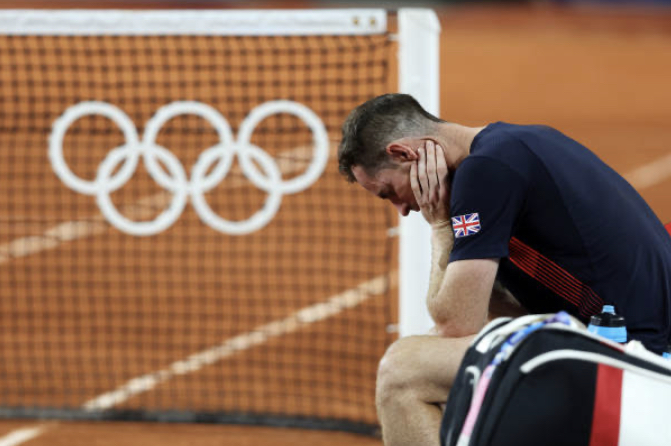
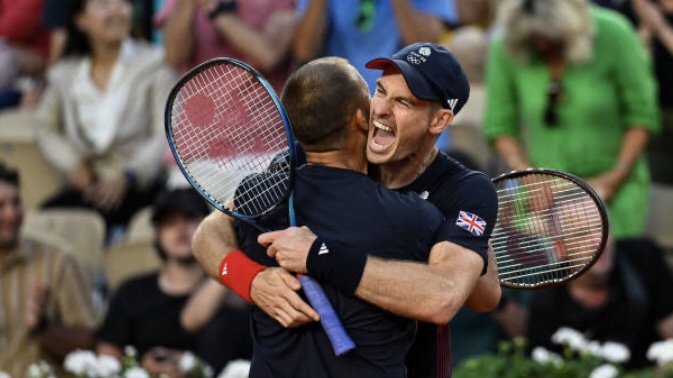




 Popcorn Tennis