Australian Open Awards

By Owais Majid

The Australian Open has come and gone. It had us picking our jaws up off the floor on countless occasions, it had us destroying our sleep patterns the way Denis Shapovalov destroys his rackets and it delivered narratives at every turn. What better way of recapping it all than a look at the best and worst of the two weeks that were? So without further ado, grab your popcorn and settle in for the definitive end of tournament awards ceremony, Australian Open edition.   

Feel good story of the tournament: Alizé Cornet’s run to the quarter finals.

Going into the tournament, there was little to no attention on Alizé Cornet. If her name was mentioned at all before the tournament, it was that she would be the second round opponent of one of the favourites, Garbiñe Muguruza. Cornet beat Muguruza in emphatic fashion before backing that up with another solid victory over Tamara Zidansek in three sets. 

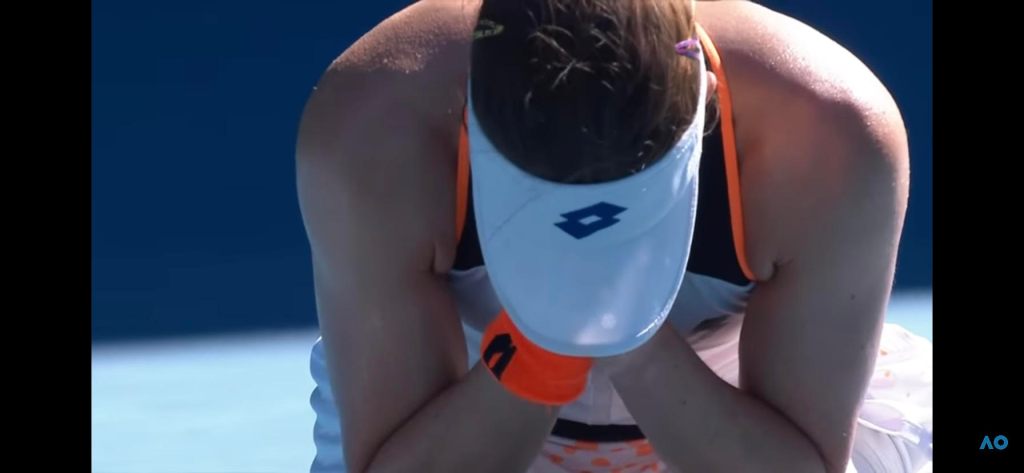
She then came through a gruelling encounter against Simona Halep in which both women were clearly finding the heat incredibly difficult to deal with. In her on court interview after that match, Cornet was understandably very emotional at having reached the quarter finals of a grand slam for the first time after 16 years of trying. She delivered one of the all time on court interviews as she and Jelena Dokic had an exchange which had Dokic and everyone else watching wiping their eyes. The goodwill towards her was already at a high and only increased. Although she went on to lose to Danielle Collins in the quarterfinals, Cornet left Melbourne with her head held high and having captured the hearts of many around the world.

All the quarterfinal emotions. Cornet celebrates after beating Halep in a war of attrition in the heat. Screenshot: Australian Open YouTube Channel

Breakthrough star: Maxime Cressy

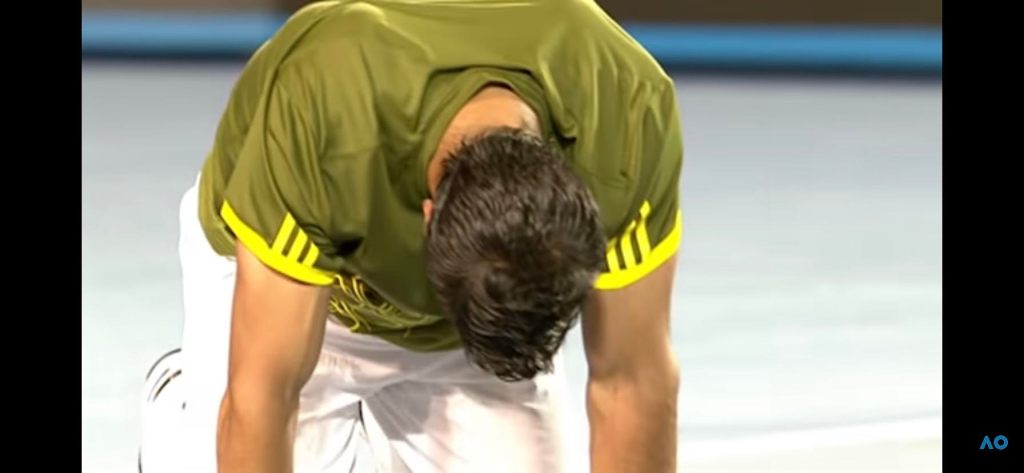
Very few people were familiar with the name Maxime Cressy prior to this year but a month later he is almost a household name on the ATP Tour. After being edged out in the Melbourne final by Rafael Nadal, Cressy would have had people talking about him anyway, but his throwback serve and volley style meant that the spotlight on him was even brighter. 

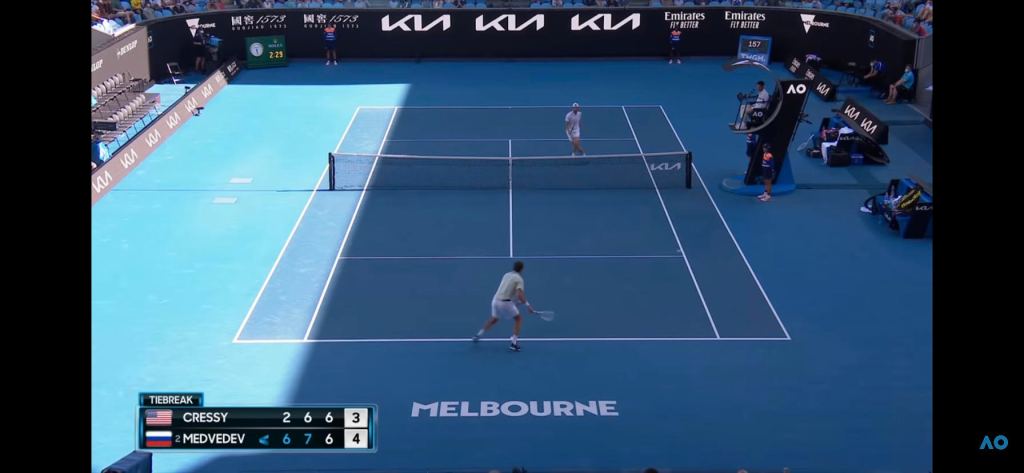
With eyes on him at the start of the tournament, Cressy impressed by scoring a five-set victory over John Isner in the first round. He got as far as the last sixteen where he gave Daniil Medvedev all sorts of problems. He eventually lost out in four sets, in a match that had Medvedev visibly and audibly rattled by Cressy’s play style. That performance came as a bit of a surprise to all but Cressy himself, who aspires to become a world number one someday. He makes no attempt at hiding his own belief in his ability and it will be intriguing to see how Cressy gets on through the rest of the year, and if his game will allow him to excel.

Maxime Cressy puts away a volley to retrieve a crucial mini-break against Medvedev. Screenshot: Australian Open YouTube Channel

Disappointment of the tournament: Alexander Zverev.

Many people had earmarked Alexander Zverev as being the man who would bring an end to Rafael Nadal’s run at this year’s Australian Open (a take that aged like milk), but Zverev wasn’t even able to make it that far. Few could have seen his defeat to Denis Shapovalov in the round of 16 coming. Although Shapovalov is in his own right a solid player, Zverev was the heavy favourite going into their match due to the results he had put together in 2021. Whilst he has suffered unexpected defeats at grand slam events before, the tennis he had displayed at the back end of last year made this defeat especially disappointing. After winning gold at the Olympics and the year-end ATP finals, Zverev was regarded as one of the favourites for the tournament. As a matter of fact, he declared himself part of a new Big Three together with Medvedev and Djokovic (another take which hasn’t aged particularly well). Zverev was tipped to do so well here but once again, he failed to impress at a grand slam. A top-ten scalp at a major still eludes Zverev and he has only been successful against a top-20 opponent on four occasions. For someone who has done so well on the tour, this is hugely underwhelming. Thus, it’s difficult for me to look past Zverev as the disappointment of the tournament.

Surprise package of the tournament: Danielle Collins

Having only recently come back from a lengthy lay off due to having endometriosis surgery, few people were talking about Danielle Collins in any capacity going into the Australian Open. The fact that she was in the same half as Garbiñe Muguruza, Simona Halep and Iga Świątek meant that almost nobody predicted her to make a deep run here. Therefore her run to the final came as a major shock.  The tennis she was able to produce, beating one of the upcoming stars in Clara Tauson, Elise Mertens, an inspired Alizé Cornet and Iga Świątek along the way was nothing short of miraculous. That run of results would have been a seismic achievement under any circumstances, but given the severe nature of her surgery the magnitude of it is even greater. Even though she eventually came up short against Ash Barty in the final, she gave the champion a greater test than any of her previous opponents. 

Collins’ celebration after her semifinal win over Świątek was telling — it was the biggest victory of her life, and her reaction was businesslike. More work to do, she might as well have been saying. Screenshot: Australian Open YouTube Channel

Collins is one of those players who appears to fly permanently under the radar, however this run may prompt people to view her through a different lens going forward. Now a two-time grand slam semifinalist, she has proven that the initial run at the U.S. Open wasn’t just a fluke occurrence and she will fancy her chances for the rest of the year.  

Match of the tournament: Medvedev vs. Nadal

There’s absolutely no competition here. Let alone match of the tournament, Rafael Nadal vs. Daniil Medvedev will go down as one of the all time great grand slam finals. Rather than indulge you too much with my thoughts here, I’ll direct you towards the outstanding article Owen wrote at the conclusion of the match and to the equally excellent piece Scott produced discussing the championship points. There were plenty of other matches in this tournament which would have been genuine contenders in any other grand slam, but this one stands head, shoulders and entire body above everything that came before it. It’s a match we’ll talk about for years and probably decades to come.

The Australian Open has certainly got the tennis year off to a great start. Here’s hoping everything that follows will be similarly good.

Daniil Medvedev: Why The Kid No Longer Dreams

By Owais Majid

As journalists packed into Daniil Medvedev’s press conference after he suffered a heartbreaking loss at the hands of Rafael Nadal, they would probably have prepared questions to the effect of “What went wrong today?”, “What positives can you take from the match?” and other familiar inquiries that ostensibly follow a grand slam final loss. This was largely made redundant by what followed after the first question that was posed to Medvedev. 

Medvedev responded to a fairly standard question about how he and his coach analysed the match, by politely disregarding it before launching into a 4 minute monologue which contained the poignant words “Today that kid stopped dreaming.” But Medvedev wasn’t referring to his grand slam dream; he’s already won one of those. He wasn’t referring to his Australian Open dream; as Nadal himself remarked afterwards, he will almost certainly win multiple Australian Opens in his career. In fact, Medvedev made a point of not specifying what the dream was, but it was apparent to all that he was referring to the Australian crowds treatment of him. 

It’s fair to say that Medvedev has had his ups and downs with tennis crowds over the years. He has frustrated, amused and endeared himself to the public in equal measure but this tournament felt different. Even aside from the final, Medvedev wasn’t received particularly well. 

As was expected, he was the pantomime villain when he faced local boy Nick Kyrgios on the John Kane arena. He was the heavy favourite in every match up until the semifinals so the crowd – again understandably – were rooting for the underdog. When he faced Stefanos Tsitsipas in the semifinal the crowd was largely against him due to the substantial Greek contingent in Melbourne and on Sunday, almost all of the 11000 in attendance were supporting Nadal. 

I’d venture that Medvedev, a pretty self-aware person, would have completely understood all of this. However the packed Rod Laver arena may have overstepped the line on Sunday. 

It’s difficult to imagine how dispiriting it must be to receive no reaction when you do something spectacular but to get tumultuous cheers from thousands of fans when you make an error. That’s something the vast majority of us cannot begin to fathom but it was the reality for Medvedev. To compound what must already have been a pretty jarring experience, the climax of the match was arguably even more disappointed than what had come before it. After 5 and a half hours of providing entertainment that nobody is likely to forget for a very long time, the least Medvedev deserved was some appreciation, be it even a mere round of applause. Instead boos once more rang out and it baffles the mind as to why. Although it cannot have been pleasant, he may have been able to compartmentalise the manner in which the crowd acted during the match. 

The New York crowd at the 2019 US Open epitomised the perfect villain/fans relationship, and Medvedev would have been hoping for – maybe even expecting – something similar here. During his third round victory over Feliciano Lopez, it felt the like entire stadium turned on Medvedev after he had an unsavoury interaction with a ball boy. That this noise further intensified after the now famous “When you sleep at night, know that I won because of you” speech that Medvedev delivered in such charismatic fashion afterwards. By the end of that tournament however, the crowd had warmed to Medvedev to the point he was given as big a cheer as that which Nadal had received. That crowd recognised the role Medvedev was playing. They embraced him and he embraced them and it made for amazing tennis theatre. 

This, for me, was what Medvedev imagined would happen at the end of the battle with Nadal. In Australia though, the appreciation never came and this is what I believe saddened Medvedev deeply. As alluded to earlier, it’s near impossible for you or I to imagine the mental suffering such little adulation after performing such wonders can have. Purely on a human level, wouldn’t it be all of our dreams in some capacity at least, if any of us were good enough to perform our art in front of thousands, to be receive a standing ovation or a tumult of cheers? The distinct lack of this must have been so incredibly heartbreaking for Medvedev that it elicited the speech at the start of his press conference. Throughout the 12 minute English segment, he implicitly referenced how much he enjoyed being noticed, and inversely how much of a negative effect it had on him whenever he wasn’t and Sunday was just the culmination of all of this. 

Medvedev made another interesting point during his monologue about how the tennis world changed their tune. Speaking about the next gen, he said “There were talks like people saying we really want the young generation to go for it to be better and stronger and I was like pumped up. Well, I guess these people were lying because every time I stepped onto the court I really didn’t see many people who wanted me to win.” This made me think of another glaring contradiction many of us are guilty of. Large sections of both the media and wider public have bemoaned the lack of colourful characters on the circuit. For all their qualities, the impeccably behaved Federer and Nadal don’t provide the agro, the theatre that sport requires to attract greater audience. Once somebody like Medvedev comes along and provides that in droves, his behaviour is scrutinised to within an inch of his life and he is criticised to no end. By his own admission, some of his actions have been deplorable but Medvedev has on countless occasions acknowledged his flaws and vowed to improve. You’d think that all of the meme-able content he has given us over the years and all of the superb one-liners would result in more appreciation of him but alas, this hasn’t yet transpired.  

I sincerely hope that in the cold light of day, when he has had time to reflect, Medvedev’s view will change. Players often make irrational statements immediately after they have just experienced such an emotional rollercoaster of a match. In weeks to come, the despair may no longer be as severe as it is at the moment and we may once more see the Daniil Medvedev we’ve all become accustomed to. Crowds around the world will eventually warm to him, he’s too witty, too smart and too entertaining for them not to. Just as the New York crowd eventually fell in love with him in 2019, there is absolutely no reason why this should not be the case everywhere else.  He may be the black sheep at the moment, derailing the familiarity of the big three, but when they are gone and he can step out for their shadow, the sun will shine on the charismatic character the sport needs.

The kid needn’t stop dreaming just yet.

The Dream Is Dead?: Daniil Medvedev shares how he’s feeling in the post-match press-conference following his loss in the Australian Open final.

Baseline Tennis: The Unpredictability of Daniil Medvedev’s Serve

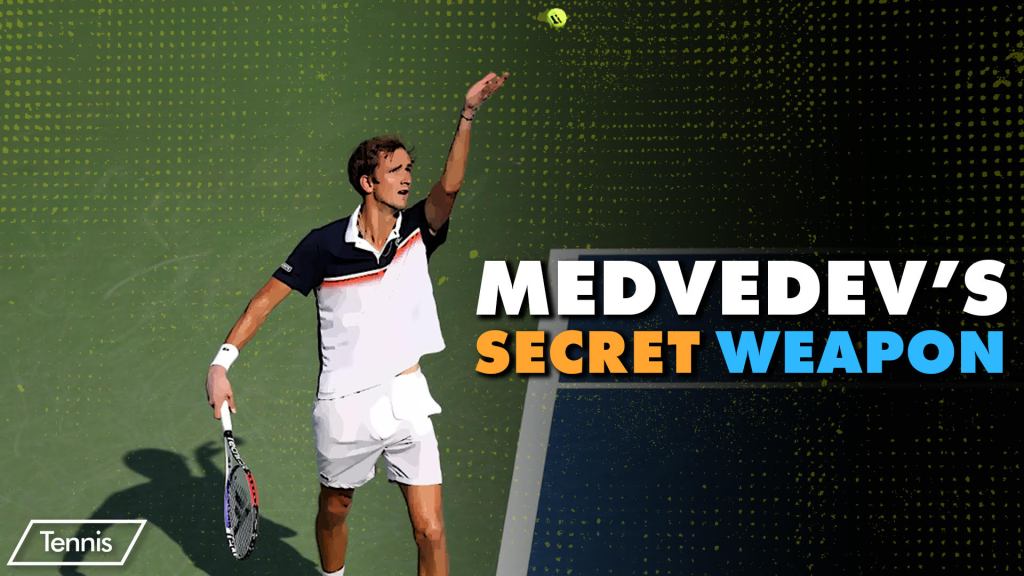
Daniil Medvedev is a huge server, but his serve is made even tougher by his willingness to go for powerful second serves. Not only that, but his toss is unreadable, and in a different way from Roger Federer’s — Medvedev’s serve direction seemingly has little to no correlation with where he tosses the ball. Rafa managed to break him seven times in five sets, but many other opponents have and will struggle more.

Watch until the end for a Popcorn Tennis promo (screams excitedly)! Watch at the clip below or on YouTube by following this link.

Tennis Origin Story #17: Siddhant Guru

By Siddhant Guru

Year 2007. I was only 8 years old then. Naturally, I don’t remember much of what I did at that age but rather surprisingly, one memory has always stuck with me.

In India, the summer season is terribly hot and humid, especially in May and early June. Starting from late April, we used to get almost two months of summer holidays in schools. The summers, apart from the delicious mangoes, are awful. It’s sweltering, you get sweaty in minutes and going out in the midday sun is a strict no-no. As a child, I was instilled with the belief that whatever my parents said was the Gospel. One of those gospels included, “Don’t go out during the afternoon. You will catch a heatstroke.” Considering mid-40 degree temperatures (Celsius! not Fahrenheit, you Americans!), it was the right advice. However, little seven-year-old me obviously didn’t have the mental capacity to understand that. So, what followed was me grumbling and unhappily sitting inside the house during the afternoons. I would lazily switch channels on TV to pass the time.

As I was switching channels one evening, I stumbled upon one match. Two players were hitting a ball over a net. I knew this was what they called “tennis”. My dad used to sometimes watch this weird sport. But I remember when my Dad used to watch, it was always played on a green surface. Yet here it was being played on a red one. Naturally intrigued, I kept watching it, not really understanding much, but I was surprisingly drawn towards it. Part of that was because the two players looked and played so differently. One was a lefty. The other was a righty. One had huge muscles swinging hard at the ball, the other kept moving silently across the court – every shot that he hit was visually different from the previous. One wore a sleeveless shirt with pirate pants and a bandana. The other wore half sleeved shirts and shorts.

As my intrigue grew about this weird sport, my mom called me out, asking me to go to a nearby store to get some grocery items. I was obviously unhappy but like I said, Mom’s words are the gospel. Just before I left for the store, I checked the score. I vividly remember that it was the left handed guy serving and the score was 40-40. 10 minutes later, I returned from the store and immediately went to watch the match again. The left handed guy was still serving. The score was still 40-40.

I don’t remember anything else about that match. Fast forward, one month later, I once again saw the same two players playing, this time on a green surface. As my dad also watched with me, I immediately asked him, “Who are these players? What is this”? His reply? “This is Wimbledon. The most important tennis tournament in the world.” He pointed out the right handed player and said, “That is Roger Federer. The best player in the world.”

One year later, the same two players again played on the same green surface. This time, I was a bit older and knew a little bit about tennis. I also knew that the two players were Federer and Nadal. Wimbledon final. 2008. My dad and I sat in front of the TV. Rafa takes the first two sets. Then the weather intervenes and the players are forced off-court. I went to sleep at that time while my dad continued watching. The next morning, I woke up and immediately asked my dad, “Who won?” His reply, “Nadal won. That was the best tennis match I have ever watched.”

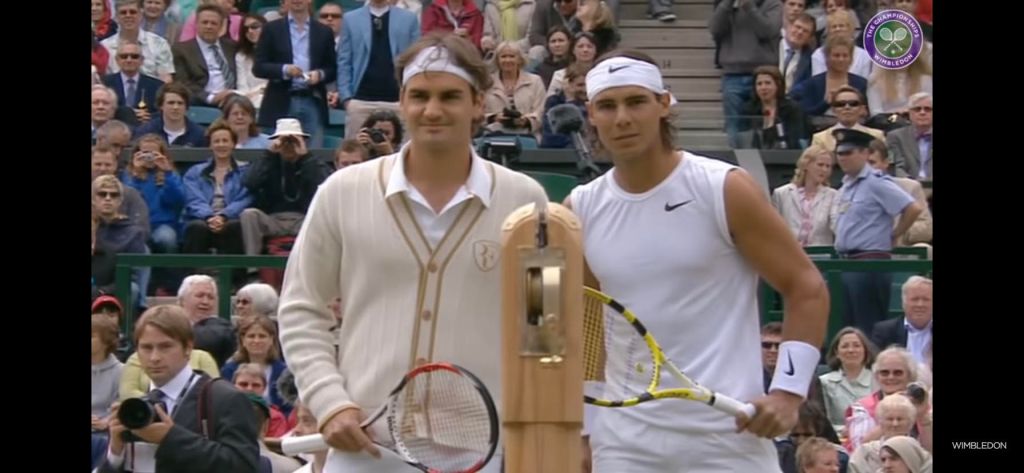
Before the 2008 Wimbledon final. Screenshot: Wimbledon YouTube Channel

My memories after that are hazy. I remember seeing Federer win the French Open in 2009 and Wimbledon in 2009. My interest in tennis dwindled in the early-mid 2010s, particularly because different TV channels had rights to different Grand Slams and not all of them were available at home.

I did watch some Wimbledon finals like 2012, 2014, 2015 in those days but nothing much apart from that. In 2017, Federer came back from a six month layoff. I religiously followed the 2017 Australian Open, probably the first Grand Slam event I followed closely in years. I can’t complain about what happened. It was the fuel for my renewed interest in this sport and now I closely follow pretty much every big tournament.

P.S. Even to this day when my mom sees me watching tennis, she invariably mentions, “didn’t Nadal beat Federer that one time?” Of course, Nadal has beaten Federer 24 times. My mom only knows about Wimbledon 2008.

Australian Open Men’s Singles Final: A Personal Reflection

By Nick Carter

On January 29th 2022, it was ten years since one of the best tennis matches I have ever seen. I don’t know if it is the best I have ever seen, that is something I’m still reflecting on. However, it is a match that will always stay with me. On the morning of Sunday January 29th 2012, a 17-year-old British A-Level student woke up, excited to watch the tennis. He’d missed the Djokovic vs Murray epic the morning before due to having a driving lesson, but by and large he’d been catching the main coverage of the tournament on Eurosport UK before revising for his exams. He had very much enjoyed seeing Victoria Azarenka winning her first major the day before. Now it was time for the best two male players in the world to do battle, and he would be watching.

If you hadn’t guessed yet, I was that 17-year-old. What ensued was pure tennis magic for me. I had never seen a contest like this before. Both men were hitting the ball so hard, for so long, and were able to counter each other. Either man could win if a rally became extended. It was a pure, physical battle and I loved it. I didn’t notice how long it lasted, and I didn’t care. I just wanted it to keep going, marvelling that these two were performing so well despite being on court for so long.

At the time, I was a die-hard Federer fan. I still am, but I have learned to respect his rivals a lot more in the last ten years. As a result, I was supporting Djokovic. As far as I was concerned, Nadal was the biggest threat to Federer’s GOAT status so Djokovic was the preferable option. How things have changed since. Nevertheless, when Nadal suddenly won the fourth set (and it seemed sudden to me in that moment), and the fifth looked to be close I cared less. I would still have preferred Djokovic to win, but if Nadal had won that contest, I actually wouldn’t have minded by the end. He would have earned it. Nevertheless, when Djokovic put away that winner from mid-court off a tired Nadal return, I was very pleased. His celebration encapsulated how much of a physical battle this victory was for him.

In the years since, I have always had this match as the standard by which a major final should be measured. I was still a young tennis fan, and I have grown to appreciate finals for what they are. One of my other favourites, Djokovic vs Murray at Wimbledon 2013, was over in straight sets. But still, when I think of major finals, I think of this one. Whenever Djokovic and Nadal meet again, this is the match I think of and see as the template for that contest. This is despite the fact that I don’t think they’ve played such a physical contest since.

I hadn’t rewatched the match in full until now. I’ve rewatched clips, but in the last ten years I have preferred to watch live tennis. I really struggle with being immersed in a contest when I know the outcome. The other issue is that since 2012 I have been to University and I now work a full time 9-5 job, which means I struggle to find the time to watch a 6-hour match. Given the milestone period of ten years though, I felt I had to try. So, here are my thoughts on the match as a tennis fan now, as a 27-year-old who has watched every major held since that match. 

The match is a physical contest, but what made it so long wasn’t the rally length, although it did make a difference. It was the time both players were taking between points. I remember noticing this back in 2012. For me though, this wasn’t irritating, but helped build the tension. No game was an easy hold, you got the sense the momentum could swing at any moment.

For much of the match, the momentum was with Djokovic. Nadal started better, and deserved that first set, but by the end Djokovic was coming back at him. It reminded me a little of how the first set of their Roland Garros semi-final of 2021 played out. The second set in 2012 was more tightly contested, but was the inverse result, with Djokovic deserving the set but Nadal coming back at him only to find something out of nowhere to take it. The other big difference was that both players were more nervous the first set, whilst by this point both were going for it. It was more like the match I remembered, both players counter-punching and neutralising each other.

The third set was the least interesting. It was clear Djokovic was in the ascendency, and although Nadal came out swinging in the fourth there was a sense the Serb would get it done in four. He came close to doing it, only for Nadal to produce clutch, big hitting tennis at 3-4, 0-40 down. The fourth set deserved a tie-break, and Nadal fought his way back into the match. Even back in 2012, I thought this match deserved to go to a fifth, especially once the decider started.

The fifth set is what really sticks in my memory, as somehow these two physically exhausted men (particularly Djokovic) were still able to run so hard and hit so big. This still stuck with me. What interests me watching it back is the amount of unforced errors. I remembered the long, closely contested rallies but what I found was so many of them were ended by one of the players breaking down. They were either forced to by sheer weight of shot or the ball being just that bit out of reach, but still hit 140 unforced errors between them. Given there were 369 points played, that’s 37.9% of the exchanges ending with an unforced error. Whilst most ended with a player actively winning a point, there’s still enough unforced errors to be noticeable. However, it dawned on me that errors require context. A player making errors could be misfiring or overhitting, or it could be because they are being pushed to the limit of what can be achieved with a tennis racquet and ball. I felt that it was the latter in this case. It is small details like this that I picked up on when rewatching, but my overall impression of the match remained much the same. I was perhaps less enthusiastic after, but I was watching more with my head and less with my heart this time.

Djokovic celebrates. Screenshot: Australian Open YouTube Channel

I really enjoyed the rewatch. It was still an epic contest, the big moments still got the same reactions. To me, this is a contest of baseline tennis at its very best, and I love a good rally from the back of the court. What will always stand out to me is the purity of the contest, of both men throwing everything they had at each other. If I’m honest, I can’t think of any match since where I have seen this play out in such an exciting way. I don’t know if I watched it live now whether it would stick with me in the same way as it did when I was 17, but I know a great match when I see one. For me, whilst Federer might be my favourite tennis player, Djokovic vs Nadal is my favourite tennis rivalry.

Why Tennis Needs Silence

By André Rolemberg

Whether you watch it on tv, on live, or at your local club, tennis has a unique quality among sports: it needs silence.

If you play the sport, you also notice it for yourself that any noise can break your flow, disrupt your momentum, make you downright pissed off.

Why?

Every athlete needs focus to perform. Most athletes have the super-human ability to shut off any influence from the outside world, as if nothing else existed but themselves and the game being played. 

Even tennis players have that ability. Novak Djokovic spoke about the ability to cut out the crowd chanting his opponent’s name, and even magically making it sound like they were saying his instead. Djokovic is one of the most focused players ever to walk on a tennis court.

But noise still sucks. Somehow, it still messes everything up. So, if every sport needs a state of absolute focus to be performed at the highest of levels, why do tennis players need complete silence, to the point where it is a requirement if you want to watch a match live?

Here’s a few things I think could explain this rather uncommon need.

Rally structure

First of all, there is the way the rallies happen. In tennis, you are only allowed a single touch at the ball. The touch happens in a split second, meaning you cannot just land the ball on your racket and think about it: it must leave your racket nearly as soon as it touches it. 

This is true for doubles as well. There is no saving grace. You mess up, and that’s it for the point. No one will be there to save it. Unlike in volleyball, a sport with some similarities, where players can produce miraculous defense and turn into attack before it even crosses the net. Or a routine play turned into nightmare if a player fails to do the job right in the first two touches: a third can still keep the point alive.

In tennis, that single touch is what you have. What’s worse: it only guarantees your survival for a little longer.

You can successfully hit the ball back 40 times in a rally. If you miss on the 41st time, you lose the point. Hitting the ball back in is the bare minimum, the prerequisite to playing tennis. Hit the ball out, your efforts are often nil.

Scoring system

The scoring system in tennis is a work of art. It is divided in a few pieces that, grossly putting, are independent of each other.

You need to score sets to win a match. You need to score games to win a set. You need to score points to win a game. You need to keep the ball in play longer than your opponent to win a point.

Conversely, you can hit 50% more balls in than your opponent, and they still finish with more points. You may win more games in a match and your opponent still wins the match. You may win more points then your opponent, and still lose the match. You may do literally everything better than your opponent, albeit just marginally, and still lose the match.

Look at these numbers — brutal. And what is worse, you must win to advance. Tennis really can be an unforgiving sport.

This brings us to pressure points: the ones that close out the clusters of a game, a set, and a match.

When a point is worth more than others, to a point where all your work can turn out completely fruitless, nerves kick in. The absolute need for precision and focus become the ultimate truth. There are no second chances. Or, at least, not after you hit your first serve. 

Players need silence, because one single point gone the wrong way and it cascades down into catastrophe. A lapse in concentration, a shanked forehand, a shaky second serve, and the momentum gets pulled hard towards the other side, as if all your teammates decided to drop the rope at the same time in a game of tug-of-war.

Speed of play

Several sports are quick paced, but there’s something to be said about the incredible speeds at which balls are thrown around on a tennis court. 

Not only does the ball go fast, but also racket heads move at super-human speed to generate the amounts of pace and spin we see coming from players.

With a tiny ball, rackets that have become bigger, but are still somewhat small especially if you consider that only the “sweet spot” is where you want to make contact with the ball, it makes sense to say that any distractions and it’s all over.

As previously stated, you misfire, you lose the point. Even on serve, if you lose your first serve, there goes what is possibly the biggest weapon in the game, and you have to make a choice between going for the second serve and risk losing the point with a double-fault, or playing more conservative and counting on winning the point in a rally which likely will start neutral.

When things happen fast, you have to move fast and think fast. When that happens, you cannot afford to get caught in any sort of distractions. Head in the game, or you’re off-tempo. 

Technique and physics

And just as things happen fast, you must be able to do things fast, but also well. Tennis technique is very precise and also does not allow much room for sloppiness and error.

Moving well means reading the trajectory of the ball, judging the distance from your body to the contact point, placing your legs in the optimal position for optimal balance, swinging with the right distance from the racket head to your body, applying the right amount of spin or “feeling” the right trajectory of a flatter shot or a slice.

All of this happens in a fraction of a second, but obviously no one is truly thinking about these things as a step-by-step guideline when playing. It happens with muscle memory and proprioception, which is basically thinking with your body.

But, just as you can lose your train of thought if someone interrupts you mid-sentence, you can lose your balance and spatial perception if something significantly disturbs the environment you’re in.

Some sports have a higher tolerance to this. Think of soccer, basketball, hockey. They will stop at almost nothing short of a streaker or something that physically interrupts play, like an object thrown on the field/court/ice (and even still, hockey players can even play for a few seconds without a stick that has been broken, and still lies around during play.)

Tennis does not tolerate much at all. Camera flashes, people moving, a whisper too loud between people or from commentators sitting courtside. 

Any small disturbance jeopardizes the outcome of a point. It could be a nuisance at 0–0 in the second game of the first set, on serve. It could be 30-all at 11–11 in the fifth set of a Wimbledon final.

The importance of a crowd

Should crowds just shut up, then?

Absolutely not. Players have *some* tolerance to a little bit of noise, and can play through “ooohh’s” and “ahhh!” sometimes. Murray did that on match point against Djokovic at his second Wimbledon final, and won. Who could blame the British crowd? It was a historical moment. Even I, who’s never been to Great Britain, felt the magic energy.

So crowds have space, and can turn things around. Think of Leylah Annie Fernandez in her US Open matches. Think of the electric atmosphere during Tiafoe-Sinner in Vienna last year (2021). Players can work the crowds. They can draw energy and adrenaline from them.

Crowds matter. 

The point is, you want to be involved in the game, you want to be a part of it. What you don’t want to be is the one who breaks the flow, that swims against the current and consequently ruins everyone’s experience. Making noise at a bad time is like talking on the phone during a movie in the theatre. It doesn’t enhance the experience, it just makes you stick out like a sore thumb, and like such, anyone would want to get rid of the pain as soon as possible.

Make noise between points, scream your favourite player’s name, jump up and down.

But when the umpire says, “quiet, please”, then… Quiet. Please.

Rafael Nadal: Everything Moments

He’s a child but he looks ready to die for this.

His shorts long, his sleeves short, his hair a lengthy untamed mane that tangles across his head and is only held back from cascading his face by a bandana that sits atop his forehead.

He’s ran today with endless youth but by stepping up towards the court now, he stands on the precipice between realities, a border over which there will be no-coming back from if he were to manage to charter his way across it.

The ball is tossed up into a service motion on the baseline opposite, suspended in the air there only momentarily as though it’s aware of the significance of the point it’s about to birth and wants to mark the occasion.

Indeed, this is an everything moment.

The ball is finally struck from its perch high and rifled down fast and at an angle out wide, sending it scarpering desperately to avoid being blocked back.

He moves forwards into the return, his knees bent, his eyes trained, his feet following, pushing, his fingers curled around the racket handle with a grip that would soon cause blisters if he wasn’t careful – he should really consider plasters – and he plants himself steady into a forehand whipped around rotation that has already become something of a signature.

Hours and hours and hours spent, again and again and again, over and over and over. That had been what had got him here. It was a severe dedication to a craft that could guarantee only that his heart would never be far from another breakage. A payoff? Don’t be ridiculous. Do you know how many tennis players never make it? Get lost in the shuffle? Try and fail so immediately that it ends their careers before they’ve even got going?

Tennis owes no one anything, even those who love it.

The ball is manhandled cross-court, a safe shot, just get it back in play, that’s all he needs, just get this point going and don’t miss, good god, please don’t miss, let’s get this done, because on this surface he may look like a whirlwind, but inside he’s scared, he’s damn scared of missing this and crumbling to the dust beneath his feet as it all disappears from him.

His effort lands in easily, thank the heavens above, but a forehand reply is waiting and he needs to be ready so he’s already moving back across the court from his return ready, his mind charting all possibilities in single seconds. Back crosscourt again, down the line, drop shot from nowhere, accidental-mishit-that-somehow-clears-the-net?! It could be any and all but he just needs to be there, just let him be there, let this happen here and now, because this needs to be it, it needs to be.

But wait…

That forehand reply is going… It looks almost, almost, almost… Almost like it’s drifting long, wide, out-of-bounds, whatever it is? Could it, would it, please just let it…

Day-in, sunrise, plans with friends cancelled once more, courts swept, shoulders ache, ball hit and hit and hit, uncle muttering, lines cleaned, headband fixed, sweat drip and drip and drip, sunset, day-out, day-in, sunrise, plans with friends cancelled once more, courts swept, shoulders ache, ball hit and hit and hit, uncle muttering, lines cleaned, headband fixed, sweat drip and drip and drip, sunset, day-out, day-in, sunrise, plans with friends cancelled once more, courts swept, shoulders ache, ball hit and hit and hit, uncle muttering, lines cleaned, headband fixed, sweat drip and drip and drip, sunset, day-out… Childhood.

Please just let this be it.

And it is and his feet go beneath him as he falls back across a history that’s browned through with a reddish tinge and he lets himself really feel this, really claim this as his as he raises his arms from his body towards the sky above as though he’d climb on up there if he could. He closes his eyes to protect this moment, to really imprint it, and the expression on his face is one so purely innocent of anything other than a crazy kid-on-Christmas-morning wonderment. He’ll live this, take this for all of the happiness that it has because there are absolutely no certainties that he’ll ever make it back here again.

So much, so much yet to happen and so much, so much yet to come, this really just the starting gun of a race yet to be run, but if he could pause time at just this singular fraction of a second, just to treasure it and lock it away safe from judgment, he most desperately surely would.

There may indeed be no looking back now but Rafael Nadal’s never been the casting-backward-glances kinda’ kid.

18-years old.

1st major title.

2005 French Open Men’s Champion.

Match point played at 24:45

***

He’s a man and he looks ready to die for this.

His shorts short, his sleeves long, a bandana that sits across his forehead.

He’s ran and ran and ran and ran today with a youth that he no longer honestly has but by stepping up towards the court now, he stands on the precipice between realities, a border over which there will be no-coming back from if he were to manage to charter his way across it.

He readies himself on his baseline, his usual routine of fixing his hair that has long since thinned, falling under the intense pressure of exerting himself to his limits far too many times to count, stresses and wrinkles across his face a modern art exhibition demonstrating what happens to a person who just won’t stop even when everyone in the world tells them to.

He tosses the ball into the air above his head and he lets it remain up there for just a moment, lets it hover there unaware of the significance of the point it’s about to play a leading role in.

Indeed, this is an everything moment.

He finally strikes it from its perch high and rifles it down fast and at an angle down the middle, sending it scarpering desperately to try and force an error.

He stays where he’s at, his knees bent, his eyes trained, his feet following, pushing, his fingers curled around the racket handle with a grip that’s caused blisters so many that he wears plasters around each of them, war-wounds and battle scars, and he plants himself ready for response.

Hours and hours and hours spent, again and again and again, over and over and over. That had been what had helped him return to this stage. It was a severe dedication to a craft that could guarantee only that his heart would never be far from another breakage. A payoff? Don’t be ridiculous. Do you know how many tennis players suffer? Get lost in injuries? Try for a comeback but are damaged so greatly that it ends their careers before they’re ready for goodbye?

Tennis owes no one anything, even those who love it.

The ball is coming back to him into the mid-court and he’s ready with his forehand to whip around his head in a rotation that has long become his signature shot, ready to play it inside out aggressively but good god, please don’t let him miss, let’s get this done, because he may now look close to the finishing line but inside, he’s scared, he’s damn scared of missing this and crumbling to the concrete beneath his feet as it all disappears from him.

His shot lands in easily, thank the heavens above, but a defensive forehand reply is waiting and he needs to be ready so he’s already moving forwards into the net, his mind charting all possibilities in single seconds. Lob, down-the-line, drop-shot-from-nowhere, accidental-mishit-that-somehow-clears-the-net?! It could be any and all but he just needs to be there, just let him be there, let this happen here and now, because this needs to be it, it needs to be because he’s exhausted.

Still not over…

One more shot to hit, a volleyed backhand directly down into the open court and surely that’s not coming back, surely after five hours that’s not coming back, surely after all of this nonsense that’s not coming back…

Day-in. Sunrise. Plans with friends and family cancelled once more. Courts swept. Shoulders ache and wrists break. Ball hit and hit and hit. Surgery tables. Needled injection. Pain and suffering. Wins and losses. Lines cleaned. Headband fixed. Sweat drips and drips and drips. Muscle tears. Tears cried. Sunset. Day-out. Day-in. Sunrise. Plans with friends and family cancelled once more. Courts swept. Shoulders ache and wrists break. Ball hit and hit and hit. Surgery tables. Needled injection. Pain and suffering. Wins and losses. Lines cleaned. Headband fixed. Sweat drips and drips and drips. Muscle tears. Tears cried. Sunset. Day-out. Day-in. Sunrise. Plans with friends and family cancelled once more. Courts swept. Shoulders ache and wrists break. Ball hit and hit and hit. Surgery tables. Needled injection. Pain and suffering. Wins and losses. Lines cleaned. Headband fixed. Sweat drips and drips and drips. Muscle tears. Tears cried. Sunset. Day-out… Professional player.

Please just let this be it…

And it is and his feet hold him steady across a history that’s browned through with a reddish tinge but now bizarrely blue with a hint of hard and he lets himself really feel this, really claim this as his as he raises his hands towards to his face and grins a smile that looks like it’ll never leave him, up towards his team as though he’d climb on up there right now to be with them if he could. For now though, he handshakes at the net and takes the applause with a celebration of the like many thought had long since gone, fist-pumping the air and falling to his knees, closing his eyes to protect this moment, to really imprint it, and the expression on his face is one so purely innocent of anything other than a crazy kid-on-Christmas-morning wonderment. He’ll live this, take this for all of the happiness that it has because there are absolutely no certainties that he’ll ever make it back here again.

So much, so much has happened and not all too much left to accomplish, an echoing memory of the starting gun of a race-turned-marathon-turned-endurance-test that is even now still being run, but if he could pause time at just this singular fraction of a second as he sat on top of the world, just to treasure it and lock it away safe from judgment, he most desperately surely would.

Perhaps he’ll spare a moment now to comprehend how far he’s come and through what he’s been to make it here. Just for this, perhaps Rafael Nadal will allow himself to be a casting-backwards-glances kinda’ guy.

35-years old.

21st major title.

2022 Australian Open Men’s Champion.

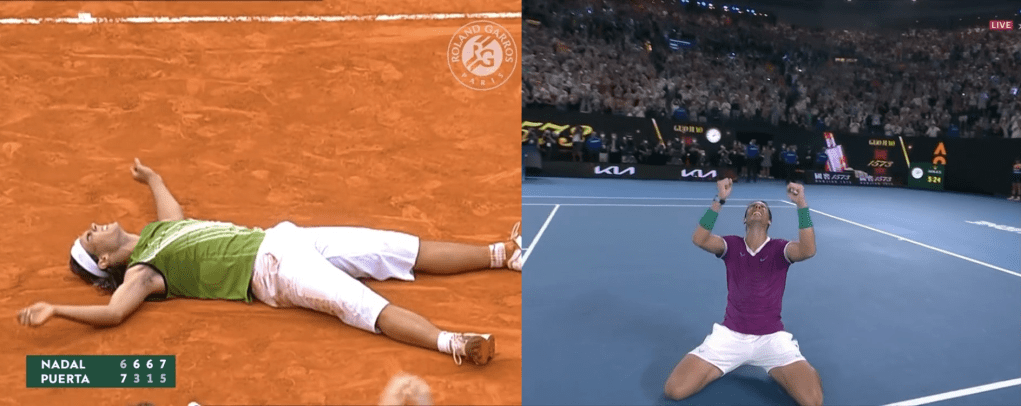
The 1st and the 21st: Rafael Nadal winning the French Open 2005 and the Australian Open 2022

Second to None

“Bad as you might be feeling now, it’s likely that you’ll never have as good a chance of winning the Australian Open as you do today.”

Toni Nadal to his nephew before the 2009 Australian Open final, Rafa

To fight, at its core, is to suffer. Often fruitlessly. It’s one of the easiest ways to get back into a tennis match in that wanting to win requires no technical skill, but it often does demand intense pain. Rafael Nadal knows this better than anyone. He has extended many matches by multiple hours only to lose them anyway. He has pulled off incredible escapes. But when Nadal blew a 5-3 lead in the second set tiebreak against Daniil Medvedev to go down two sets in the Australian Open final, it seemed that all the fight in the world wouldn’t have helped him. He was two hours into a physical match against a much younger opponent who was more in-form on hard court, to boot.

How do you explain the result we ended up getting, a backbreaking 2-6, 6-7 (5), 6-4, 6-4, 7-5 victory for Rafa? He is 35. At a gargantuan five hours and 24 minutes, this was the second-longest match of his professional career (and Nadal has played some marathons). It’s the longest match he’s ever played and ended up winning. Think about that — Nadal has been serving bigger and trying to end points more quickly in this phase of his career, yet he not only waded into the lava for a war of attrition, he came out on top. He wasn’t supposed to be able to do this anymore; he was getting tired after two quick sets against Matteo Berrettini! Yet in one of the bigger matches of his life, Nadal outlasted a younger, fitter opponent.

The absurdity doesn’t stop there. Nadal had not come back from two sets to love down since Wimbledon in 2007 — that’s almost fifteen years ago. Nadal fights like no one else, yes, but that spirit has tended to result more in epic, unique losses than comeback victories. He makes matches more thrilling, more close than you could ever expect, but he rarely actually wins them from a big deficit. Today, he pulled off a comeback from 2-6, 6-7 (5), 2-3, love-40 against the world number two and reigning U.S. Open champion. Good luck explaining that one to the grandkids. Or tennis analysts.

All in all, Toni turned out to be right. After winning that maiden title in 2009, Nadal fell short in his next four appearances in Australian Open finals. His win over Roger Federer thirteen years ago was a spectacle of shotmaking and incredible court coverage, of mental strength and endurance. And yet, I think today’s title was more improbable.

*****

Nadal’s run to the final had been odd. He played some great tennis, but his opponents never exactly rose to the occasion. Besides a lone break point (saved by an ace) early in the fifth set of his quarterfinal against Shapovalov, Nadal was never behind in a match. He was a relatively heavy underdog entering the final. I was excited to see Nadal get pushed into a corner, since that was what had been missing for me this tournament — the Spaniard had fired his trademark forehands, but hadn’t faced a meaningful enough deficit to have to fight very hard.

The tournament had already been a success for Nadal, but a final is a final, and no finals had been more hostile to him than Australian Open title matches. It didn’t take long for him to start facing the adversity I hoped his opponents would show him. Nadal lost the first set, and lost it in a way that made it seem like a Medvedev win was inevitable. Nadal fought for tough holds in his first two service games, but Medvedev then broke him at love twice in a row. The Russian was making almost all of his returns, running down Nadal’s forehands, and serving bombs. The Spaniard’s slices, once a useful change of pace in baseline rallies against Medvedev, were totally ineffective. That Nadal had ever been able to beat Medvedev felt like an alternate-universe memory.

When Nadal lost the second set despite having a handful of golden opportunities to win it — he had a 4-1 lead in the set, had set point on serve at 5-3, led the tiebreak 5-3, and generally failed to capitalize on Medvedev losing his first serve — the match really felt over. He had reversed some of the overwhelming momentum against him in the first set, but had blown a bunch of chances to even the match, which had now been going on for a physical two hours.

The narrative going into the match was that Nadal would have to win in three or four. He had been visibly tired in several of his matches. Medvedev, meanwhile, played for nearly five hours against Felix Auger-Aliassime in the quarterfinals and rebounded easily to tire out Stefanos Tsitsipas in the semis. Medvedev looked indefatigable. It seemed impossible that Nadal could play his game and win, all the more so from two sets down.

It was a given that the Spaniard would go down swinging, no matter the odds, but the defiance is always impressive. As Nadal vamos-ed his way through a few tough holds in the third set, I was shaking my head in admiration. He was screwed, clearly, but his play-every-point-like-it’s-your-last mentality was allowing him to stay in the moment and not lose hope by looking at the bigger picture. He broke Medvedev at 4-all with a stunning backhand pass and served the set out with four straight winners, celebrating with a prolonged roar at the crowd.

Nadal’s tactical acumen is sometimes buried underneath his spirit. The way the Spaniard played in the fourth set was practically incomparable to the first. Nadal ripped backhand winners down the line, methodically took out Medvedev’s legs with drop shots, and launched sustained rampages with his forehand. Nadal is resilient because of his competitive drive, yes, but his tactical mobility is also a big weapon. In the Roland-Garros semifinal last year, Djokovic was taking over the match with angled crosscourt forehands. In the third set, he won 16 of 17 points in which he was able to pull Nadal outside the doubles alley. Twice down a break in the set, Nadal changed his patterns to deny Djokovic the opportunity to hit that shot as much towards the end of the set, and wound up with a set point at 6-5 in a frame he had trailed in constantly. In this match, Nadal’s backhand down the line — a shot he typically hits centrally to provoke his opponents into hitting crosscourt to his forehand — may have been the shot of the match. He sprayed several clean winners into the corner. It’s not something he’s always comfortable doing, but he did it, and it worked. Nadal’s combination of will and willingness to change is a deadly one.

By the fifth set, Medvedev looked dead on his feet. He served well through much of the set, but early on, when rallies got going, he was almost immediately toast. At 2-all, 30-15, he hit a backhand into Nadal’s forehand that was reminiscent of something I (or Berrettini) would produce from that wing. Nadal annihilated it for a winner. The inevitable tension of a looming title at a stage so important to him complicated the set greatly, but Nadal was easily the better player. He probably should have won the fifth 6-2 or 6-3 instead of 7-5.

By far the most shocking part of this match, for me, was that Nadal seemed not to have a single physical dip in the last three sets. By all reasonable guesses, he would have been gassed to start the third set. Yet he dropped serve just twice in the final three sets. He cut low backhand slices crosscourt to stay in points that barely cleared the net, keeping him alive. As Medvedev got his quads massaged on changeovers, Nadal appeared to feel fine. A common joke regarding Nadal’s notoriously bad Australian Open luck in years past was that he had to make a deal with the devil to give him the extraordinary fitness required to win the title in 2009. Today, it was as if the devil allowed Nadal the use of his young legs one last time.

“He was, I think, stronger than me physically today.”

-Daniil Medvedev on Nadal after the match

*****

The last few years of the Big Three era have been fascinating to watch not just for the incredible standard of tennis, but for the new ways to mirror each other Djokovic and Nadal come up with. Last year, Djokovic took out Rafa at Roland-Garros in a draining semifinal. I didn’t think he had it in him after seven losses to the Spaniard on the Parisian dirt. When Djokovic should have had nothing left, he came back from two sets down against Tsitsipas in the final. Nadal entered this Australian Open without ideal preparation and a difficult draw in front of him. Though his expected quarterfinal opponent failed to materialize, Nadal beat three top-15 players. He was supposed to be physically lacking and played a match longer than any he had won before, and ended up bagging it. The greats continue to evolve, to improve, to win in new ways. The next chapter of the Djokovic-Nadal rivalry and GOAT race looks enticing in light of Nadal’s unexpected durability this tournament. If they’ve both won majors on unfavorable surfaces after beating top contenders in the last year, how long can they continue to dominate their home turf? Now that the finish line of 20 has been moved, how far will they push it? I can’t wait for them to duel for Roland-Garros.

*****

What will stick with me from this match is the mere fact that Nadal won it. At the start of the fifth set, I expected Medvedev to regroup and win. When Medvedev broke Nadal after being down 30-love to stay in the match, I thought he would run away with the momentum. This is the kind of match Nadal loses at the Australian Open! He comes back from a deficit, plays blinding tennis, then either falters at an inopportune moment or has the misfortune to watch his opponent play just a little bit better. It happened at the 2012 and 2017 Australian Open finals (down two sets to one, won the fourth, was up a break in the fifth, lost the match). When Nadal served for the final at 5-4 in the fifth and went up 30-love, he looked home free. Then he made a handful of unforced errors, including a double fault, and he looked primed for his most harrowing loss yet: he had levitated out of the jaws of defeat only to slip and fall as he went to climb to safe ground.

Left: Nadal after losing the 2012 Australian Open final. Right: Nadal after winning a similarly draining match in the 2022 final.

Even when Nadal had leads in the fifth set, there were times when I thought Medvedev would win. At 3-2, 40-15, Nadal had a forehand putaway, guessed the wrong side, and got dragged into a multi-deuce game in which he had to save three break points (all with unreturned sliders out wide, interestingly).

Nadal managed to avoid this fate. With Medvedev serving at 5-5, 30-15, he ran down a drop shot and passed the Russian with a crosscourt dink that barely snuck over the net. Had he lost that point, Medvedev probably would have held for 6-5, leaving Nadal’s chances in the mud. (Had Rafa held serve to survive, he’d have had to play a match tiebreak. He hasn’t won a tiebreak against a top ten player for over two years.) He didn’t avoid another hellish loss by much, but he did do it.

*****

Before this tournament, I posited that for Nadal, the joy of tennis is in the fight, not the results. That in a way, he’s okay with losing if he gets to engage in an almighty struggle. I wondered if that was the case for this match, though. Yes, much of the last four sets were fiercely competitive, just the kind of war Nadal has built a career by waging, but I think this one was different. After Nadal placed his final volley out of Medvedev’s reach but far enough inside the lines there was no way he could miss it, he dropped his racket and covered his face with his hands. He beamed, and then he shook his head.

Disbelief. Screenshot: Australian Open YouTube Channel

Nadal has now won 21 majors, and he has celebrated 17 of them by falling to the ground in elation. Three of the times he didn’t were after straight-set drubbings of finals. Then there was this one. When Nadal falls to the ground, it strikes me as a brief afterlife to the intense spirit of a major final, the competitiveness requiring a couple seconds to exit his body. After this match, though, it left immediately (perhaps because Nadal had no remaining energy to keep it contained), leaving only joy and disbelief. I think he wanted to win another Australian Open, wanted it more than he’s wanted most anything else, even an intense battle. And he got it.

I wrote that in fighting hard and still losing, Nadal extracts a level of play from his opponent that transcends the sport and the result. The cruel paradox is that the pure theater comes at a price of brutal losses for the fighter; his pain is quite literally our gain. Today, for the first time in an Australian Open final since 2009, his opponent folded in the face of his spirit. Not completely — Medvedev made an impressive recovery after going down 3-2 in the fifth, his shots recovering some zip and length — but Nadal was rarely under scoreboard pressure in the fifth set. He broke down his opponent enough to put the match on his racket by the end, and when trying to serve it out for a second time, he did not miss.

*****

When Nadal’s contests take on a special kind of intensity, you can sometimes sense the spiritual weariness in his reactions. He still snarls, but his face becomes tinged with fatigue, or even fear. Nadal served for the match a second time and went up 30-love again. To lose the next point would have meant an instant flashback to getting broken two games earlier; to win the next point meant certain victory at 40-love. Nadal smashed an untouched serve out wide. The let radar beeped, but it went unnoticed all around (not a small detail!), scoring the serve as an ace. Nadal pumped his fist, but gently. He had a soft grimace on his face. The defiance was still there, as always, but it was like he was thinking oh, thank god, I can rest soon. The euphoric disbelief came one point later.

Can there be a better advertisement for never giving up in sport than the way Rafael Nadal won this match? There will be obstacles. Adversaries will perform well. You will hurt. You will suffer. Things will look bleak. But if you stick around, really stick around, good things will happen.

In the epic novel of the Big Three, Nadal has so often been second. He was #2 behind Federer for four years, then trailed Djokovic for much of the next decade. Nadal has been the chaser, the rival. He has amazed in his defeats and won many compelling matches as #2 in the world, but he has been second nonetheless. He might still be second when Djokovic takes the court again, who may well be hungrier than ever. But this is Rafa’s moment. He’s won 21 major titles. One more than Djokovic, one more than Federer. He has suffered for so many years in trying to fight past his rivals, his injuries, and himself at times. Nadal has overcome it all. He has been second for so long, and after yet another almighty effort, he is now first.

Thoughts On All the 2022 Australian Open Finals

By Damian Kust

Between Wednesday and Sunday of the second week of the Australian Open, a total of fifteen finals were contested. Eight of the fifteen were played on Rod Laver Arena, with both the boys’ and girls’ doubles getting the second biggest stadium at Melbourne Park, Margaret Court Arena. All but one of the six wheelchair finals were played on Court No. 8 as Australian hero Dylan Alcott got the chance to finish his career on RLA. Here are my thoughts on all of them, in chronological order.

Wednesday 

Wheelchair Women’s Doubles

Diede de Groot/Aniek van Koot – Yui Kamiji/Lucy Shuker 7-5 3-6 10-2

Started around 1:30 pm Melbourne time

Court No. 8

I had absolutely no idea what to expect coming into this one. I had watched some wheelchair matches in the past but I do believe they were exclusively singles and probably mostly men’s. Diede de Groot was a name I was very familiar with as she grabbed a singles Golden Slam last year, but without googling I wouldn’t even know which one of the Dutchwomen she was. I looked it up but only after a while, which was a conscious effort to stay unbiased in my understanding of the final.

About an hour into the match, I wasn’t surprised to learn that the best player on the court was in fact de Groot. There was a clear power difference between her and the other competitors, although her partner, Aniek van Koot, possesses a very pleasing forehand stroke as well, albeit a little loopier.

33% of the rallies in the final went over nine shots, which included a stunning 62-shot point in the middle of the second set. With very little netplay, it wasn’t quite like the doubles I’m used to, but still made for a very fun viewing experience. Yui Kamiji and Lucy Shuker took a rather defensive approach and almost made it work, blowing a 5-3 lead in the first set before ultimately taking it to a deciding tie-break. 

De Groot grabbed her 13th doubles Grand Slam title, 9th with van Koot (this is probably a good moment to remind you that wheelchair and quad doubles at Grand Slam events have four-team draws, so the first round is a semifinal). Her partner has been on the stage for a little longer and locked up her 20th. It was a pleasant way to kick off my quest and made me very excited for the upcoming women’s wheelchair singles final championship match, between, you guessed it, de Groot and van Koot.

de Groot and van Koot lift the trophy. Screenshot: Australian Open YouTube Channel

Wheelchair Men’s Doubles

Alfie Hewett/Gordon Reid – Gustavo Fernandez/Shingo Kunieda 6-2 4-6 10-7

Started about 4:05 pm Melbourne time

Court No. 8

When people ask me who the GOAT is, I always reply Shingo Kunieda (although the more realistic version of that answer is probably Esther Vergeer, but I didn’t get to watch her play and I’m recency biased). The Japanese legend hasn’t won a wheelchair doubles Grand Slam title in almost three years though and it’s largely due to what these two Brits have been doing.

This exact final happened four times in the past nine slams with Alfie Hewett and Gordon Reid prevailing every single time. In fact, the pair has won nine straight Grand Slam events and it was easy to see why. Compared to their opponents, they positioned themselves very aggressively on the court and even utilized the net quite a bit, though with mixed results (I think on a wheelchair it’s very tough to retreat to the baseline, you’re also really vulnerable to lobs). The big difference was the quality of returning, though. Hewett in particular would just tee off on the opponent’s second serves, many times going for the instant winner. 

The Brits did lose the plot for quite a bit, dropping the next four games from 4-2 up in the second. The deciding tie-break essentially consisted of two parts as it started raining and at 5-4 the players had to walk off the court. They came back an hour later with the top seeds winning 5 of the next 8 points to clinch their 9th straight Grand Slam championship. The match point was converted with yet another return winner from Hewett. As I knew that the singles final would feature him and Kunieda, I was very intrigued to see if that shot would make the same impact in the other discipline as well.

Quad Wheelchair Doubles

Andy Lapthorne/David Wagner – Sam Schroder/Niels Vink 2-6 6-4 10-7

Started about 7:10 pm Melbourne time

Court No. 8

I already stated that I had very little experience watching wheelchair doubles and I knew even less about quad, only having caught some Dylan Alcott matches in the past. I’ll get to the Australian in another section, but he didn’t make the championship match here, leaving me again with a completely clean slate of expectations regarding the players. 

Fundamentally, quad doubles turned out to be a very similar viewing experience to wheelchair, even though the disabilities are naturally completely different and some players need to have their rackets taped to their hands. After the first set, I reckoned this would be the most lopsided final of the day. Sam Schroder and Niels Vink hit plenty of winners, especially going down the middle and confusing their opponents as to who should try to get the ball back. The Dutchmen played their shots with a lot more pace and it helped them dominate the short rallies (19-9 in the opener).

The match soon started turning around, and not discounting Andy Lapthorne’s impact, there was one clear MVP in my book. 47-year-old David Wagner really had that veteran quality to him and shocked me multiple times with his reactions at the net. The American actually went there quite frequently and was astonishing both at anticipating the passing shots, but also killing the point with a drop volley, even with the ball at an unpleasant height below the net. How does he do that with his racket taped to his hand? 

The volleying sensei showed up again in the deciding tie-breaker, winning a crucial point with another quick and accurate reaction. On top of that, the Dutchmen seemed to have let the occasion get to them and committed some uncharacteristic unforced errors. The match ended with Sam Schroder missing a few shots that were simply intended to transfer the ball to the other side of the court, not even to achieve anything proactive. 

Thursday

Wheelchair Women’s Singles

Diede de Groot – Aniek van Koot 6-1 6-1

Started around 11 am Melbourne time

Court No. 8

Diede de Groot’s last singles loss at a Grand Slam came back at the 2020 French Open (to Momoko Ohtani) as the Dutchwoman reeled off four straight titles (and the Olympics in the meantime). Van Koot’s appearance in the singles final was a minor surprise, given the 31-year-old hadn’t done it in two years and eliminated de Groot’s biggest rival, Yui Kamiji. 

Having watched the doubles final on Wednesday where de Groot seemed like the best player on the court, I wasn’t surprised to see her put up a very comprehensive display and dominate the proceedings from the very beginning. Singles’ wheelchair matches turned out to be a lot more like the singles that we know, focused on 0-4 rallies and staying close to the baseline to take the ball early. Just 5% (5/97) of the points were extended over nine shots. 

What decided the match was de Groot’s incredible dominance in short rallies (48-26), which came as a result of both her aggressive shots, but also van Koot missing quite a bit of the first rally balls. The 25-year-old won her fifth consecutive Grand Slam singles title and from the two matches of her that I watched, she looks like she could stay very dominant in the sport for years to come. 

Wheelchair Men’s Singles

Shingo Kunieda – Alfie Hewett 7-5 3-6 6-2

Started around 12:35 pm Melbourne time

Court No. 8

Similar to the women’s wheelchair singles, this one was also far more about being the first to strike in the rally than what I saw during the doubles. I paid a lot of attention to Hewett’s returning strategy in his match against Gustavo Fernandez and Shingo Kunieda, but it turned out that in singles, the Japanese would be just as aggressive on that shot, taking it extremely early. The two combined for 27 return winners throughout the match. 

9% of the rallies went over nine shots (15/173) as both players were keen on looking for winners and easy ways to win the points. Perhaps it was due to the nature of moving on a wheelchair, but many of the strokes that ended the rallies seemed to be more about the wide angle rather than being deep into the court. Kunieda finished the match with 50 winners, Hewett not that far behind with 37.

So, how did Kunieda win his 26th Grand Slam singles title (and that’s despite never winning Wimbledon, which has only been organizing a men’s singles wheelchair event since 2016)? Hewett managed to level the match but boy did the Japanese step up for the deciding set. His backhand produced a number of breathtaking winners to go two breaks up and while in wheelchair tennis, serving isn’t nearly as important (with how these guys were returning it could even be viewed as a disadvantage, 13 breaks in the whole match), Kunieda served it out for his 11th Australian Open singles trophy (1st back in 2007). 

Quad Wheelchair Singles

Sam Schroder – Dylan Alcott 7-5 6-0

Rod Laver Arena

Started around 5 pm Melbourne time

One of the very rare occasions when the attention of the whole tennis world was at quad wheelchair tennis. Dylan Alcott announced before the Australian Open that he would be finishing his professional career with this event and for his last match ever, he got nominated to play at Rod Laver Arena (by the way, it would be very cool if other wheelchair finals were also on stadium courts, not necessarily the biggest one, but there’s no need to have them on Court No. 8).

This was a send-off for a very special player. A paralympic Gold medalist in both basketball and tennis, one of the three Golden Slam winners ever (along with Steffi Graf and the aforementioned Diede de Groot), winner of 15 out of 19 singles Majors he ever entered before this year. He also took seven consecutive Australian Open crowns, losing in Melbourne just once back in 2014. 

But it wasn’t meant to be this time around. I mentioned Sam Schroder’s lacking mental performance in the doubles’ final, but he was extremely sharp this time around, first not allowing Alcott to serve out the opening set and then saving four crucial breakpoints at 5-5.

The momentum shift was too much as the Dutchman reeled off nine games in a row to take the championship. He exacted revenge on his opponent, who defeated him in four of the five Major finals of 2021. Alcott’s all-court style clashed with the Dutchman’s more conservative approach but the shotmaking of Schroder, especially on the backhand side, was pretty incredible. 

Alcott and Schroder shake hands. Screenshot: Australian Open YouTube Channel

Friday

Mixed Doubles

Kristina Mladenovic/Ivan Dodig – Jaimee Fourlis/Jason Kubler 6-3 6-4

Rod Laver Arena

Started around 12:15 pm Melbourne time

We’re entering some more familiar territory as I usually try to watch at least the final of a mixed doubles Grand Slam. Naturally, I had seen the four competitors play before, so there weren’t going to be any surprises. Ivan Dodig and Kristina Mladenovic had won Majors in mixed doubles before, but it was their first event together. The partnership clicked though and you could see why as they expertly dealt with any situations at the net, always knowing how to find an answer.

Jaimee Fourlis and Jason Kubler (also playing with each other for the first time) saved seven match points on the way to the final (4 against Sam Stosur and Matthew Ebden, 2 vs Nina Stojanovic and Mate Pavic, 1 over Lucie Hradecka and Gonzalo Escobar). The Aussie pair were impossible to put away and made their first Grand Slam final.

While Fourlis never managed to hold serve in the entire match (0/4), she certainly wasn’t a weak link of the Aussie team. Her lobs dealt a lot of damage to Dodig and Mladenovic, often catching them off-guard. The Frenchwoman won the Australian Open eight years earlier with Daniel Nestor and was able to secure the championship again after a fantastic match point, where both she and Dodig showed some great reactions at the net.

Girls’ Doubles

Clervie Ngounoue/Diana Shnaider – Kayla Cross/Victoria Mboko 6-4 6-3

Margaret Court Arena

Started around 4:25 pm Melbourne time

I usually watch some of the juniors’ tournament at the slams, but in almost all the cases it’s singles, not doubles. I was unpleasantly surprised to discover that they just play a deciding point at deuce here, which feels a bit degrading in my opinion and while it shortens the matches a bit, is it really needed with junior events starting pretty much during the second week and so many courts at Melbourne Park available? I can live with it in mixed, since then it creates the rule that at deciding points you gotta serve at the opponent of your gender, which makes sense to me. 

The Canadians went up 4-2 in the opening set, showing some great instincts at the net. It was clear though that Ngounoue and Shnaider were much stronger physically and would be able to come out on top if the match drifted into a more baseline rallying style. That’s when Cross and Mboko started committing more errors on the first ball though, some untimely double faults also kicked in. The top seeds still had to play very well to take advantage and reeled off seven straight games to go up 6-4 3-0.

Cross and Mboko had a little fightback but despite pulling it back to 3-3, they were still overwhelmed in the short rallies (34-46), almost half of the opponents’ points (22) coming from their own unforced errors. The whole affair lasted just 56 minutes, which nicely ties it to my point about no real harm in playing regular deuce games here, especially as the third set would have been a deciding tie-break anyway. Diana Shnaider was the only player on the court who had already won a junior Grand Slam (at last year’s Wimbledon with Kristina Dmitruk). Ngounoue and Mboko’s performances are even more impressive when you consider that the two are just 15 years of age. 

Boys’ Doubles

Bruno Kuzuhara/Coleman Wong – Alex Michelsen/Adolfo Daniel Vallejo 6-3 7-6

Margaret Court Arena

Started around 5:50 pm Melbourne time

Despite the American-Paraguayan pair being taller and therefore having a lot more reach, it was Coleman Wong’s fantastic reactive volley (which just clipped the baseline) that gave the second seeds a 3-1 lead in the opening set. Deciding points were key again and while I don’t mind them in tour-level events, my view is that a Grand Slam final probably deserves better. Vallejo managed to fend off another break point chance at 2-5 down with a great lob, but Kuzuhara’s prowess at covering the net was enough to clinch the next one, a deciding point again, this time on their serve.

Kuzuhara pulled off an incredible sprint at 1-1 in the second set, having to be very careful not to bump into the ball boys after a net cord went really wide. Vallejo’s 2nd serve remained an issue as both Wong and Kuzuhara were capable of jumping onto it and taking control of the point. The second seeds seemed to be cruising towards the finish line but in a match pretty much resolved through deciding points until that game, Michelson and Vallejo managed to break Wong as the former landed a beautiful forehand return winner. 

It turned out they were only delaying the inevitable though. In the second set tie-break, Kuzuhara won a few key cross-court inside-out forehand rallies against Michelson’s backhand with Wong waiting for the right ball to poach at the net. The second seeds took it seven points to three. If I had to pick a player I was most excited to watch again it would be Kuzuhara, which left me thrilled for the boys’ singles final on Saturday, in which he’d also be participating. 

Saturday

Girls’ Singles

Petra Marcinko – Sofia Costoulas 7-5 6-1

Rod Laver Arena

Started around 12:10 pm Melbourne time

A battle of two 16-year-olds, which while a little high on the error count maintained some great quality. It was disappointing to see barely any crowd on Rod Laver Arena on Saturday afternoon, which would have made it an even bigger deal for the competitors. Petra Marcinko is the current Junior World No. 1 who already owns a win over Kurumi Nara, while Sofia Costoulas making the final was not a huge surprise either. The Belgian was seeded eighth for the tournament and made some impact in professional tennis already, reaching three ITF 15K finals last year.

Marcinko’s ability to step into the court and take the ball early saw her dominate the early proceedings, but Costoulas soon fought back to keep the opening set competitive. The easy power the World No. 1 generates was a bit too much though, especially combined with the Belgian’s wild forehand (15 unforced errors off that wing).

The top seed claimed the tight opening set and managed to take it up a notch in the remainder of the match, hitting 11 winners in seven games of set 2, the same amount as in the 12 games of the opener. In spite of her attacking style, Marcinko actually dominated the extended rallies section the most (18-6 in points that went over nine shots). 

Petra Marcinko during the post-match speech. Screenshot: Australian Open YouTube Channel

Boys’ Singles

Bruno Kuzuhara – Jakub Mensik 7-6 6-7 7-5

Rod Laver Arena

Started around 2 pm Melbourne time

What a final this was – 3 hours and 43 minutes of an absolutely grueling physical battle. Bruno Kuzuhara thrived in it with his court coverage and incredible fitness. Perhaps the year of difference between him and Jakub Mensik was very important here as the Czech started struggling with heavy cramping late in the deciding set. At 15-30 in the last game, Mensik won a 33-shot rally after which he fell on the ground and couldn’t even get up to serve for a while. The brilliant final ended with two consecutive double faults as he was too hurt to even put it into the court anymore. 

As it often happens in junior Grand Slams, it’s actually the runner-up that seems to be the more exciting prospect for the future. Mensik could fit in well with the trend of tall counterpunchers and has a great backhand that reminds me a bit of Hubert Hurkacz, his whole posture and movement in defense is quite similar to the Pole too. His serve can certainly be raised to a higher standard, he’s got the right physicality for this. 

Meanwhile, Kuzuhara is more or less developed as a player already and while his serve is surprisingly good for his height, it’s always going to be an uphill battle to some extent due to how tennis looks today. Nonetheless, a title like this is a great way to propel himself into the tough journey that the transition to the pros can turn out to be. After the heartbreaking finish, Mensik couldn’t even attend the trophy ceremony and was taken off the court in a wheelchair. 

Women’s Singles

Ashleigh Barty – Danielle Collins 6-3 7-6

Rod Laver Arena

Started around  7:45 pm Melbourne time

Ashleigh Barty went through the tournament in extremely dominant fashion, dropping just 21 games on the way to the final. The Australian had her issues with pressure at Melbourne Park in the past though, throwing in lackluster performances against Sofia Kenin (two years ago) and Karolina Muchova (one year ago). Despite the home crowd advantage, it had been easier for her to maintain focus at Roland Garros and Wimbledon, even during the finals. 

While the Australian started off the match in amazing fashion, mixing up spins and barely losing points on first serve, you could see some tension in how she was moving and hitting her forehand. Danielle Collins grew more confident as the 2nd set progressed and was hitting through Barty’s backhand slice with ease, utilizing her wrist action very well. She was the third player to break the Australian in 2022 as the World No. 1 earlier held 85 of her previous 86 service games.

But the difference was that Barty was able to recover this time, playing a lot more freely to get back from a 1-5 deficit in the second set. She then impressed with a clinical tie-break to clinch the championship, further solidifying her status as an all-time great. The US Open is now the only Grand Slam missing from her resume and she’s got a great chance to maintain the No. 1 position in the WTA rankings for a long while. 

Mens’ Doubles

Thanasi Kokkinakis/Nick Kyrgios – Matthew Ebden/Max Purcell 7-5 6-4

Rod Laver Arena

Started around 10:05 pm Melbourne time

Was that a great fortnight for doubles as a discipline? Never before this many people tuned into it, but in a way, the message that’s going out is that singles players with good chemistry can just smash their way through elite doubles pairs. Regardless of your perspective, Nick Kyrgios and Thanasi Kokkinakis played absolutely phenomenal tennis at Melbourne Park this year. 

The pair combined for 95 aces through six matches and only got broken six times, but what was most impressive was the set of opponents they managed to take out. Despite barely playing doubles in recent times, they eliminated seeds #1 (Nikola Mektic/Mate Pavic), #3 (Marcel Granollers/Horacio Zeballos), #6 (Tim Puetz/Michael Venus), and #15 (Ariel Behar/Gonzalo Escobar), feeding off the energy of the crowd. It was the first all-Australian men’s doubles final since the year 1980 at the Australian Open, although Kokkinakis and Kyrgios completely stole all the media attention. Matthew Ebden and Max Purcell also took out four seeded teams but were never going to be cheered for as much as their more famous colleagues.  

The championship match once again saw Kokkinakis and Kyrgios thrive on serve and while they only managed six aces this time around, only two of their games went to deuce as Ebden/Purcell weren’t able to create any break point opportunities. The former had some issues with his volleying, while Kokkinakis definitely made their lives harder with his whippy forehand passes, always managing to keep the ball low over the net. 

Two singlists coming out of nowhere to win a doubles Grand Slam is a story that hasn’t really happened in recent times, even pairs like Pospisil/Sock (Wimbledon 2014) had a lot more experience, while not necessarily with each other. 

Sunday

Women’s Doubles

Katerina Siniakova/Barbora Krejcikova – Anna Danilina/Beatriz Haddad Maia 6-7 6-4 6-4

Rod Laver Arena

Started around 3:10 pm Melbourne time

Top-seeded Katerina Siniakova and Barbora Krejcikova were massively favored to win this one, having already clinched three Grand Slam doubles titles together (French Open 2018, 2021, Wimbledon 2018). The Czechs faced Anna Danilina and Beatriz Haddad Maia, a new pairing who partnered for the very first time in Sydney prior to the Australian Open. 

The underdogs won that warm-up event, therefore arriving in the final unbeaten in nine matches to start the year. Danilina and Haddad Maia had to win the deciding set in four of their five clashes before the final at the Australian Open, impressing in a semifinal victory over 2nd seeded Shuko Aoyama/Ena Shibahara. Krejcikova and Siniakova were yet to drop a set.

Danilina and Haddad Maia definitely had no inferiority complex here and gave the three-time Grand Slam champions a very tough time. Especially the Brazilian held up beautifully from the ground in the opening set, coming up with a clutch backhand winner to avoid giving the Czechs a set point. The lower-ranked team opened up a 6-0 lead in the tie-break with Haddad Maia eventually closing it out with a brilliant second serve for 7-3.

The favorites were visibly tense but really cleaned up their game in the next two sets. It remained competitive (total points won just 110-107 for the Czechs), but were able to regain control by dominating their own service games. It wasn’t until 5-2 in the decider that they would get broken again. It wouldn’t matter in the grand scheme of things though with Krejcikova serving out the match after a hilarious moonballing rally that neither she nor Danilina had an idea to break away from, until the Kazakh misjudged a very high ball by the and let it clip the baseline.

Men’s Singles

Rafael Nadal 2-6 6-7 6-4 6-4 7-5

Rod Laver Arena

Started around 7:45 pm Melbourne time

That was something. History was made in Melbourne Park as the 35-year-old Rafael Nadal came back to the sport after having to finish his 2021 campaign in August. Struggling with a chronic foot injury, the Spaniard wasn’t even sure he was going to be able to continue his tennis journey. But not only did he get a Double Career Grand Slam at the Australian Open, he’s also now in the lead over Novak Djokovic and Roger Federer in Major titles (for the very first time). 

The expectations for the final were clear – the longer it goes, the more physical the rallies get, advantage Daniil Medvedev. That’s exactly what we got, but only for two sets and a half. Nadal did what he does best – fought like a lion and never gave up. Soon enough, in the fourth set, it turned out that it’s actually the Russian who’s got very little energy left. At one point, Medvedev was only scoring with big serves, nothing else. 

The fifth set turned out to be just pure madness. Medvedev regained some energy, was once again able to keep up with Nadal in the rallies and even break with the Spaniard serving for the match. But the soon-to-be 21-time Grand Slam champion wasn’t the weak version of himself from the opening sets anymore. His backhand down-the-line became a major weapon and with well-executed drop shots, he was able to keep tiring Medvedev and move him all over the court. 

What at one point looked like an inevitable straight-set loss, turned out to be perhaps his greatest ever win. Not in terms of the playing quality, but the sheer unbelievability of the fact he was even in the final to begin with, then coming back from two sets to love down for the first time in fourteen years. A historic day that we’ll be talking about for years to come. 

Nadal smiles in disbelief. Screenshot: Australian Open YouTube Channel

Wrapping up

The best final of the bunch? One of the ones in contention is surely Bruno Kuzuhara beating Jakub Mensik in the boys’ singles, outstanding physical effort from both and a heartbreaking finish when the Czech simply couldn’t continue. The obvious answer is Rafael Nadal over Daniil Medvedev, but the hipster in me won’t allow me to go for this one. The quality was never really great, but the entertainment value – unbelievable, no? Shingo Kunieda tackling Alfie Hewett in the men’s wheelchair was pretty amazing too, especially that peaking third set from the Japanese legend. 

I don’t think there was one that truly disappointed me. Diede de Groot beating Aniek van Koot was lopsided, but still enjoyable as the powerful display by last year’s Golden Slam winner gave me a great insight into her game. Watch wheelchair tennis, folks! It’s really good. Can’t recommend the junior events enough either, a glimpse into the future is always great. 

Dominance Down Under

There was a moment in last night’s final, a moment when Barty’s streak of service dominance and zero sets dropped was being intensely threatened, a moment when the match looked certain to become complicated. Barty was up a set, but Danielle Collins had taken a 5-1 lead in the second. Though Collins lost one of the two breaks, she served for the set again at 5-3 and went up 30-love.

From here, it’s practically all about what the server does — they just have to win one of the next three points to get to set point. Many players slap a return at this stage, anxious to hurry things along to the deciding set, which they can begin on more even terms, with the advantage of serving first.

Barty chose a different tack: going out in a blaze of glory. At 30-love, she ran around a second serve and nailed a forehand winner down the line. Her forehand is one of the best in the world — a compact, heavy shot she can hit with pace to the smallest of areas — but at 30-15, she amazed me again with her trust in it. She opened up some space on the deuce court with an inside-out forehand, then wheeled around Collins’ crosscourt backhand to set up another forehand. Barty crushed it inside-in, the ball landing extremely close to the baseline.

I thought the ball was long. I waited for an “out” call, but it didn’t come: Barty had kissed the baseline. Had she missed, Collins would have had two set points on her serve, a virtual guarantee that the match would go to a third set. Two points and another huge forehand later, Barty had broken to get back on serve at 4-5.

From there, Barty was practically untouchable. Collins gathered herself commendably to hold serve for 6-5 while the vehemently pro-Barty crowd cheered her faults, but Barty would not allow her any further inroads. In the tiebreak, the Aussie took a decisive lead with a forehand winner and a smash. On match point, she ran down a Collins approach backhand and passed her cleanly with a crosscourt forehand. The crowd erupted, noise bursting from the rapturous fans like an ace from Barty’s racket. Barty had been subdued for most of the match, fist-pumping only mildly and showing little frustration even as she went down 1-5 in the second set. But upon winning the match she threw her head back and roared, both fists clenched. As Courtney Nguyen pointed out on Twitter, Barty had celebrated her first two majors with disbelief, but this reaction pulsed with elation. She was thrilled, but she hadn’t surprised herself, she was merely matching her expectations for herself.

Ash Barty celebrates her third major title and first at the Australian Open. Screenshot: Australian Open YouTube Channel

*****

With its deep talent pool, unpredictability has been a hallmark of the WTA since Serena Williams’ relentless dominance came to a stop in 2017. Barty has shifted the landscape recently, though. She has won two of the last three majors. She is the only active WTA player besides Serena with major titles on all three surfaces.

Barty has been world number one for over 100 weeks. It is obvious by now that like many others, her best level wins her the big titles, but unlike many others, she has been able to produce it readily. It is difficult to imagine her playing well and losing on any surface, such is the menace of her game.

Barty won 82% of points played on her first serve. She hit ten aces. She is one of the very best servers in the world. Being tall is beneficial to a serve, as a higher contact point opens up more possibilities for sharp angles and smaller targets to be hit. Ash Barty is not tall. At five feet, five inches, she is not just short, she is the shortest player in the top 30. And yet, she has one of the two or three best serves among them. Her service motion may be the most technically perfect of anyone in the world, such has been her ability to maximize the shot. Her slice is a fantastic, unusual stroke on the WTA, but her serve may well be historically fantastic.

The slice is perhaps the most talked about part of Barty’s game, but it’s more of a spiky shield than a sword. Barty’s topspin backhand is iffy at best and a liability at worst, and the slice allows her to protect that wing while keeping her opponents uncomfortable with versatile spins. Interestingly, Collins dealt with the slice very well — she crushed several crosscourt backhands, doing more damage to Barty’s weaker wing than anyone had been able to this tournament. And yet, Barty won the match in straight sets. Her strengths are so overpowering as to be able to practically erase her weakness.

*****

Barty has served, forehanded, and sliced her way to an uncommonly steady formula for success. It’s all out there for the Aussie; no big trophy looks out of reach. She is 25, now has three majors to her name, and has a big lead in the WTA rankings. More glory is ahead. Just how much depends on Barty herself, which is undoubtedly the way she likes it.