WTA Indian Wells: Questions, Preview, and Predictions

By Troy Finnegan

The third WTA 1000 event of the year kicks off this week in Indian Wells, where Elena Rybakina is the defending champion. It’s been an action-packed WTA season so far, with some great champions reaffirming their spot at the top of the tour, and some unpredictable results that have given us some new breakout players. There are questions galore before the Sunshine Double gets going, so let’s dive into the draw quarter by quarter.

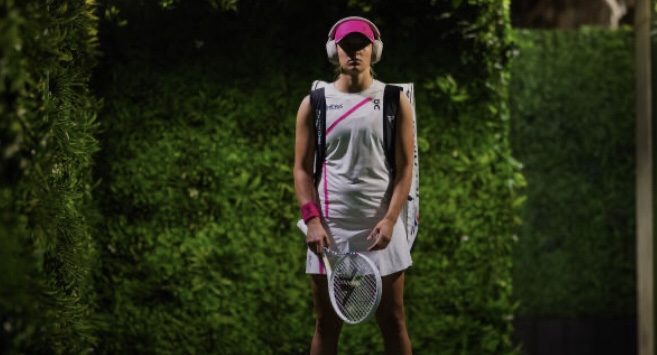
Iga Świątek’s Quarter

Top Seeds: [1] Iga Świątek, [6] Ons Jabeur, [10] Jelena Ostapenko, [15] Ekaterina Alexandrova

Burning Question: Can Iga Świątek navigate another section full of big ball strikers?

If you saw Iga Świątek’s draw and continued to refresh your page, thinking that her Australian Open draw was copied and pasted in on accident, you are forgiven. Once again, the world number one drew a section full of aggressive, big ball strikers, and her early path is nearly identical to her draw in Melbourne. After a first round bye, she’ll take on either a qualifier or Danielle Collins, who she beat in three tight sets in the second round in Australia (winning the final five games after trailing 4-1 in the third). Then, it may very well be Linda Noskova, who knocked the Pole out of the Aussie Open in round three. The rest of Świątek’s quarter isn’t lacking for power either. Madison Keys and Alexandrova await as potential round four opponents, and Świątek’s nemesis Jelena Ostapenko looms in a possible quarterfinal. 

Despite all of that, Świątek should feel pretty good about her chances in the California desert. The slow, high-bouncing courts in Indian Wells should suit her game better than the ones in Melbourne, and has played some of her best tennis there in the past. She’s 12-2 in main draw matches here, winning the title in 2022 and making the semifinals last year. The slow courts really help her elite return game, where she’s won over 50% of return points in 10 of those 14 matches. Świątek played poorly by her standards in her recent loss to Anna Kalinskaya in Dubai, and even then it took a miserable 2-for-11 day on break points for her to fall after a few consecutive long weeks. The draw isn’t friendly, but it will take a Herculean performance to take her down.

Bracket Buster: Katie Boulter/Mirra Andreeva

Boulter’s upside in this tournament is likely limited with Świątek as her possible third-round opponent, but she deserves a mention with her recent form. The Brit took home her biggest career title in San Diego last week, coming from a set down to beat Marta Kostyuk in the final and grabbing five consecutive wins over top 40 players. She’s hitting her forehand bigger, destroying opponent second serves, and is serving really well. Heading into the tournament, she’s fourth in hold percentage among the top 50 in 2024. The only three ahead of her? None other than Aryna Sabalenka, Iga Świątek and Elena Rybakina. Not bad! A second round match between her and Noskova would be must-see.

Andreeva is always going to be a bad draw until she ends up as a seed, which will likely be sooner rather than later. The 16-year old has put together an impressive resume already in her young career; she’s 20-11 in WTA main draws, and is already 6-6 against top 20 players. Pretty amazing! She’ll get Katie Volynets in round 1 before a potential rematch against Ons Jabeur, a draw she’ll be happy with. Andreeva dominated Jabeur 6-0 6-2 at the Australian Open, her biggest ever win, and Jabeur has played just three matches (losing two of them) since then while she struggles with a knee injury. The stars are aligning for Andreeva to make another good run at a big event.

Quarterfinal Prediction: Iga Świątek over Jelena Ostapenko in three sets

Ostapenko’s rise back into the top 10 has been fueled by her consistency. She’s 25-10 since the start of the US Open, and is 16-1 in 2024 against anyone not named Victoria Azarenka. Her relentless power and attacking style are still there, but she’s less error prone and is protecting her second serve better than she has in the past. On the other side, Świątek has a tough draw through the first four rounds, but it would still be surprising to see her knocked off early.

That brings me to the matchup. Ostapenko’s 4-0 record against Świątek is well-documented, including her stunning final two sets against her in New York last fall, but Iga isn’t just going to lose to her every time (I don’t think). So far in 2024, Świątek is making more first serves and has been very clutch against break points, two things that she has struggled with against Ostapenko in the past. That, combined with the favorable conditions, gives the world number one the edge for me.

Elena Rybakina’s Quarter

Top Seeds: [4] Elena Rybakina, [7] Marketa Vondroušová, [12] Beatriz Haddad Maia, [13] Jasmine Paolini

Burning Question: How will all of 2024’s new breakout players fare?

Can I interest anyone in a rubber match between Jasmine Paolini and Anna Kalinskaya? It’s not a guarantee, of course, but the two are slated to meet in round three and have manageable second round draws heading into it. The two have already played twice in 2024, with Kalinskaya knocking Paolini off handedly in their Australian Open round of 16 encounter on her way to the quarterfinals. Paolini got her revenge just under a month later in the Dubai final, mounting a great comeback from a set and a break down and 5-3 down in the third set to win the biggest title of her career. Kalinskaya especially has been in strong form over the last year, with a 37-16 record over the last 52 weeks after struggling with injuries throughout her early career.

Marta Kostyuk is also in this section as the No. 31 seed, and is having a breakout year of her own in 2024. The Ukrainian made her first major quarterfinal in Melbourne and also reached the final in San Diego last week. Kostyuk has a decent draw coming up, with a qualifier or Shuai Zhang in the second round and the recently out-of-form Vondroušová, who is just 4-4 in 2024.

Bracket Buster: McCartney Kessler

There were no obvious candidates in this quarter, but I like Kessler’s draw here. The former University of Florida star has rapidly risen in the rankings and is coming off of a win in Puerto Vallarta last week as a lucky loser. While she hasn’t beaten a top 100 player in 2024, she is 13-2 overall and has won 10 matches in a row at lower levels. The wild card also got a draw that could allow a nice run: a qualifier in round one, Anastasia Pavlyuchenkova (likely her toughest test) in round two, and Beatriz Haddad Maia in round three, who is 6-7 this year.

Quarterfinal Prediction: Elena Rybakina over Marta Kostyuk in 2 sets

I was tempted to go with Kalinskaya here, who has looked great this year and has played Rybakina very tough in their meetings last year. Her counterpunching and willingness to attack the second serve bothers the Kazakh, but Rybakina played exceptional tennis en route to this title last year and is 17-3 with two titles in 2024. It should also be said that Rybakina has won the only two tournaments she played after resting the week before this year (Brisbane and Abu Dhabi), so she should be firing on all cylinders here.

I talked about Kostyuk’s draw above, and I really think the bottom half of this quarter is wide open, with a bunch of names that wouldn’t surprise me in a quarterfinal. I’ll go with the recent form of Kostyuk though, although Vondroušová is still extremely dangerous when healthy. In this specific matchup, Kostyuk’s serve doesn’t bother Rybakina enough, and the defending champion’s power from the baseline will likely be too much for the Ukrainian to overcome.

Aryna Sabalenka’s Quarter

Top Seeds: [2] Aryna Sabalenka, [5] Jessica Pegula, [9] Maria Sakkari, [16] Elina Svitolina

Burning Question: Can Jessica Pegula get back on track on home soil?

“Back on track” makes it sound like Pegula has been bad recently, and she hasn’t. But she also hasn’t been the bona fide top five player that she was in 2023, winning six of her nine matches since the new year. Sure, the disappointing no-show against Clara Burel at the Australian Open leaves a bad taste that lingers for a while, and now she has another chance to right the ship at a big event. She’ll have to do it without her longtime coach, David Witt, who she parted ways with earlier this month, and will now be working with Maria Sakkari (Sakkari-Pegula in the round of 16? Sign me up!).

One thing to watch with Pegula’s game: the second serve. She’s winning just 42.9% of her points behind the second delivery this year (small sample, to be fair), which would easily be a career low. Last year, for reference, she was up at 51%. Her draw is littered with players, such as Karolina Plíšková in the second round, who will attack her second serve, so that shot could be make-or-break for Pegula this tournament.

Bracket Buster: Karolina Plíšková

Okay, I’ll admit it. I’m cheating a little bit with this one. Pliskova is pretty clearly under ranked after winning just one match in her last four majors and missing the last three months of 2023 with a wrist injury. Regardless, the former #1 has been on fire in 2024, losing just one match to a player outside of the top 10 (against Katerina Siniaková in Adelaide) and taking home the title in her home tournament in Cluj-Napoca. Anna Blinkova isn’t an easy first round, but I would favor the Czech to advance into a second round against Pegula, who is facing some uncertainty with her coaching situation and will be under a lot of pressure heading into this month.

Quarterfinal Prediction: Aryna Sabalenka over Karolina Plíšková in three sets

Sabalenka fell just short of the title here last year, but that was really her first taste of success at the event. Last year was her only quarterfinal at the event, but she was very impressive in rolling through three top 20 players before falling to Rybakina in a very close final. It will be interesting to see how the recent Australian Open champion will respond to her surprising loss to Donna Vekić in Dubai, the only match she has played since earning her second major title, but she should be well rested and has been a model of consistency over the past six months. Before the loss to Vekic, Sabalenka hadn’t lost to a player ranked outside the top 10 since August of last year.

In her recent form, Plíšková has a great chance against anyone in her section here. She’s arguably a toss up against Pegula in round two, and she would likely be favored in a round of 32 matchup with Leylah Fernandez. Sakkari would make for an interesting round of 16 with her new coaching setup (Plíšková leads H2H 4-3), but I think Plíšková has a good chance to make it through here.

Coco Gauff’s Quarter

Top Seeds: [3] Coco Gauff, [8] Qinwen Zheng, [11] Daria Kasatkina, [14] Liudmila Samsonova

Burning Question: Is Naomi Osaka ready to be back at the top of the game yet?

Look, I know it’s soon, and I don’t ask this to put pressure on her. I ask this because I think she’s in decent form and she might finally get a look at some players who will give her some time to play. Oh yeah, and she’s a former champion at Indian Wells, which always helps. We know that Osaka has the power to hit through any court, and the serve has been firing all year for the most part. What’s been hurting her is the return (winning just 35.6% of return points in 2024), but part of that is playing Pliskova and Garcia in four of her seven matches. Does the slower surface give her the extra fraction of a second she needs to punish opponents’ serves the way she did when she was a top player? She gets a qualifier first and Liudmila Samsonova if she wins. If she gets through those two, nobody will want to see her on the other side of the net.

Bracket Buster: Sloane Stephens

Osaka would be the answer here, but since I already talked about her I’ll go with Stephens, who is the second-most dangerous unseeded player in this draw. Her inconsistency is maddening, and she’s coming off of a lopsided loss to Anastasija Sevastova where she was completely ineffective on serve. I still give her a chance here because of her showing against Świątek in Dubai, where she gave the World No. 1 a whole bunch of problems that the scoreline wouldn’t suggest. Stephens dragged Świątek into a lot of long rallies and came out on top in most of them, counterpunching well and hitting with great depth throughout the match. According to Tennis Abstract, Stephens won 22 out of 36 rallies of 7 or more shots in that match.

Stephens gets Mayar Sherif in the first round, and Sorana Cîrstea if she advances to round two. Cîrstea beat Stephens in straight sets in Doha last month, but if Stephens can make it to round three, she leads the head-to-head with Daria Kasatkina 4-1. 

Quarterfinal Prediction: Victoria Azarenka over Coco Gauff in three sets

This pick is a combination of me not wanting to go full chalk and also liking Azarenka’s form more than Gauff’s so far this season. Azarenka has played well this year, and despite not winning a title, her losses are to Dayana Yastremska at the Australian Open, Aryna Sabalenka in Brisbane, Iga Swiatek in Doha and Elena Rybakina in Dubai (where she retired after the second set). On top of that, Azarenka is 37-12 all time at Indian Wells and is a two-time champion. Zheng is a tough third round draw, but Azarenka should feel pretty good after that.

Gauff has had a perplexing season. She made the Australian Open semis and won the title in Auckland, but it doesn’t feel like she’s playing at the level that she was during the American hard court summer last year when she was tearing through the rest of the tour. A lot of that comes down to the serve. Gauff’s ace rate is down in 2024, and her second serve has been especially vulnerable, as she’s winning just 43.2% of points off of the second delivery (her lowest since 2020). Gauff is still lethal on return, one of the best defenders in the world, winning more than half of her return games so far this year. Additionally, the high-bouncing courts could help her forehand effectiveness by giving opponents high contact points, but I’d like to see the serve return to form before I trust her to roll through lower ranked opponents.

Final Weekend Prediction

Semifinal 1: Iga Świątek defeats Elena Rybakina in three sets

Semifinal 2: Aryna Sabalenka defeats Victoria Azarenka in two sets

Final: Iga Świątek defeats Aryna Sabalenka in three sets

Embed from Getty Images

Andy Murray and an Uncertain Ending

Even here, with grim reality in attendance and hanging low over his every word, Andy Murray will still keep us guessing.

“I’m likely not going to play past this summer. I get asked about it after every single match that I play, every single tournament that I play. I’m bored of the question, to be honest.”

An eternity of first, second and third round defeats would be manageable, if only he didn’t have to deal with prying eyes and the nonsense that comes with them. If he could keep this all going in a padded room where the noise couldn’t reach him, he would. It would just be him and the game, playing forever with his joy and anger entwined still through it but there’d be silence afterwards and that’s what he’d want. If we could gift wrap him that peace and quiet, we would. 

Alas, the world spins on and it drags Murray with it, right the way up to the process of embracing a future he’s held at bay for longer than many thought possible but not nearly as long as he’d have liked. He did outrageous though, didn’t he? Like, wild, crazy things, stamping-the-ground-and-shaking-the-roof sorta’ things, and it’s like we saw it all through his own eyes every time he played. He’d break stuff and scream and bemoan outwardly the fact that he was born to play a sport so well that it would leave him with no other option than to love it to the point that to play it badly would cause him anguish. He’d hate himself, or so it would seem, and we’d feel for him, this little man-child of a player that made us a fan because no other so visibly captured the frustration of the everyday and so viscerally cared to the point that nobody else’s opinion mattered.

This is the exact sort of finish to Murray’s career that we knew we’d get, one filled with scraped-knees and early losses and constant questions. When you’ve retired once before, all people seem to want to know is when you’re going to do so again and Murray’s form of late has only rolled these out and shaped them into the norm. His journey undoubtedly deserved better than people wondering when it would be finished but that, it seems, is the way it is when you’ve hobbled your way past your prime. He seemed OK with it right up until he wasn’t and that is where we’re at now.

Everyone’s going to have their memories of him. Mine will just be the whole packaged deal that we got, the guy who bore the brunt of it and made it all happen his own way without compromise. It was just comforting to know he was out there giving it a go, ranting and raving about something or other and struggling because yes, this thing was hard and he would never try and hide that it was anything other than that. He’d win but he wanted us to know that it really fucking hurt to do so. If we were going to be his fans, we’d have to earn the right by turmoiling through it with him. I’d like to believe that now that we’re closing in on the end, he’ll look back and accept us all for what we were – mad people made mad by his hands alone. You just know he’ll retire with a wee smile on his face knowing he caused us all to age far beyond our years.

He’s so damn annoying though, isn’t he? Causes his own problems. Changes his mind. Says he’s going to call it a day but leaves the door open for a miracle, a lightning bolt, a magician that might just save him. He can’t quite bring himself to shut it down, to definitively say it’s done, here and now. That’s his right but I’ll curse him for it because how the hell am I supposed to prepare for a goodbye when I’m not certain when it’s happening? He’ll drop it on us suddenly this summer at some point, a mumbled “I’m done” as he exits, leaving us all questioning if we heard him right. Then he’ll just never return and we’ll know.

God, I hate him. God, I love him.

***

He’s said before that he didn’t think anyone would come to a farewell ceremony for him, demonstrating a severe lack of awareness of the scale of his impact. People have befriended and loved each other because of you, Andy. We won’t inflict our thanks on you if you don’t want us to but don’t you dare think there’s not thousands waiting to offer them. We’re all still here. We’re all still with you.

What lurks behind the curtain that’s been the backdrop of an entire life? That’s what Murray’s about to find out and maybe that’s what he’s waiting to feel ready for. He’s not there yet. But almost. Very much almost.

It’s worth just trying. That’s what Murray’s career will be remembered for. It’s worth getting up for, even if it kills you, even if it leaves you almost dead or even just about wishing that you were.

It’s worth it.

The Ultimate Humbling Experience: Watching Yourself Play Tennis

By Zack Czajkowski

Wow. I’m really moving. I’m in my happy place: on a tennis court. My opponent hit a ball that I wasn’t sure I could get to, but lo and behold, I got there! Not only did I get there, I was recording my match on SwingVision so there will be video evidence of this epic get of mine. For those of you unfamiliar, SwingVision is an emerging piece of tennis tech that allows you to record yourself playing, practicing, or rallying. The technology cuts out the time between points or rallies so you maximize the amount of time watching yourself play.

Readers who have recorded themselves or had a friend record a match know what I’m about to say. That get? I was moving comically slowly compared to every tennis player I’ve watched on TV. I look like shit out there! I know I’m not Alcaraz fast, but SHEESH. If you’re below a 5.5-level player, whatever you think you look like on a tennis court is wrong. I can assure you, if you record yourself you will look far worse than you are mentally prepared for. Your technique? Spotty. Footwork? Lol. Shot anticipation? You might as well just guess. The truth hurts sometimes. It can be immensely humbling. But here’s the thing: That’s why you SHOULD record yourself. 

I’ve been an off-and-on SwingVision user for a little over two years now. I have captured funny moments, tweeners, bloopers (often involving attempted tweeners), and from time to time a shot that I actually feel good about. You don’t need to pay a service to record yourself playing, but if you’re a recreational player you will benefit immensely. Most of us have no idea what we look like on a court. How can you correct something if you’re not sure what you’re doing wrong? It is a highly useful tool for improvement and there is a meaningful sense of pride that comes with being able to watch an old match and see the progress that you’ve made.

Let’s also be honest with ourselves. I’m 32 and I’m a decent recreational player, but I’m never getting paid to play tennis. If anything, like many enthusiasts, I have a rationally irrational financial relationship with the sport. I need to be reminded in unsparing terms that I’m not that good at tennis and I’m out there to have fun, get a workout, and hopefully improve a little. Watching yourself miss an easy putaway because you didn’t move your feet? It sucks! I have watched a version of that clip hundreds if not thousands of times now and each is a humbling reminder that I’m not like the pros and never going to be. There is peace in acceptance. The first time you watch a recording of yourself, you will be one step closer to accepting your tennis destiny. Prepare to be humbled. Let it liberate you. And never stop playing tennis.

Time and a Place

Novak Djokovic is trying so hard. He’s unfailingly classy after matches: when he wins he’s respectful and encouraging and when he loses he’s congratulatory. Young players on tour have spoken glowingly of his efforts to help and even fund their early careers. While he’s embroiled in the occasional spat, like the ongoing discourse about that Ben Shelton celebration, 99% of the time, he’s intent on not saying a bad word about anyone. Tell him that Rafael Nadal gave a mildly salty quote about the GOAT debate that Twitter user Pavvy G finds appalling and detestable and grounds to put Rafa in a small padded cell with only tapes of his hard court matches with Djokovic for entertainment and Novak would say, “no matter what, Nadal is my greatest rival, and I hope we can be friends after we retire.” It’s admirable gestures like this that have resulted in a recent push among Djokovic fans and even some pundits for Novak to win the sportsmanship award.

Unfortunately for those people, sportsmanship is not limited to being a great guy after matches and supporting younger players. It also includes not smashing your rackets or telling various crowds to suck your dick. It’s an interesting tension, really. Djokovic wants to be nice and succeeds with flying colors most of the time. But then a spectator pushes his buttons or he makes a bad error at an inconvenient moment of a match that everyone knows he will win anyway, the racket splinters and the curses fly.

Nadal and Roger Federer don’t do these things. Don’t bother sending me the clip of Federer smashing a racket against Djokovic in the 2009 Miami semifinal — I’ve seen it and for each moment like that, I can find 10 involving Novak. Federer and Nadal just have a better handle on their tempers and their potty mouth. They’ve also never had to deal with the hostile crowds that Djokovic goes up against every year. Maybe they would have handled the taunting better than Djokovic handles it. Maybe they would have handled it worse.

One of the most compelling parts of a story is the character who does things that you wouldn’t do, but has such understandable reasons for doing so that your sympathy overpowers any judgment you might pass on them. (I don’t mean Djokovic not getting vaccinated, that was just dumb.) But you’d have to be emotionally stunted not to feel a little bad when crowds jeer at Djokovic. It’s been 13 years since the start of the season during which Djokovic made it to #1 in the world and he still lacks the near-100% approval rating of Roger and Rafa, even though he’s better than them both. He rarely starts shit with fans in the crowd; someone will set him off and he’ll lash back. He’s trying. He’s just not perfect at letting the anger seep through the cracks. No one is.

Djokovic just broke that mold a little bit. Usually, when Djokovic and the crowd get into it, the match will have its testy moments. I was at Novak’s match with Enzo Couacaud last year, in which he dropped a set and had testy moments with some fans. The drunk fans around me were a classic case of people rooting against Djokovic, not rooting for his opponent. They got so annoying that I said something to them when they started antagonizing someone who was just trying to enjoy the match. I got why Djokovic barked back. Then there was the Wimbledon semifinal last year against Jannik Sinner, when Djokovic saved two set points to hold for 5-all in the third set and mock-cried to troll the crowd, which had been hoping for Sinner to win the set. It was funny. Even the imitation of Ben Shelton’s “dialed-in” celebration worked for me — that third set had been tight and tough, and Shelton had a set point along the way. Want to stick it to a boisterous opponent who had the fans fully behind him? Go right ahead.

Tonight, against Adrian Mannarino, Djokovic reeled off the first two sets 6-0, 6-0. Mannarino, having played three consecutive five-setters in the previous rounds, was probably running on empty, not that it would have mattered when Djokovic was hitting the ball so cleanly. At 30-all in the first game of the third set, Djokovic got annoyed at a fan distracting him, banged down a service winner, and started blowing kisses. More celebrations followed. A game later, the umpire started the serve clock when the crowd was still buzzing, which Djokovic took issue with enough to argue about. Naturally, the fans were invited to be even louder. After shaking hands with Mannarino, Djokovic beckoned the crowd to cheer for him, as players usually do after epic rallies, then leapt into a fist-pump and a roar.

Much as I enjoy it when Djokovic deservingly sticks it to the crowd, the mid-match showboating before he had lost a single game felt kind of pathetic to me. I liked his previous fuck-yous to the crowd because they were usually about denying fans of what they wanted: to watch him lose. But for that to work, Djokovic losing, or being under serious pressure, has to at least be a faint possibility. At this point in the Mannarino match, losing literally could not have been less of a risk. Djokovic had already denied those fans of what they wanted. Blowing the kiss at a moment that would have no impact on the set, much less the match will give his haters fuel until the next time vaccination comes up.

Not only that, but the little episode was disrespectful to Mannarino. All’s fair in love, war, and a close tennis match with an uneasy atmosphere. At 6-0, 6-0? Dude, just get on with the match so that your poor opponent can get off the court and have a tequila. I promise, the chair umpire could have docked you an entire set for time violations and you would have won the match anyway. Blow the fans a little kiss after match point if you must, but keep things rolling so that you don’t piss off your probably-already-depressed opponent. I have a hard time imagining that Djokovic, usually so considerate of opponents, couldn’t have ignored the background noise for once.

*****

Djokovic is a complicated guy. Like I said, he’s usually respectful almost to the brink of parody. He’s allowed a slipup. Of course, since this is the internet, takes will be all over the map. I got the full range of replies on Twitter when I shared my thoughts on the hell app. Some used the moment as evidence that Djokovic is a horrible person. (He isn’t.) Some thought he was completely within his rights and did nothing wrong by trying to create drama when all anyone else wanted to do was just go home. (He wasn’t.) As usual, no one’s mind is going to change.

Ironically given the lopsided scoreline, this match might highlight Djokovic’s more enigmatic qualities as much as any other. When serving at 6-0, 2-0, Djokovic hunched over and shook a little bit. I can’t begin to guess why he was having physical issues after a frictionless set and a half, and I’m no closer to knowing why the issue popped up for a moment and then was never a problem for the rest of the match. I don’t buy an ounce of the theory that Djokovic plays possum — if you think he needs help to beat anyone, you’re crazy — but moments like this make you at least understand where the idea comes from, right? We’ve been conditioned to expect someone’s level to dip when they’re visibly exhausted. Djokovic’s doesn’t really change, and sometimes it goes up. He hit an ace and won one of the better rallies of the match directly after his apparent discomfort.

I think that Djokovic is extremely skilled at navigating physical issues, which he experiences with increasing frequency in his late 30s. I also think that when he’s cruising in a match, it helps him stay motivated to create little hurdles for himself, whether that’s by taking on the crowd or even dropping serve on purpose once in a while. But really, I don’t know why the hell Djokovic roared like an animal after holding for 6-0, 3-0 in this match and why he only did a small fist-pump after beating Sinner in a much closer, much more important contest in the 2023 Wimbledon semis. I don’t know how Djokovic goes into tournaments with physical issues and looks healthier in the final than he does in the third round. I don’t know how Djokovic operates so well when it looks like he’s dying on the court. Partisan fans certainly don’t care about the why; rather than admitting that they’re confused, Djokovic lovers defend him to the death and Djokovic haters embrace the nuclear option in the opposite direction. He must be faking. No, he’s desperately sick and handling it like a champ! The truth is that no one but the man himself knows how Djokovic actually feels because he’s a complex guy who does inexplicable things sometimes. That isn’t going to change. The least we can do is try to accept what we can’t explain.

Andy Murray and Purple Yellow Walls

It was with a sigh that Andy Murray exited Melbourne Park yesterday. Talk pre-tournament had been of his wizardry here last year, back-to-back monstrous 5 setters that shook us all silly with memories of what this man produced when he was dominant and my word, we loved that, didn’t we? Nostalgia sickened us all but promised us nothing and it truly delivered on that.

Unwelcome endings are never pleasant but sometimes they’re necessary to help us recognise where we’re really at and as Murray sat in his post-match first round press conference, it appeared he was reckoning with his present place in this sport. The focus naturally will be on his words, his wayward it-could-well-be responses to nipping queries in regards to whether this’ll be his last outting as a professional player in Australia. But for me, it was his struggle to locate what he was really looking to say that hit this all home. It was as though the gravity of it was simply incomprehensible in its reality. This listlessness was a far-cry from the fine-tuned analytical brain we used to see from him following a loss. This, it would appear, was always going to happen and there wasn’t really a thing he could have done about it.

The loss of all control over what happens in his matches might finally be what pushes Murray across the void that he’s been wading in for awhile now. Floating around, trying to form some semblance of structure, he’s instead just wrapped himself in an unpleasant repetitive nature of tournament buildup, tournament exit. It’s been ugly, walls painted purple and yellow. Murray’s pretty much copyrighted that grinding scowl that forces its way across his face as he fights. But even that’s been absent of late, replaced with flat self-acceptance of yet another week gone. If it’s not that, it’s the opposite, rage justified only in that it’s there and has nowhere else to go, no longer channelable in hunt for a higher gear. Stuck in fourth looking for non-existent fifth. Over and over. Screaming into the oncoming wreck of defeat.

Murray said at the end of last year that he’d lost his enjoyment of tennis. The off-season, it would appear, has offered no indication that it will return. He seems to totally understand the process of his career at the moment that when the familiar issues arise, he faces them with near-placid awareness that this is just how things go when you’re near the end. You lose and then you lose again and then one more for good measure. Following this latest exit, Laura Robson – Murray’s Olympic mixed silver medalist partner from back in 2012 – offered him encouragement, maintaining that she believed that he had more to give. His immediate reply?

“Do I?”

***

I first became a fan of Murray because I found him relatable, his inner-child tantruming its way through his tennis and holding my hand as I struggled to understand the world. He was stupid at times, letting it take too much from him and driving him off cliffs. But he always went out there with every ounce of all that he had that day. He’s still doing that now, only these days aren’t those days and nothing changes everything quite like time.

It’s rough amongst the ticket stubs and apple cores of long gone events. The growing pains of late-stage professional tennis take the form only of preparation for life without it. Murray’s been just making sure for years now, determined to finish up knowing that beyond all else that he really fucking tried. If his career is to be defined by the fact that he always stood up to be counted when the big moments came, I think he’ll take that. It can be cold realising you’re empty but for Murray, there’ll be relief. No regrets for the man who retired once and came back to double-check.

Whenever he does formally announce it, it’ll be for the final time and I’ll cry. Oh my god, will I fucking cry for the absence of a man that doesn’t know I exist. But I’ll know this time that he knows it’s time and that he made a second chance out of impossible. And so we wait for this soon. But still. We wait. Not. Quite. Yet.

Sometimes we play to win Wimbledon and sometimes we play just to see how long we can play. Andy Murray – defeated, near the end, a little lost – is still playing. And so we wait.

Checking in on My Top 100 Picks From 2022

By making the top 30 in 2023, Chris Eubanks topped my 2022 list of top 100 prospects. Screenshot: Wimbledon

By Damian Kust

At the end of 2022, I did an off-season thread on Twitter where I named 26 players I thought were likely to break the top 100 in 2023. The time has come to review the selections and see how I did. Can we learn anything from this experiment?

Correct picks (where they started the season > career-high achieved in 2023):

Christopher Eubanks (123 > 29)

Arthur Fils (251 > 36)

Matteo Arnaldi (134 > 41)

Aleksandar Vukic (130 > 48)

Alexander Shevchenko (154 > 48)

Yibing Wu (116 > 54)

Fabian Marozsan (173 > 61)

Luca Van Assche (139 > 63)

Yosuke Watanuki (145 > 72)

Dominic Stricker (118 > 88)

Facundo Diaz Acosta (191 > 93)

Jurij Rodionov (122 > 100)

It all depends how you look at it. My list had 26 players, as that was the number of Top 100 debuts in 2022, although as I suspected there weren’t quite as many in 2023 (despite the increased amount of Challenger Tour points on offer), which produced just 21 new entrants to the top 100. And hey, 12/21 looks better than 12/26. Who was an impressive selection and who was obvious?

Wu and Van Assche I considered absolute locks — they had few points to defend in the first half of 2022 and had very strong runs in the second half. I’m pretty sure anyone would have Stricker on their list as well, that top 100 debut was eagerly anticipated.

The others actually weren’t that simple. I didn’t think Wimbledon quarterfinalist Eubanks was going to get quite this high, but his game has become increasingly complete. Arnaldi was quite a trendy player after the NextGen Finals, even if the extent of his 2023 improvement was far greater than anyone could have foreseen. And Rodionov had been around that 101-150 range for a while and it was a matter of when, not if, but his top 100 stay ended up being extremely short.

We still have six remaining and I feel like these were my best shouts. Fils might seem obvious in hindsight, but he was around 250th in the rankings at year-end in 2022 and I definitely felt like I was leading the way in hyping him up. I actually believed this was going to be a different season for him with Challenger Tour dominance and a Top 100 debut later in the year, but he just made plenty of main tour impact almost right away.

Vukic was a correct analysis of his ranking situation and how he was likely to make the jump if he could stay healthy. Smart scheduling from him more or less clinched it in the South Korean swing. With Watanuki, we sort of had seen this story before with him peaking in the Asian Challengers at the end of the year and not following it up. But this time you could see the quality of his play was just too high for that to happen again.

Shevchenko and Marozsan weren’t getting too much hype, but they are right now. (Recall Marozsan’s amazing upset of Carlos Alcaraz in Rome, which sparked hyperbolic takes about the magnitude of the shock.) The latter convinced me with his Bratislava performance at the end of 2022, especially as at the time he was still playing 90% of his events on clay. Shevchenko is a nice story for me as I vividly remember seeing him live in his Challenger debut in July 2021 (I actually hadn’t watched him even on stream before then) and just instantly seeing obvious top 100 potential. It took me a while to convince others about that though — maybe he’s just one of these guys you had to see in person to get the full picture.

Was Diaz Acosta my best selection? Maybe, it remains to be seen how much impact he can produce at tour-level. It was definitely one of the bolder predictions, but I started feeling really good about this pick when he almost beat Norrie during the Golden Swing. He went on a rampage on the Challenger Tour after that.

Top 100 debutants who weren’t on my list (where they started the season > career-high achieved in 2023):

Max Purcell (220 > 40)

Sebastian Ofner (193 > 43)

Rinky Hijikata (164 > 70)

Borna Gojo (144 > 71)

Thiago Seyboth Wild (418 > 74)

Alexandre Muller (160 > 76)

Alex Michelsen (600 > 91)

Liam Broady (163 > 93)

Flavio Cobolli (171 > 95)

Nine misses seems like a lot, but I feel like I can get a pass for a lot of these. Gojo should have been on my list, but I figured he was more likely to stay around the 110-150 ranking range. That was wrong and if you feel like that about a player, you should probably include him in a list like this anyway.

I expected to trash myself for not picking Ofner, but now that I see where he was at the beginning of 2023 it’s actually not a huge blunder. He did have a nice window to earn points at the beginning of the season, but still had to massively top any of his previous results to get there.

There’s no way anyone would include Seyboth Wild, Michelsen, or Purcell on their lists. The Brazilian was coming off a couple of horrible seasons and he did well to put it all back together in 2023, including the headline-making upset of Medvedev at Roland Garros. Michelsen was already committed to college and the Shelton-ish run to break the Top 100, especially at 19, wasn’t to be expected. Purcell decided to focus more on singles despite amazing doubles results and instantly got the reward in a way that I couldn’t have imagined.

Hijikata and Muller were both in the gettable range I think, but neither was considered a player with enough explosive potential to make it. Amazing development for both as I considered the Australian to be a potential Top 100 prospect only in a few years, and Muller wasn’t on my radar whatsoever. Hijikata probably should have made my list, I’m fine with not selecting Muller.

Broady had been somewhat close to breaking the Top 100 for years, but never actually found enough to pull it off. Should I have included him? Not sure, but when he won Vilnius in February I was already regretting my decision not to. Cobolli was one of the last players I decided not to write about and I am a little angry that I missed him. That’s because I still believed in him quite a lot, I just didn’t feel like the bounce-back campaign would be this good and thought of him as a likely top 100 debut for 2024 or 2025. 

Near misses (where they started the season/career-high achieved):

Aleksandar Kovacevic (158 > 101)

Hamad Medjedovic (255 > 102)

Francesco Passaro (119 > 108)

Zsombor Piros (162 > 109)

Otto Virtanen (175 > 109)

Zizou Bergs (129 > 112)

Luca Nardi (135 > 115)

I’m counting the players who were ranked inside the Top 120 as near misses. I guess that automatically includes Passaro and that’s a flaw of this system, but he did get his ranking up to 108 so it’s fine. This could have gone a little smoother for me, especially as Kovacevic was literally waiting for the result of one match to see if he gets in (on the other side of the planet though, it wasn’t in his hands) and Medjedovic played a deciding tie-break to get there, which he lost.

It’s especially a shame with Medjedovic, because he would have been one of my best picks, if not the best. He had a long losing streak to end 2022, but I just felt like with his brutal power he must be on the verge of figuring it out soon. I would totally pick him to break the top 100 in 2024 now.

Kovacevic could get slightly tricky as he’s got two Challenger titles to defend in February/March. But if he can save some of these points, then there’s plenty of time to make up in the spring where he didn’t win a single match for three months last year. So I think I’d still pick him for 2024, just with less confidence than Medjedovic.

Passaro was such a letdown after a brilliant 2022. I thought he had to get there before the summer, but he just didn’t grab anything huge on hard courts and then also failed to repeat his clay achievements. He ends 2023 outside the top 200 and I actually wouldn’t pick him for 2024 now, although a top 100 debut is still very much a possibility in the future, just maybe not tomorrow.

Piros had some chances and he did extremely well in the spring, but truth be told at year-end he just wasn’t playing top 100 tennis anymore. Virtanen started so well, but then had a similar summer like Kovacevic and actually didn’t recover. While these two could make it in 2024, the Hungarian will have so much to defend around April. I trust Virtanen more next year, but it isn’t really related to his ranking situation, I just think he’ll put it together at some point (those Davis Cup performances!). Piros doesn’t quite have the same ceiling, so it’s a bit trickier.

Bergs and Nardi I would absolutely follow up on and pick them for 2024. The Italian had a rough campaign, but started firing again at the end of the season and I think he’ll be there by the spring with not much to defend early. I even said in my write-up that Bergs just needs a fully healthy year.  He didn’t get that, but is back in good shape in November and I think it’s again more a question of injuries than quality.

Wrong (where they started the season/career-high achieved):

Leandro Riedi (157 > 126)

Gabriel Diallo (227 > 130)

Lukas Klein (136 > 133)

Mattia Bellucci (153 > 142)

Juncheng Shang (192 > 149)

Adrian Andreev (189 > 183)

Nicolas Alvarez Varona (284 > 219)

These are the players I picked who didn’t make it and didn’t really come all that close. Riedi kicked off the season with a fantastic run in Canberra, which made me feel like it was going to work out for him. He had some injury issues though and then never found that level again, eventually dropping far down. Would I pick him again for 2024? Not sure, but with his hit-or-miss playstyle it’s always going to be a question of finding the confidence and just firing up for a couple of months. He’s not lacking the quality to get there.

I knew Diallo was quite risky as his game still felt raw, but he just wasn’t defending anything in the first half due to playing college in 2022, so there was lots to gain. He actually did okay for his first full pro season, I can’t be disappointed with the pick at all. 

Klein has lots to regret as he had 23 points to defend until May and just didn’t take the opportunity. He started playing better again in the fall so I’m hopeful for 2024, but a lot more cautious this time. Admittedly, he was one of three players I considered absolute locks for this year, along with Wu and Van Assche.

Bellucci had a nightmare first half of the year, but maybe I’d pick him again in 2024 because his shot selection was back later on and the game is still good enough. Shang had mono and at various points of the year was physically spent in every third set. I think a healthy version of him makes the top 100 soon, but we’ll see if we actually get that this time.

Andreev struggled with an injury at the start of the season, but overall only had a few flashes and I think I wouldn’t include him for 2024. He might make the Top 100 at some point in the future, but the development of a more aggressive forehand seems to have less of an impact on his potential than I thought it would. Alvarez Varona missed the majority of the year due to an injury, so I can’t really judge that pick and I think it’s too early in his comeback to think of him as a potential top 100 debut in 2024. He was one of my bolder selections anyway.

All in all, I was expecting to be a lot more down on my picks as 12/21 doesn’t seem like a great success rate. But after looking at it more closely, I don’t think I had a big blunder besides Gojo (maybe Cobolli?) and even these of my selections that didn’t get near the top 100 usually had some sort of physical issues that stopped them from giving it a better go. I had a lot of fun doing the list, following it throughout the year, and also writing this review.

Double or Nothing: Wimbledon and their expansion quest to stay ahead…

By James Steel

On a wet Thursday night in the Merton Borough Council chamber, ten local councillors held the fate of the All England Lawn Tennis Club (AELTC) and the Lawn Tennis Association (LTA) in their hands. Before these individuals were the long awaited expansion plans for the AELTC, plans that would see the Championships extend well beyond its current boundaries along with the building of a showcourt that would replace Court 2 as the third largest show court in the grounds.

The meeting started at 7.15pm and ran on for nearly 5 hrs until the vote took place. For hours, councillors discussed and asked questions on a range of topics to do with the planning application. Topics included the need for the numbers of new courts being asked for, the building materials to be used to build the new player houses and show courts, how many trees will be cut down for the development, and what will be planted in their place, and finally, how the biodiversity with be improved due to work in the parkland area and the Wimbledon lake. After all that and as the clock struck midnight, the committee voted. Six voted in favor, four voted against. With this one vote a major obstacle was finally overcome for the AELTC, the expansion can finally get underway.

(3D render of the proposal from the air [1]) 

So what are the plans?

The expansion plans are incredibly ambitious. So ambitious, in fact, that Sally Bolton (CEO of the Club) stated that this is the biggest sporting transformation project in London since the 2012 Olympics. The club seeks to extend the Championships site over Church Road and into the Wimbledon Park adjacent. With this expansion, the major bit of infrastructure visitors will notice will be the creation of the Parkview Show Court. This show court will hold a capacity of 8,000 seats, and will probably have a retractable roof (AELTC are still not fully committing to this yet but it’s an aim for them).

Why Parkview show court is important is mainly down to the placement of the whole site compared to the other three Grand Slams. Wimbledon’s third court (Court 2) has a capacity of around 4,000 spectators and although the court is a wonderful stadium to be in, it’s overshadowed by the John Cain areas at the Australian Open (Capacity 10,300), Grandstand at the US Open (Capacity 8,125) and Court Simone Mathieu at the French Open (Capacity 5,000). The building of Parkview show court as the third court for the Championships would see an equaling with US Open Grandstand in this list and bizarrely an overtaking of the Australian Open’s second court, Margaret Court (Capacity 7,500).

The next major development on site would be the creation of 38 grass courts. Of these, eight grass courts will be designated for players to practice on. Some will be match courts with banked seating along the side of the courts and a minimum of seven courts made available to members of the public so that grass court tennis can be made accessible to as many people as possible. Because of these increased courts, it means Wimbledon can finally bring qualifying onsite for the first time.

Currently, Wimbledon holds a lease agreement with the LTA National Tennis Centre in Roehampton to hold qualifying. Wimbledon is the only one of the four grand slams that hold qualifying off site due currently to the conditions of the grass courts and the strain an extra week of professional tennis action would have on the Wimbledon grass. Holding qualifying at the championships opens up many more opportunities for the club to bring in more visitors to the venue and possibly host more events over the weekend before the Championships begin.

(Picture from Wimbledon Qualifying in Roehampton [2])

There are other elements to the development as well, there will be the creation of two new player buildings. One in the northern part of the new site and one in the south (which will be themed around a boathouse). There will be accessible walkways, toilets and doors throughout (although not fully everywhere in the Parkview show court) and the lake will be redesigned to flow through a major chunk of the park.

It is incredibly important for the Championships to keep up with the other grand slams. Looking to Australia a couple years ago, they opened a fifth show court with the KIA Arena [3] along with plans in 2024 to open a courtside bar next to court 6 which will allow 400 spectors the ability to sit at a bar, order food and drink and watch some of the world’s best tennis player play. This will be coupled with a redesigned Garden Square, which will give a shaded area for fans to sit and watch tennis on a big screen [4].

At the French Open a couple years ago, they opened a new third show court at Roland Garros. Court Simone Matheiu was designed like the greenhouses of the botanical gardens the court surrounds [5]. This will be joined by the completion of the roofing of Suzanne Lenglen [6], which will see a second court in Roland Garros getting a cover if it starts raining during the grand slam.

The US Open also developed in the recent past with the building of the new Louis Armstrong Arena, a second court that could rival Rod Laver, Philippe Chatrier and Centre Court in terms of capacity [7].

Keeping up with the other Grand Slams is key. Wimbledon is unique in the tennis world, it is the one Grand Slam touted above all other by players and fans alike. Many of the general public know more about Wimbledon than anything else in tennis. For the sake of keeping this going, these plans will be vital to ensuring this. There are more roads ahead, Wandsworth Borough Council and the Mayor of London will also need to sign off with the plans and so let’s see how the following development unfolds over the coming years.

References

[1] London | Wimbledon expansion plans under fire | Tennis Threads Magazine
[2] Wimbledon Qualifying at Roehampton • A Tennis 10sBalls Extravaganza – 10sBalls.com • TennisBalls.com
[3] Melbourne Park’s stunning Kia Arena opens – Coliseum (coliseum-online.com)
[4] AO Courtside Bar and Finals Festival to reach new heights at AO 2024 | AO (ausopen.com)
[5] Insider’s guide to Court Simonne-Mathieu – Roland-Garros – The 2023 Roland-Garros Tournament official site (rolandgarros.com)
[6] Roland-Garros 2024: A retractable roof on Court Suzanne-Lenglen – Roland-Garros – The 2023 Roland-Garros Tournament official site (rolandgarros.com)
[7] New Louis Armstrong Stadium officially opened – Official Site of the 2023 US Open Tennis Championships – A USTA Event

The future of ATP 250 tournaments in 2025 

By James Steel

Le Progres published an investigative article cited in a L’equipe article, firming up evidence of major changes to the ATP calendar from 2025. These changes will see a sliming down of certain weeks of the tour and shortening of some parts of the season to make way for the second round of 12 day Masters 1000 events. 

So what are the major changes? 

The first change according to the article is the removal of five ATP 250 events from the tour calendar. The two grass court events in Newport and Majorca will go along with the two clay events in Lyon and Estoril and the hard court event in Atlanta. The next major change will be upgrading three events on the tour calendar. This will see ATP 250 tournaments upgraded to ATP 500 events. These tournaments include Dallas, Doha and Munich. The aim, it seems, is to hold more twin ATP 500 events at the same time. Similar to Acapulco/Dubai, Queens/Halle and Vienna/Basel. It is also reported that Hamburg will be moved from July to the week just before Roland Garros. There’s no word on a change in status but we can assume that this will be the only ATP 500 event to be held the week prior to a grand slam. 

So how does this change the tour schedule? 

We won’t have the official list of 2025 tournaments until early next year but we know that there will be three periods of the calendar that will see a major overhaul. These being the bitty February tournaments, the Mediterranean clay court season and the post Wimbledon clay. For each time period, I’ve created a calendar for all three time periods and what we can expect to see.  

February bitty tournaments 

Week 1 Week 2 Week 3 Week 4 Week 5 
Davis Cup Qualifying  ATP 250 Cordoba ATP 250 Buenos Aires ATP 500 Rio ATP 250 Santiago  
 ATP 250 Marseille ATP 500 Rotterdam ATP 500 Doha ATP 500 Dubai 
 ATP 250 Montpellier ATP 500 Dallas ATP 250 Delray Beach ATP 500 Acapulco 

With regards to this time of year, there are no major changes to the number of events that will be put on. The major change will be the status of each of the tournaments. The changes will be seen in the first week of the swing where Montpellier and Marseille will possibly take place in the same week. Usually both tournaments play a week or two apart but under the new system they could only work in the same week. In the long term one of these two tournaments could be looking to move its positioning in the calendar, potentially moving to the Autumn period which is the main time for indoor hardcourt tennis.  

Mediterranean Clay Court swing 

Week 1 Week 2 Week 3 Week 4/5 Week 6/7 Week 8 
ATP 250 Houston ATP Masters 1000 Monte-Carlo ATP 500 Barcelona ATP Masters 1000 Madrid ATP Masters 1000 Rome ATP 500 Hamburg 
ATP 250 Marrakesh  ATP 500 Munich   ATP 250 Geneva 
  ATP 250 (Europe)    

Similar to the February period, the number of tournaments doesn’t really change aside from there being one less tournament in week one of the swing. The major change will be Munich getting the upgrade. Now this will mean that Munich will need to upgrade their facilities as the centre court in Munich works for an ATP 250 tournament. However, it will be seen as too small for an ATP 500 event. Hamburg will make its return to this part of the calendar as well as an ATP 500. The major question will be to what extent will it attract big names given the big points on offer?  

Post Wimbledon clay into US Open swing 

Week 1 Week 2 Week 3 Week 4/5 Week 6/7 Week 8 
ATP 250 Bastad ATP 250 Kitzbuhel  ATP 500 Washington ATP Masters 1000 Canada ATP Masters 1000 Cincinnati  ATP 250 Winston Salam 
ATP 250 Gstaad ATP 250 Umag ATP 250 Los Cabos    

This part of the season sees the biggest changes, something that would be expected given Canada and Cincinnati move from one week to 12 days for the event timescales. The first major change would be the shortening of the post-Wimbledon clay. This is something that we’ve seen already with the third week’s tournament (Kitzbuhel) taking place the same week as Washington and Los Cabos. The shortening takes the number of weeks of clay from three to two weeks. This is also coupled with the only ATP 500 for the period (Hamburg) being moved out of this time window. Because of that, we can expect it to be harder to attract top 10/20 players to the clay 250’s due to the lack of points and length of the swing. It will most likely be the clay court specialists who will venture these events in central Europe.  

The other main change will be the extended length of time between Wimbledon finishing and the US events starting. Newport and Atlanta originally bridged this gap but both will be removed, meaning all US events will start later in the summer. It also means there’s less time for players to play on the hard courts before the US Open with the reduction of a week with Atlanta’s disappearance. Big questions will also be made about Newport and the Hall of Fame element of the venue. Newport has been on the calendar for decades and was the home of the US Open for a few years. Losing it from the calendar both shortens the grass court season and removes a bit of tennis history from the calendar.  

With regards to Majorca’s removal, this does raise questions about how the grass season will run post 2025. The most obvious avenue would be for the Eastbourne ATP 250 to expand like Winston Salem from a 28 player draw to a 48 player draw. This would accommodate for the places lost at the Majorca tournament so that players can get as many grass matches in before Wimbledon. There is the other possibility that Stuttgart or Hertogenbosch move to the week before Wimbledon and Nottingham gets an upgrade from a Challenger 125 to an ATP 250 event. Surbiton could move into the challenger position in that week or they could bring back the Manchester challenger.  

Final thoughts? 

Overall in my mind the changes won’t have an adverse effect on the calendar. I feel for the loss of Estoril, Lyon, Newport and especially Estoril given it’s the only main tour event in the calendar for the Portuguese and it’s a country that has a desire for more tennis events. I have my concerns about Dallas and Munich. Those events currently don’t have the facilities to cater for an ATP 500 audience. It will be interesting to see how those sites develop to meet those needs. Doha has the venue for an ATP 500 and given the financial power of the event (offering the biggest prize money of any ATP 250 on the calendar in 2023), it makes sense for it to achieve the upgrade.  

Sources 

https://www.lequipe.fr/Tennis/Actualites/Le-nombre-de-tournois-atp-250-sera-reduit-a-partir-de-2025/1423622

Tennis. Open Parc de Lyon: last edition in 2024? (leprogres.fr) 

Tennis. The ATP 250 in Lyon is set to start in Munich (leprogres.fr) 

Novak Djokovic Needs Some More Rivals

The biggest highlight of the men’s singles draw of the U.S. Open, in terms of tennis quality, was Daniil Medvedev’s sensational upset of Carlos Alcaraz in the semifinals. What are usually thought to be Medvedev’s weaknesses against Alcaraz — his forehand and his incredibly deep-positioned returns of serve — performed to perfection, firing sharp angles with unsettling consistency. Even Alcaraz, who the tennis world spent much of the last three months happily crowning as its king, was befuddled to the point of panic.

The second biggest highlight was Ben Shelton’s run to the semifinals. The crowd loved him, he hit a couple 149 mph serves, he had a dramatic match with fellow American Frances Tiafoe, and when he lost to Novak Djokovic in the last four, Djokovic mocked Shelton’s hang-up-the-phone celebration, which stirred Twitter into a frenzy.

Jannik Sinner’s fourth-round, five-set loss to Alexander Zverev may have been a highlight for some too, though Zverev facing two accusations of domestic violence makes him a very uncomfortable watch for many. And if you’re a Laslo Djere fan, your man taking a two-set lead over Djokovic in the third round (though the last three sets were suspenseless) would have been great. The second set of the Djokovic-Medvedev final was staggering, a 104-minute war of grueling rallies that time and again drove Djokovic to the brink of exhaustion. Djokovic landing an incredible 24th major title made enough headlines to escape into the mainstream.

It’s a short list. But can you name any other men’s matches that were interesting to the masses, either for the quality of tennis or the drama?

If you’re a tennis hipster and watched qualifying, or even some obscure early-round matches, I’m sure you can. I can’t. That’s because outside of Djokovic, Alcaraz, and Medvedev on his best nights, the top of the ATP Tour is not particularly fun right now.

I’ve been avoiding writing this article for a while. I’m sure Djokovic haters have wanted to write it since he passed Roger Federer’s 20 majors at Wimbledon last year, or Rafael Nadal’s 22 at the Australian Open in January. But I always thought that Djokovic was so damn good that I shouldn’t blame the rest of the tour for being mortals in the presence of a god. Djokovic is so superbly skilled, every facet of his game so polished, that the vast majority of the best players in the world could receive the highest quality coaching and nourishment possible and they still wouldn’t be better than him.

So, a word to the Federer-Nadal diehards who are probably rejoicing at the “THIS IS A WEAK ERA” rant that they probably think is to come: I still think Djokovic is the greatest ever, and have thought that since before he reached 20 majors, much less 24.

*sighs heavily* Here we go.

Here are some facts: Djokovic has figured Medvedev out. Medvedev has proven to have the tools to beat Novak, as he did in 2019 (twice), 2020, 2021, and earlier this year. He can outlast Djokovic in long rallies. But in this U.S. Open final, having had more than four years — in his physical prime, I might add — to learn how to beat Djokovic, Medvedev lost in straight sets. He was only competitive in one of them (which he lost anyway), and in that set Djokovic was regularly reacting to long rallies like he’d been shot. Since Djokovic adjusted in the matchup, taking advantage of Medvedev’s deep return position with relentless serve-and-volleying at the 2021 Paris Masters, there has been no adjustment in response.

Here are some more facts: Stefanos Tsitsipas, Jannik Sinner, and Taylor Fritz are all doing worse against Djokovic now than they were a year or two ago. They have shown themselves capable of pushing, and in Tsitsipas’s case beating, Djokovic in the past. But this year, their combined efforts against Djokovic are a straight-set loss at the Australian Open, a straight-set loss at Wimbledon, a straight-set loss in Cincinnati, and a loss at the U.S. Open in — can you guess? — straight sets.

Fact: Andrey Rublev, Zverev, Felix Auger-Aliassime, Frances Tiafoe, Casper Ruud, Alex de Minaur, and Tommy Paul might not be actively regressing against Djokovic, but they are not improving. In their most recent meeting each with the GOAT, they combined to win one set — Rublev’s at Wimbledon. Forget beating Djokovic, most top players can’t even scratch him right now. And with that, I’ve named every Djokovic opponent in the top 14 outside Alcaraz and Holger Rune, who is 2-1 against the 24-time major champion and only 20.

Fact: Djokovic is 36 years old. Everyone else I’ve named (besides Alcaraz and Rune) is between 22 and 27, which, historically, is an age range very conducive to improvement.

Opinion: These players are demoralized. They are still fiercely competitive, especially in matches they know they can win. They have achieved admirable results — Fritz won Indian Wells last year, Ruud has made three major finals, Tsitsipas won the World Tour Finals in 2019. But after repeated losses to Djokovic, who even at 36 isn’t slowing down by enough to give them a foothold, they’ve let go of the dream that they’re going to displace him. The goal of winning a major or becoming world #1 has become a waiting game for Djokovic to retire. This is not going to change until Djokovic either retires or finally starts to decline severely, and in the case of the latter, I think he will still be able to beat a lot of the aforementioned players. Remember, at the Australian Open, Djokovic’s hamstring forced him to abandon his trademark sliding backhand defense. He was as dominant as ever anyway. Goran Ivanišević made some headlines recently when he said Djokovic wanted to play at the 2028 Olympics, at which point he’d be 41. I didn’t bat an eye at the news.

After Djokovic beat Tsitsipas in straight sets to win the Australian Open this year, Tsitsipas said, “Getting our asses kicked is for sure a very good lesson every single time.”

I hate to say this, but it’s not. (Or if it is, Djokovic’s pupils aren’t retaining what he tells them.) The numbers will back me up. Tsitsipas went 2-1 against Djokovic in his first three meetings; he’s 0-10 since and the losses aren’t getting closer. Djokovic himself has shown in the past that it is possible to take repeated beatings from your betters and use that to improve your tennis enough to one day turn the tables — before his first prime in 2011, he went a combined 12-29 against Roger Federer and Rafael Nadal, but managed to use the pain from those losses to sharpen his own game. It was a brutal trial by fire, and the current generation’s failure to resist the flames has shown what a mountainous task it is. The NextGen are getting further from their goal as more time passes, and I think it’s because of the psychological torment caused by so many repeated losses.

And this is more than fair! Who likes to constantly fail to meet the gold standard you’ve dedicated your life to chasing? Djokovic is not just the greatest player ever, he’s damn near impossible to make a game plan against because there are no weaknesses to attack. Imagine playing your best, losing by miles, and then being told to play better the next time. How? Is Ruud supposed to make 90% of his first serves? Because that’s what it’ll take to get a win. Sometimes players win a set against Djokovic, and the next time they play Novak beats them so badly that it becomes clear winning the set was a fluke, not a sign of progress. If Djokovic has slowed down from his peak, it’s nearly imperceptible. Sure, he gasses more quickly now, like we just saw in the second set against Medvedev. But that fatigue never impacts his level of play too much, and most players just aren’t good enough to push Djokovic into a match brutal enough that his conditioning will actually cost him. So I’m trying not to blame players for falling short against Djokovic (and Alcaraz) — they’re essentially trying to climb a wall with no handholds.

But all this does mean that their matches against Djokovic aren’t very competitive or exciting. And because we’re talking about top players here, this means that most of Djokovic’s matches aren’t very fun to watch from a competitive standpoint, even in majors, even in late rounds of majors. I’m not saying that Djokovic isn’t fun to watch — it’s incredible watching him excel at a historically high level. But we need to watch Djokovic get tested. He has a reputation as a master at winning from two sets to love down, but of the eight times he’s done it in his career, three of them have come since the start of 2021, all against promising young players (Tsitsipas, Sinner, Lorenzo Musetti). Only one of them produced so much as one break point in the last three sets — Sinner earned one at Wimbledon when he was already down two breaks in the fourth set, and he didn’t take it — and Musetti could scarcely win points down the stretch. None of those players could build on their brief success in their next shots at Djokovic. Despite Novak being an absolute force well into his 30s, the youngsters get some of the blame for that.

Greatness requires a dancing partner to shine properly. Djokovic’s opponents, though, can’t push him to the point that his matches are always, or even often, satisfyingly competitive. (If you can find anyone who is not a Djokovic diehard that felt truly fulfilled after the U.S. Open final, let me know.) That’s not great for the tour. Here you have the greatest tennis player ever, a sporting legend whose legacy continues to build, and besides Alcaraz, no one is forcing his best level out.

Here are the set scores of Djokovic’s major semifinals and finals this year: 7-5, 6-1, 6-2, 6-3, 7-6, 7-6, 6-3, 5-7, 6-1, 6-1, 7-6, 6-3, 7-5, 6-4, 6-3, 7-6, 6-1, 6-7, 1-6, 6-3, 4-6, 6-3, 6-2, 7-6, 6-3, 7-6, 6-3. That’s a 23-4 record.

Want to know something? All four of those lost sets came at the hands of Carlos Alcaraz.

Here’s the problem with the ATP: For years now, everyone has been waiting for a challenger who could equal Djokovic. This year, we got one. And it’s still not enough to make the men’s draws at majors consistently interesting. When Alcaraz loses before playing Djokovic or can’t play at all, like we saw at the U.S. and Australian Opens this year, Djokovic inevitably demolishes a lesser competitor in the final. Alcaraz, who at 20 is almost surely not at his peak yet, has done everything we wanted to see from a young ATP player. He beat Djokovic in a Wimbledon final, which I think is as clear a passing of the torch moment as we’re going to get. He took the #1 ranking from Djokovic. He responds to tough losses with immediate and focused improvements. And because of that loss to Medvedev in the U.S. Open semifinals, Alcaraz’s first serious stumble in months, the air went out of the men’s tournament. Maybe not immediately, many called Djokovic-Medvedev a coin-flip match, but when it became clear late in the second set of the final that Medvedev wasn’t taking his chances, I know part of you wanted Alcaraz there instead. At least I know I did.

The responsibility to make men’s tennis competitive isn’t on Alcaraz anymore. He did his job. We can’t rely on one man to be there to play an epic match with Djokovic at every single major. No, the burden shifts to the rest of the ATP now. Medvedev needs to practice passing shots until he’s dreaming about them, or do something else to at least try to break Djokovic’s serve-and-volley stranglehold on him. Rune needs to win a match, which he hasn’t done since July, and show that he intends on keeping the #4 ranking he’s been recently handed. For everyone ranked lower? There’s not much to lose anymore. The promise of winning a major is gone. As Djokovic fades, Alcaraz is going to fill a lot of the dominance gap, and we’re already seeing some players get demoralized from consistently losing to him in a manner similar to the Djokovic-inflicted depression.

It’s time to get crazy. I’m talking Tsitsipas firing his dad (which he said in a Reddit AMA that he’ll never do) and finally fixing that damn backhand return. Sinner getting so fit that he won’t fade again in a five-setter until he’s 35. Fritz learning how to properly finish points at net so he doesn’t have to obsessively engage in baseline hell against Djokovic. Ruud throwing darts at a photo of Rafa until he can compete with him as intensely as he can his other opponents. Tiafoe simply practicing his return of serve, which he recently told Tumaini Carayol of The Guardian that he doesn’t do.

These are tough asks, and I’m guessing some reading this will even find them unreasonable. These players are not blessed with the same godlike skill that Djokovic and Alcaraz have. Not even close. But you can always get better. Djokovic might always have had the backhand, but he did not always have the hands that let him hit a sublime half-volley winner to save break point against Medvedev at 3-4 in the second set of the U.S. Open final. And if you rightfully point out that that improvement took over a decade, how about this: Alcaraz gave out physically at the 2021 U.S. Open and came back for the 2022 season with five-hour endurance. It is possible for the NextGen to get more out of their games, and they’ll have to if they are ever going to win a major with a remotely difficult draw.

*****

Not every major is going to have a men’s singles tournament as bad as the 2023 U.S. Open. The NextGen might not be good enough to win majors, but they can play great matches against each other, like Tsitsipas-Sinner at the Australian Open this year (though that was a rare bright bright spot in another uninspiring men’s tournament). There are reasons to be optimistic for Melbourne next year.

But we all know what makes for high-quality tennis: depth and rivalries. Despite watching all-time-greatness in Djokovic and the most exciting ATP player to come along in years in Alcaraz, without players who can mix it up with both, the men’s game is often boring.

It’s not going to improve overnight. Rune and Sinner need some time. I’m not sure anyone else is complete or hungry enough to compete at the very top. But damn if these players aren’t capable of some amazing things. Watch Tsitsipas in full flight and you’d think he was a multiple-time Roland-Garros champion. Sinner may already have the best running forehand since Juan Martin del Potro. Tiafoe is so fast that he can get to shots you thought were past him already. The NextGen is not untalented. They have weaknesses, sure, but if they fulfill their potential, there are routes to major titles for some of them.

Though that doesn’t mean I think it’ll happen, the possibility is there. The Djokovic-Alcaraz show is the biggest and best thing in men’s tennis by a mile. But other things could dare to be great too.

Not an Expert

By Nick Carter

During his opening press conference at the U.S. Open, three-time runner-up at a major and world number five Casper Ruud had this to say about tennis talkers on social media:

“Yeah, it’s this new, I guess, feed where you can put, like, I don’t follow that many people on Twitter or X, but you can get, like, content that is kind of based for you, in a way, based on who you follow and what you have done in the past.

“So I read a bunch of these, like, so-called tennis experts and their opinions, and it’s just insane. It annoys me in a way, because it’s just – I feel like if you haven’t played professional in the past, most of them have no clue what they are talking about.

“Their opinions, for fans, if anyone listens to what I’m saying, I would just not take more than maybe 5% of what so-called tennis experts on Twitter say as good info because it’s just not the way it goes.

“I could probably reply to many other things, but I just leave it, because it’s just interesting to see how people just exaggerate all the time on social media about anything. You go from being the best player in the world to the worst player in the history from one week to another, and it shouldn’t be taken serious.

“But it’s new modern world, I guess. Sometimes I like to interact, because, you know, I feel like sometimes my opinion can matter, but it’s more I have to be really annoyed to actually take the time to actually reply to someone (smiling).”

Coco Gauff then made similar remarks in her title winning press conference, following a general theme of proving the doubters wrong:

“People are like ‘oh, she’s hit her peak and she’s done and it was all hype’. I see the comments, people don’t think I don’t see them but I see them. I am very aware of Tennis Twitter, I know y’all usernames so I know who’s talking trash and I can’t wait to look at Twitter right now!”

Both of these statements have got me thinking about how I view myself as a tennis fan. I know more about the sport compared to most people I know in real life (outside the Popcorn Tennis community) and probably more than most sports fans or casual Wimbledon watchers. Does this make me an ‘expert’?

Now, it is definitely possible that if you watch enough hours of a sport, you will pick up on the nuances involved. I can tell the difference between a forced and an unforced error after a point. I can look at the differences in shot technique and court positioning and understand the outcome. However, to fully understand the sport, you not only need to understand sports science, physiotherapy, psychology but also have experience of being on a tennis court in all kinds of environments. To be an expert, you need to completely understand what players go through. I mean 100% knowledge. That’s a high bar. You can still learn a lot from watching hundreds of hours on TV, it’s probably enough to get you 75-85% of the knowledge anyone on the ‘inside’ has. This is what Casper Ruud is getting at. 

The reality is that there are multiple types of tennis fans out there. There’s the fans of the sport, many of whom have followed it for decades, and just love it for what it is and binge-watch it. There are those who are fans of a specific player (or players) and everything they talk (or think) about is focused around them. Some are passionate not just about watching the sport, but also playing it. They may watch less of the tour but may spend more time on the court instead. Some of us are “tennis nerds,” who pore over the stats and try to understand the technicalities of the game. Separate from this are those who bet on tennis, who do something similar but with the purpose of betting on the sport, which they do to enhance their enjoyment of it. There’s a group of fans who want to work in the sport, be it as coaches, line judges or journalists. This might also include those younger fans who dream of being a professional player! Finally, there are those who are obsessive enough to dream of working in the sport, but are content to write blogs or multiple social media posts detailing all their thoughts about it. I could put myself in many of these categories, in reality I’m probably in the latter (though I still have my favourites). 

There are a lot of motivations to talk about the sport and to put forward an analysis of what we watched. Some of it is just about conversation with fellow fans. For others it’s about emotionally processing watching a certain player win or lose. For some, there is also an element of wanting to be taken seriously by the tennis world. To be noticed, whether you want to be employed or not. And there are those of us who find analysis really fun.

However, there is an element that as fans we will never get. Even if we play the sport, we are unlikely to hit a serve at over 100 mph or train for a five-hour tennis match or drill forehands until they become muscle memory. And, while we can ride the highs and lows of watching our favorites, the rush of winning and the crushing disappointment of losing is greater for the one on the court. Plus, we watch most of our tennis on TV. Anyone who has been to a tournament knows the sport can look very different at ground level. It’s why we appreciate commentators such as Chris Eubanks and Laura Robson because they have recent, first-hand experience of working on the court and the tactics needed to beat a modern player. They can give us insight based on first-hand experience. 

This is not about spoiling people’s fun. We can still talk based on our understanding, but we have to be honest and admit that it is limited. Over the last year, I’ve been part of conversations about the flaws of Coco Gauff’s forehand, Iga Swiatek’s serve and the limits of Casper Ruud’s abilities. Now, in the context of analysing a match, it makes sense. Paula Badosa in Madrid hit to Gauff’s forehand waiting for it to break down (interestingly a less effective tactic against Coco this U.S. hard court season). We can frame it as what Badosa had to do to win the match. Or we can talk about how Novak Djokovic had the edge over Ruud in the Roland-Garros final. However, it is very easy to turn the conversation to how a player isn’t able to succeed at a certain level, and either suggest an improvement or (more likely) write them off. In the Gauff example, there were some views expressed that the way her forehand was she might have hit her limit. At 19! Most players don’t find their peak (or limit) until their mid-20s. Some don’t find it until their mid-30s. People calling for her to change the forehand without much thought for how long this would take (as it turned out, it took a few weeks) were oblivious at best and insensitive at worst.

The reality is it doesn’t matter how players win, as long as they do. Daria Kasatkina has long been called underpowered, yet she was ranked in the top ten last year and is safely top-20 in 2023. She wins more matches than she loses and has some good wins under her belt. Jelena Ostapenko should not have won a major with her high risk, low consistency game but she did at Roland-Garros in 2017. Casper Ruud has reached three major finals (plus a final at the ATP Finals) despite being most comfortable on clay and building a game around one shot, a very impressive forehand. He is also looking likely to be ranked in the top ten for three consecutive seasons. That’s within the Top 1% of pros and 0.1% of all those who play tennis. These players are professionals, they haven’t broken into the upper echelons of the game without having a crazy amount of success and hard work behind them. Any player has the level to beat the best in the world, the ranking gives a guide to how often they find it. Likewise, every tennis player loses. The higher their ranking, of course, the more scrutiny there is when they lose. But it feels like players can’t have bad days or lose to a low ranked player having a good day. When we turn on our TV, even for a 250 event we are watching highly skilled athletes. They are not bad at what they do, even when they lose, just not as good as whoever won on the day.

Of course, there is a difference between winning professional matches and winning the biggest possible matches. There is a difference between these achievements, and the margins between the players are fine. Coco Gauff still got to world number six with her shaky forehand, and a small change was enough to see her win her first major! Some of the conversations after the U.S. Open final immediately turned to what Aryna Sabalenka did wrong. She didn’t play her best, Gauff was able to frustrate her enough to stop her from finding it. Again people are setting limits on her abilities. This is what I think frustrates actual players. Once an ‘expert’, be it a former professional like Martina Navratilova or a Twitter fan like myself decides that Gauff’s forehand is vulnerable to pressure, Sabalenka’s footwork isn’t the best, Rybakina has too many injury issues, Swiatek isn’t able to evolve her game or Raducanu will never find that 2021 level again, that is it. That player is put in a box and they will forever be doubted. There’s no room for them to prove us wrong, until they do. That is what Gauff set out to do and where she found her motivation.

I am not an expert. I will give an opinion on what I see in a tennis match, because that’s what we fans talk about. It’s fun, it’s how we make friends and share our enjoyment of the sport we love. However, I know my limits. I have never even attempted to consider a professional career in tennis. My ethos regardless is that I’d rather look for what a player did to win a match than what happened for their opponent to lose it. Often, I post my views on social media, write about them for Popcorn Tennis or share them on YouTube or podcasts. However, I’m mindful of what a player would think of what I have written or said about them. Certainly, I’d be reluctant to offer opinions of what someone doesn’t do well or how to improve. By all means, I’ll mention any limitations I see during a match but I’ll reserve judgement on whether this limitation was temporary (brought about by the opponent forcing it or a bad day at the office) or a permanent fixture of someone’s game. Keep analysis to the moment, never assume it will stay like this forever.

Now, a lot of these kinds of judgments might be made in the heat of the moment, because we’re frustrated to see someone lose when we want them to succeed or because we lost a bet on someone we backed to win. To be fair, many fans acknowledge these emotions, and there should be space for anyone who needs to process how they feel. So, let’s be honest about our emotions in the moment and try our best to limit any judgments we might make.

Think of this as a manifesto for my brand of fandom. You don’t have to subscribe to it, life is probably more interesting if you don’t. But I refuse to claim I know better than Casper Ruud or Coco Gauff or any other professional tennis player. By all means, let’s talk about the amount of backhand errors someone plays in a match or how the winner exploited issues with the lateral movement of their opponent. Let’s talk about performances match to match. However, please, let’s not permanently write off or pigeon-hole someone. No one likes it when that happens in their own job. If I stray from this, call me out on it! In the meantime, let’s have a sense of perspective, be optimistic and have fun. We can still have an excellent conversation and my friends at Popcorn Tennis are very good at this.