This is a story of a terrible tennis player and an avid tennis watcher. First of all, some context – I was born in 1985 in Serbia, the son of a journalist and an actor. While I’m sure a more gripping tale about being in a country at war (twice!) would be more engaging, I’m here to talk about my grandma, Sunday lunches and tennis. I know – riveting stuff.
First, let’s get the ‘terrible player’ part done – I played tennis for maybe a month in grade school, and sucked so bad at it my mom, normally very hesitant to let me just drop a hobby, had no such issues in letting me drop tennis. My connection to the sport should have ended there, were it not for my grandmother, Ana.
My grandmother loved watching tennis for as long as I knew her, and considering I began to form proper memories in the 90’s, I remember she was a big Sampras fan – I think she liked him for his Greek origins (Her husband, my grandpa, was half Greek). Her love for the game didn’t truly rub on me until around 2004-5. We had a family lunch every Sunday, where we would all gather at our grandparents place for a meal, talk and some pocket money. Most importantly for this text though – we would sit and chill after the meal, and grandma would watch tennis. Slowly, but surely, I began to absorb the strange esoteric rules and unique personalities.
Initially, we were both Federer fans (“He’s so cool, calm and collected, graceful…”) whilst we loathed Nadal as Federer’s seeming antithesis (“He’s such a brute, why is he picking on his underpants all the time? He’s like a football player not a tennis gentleman…”). It was much later that, for me, the tables turned and I began to love Nadal for his intelligent game, his honorable and honest on court demeanor and personality – while at the same time, my love for Federer began to diminish, as I found him to be a sore loser with a very bratty, snarky trait that I grew to dislike.
Let’s not forget that around 2006 came Djokovic. Our relationship to Novak was (and remains) complex; we cheered for him by default at first (He’s Serbian! Duh!) but then I quickly grew to appreciate his game, his insane tenacity and spite (more on that when I discuss the Serbian ‘inat’) and later on – his sheer dominance. I’ll write more on the strange duality of Novak worship/hatred in Serbia – but we sure were part of it.
My grandma set me off on a path, and in time I surpassed her. My peak tennis mania was around 2009 – I remember watching everything from that insane Verdasco-Nadal Australian Open semifinal to random matches on a 250 tournament at 6am. My girlfriend at the time objected to me waking up in the middle of the night to watch tennis – it was bad.
Though I’ve since ‘calmed down’ somewhat, tennis remains a major part of my life, a kind of comfort I can always go back to, something that connects me to my grandma. Though this text wasn’t going to feature her so prominently, she passed this year – and this led me to think about her more and more… She has given me many gifts in my upbringing, not least of which is my love for tennis. In that way, I can find both comfort, and entertainment in the sport – in more ways than one.
The Murray Musings cast made the mistake-choice, sorry — to invite the Tennis and Bagels gang to rank the top 10 ATP and WTA moments of the year, from 10 to 6. All six of the participants in this episode were immobilized by manic laughter for a decent chunk of this episode. Coherent analysis is somewhere in there, you just have to be willing to look hard enough. In all seriousness, we had a great time on this episode, and we hope you enjoy listening as much as we enjoyed recording.
I’d venture that my tennis origin story is rather different to the majority you’re going to read over the course of this series. For some, it’s a player that makes them fall in love with the sport. For others, it’s a particular match that really drew them in. For me, however, it was a commentator, or rather a commentary team. As such, I hope you’ll indulge me as I provide a slightly different perspective on the sport of tennis.
Being completely blind from birth, most of my consumption of sport came via radio commentary. Living in the UK, that was more often than not radio 5Live. Despite the fact that I’ve always been a sports fanatic, through my early years, tennis was little more than an afterthought. Up until the age of around 12, I had little interest in the sport, barely bothering to check who the latest grand slam champion was. However, there must have been a point, which has now rather irritatingly escaped my memory, that I fell upon BBC 5Live’s tennis coverage. I don’t remember a match per se, or even a specific tournament when I first tuned in, but I just remember being mesmerised at the quality of commentary on show courtesy of David Law and Russell Fuller.
Many of you will be aware of the work of David through his excellent co-hosting of The Tennis Podcast. I’m sure a few of you have listened to him on 5Live too, but for those of you who haven’t as of yet been lucky enough to have experienced the thrill of his commentary, the best description I can give, as much as it doesn’t really do it justice, is that he sounds like he’s absolutely thrilled to be doing his job. There are few sounds more exhilarating than that of hearing David in full flow as he describes a clean forehand winner down the line, no doubt accompanied by a roar of amazement capable of jolting anybody from a stupor (yes, I’ve been there). On many occasions have I heard David say “I’m exhausted just commentating on that” or words to that effect and that, I believe, is the perfect indicator of how much energy and emotion he puts into his work, and the audience is certainly better off for it.
In many ways, Russell is very similar to David in the way he commentates, yet he brings his own unique style to the table. Russell’s ability to describe a point regardless of how frantic it is comes second to nobody I’ve heard before or since. Time and time again, he has been able to faultlessly provide a crystal clear description of a lung-busting 25 shot rally and it never ceases to amaze me. Between the pair of them and the various co-commentators that work alongside them, they gave the listener everything you could possibly hope for from a commentary. From the sheer emotion their voices are able to portray to the incredible execution of skill they’re describing, they gave me the impression that what I was lacking in visuals was being more than made up for by the audio. More importantly, they gave me a reason to follow tennis as closely as I now do.
I’ve gone off on a bit of a tangent here – it’s something I’m prone to doing in my writing so please forgive me – but I felt it was necessary in order to truly convey how the two aforementioned commentators got me into this sport that so many of us love so dearly. Whilst I’m sure there’s plenty I’m missing out on, I can safely say that I wouldn’t have my tennis experience any other way if I had the choice. Granted I’m extremely biased, but there really is nothing like the joys of sport on the radio. I hope I’ve done some justice to how enjoyable it is to simply let a couple of voices take you on an adventure by talking you through a tennis match.
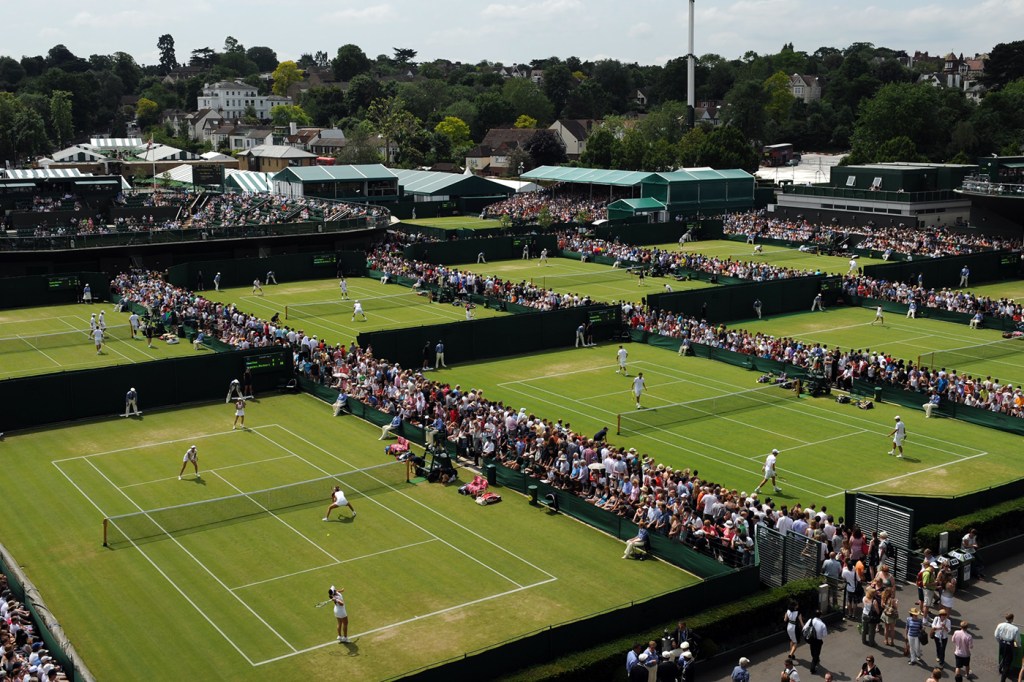
Growing up in England, my introduction to tennis was very much “tennis in an English garden”. Not exactly Wimbledon, but my dad, who has sadly long since passed away, used to play and belonged to a small club with two grass courts surrounded by allotments (including his own) just minutes from where we lived. My brother, sister and I used to go along to club socials in the hope of getting the chance to hit a few balls before the grown-ups came along. Of course, we were soon booted off the courts when the adults turned up to play, but my love of the game grew from that moment on.
I remember rushing home from school to watch Wimbledon on TV in the 1980s, the Borg v McEnroe and Navratilova v Evert (Lloyd) rivalries being my earliest memories. I loved the Wimbledon traditions, the theme tune and the compilations the BBC used to put together to music throughout the fortnight. By the time the Germans – Steffi Graf and Boris Becker – and Monica Seles came along, I was hooked and haven’t missed Wimbledon since despite having moved to France in 1997. Along with the rest of the nation, I was gripped by Henmania in the late 1990s/turn of the 20th century, and the victories (and defeats) of Goran Ivanisevic and Jana Novotna in the Wimbledon final are firmly engraved in my memory.
Surprisingly, I’ve never managed to get tickets in the ballot myself. I have only been a handful of times with someone who has, the highlights being People’s Sunday in 2004 when I got to cheer on the Brit and crowd favourite, Tim Henman, on Centre Court and semi-finals day in 2012, which was of course the year Andy Murray – my favourite player of recent times – made it to his first Wimbledon final. The buzz around the grounds following that win was absolutely electrifying. When he lost in the final to Roger Federer a few days later tears were streaming down my face during his post-match interview, tears that turned to tears of joy weeks later as he claimed the Olympic Gold in front of a partisan crowd beating Federer on the very same court at Wimbledon! This was quickly followed by his first Grand Slam title at the US Open, and he has since become Wimbledon champion twice. I have huge respect for what Andy Murray has achieved, and continues to achieve, on and off the court.
Photo: wimbledon.com
Rolling back the clock to when I moved to France in 1997, this is when my own tennis, which had been limited to socials and the occasional inter-club doubles match in the UK, really took off and developed. One of the first things I did upon arriving in Strasbourg was join a tennis club, as I was really keen to keep playing. It was then I realised how developed the French tennis system was, with ranking points on offer for every win, in team matches or tournaments. Being highly competitive, this fuelled my motivation to improve and compete, and I frequently entered tournaments throughout the year in the numerous clubs around Strasbourg. I am a real fighter on the court, chasing down every ball and never giving up until the last point. I am renowned among my opponents and teammates for playing three-set, three-hour matches despite my advancing age! Even through the lockdown period over the last couple of years, which has been an extremely challenging time for all, I have succeeded in maintaining my highest singles ranking (15/4) since 2012. Having also qualified as an umpire, I was once a lines judge in a professional match for a young Pierre-Hugues Herbert, which was a nerve-wracking experience.
I follow the professional circuit avidly, am active on social media and frequently attend tournaments in Europe, most notably the French Open, the Rolex Paris Masters and Les Internationaux de Strasbourg – the only professional tournament I can get to by bike! As part of the Murraynators, I have also made many friends and have been lucky enough to be present at numerous Davis Cup ties in recent years to support and cheer on Team GB from the stands. More recently I’ve not only experienced the Queue at Wimbledon but have had two absolutely fantastic experiences of working at The Championships, as a Picture Editor in the Digital Team in 2017 and as a Guest Services Team Member earlier this year.
In brief, tennis has become an all-encompassing passion – it’s not just a game, it’s a big part of my life and who I am and I wouldn’t have it any other way.
If I turned professional, I’d be the best one. I’d be No. 1 and win a ton of majors. I can say that, because I never became one, so how can anyone really know?
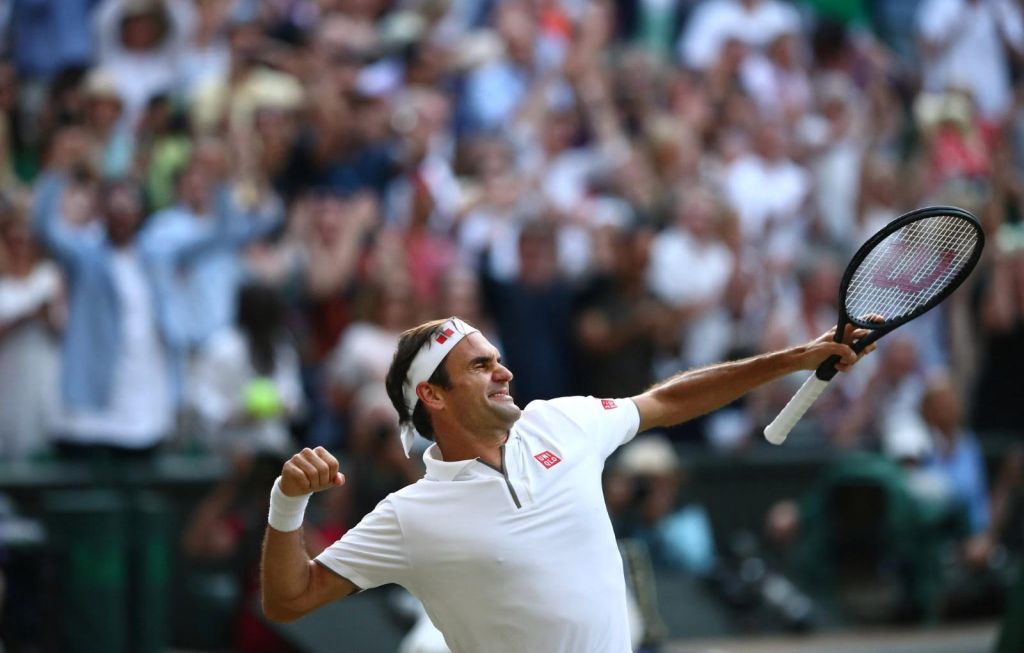
From the New York Times: Roger Federer after his victory over Rafael Nadal in the Wimbledon semifinals. Credit: Hannah Mckay/Reuters
In any case, with practice and dedication and discipline, maybe I would have been able to make it into the Top 10, or 5 (let me dream, this never happened). But I am also just about as tall as David Ferrer, so my height would have meant a disadvantage, even though my serve was one of the biggest weapons anyone had in the club I used to practice in Brazil and later when I played a bit here in Canada. It surely wouldn’t stay that way against the likes of Djokovic, Nadal, Murray, or Ferrer himself.
Little Andre was never good in team sports. Little Andre was always small and hated conflict and too much physical contact. Little Andre was born in the most successful soccer/football nation in the world, and although he loves the sport, he was never quite talented or interested in playing it at any level other than at casual meetings with friends. And then little Andre found tennis, and his life changed.
I started playing because I was always drawn towards being outside, doing physical activities. A couple friends of mine started playing in a club across the street from my…middle school, to put it this way, since the education system is different in Brazil. I was just interested in it, I grabbed a racket from this one friend as he taught me how to hold it and how to hit the ball, at the time against the wall. That must have been the moment I fell in love with it, because I remember I loved the feeling of playing in that moment, and I couldn’t stop bugging my parents to enroll me in some classes.
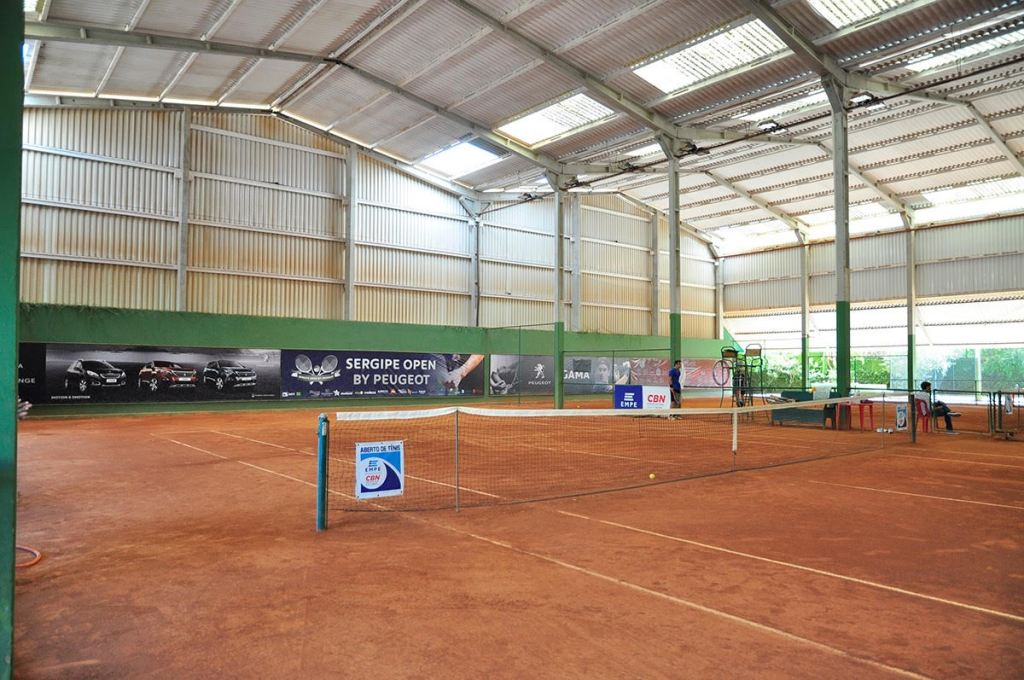
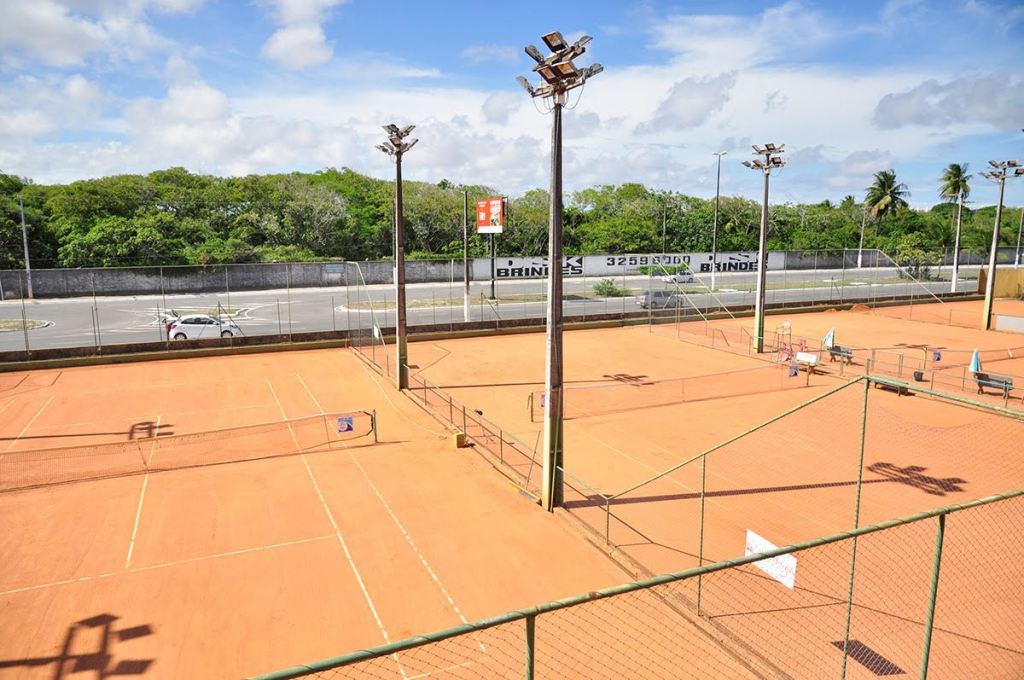
Indoor and outdoor courts at the CET, the club I used to play at in Aracaju, Sergipe, Brazil
I don’t quite know exactly what it is with tennis that makes me love it so much. Sometimes I look at myself and wonder “why the heck do I even like this so much, anyway? I’m literally the only person I have ever known outside of Tennis Twitter who likes this sport that much.”
Maybe it’s the precision. Maybe it’s the strategy. Maybe the scoring system, a hurdle every tennis fan once had to go through to come to love tennis. I personally think I just have a predisposition to enjoy manipulating things with my hands. I am also a musician and used to love drawing (I suck now). The very sensation of hitting a ball perfectly, feeling it on the strings in that moment of truth, spinning it back to the court or flattening it out, hitting the perfect drop shot or volley…there is no feeling quite like it.
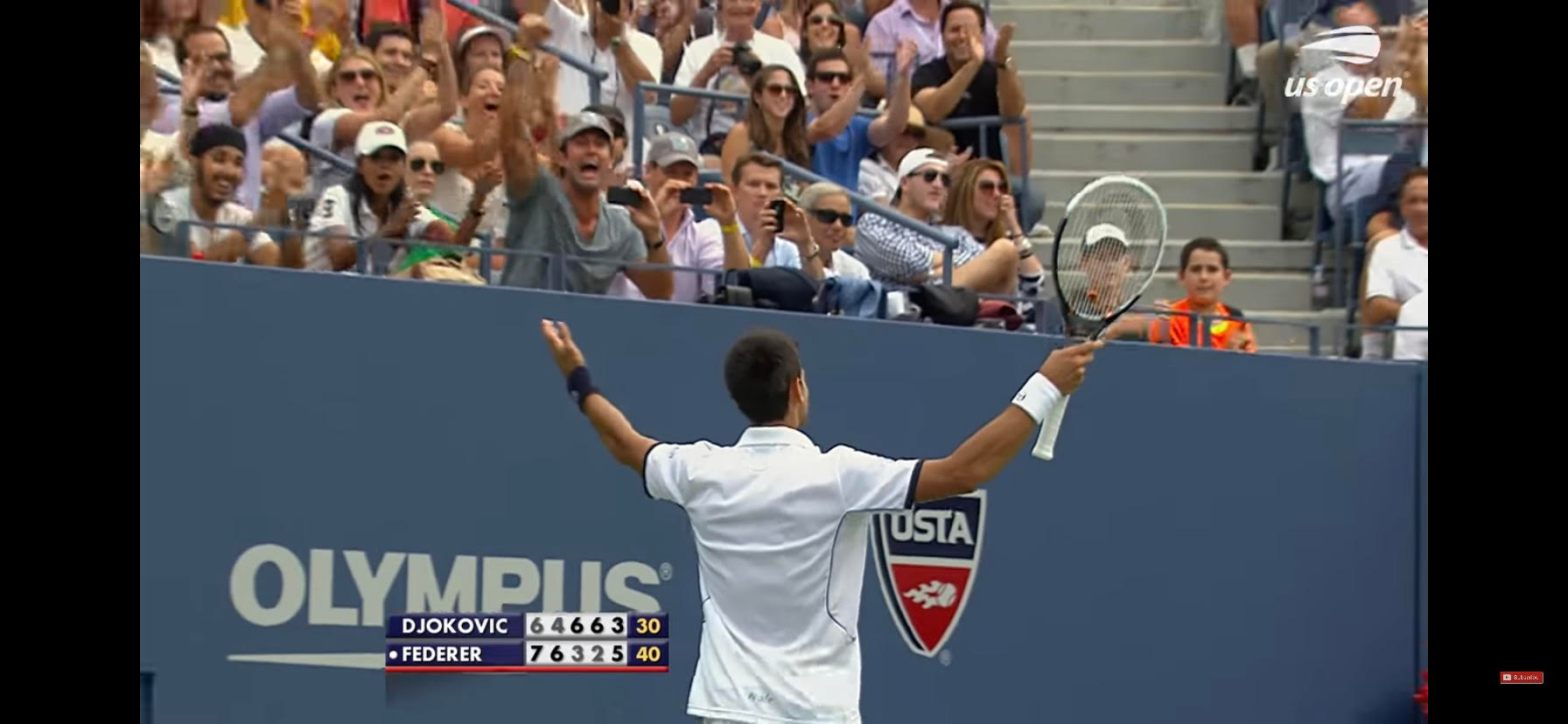
Growing up, I played exclusively on clay courts. Sliding is second nature to me; I also do it on snow now. My two-handed backhand was my best shot, it was solid as a rock, loaded with spin and I could put the ball anywhere I wanted. My socks were stained, and I wore them with pride. I loved Novak Djokovic, he was the underdog in a world dominated by Roger Federer and Rafael Nadal. He smiled a lot and had funny videos on YouTube, so I liked that about Djokovic. I remember watching him losing against Rafa and Roger, and thinking “no one can beat these guys. How are they so good? Nothing works against them!” Djokovic’s matches from the 2007-8 US Open vs Federer and the 2009 Madrid Open vs Nadal in particular come to my mind.
I wanted to be a pro. I started saving money to pay for more classes and time on court, I didn’t want much else besides playing tennis. I liked school, but I didn’t want to do homework: I wanted to play as soon as school was done. I used to watch matches on TV and try to copy what they were doing: Federer’s slice and serve, Nadal’s whip on his forehand which gave me a lot of crap from coaches who kept telling me to finish over my left shoulder, Murray’s and Djokovic’s drop shots. I used to call what these guys do at pro level “magic”. It was a high form of art for me, to hit a tennis ball so well, to move so fast, to accurately hit the corners time and time again.
My project of a career took two major hits: one when I was 13, when I broke my right arm attempting a simple ollie while skateboarding. I stepped on the nose of the board, fell into my extended arm, and broke right in the middle of my forearm, creating a roughly 45-degree angle bend that looked freakishly like a second elbow. No tennis for 6 months. As soon as the doctor allowed me, I went back, though.
The second one was the final nail in the coffin of a dream that was basically born dead anyways: coming to Canada.
While it might seem like it would be better, I was already 16, so no funding for an old dude who hasn’t played juniors yet. I would have started in that exact year, had I stayed in Brazil. Probably would have stopped right away, but hey, all I wanted was to try. Back to Canada: an immigrant family rarely has money to spare, so I had to play in public courts and forget about it all in winter.
It still took a couple years, but I had to admit it was never going to happen. I still loved tennis, otherwise I probably wouldn’t even be writing this right now, and I was already deep into learning the history of the sport and following every tournament, checking as many matches as I could, following the rankings. Of course, I can’t prove it, but I am certain at some point I could name the entire Top 100 in the ATP in order.
Fun fact: I tried starting a tennis blog at least 3 times. After coming to terms with the dead dream of becoming a touring pro, I decided I wanted to work with tennis. I loved reading the match reports and articles in the ATP website, so I decided to try and pursue that. I never really had the drive to put in the work to keep a tennis blog, though, for several personal reasons. One of them I can actually share, as it is part of why I came back to tennis: I started suffering from anxiety when I moved to Canada, and was possibly close to developing depression because I just felt so alone here. No friends, only immediate family, no regular playing. Watching tennis and reading about it was my refuge.
Notice I said I came back to tennis. That’s right. Around end of 2015 (coinciding with the time Wawrinka won the French Open, which left me devasted as Djokovic was still my favourite) I started shifting my focus on a personal project I started with a couple friends from university. It was a Christian music group, and I was also getting very involved in a local church playing bass. Music became my number 1 passion then. My bandmates were my family. Did I forget about tennis? Never. It was just not my daily bread anymore.
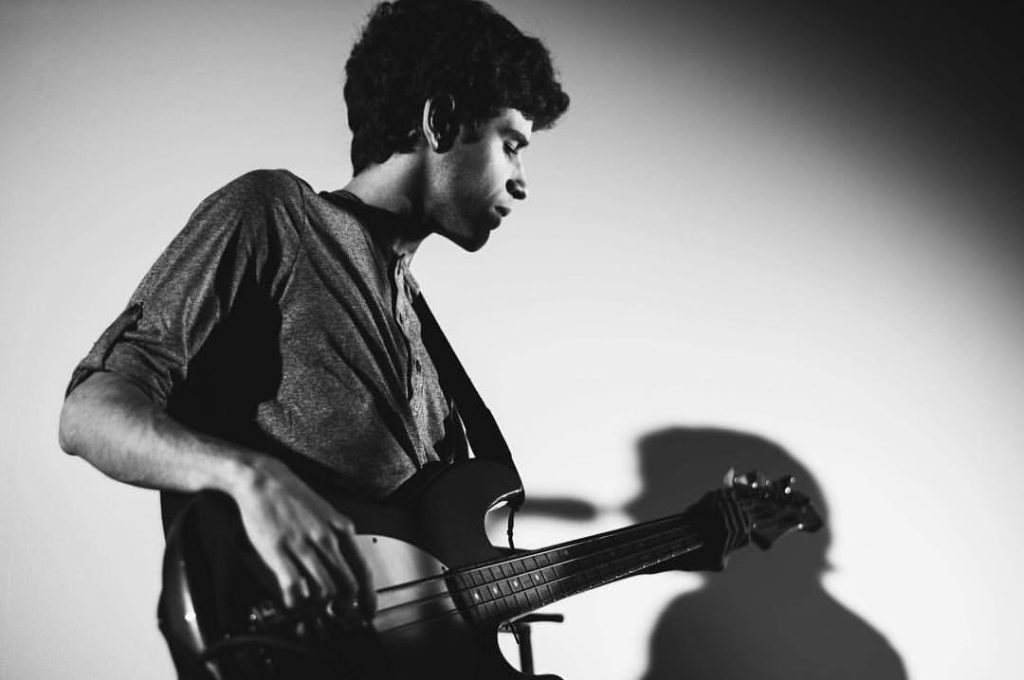
During early morning practice in the movie theatre we used to gather for church in Montreal, Canada. Photo by the talented Dan Schrempf
Fast-forward to 2020. It was the year something really big happened in the world: the Tennis and Bagels Podcast had been launched! The reason it started was because I was struggling to find a job, and I realized that I still loved tennis very much. By then I was in love with podcasts (still am) and thought, hey why not? I got into Twitter, because it’s where it’s at when it comes to sports, and found a great community of fans who love the sport as much as I do, or even more, I daresay.
It was on Twitter that I got the most motivation for my pod, and where I also found my two extremely talented co-hosts: Vansh Vermani, who contacted me first and expressed interest in participating, bringing the pod to a whole new level, and Owen Lewis, co-founder of this website and my first Twitter guest on the podcast. #Respect.
Anyway, the pandemic also started in 2020. I lost my part-time job for about a month and a half, which actually allowed me to focus almost entirely in the podcast. The tennis love was being reignited in me.
By 2021, with my job back in social media and the podcast exceeding all expectations I had for it, smashing all of my goals with immense margin, what is possibly the biggest thing in my tennis life happened: I applied for a job a Tennis Canada, and I got it.
I did not turn out a professional tennis player, but I am as close to the action as it gets now. And several years after deciding I wanted to write about tennis… well, well, well. How the turntables.
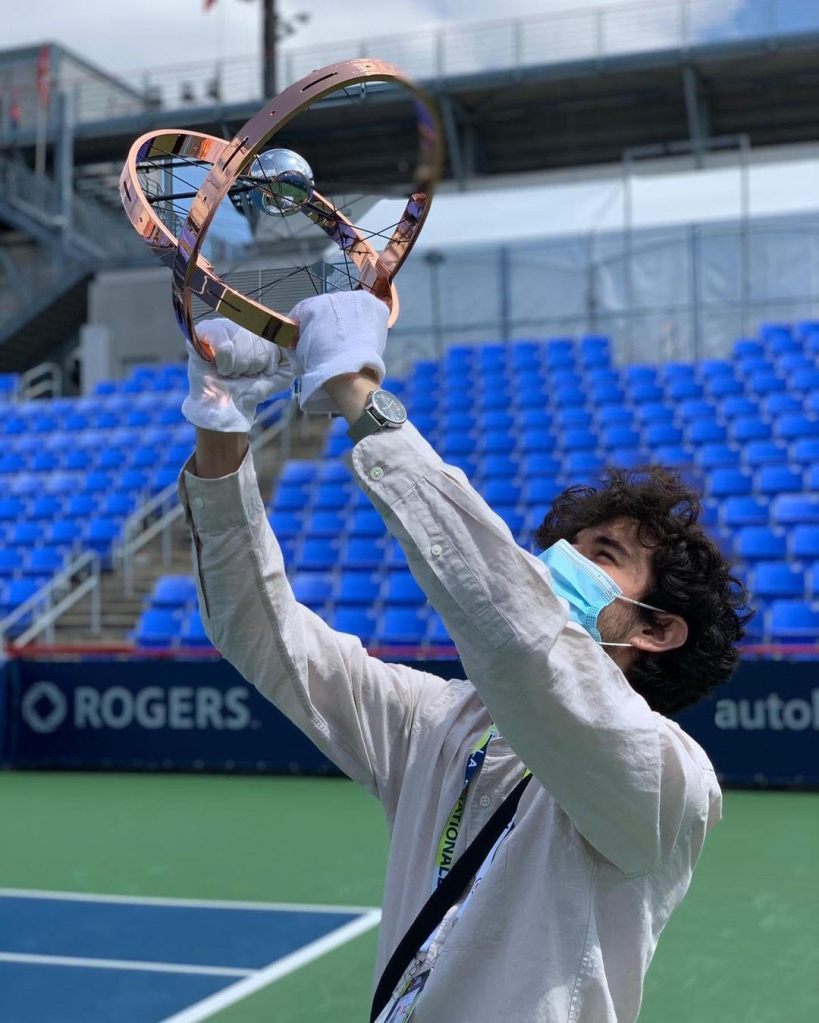
Me holding the National Bank Open trophy in Montreal, 2021, on finals day before play started. What a moment.
As a final note. I would like to congratulate Owen and Scott (also in the podcast world, with one of the best ideas for a show ever had, the Murray Musings, a show dedicated exclusively to live and/or die for Andy Murray) for initiating this project. They are the fans this sport needs, the ones who want to put it forward, bring it to the 21st century without losing the core of tennis which made us fans in the first place. I thank you two for inviting me to write for the Popcorn Tennis website. I don’t write good like you tho. Sorry for the poor English (it wouldn’t be Canadian if I didn’t say sorry at least once.)
Cheers, never give up on your dreams! Even if you have to tweak them a little
Are tennis matches too long? Notably, Andy Murray said that as a commentator, the 2018 Wimbledon quarterfinal between Rafael Nadal and Juan Martín del Potro, though brilliant, was too big of a time commitment. Tennis has played around with other formats — Fast4, a tiebreak to 10 points in place of a third set, and even through timed quarters via Patrick Moratoglou’s Ultimate Tennis Showdown. But have any of these adaptations been successful?
Watch the video at this link, or at the embedded clip below, to find out.
With the 2021 tennis season coming to a close (at least besides Challengers and Futures), tennis fans are looking forward to 2022 and trying to figure out how the landscape of tennis will change. And for the men, the ATP Next Gen Finals in Milan provided eight contenders to shake up the field in 2022.
Who are these eight players? How did they perform in 2021 and what are their expectations for 2022? Read on for a brief synopsis below!
The Field
Juan Manuel Cerundolo
While Cerundolo ended up going 0/3 in his first Next Gen Finals appearance, his clay-court aptitude was fully on display for the world to see this season. Whether it be winning the ATP 250 in Cordoba or his three Challenger titles and two additional finals, the World No. 90 is set to build on his season next year.
Cerundolo’s game is very clay-centric and he uses his heavy lefty forehand and variety to puzzle opponents. However, for him to build on this season in 2022, Cerundolo will need to continue to add more pace onto his groundstrokes, beef up his serve, and become more comfortable off of clay. Cerundolo felt like a fish-out-of-water at times at the Next Ge Finals.
Hugo Gaston
World No. 67 Hugo Gaston disappointed at the Next Gen Finals, going 0-3. However, his 2021 season was fairly successful. While the Frenchman never won a title, he did make the final of the ATP 250 event in Gstaad and made four Challenger finals. Gaston also made the quarterfinals of the Masters 1000 in Paris, beating Kevin Anderson, Pablo Carreno Busta, and Carlos Alcaraz along the way.
Gaston is a lefty with incredible touch. Whether it be drop shots, drop volleys, or pinpoint groundstrokes, Gaston’s ability to place the ball around the court and his unpredictability have made him a huge threat on the tour. For 2022, it’s vital for him to snag that first Challenger. At the Challenger level and higher, he’s 0-5 in finals and has lost his last seven sets. Playing with the precision he has under the pressure of a final will be the next jump for Gaston.
Lorenzo Musetti
Musetti didn’t perform as well as he might have hoped in regards to his home event in Milan,, a microcosm for the second half of his season. The World No. 59 went 1-2, with a sole win over Gaston. Through the French Open, Musetti was having a dream season. He made the final of the Antalya and Biella Challengers, semifinals of the ATP 500 in Acapulco and the ATP 250 in Lyon, quarterfinals of the ATP 250 in Sardinia, and was two sets up on Novak Djokovic at the French Open. However, after the French Open, he won five matches total in a very disappointing stretch of play.
Musetti’s game is built for clay, which certainly made it difficult on the quick courts of Milan. He often stands behind the baseline, working the ball around the court, and has incredible touch. However, like Cerundolo (but to a lesser extent), he relies on his clay prowess and will need to continue to get practice on hard courts. Perhaps it would do him good to go down to the Challenger level. His groundstrokes are also long swings, so that hurts his ability to play on faster courts, and is something he will need to adapt to in 2022.
But, overall, Musetti needs to get confidence in his groundstrokes back.
Holger Rune
Rune far-exceeded expectations this season, winning four Challengers and making the final of another. Rune won one match at the Next Gen Finals, beating Juan Manuel Cerundolo, but lost the other two. However, that shouldn’t soil what has truly been a remarkable season for Rune.
The World No. 103 is physically in a much better spot than before (he struggled with cramps for a while), and his aggressive baseline game can take the racquet out of opponents’ hands. Rune does a great job of waiting for the right moment to pull the trigger. For 2022, it will be important for the Dane to continue improving his fitness so the cramps don’t come back and to work on his ability to turn defense-into-offense, which is fine at the Challenger level, but will need to improve at the ATP Tour level.
Sebastian Baez
We have our second Argentine on this list with Baez. He had an incredible season on the ATP Challenger Tour, winning six Challengers and making the final of three others. And he carried the momentum of his season into the ATP Next Gen Finals, where he went 2-1 in the round robin and made the semifinals, before losing to Carlos Alcaraz. This was a somewhat surprising result, given Baez’s successes in 2021 were almost exclusively on clay. Yet, Baez did a great job adapting his game to the quick surface in Milan.
Baez is a very smart, solid baseliner. He does a great job of not getting pushed back and knows the right time when to pull the trigger on his groundstrokes. For 2022, the key for the World No. 99 will be to continue to play on hard courts and get experience there, to touch up his forehand so that it doesn’t get erratic under pressure, and to try to get a bit more “muster” on his first serve.
Brandon Nakashima
Nakashima had a reasonably successful tournament in Milan, making the semifinals with a 2-1 record in the group stage, but losing to Sebastian Korda in the final four. The Next Gen Finals was the cherry on top of a great season for Nakashima, one that saw him make two ATP Tour finals, and win two Challengers.
At World No. 68, Nakashima is climbing up the rankings steadily. His game, consisting of a well-placed serve, flatter and deep groundstrokes, and much-improved transition/net play make him very tough to play, especially on quicker and lower-bouncing surfaces. Yet, Nakashima made a huge effort to improve his clay game, which is commendable. For 2022, Nakashima’s goals should be winning his first ATP Tour title, continuing to improve his clay game, and working on his movement around the court, which looks stiff at times.
Sebastian Korda
Korda, at World No. 41, had a terrific, although inconsistent, season. Korda won an ATP 250 event on clay, made the final of one on hard, and even made the second week of Wimbledon, losing in the round of 16 to Karen Khachanov. In Milan, Korda went 3-0 in the round robin, beat Nakashima in the semifinals, before losing to Carlos Alcaraz in the final.
The American has a big serve and does a great job with the controlled aggression on his groundstrokes. His backhand is particularly lethal and his groundstrokes slice through the court with authority. For 2022, the top 20 is certainly a possibility for a player with the weapons that Korda possesses. For him to get there, however, he will need to work on his transition game to the net and his rally tolerance, as Korda can get slap-happy on his groundstrokes when he’s not mentally engaged in a match.
Carlos Alcaraz
There are not enough words in the dictionary to praise World No. 32 Alcaraz’s 2021 season. Whether it be the title at the ATP 250 in Umag, the Oeiras 3 Challenger victory, or the quarterfinal at the US Open, the Spaniard made a name for himself in 2021. And his success carried into the Next Gen Finals, where he won the title without losing a match. This included a straight-sets victory over Korda in the final.
Alcaraz’s game is very, very explosive. His serve has massively improved, he’s far from a “clay courter” anymore, adapting his game so that he can play effectively off of clay, his forehand has incredible pop, and he’s extremely fast around the court. His backhand isn’t as good as his forehand, but it’s still a solid shot and he can get good depth and power on both wings.
For 2022, the expectations are certainly high, with more ATP titles and Major second weeks expected, but Alcaraz seems ready to take on the challenge. If he can touch-up his net game and continue to improve his serve, he is going to be a force-to-be-reckoned-with in 2022.
***
So, that’s a breakdown of the eight contenders at the ATP Next Gen. Finals! For those worried about the future of men’s tennis, don’t be. These eight have us covered.
I remember the very first time I properly heard the “thwack” of a tennis ball against a racket: it was 1993 and Pete Sampras was about to win his first of seven Wimbledon championships.
I was eight years old and had always been vaguely aware of tennis on in the background during the summer months – we were pretty much limited to the coverage of the grass tournaments in our house because back in 1993 online streaming wasn’t a thing – but this was the first time my interest was piqued. I sat down with my tennis fanatic mum (she loved Pete Sampras) to watch the match, and I was hooked.
I couldn’t believe how fast the ball flew through the air, the gasps of the centre court crowd, the squeals of delight as Sampras and Jim Courier battled their way through not one, but two tiebreaks over the course of a four set thriller. My mum grinned at me as Sampras lifted the trophy: “I knew as soon as he beat Agassi he would be the champion.” – she wasn’t wrong.
Two years later I discovered Steffi Graf; her Wimbledon final victory over Arantxa Sánchez Vicario remains to this day one of my favourite tennis matches ever. The 16-minute-long 13-deuce game at 5-5 in the third and final set was absolutely mind-blowing and I would urge anyone who hasn’t seen that match to give it a watch – you won’t regret it.
Since then my love for tennis has gone from strength to strength. I wish I could say my skills had done the same but sadly I am very much an armchair observer, with the double fault being my most impressive shot. Sailing back into primary school on a high from Wimbledon 1993 I immediately signed myself up for after-school tennis coaching. Unfortunately for me, all the kids in my class apparently had Wimbledon fever and places were extremely limited, with names eventually having to be drawn from a hat. I still feel very hard done by that the slip of paper with my name on it remained firmly at the bottom of said hat – who knows what I could have become! (And no, it never crossed my mind to actually go for lessons at the local tennis club!)
Over the years I enjoyed watching as much tennis as I could with my mum – it was one of her favourite things to do and, like me, she was very much an armchair fan but really understood the game and appreciated the sheer beauty some players brought to the court. We never really had a “favourite” – although as I’ve mentioned previously, my mum did have a soft spot for Sampras – and just enjoyed great tennis. Of course when Tim Henman and Greg Rusedski emerged we always cheered for them, and we – along with pretty much everyone else – absolutely loved Roger Federer, but it wasn’t until 2004 when a young man from Dunblane won the US Open Juniors championship that I really got hooked on one particular player. And that young man was, of course, Andy Murray.
But that’s a story for another day…
Claire is one of the trio of co-hosts of Murray Musings – a podcast dedicated entirely to Andy Murray. As her first article for Popcorn Tennis suggests, she’s quite old and has been an avid tennis fan for many, many years. A former journalist who now masquerades as a communications and public affairs specialist, she still has high hopes she’ll get to interview Andy Murray one day. Ever the competitor, Claire’s favourite thing about tennis is there always has to be a winner. You can follow her on twitter @brooksybradshaw if being spammed daily about her love for Andy Murray floats your boat.
Last month, having beat Jannik Sinner in his best match of the season, Andy Murray lost to Tommy Paul in Stockholm.
…
As an avid Andy fan, I was obviously frustrated he’d lost to the world #50-something after the performance he’d put in the night before. However, that frustration turned to acceptance as Paul went on to win the tournament – if Andy HAD to lose, surely losing to that week’s best player was tolerable?
But then that acceptance gave way to more frustration. How often had Andy lost this year to the eventual champion of a tournament? Why was he always handed the toughest draws? How could Andy possibly make a comeback if he kept getting thrown into a first or second round worthy of a final?!
Any tennis super-fan worth their salt loves a good clutch into the ether for every and any excuse to backup their favourite player – but did I have a point?
I’ve excavated the stats – here are the players that lost the most times to a tournament’s eventual champion this year.
Joint-Third: Five Losses
On five occasions in 2021, Andy Murray lost to the eventual champion of the tournament he was playing, the third-most times of anyone on tour.
Of course, on discovering this stat, I was instantly enraged at the injustice – until I found out there were eight other players in the same boat as him.
There’s Andy…
Andy Murray:
Rublev in Rotterdam (2R)
Berrettini at Queen’s Club (2R)
Hurkacz in Metz (QF)
Ruud in San Diego (2R)
Paul in Stockholm (QF)
Two other Brits…
Dan Evans:
Karatsev in Dubai (2R)
Tsitsipas in Monte Carlo (SF)
Zverev in Madrid (2R)
Berrettini at Queen’s Club (QF)
Medvedev at the US Open (4R)
Cam Norrie:
Nadal in Barcelona (QF)
Ramos Vinolas in Estoril (F)
Tsitsipas in Lyon (F)
Berrettini at Queen’s Club (F)
Ruud in San Diego (F)
A couple of high-ranked players…
Andrey Rublev:
Karatsev in Dubai (SF)
Hurkacz in Miami (SF)
Tsitsipas in Monte Carlo (F)
Humbert in Halle (F)
Zverev in Cincinatti (F)
Felix Auger-Aliassime:
Evans at the Murray River Open (F)
Cilic in Stuttgart (F)
Humbert in Halle (SF)
Medvedev at the US Open (SF)
Zverev in Vienna (QF)
A few folk around the #30-#50 mark…
Alexander Bublik:
Popyrin in Singapore (F)
De Minaur in Antalya (F)
Anderson in Newport (SF)
Medvedev in Toronto (1R)
Kwon in Nur-Sultan (SF)
Lorenzo Sonego:
Karatsev in Dubai (3R)
Goffin in Montpellier (QF)
Korda in Parma (2R)
De Minaur in Eastbourne (F)
Ruud in San Diego (QF)
Filip Krajinović:
Berrettini in Belgrade (QF)
Carreno Busta in Hamburg (F)
Alcaraz in Umag (QF)
Sinner in Sofia (SF)
Zverev in Vienna (1R)
And then, outta nowhere…
Egor Gerasimov:
Goffin in Montpellier (SF)
Medvedev in Provence (2R)
Karatsev in Dubai (1R)
Sinner in Sofia (2R)
Karatsev in Moscow (2R)
Solidarity in Suffering
Disregarding the fact that Andy has played far fewer tournaments than the others and he was meeting these players early doors (Cam met all bar one of his opponents in finals), there’s a comforting solidarity in knowing that other fans are suffering as well – especially Gerasimov fans!
And then there’s even more comfort in knowing some fans had to watch their hero fall to the eventual winner of a tournament more than five times.
Two players endured six losses to a tournament’s eventual champion and one unfortunate player reached a tally of eight (!) – any guesses who these players could be?
Watch this space for the second part of this article…
On the Tennis and Bagels Podcast, Andre (stay tuned for his origin story) told Vansh and Owen about his experience in Madrid covering the Davis Cup for Tennis Canada. A discussion of the evolving Peng Shuai story is at the beginning of this podcast, and a quick debate over whether Novak Djokovic will play the Australian Open is at the end. Here are links to listen.





 Popcorn Tennis