Usually, the tributes to players you find on Popcorn Tennis are about players who are either established champions (like Owen’s excellent series on the Big Three or Scott tracking Andy Murray’s journey) or tipped for greatness (like Owen’s piece on Carlos Alcaraz or my own attempt to look at Coco Gauff’s prospects). As the grass court season is now underway, the British tennis fan in me wants to engage in some nostalgia. Let’s face it, no other surface triggers those kinds of emotions in the same way, given the sport technically originated as “Lawn Tennis”. It has hit me that it is 10 years since the last high point of one of my old favourite players, and 15 years since the moment she is most remembered for.
I suspect Laura Robson does not get much thought outside of tennis history nerds, British sports enthusiasts, or seasoned members of the fan community. Let’s list her accomplishments for younger fans or those who may have forgotten: she won the silver medal in mixed doubles at the 2012 London Olympics, was the 2008 Wimbledon Junior Singles Champion, reached the doubles final in Miami, reached a 250 final in singles, was a 3-time ITF champion and reached the second week of a major twice (the 2012 U.S. Open and 2013 Wimbledon). She reached a career high ranking of 27 in singles and scored four top ten wins.
All this before she turned 20. It is interesting watching her back and seeing how young she was during the high point of her career.
In many ways, Robson is almost the perfect example of a promising young tennis player whose career was derailed by injuries or other external factors. There have been many women who made a big impact by reaching the second week of a major as a teenager (a less common appearance on the men’s side), yet a good percentage were never able to launch a career that would take them to the peak of the game. Ana Konjuh is a very recent example of this, who made such a big impact by reaching the 2016 U.S. Open quarter-finals at 18 but has struggled to return from an injury she incurred soon after. Similarly, after all her success in 2012 and 2013, a wrist injury side-lined Robson. As she tried to come back, a recurring hip issue limited her progress and she struggled to get matches on the WTA Tour. In fact, the hip issue required three surgeries before Robson realised she was unable to continue a career as a professional tennis player and retired in 2022 aged 28. She had played her final professional match at an ITF in Sunderland three years before.
It is so easy to wonder what could have been for Robson. She had a big-hitting left-handed game, with such a clean stroke on the forehand that enabled her to produce incredible winners and one of the fastest serves on tour. Yet, she also seemed to somehow get herself in position to get any ball. Her match against Petra Kvitova at the 2013 Australian Open was almost like watching tennis played across a mirror. She had a big match mentality to match her game. In the same match, she took the game to Kvitova, broke serve late in the third set with an incredible return winner, and won a tight decider 11-9. If she could win matches against top players like that she could go far.
However, the stats suggest that she still had a lot of development to go. She was getting big wins against top players and by the end of 2013 nearly all of her losses that year were against very accomplished players. Yet, despite being in the top ten for points won behind first serve, she only won 49% of her matches in 2013. This isn’t surprising for a young athlete, as consistency is a trait that is often learned over years. There are many players with big games who struggle to consistently play their best. There’s no guarantee Robson would have conquered that had she been able to stay injury-free. That being said, her peak would likely have come around the late 2010s when there were plenty of chances for success on the WTA Tour, with Serena Williams on maternity leave and no one able to consistently fill the vacuum at the top as the new generation was starting to break through.
Those who know me well might be surprised that I would describe myself as a Laura Robson fan. I tend to prefer watching players whose games aren’t necessarily based around power, like Iga Świątek, Leylah Fernandez, Emma Raducanu, Daria Kasatkina or Karolina Muchová. However, remember the first player I became a fan of was Roger Federer. I am an admirer of ruthless efficiency in tennis, and Robson at her best was very much that. Elena Rybakina would also fit into this category for me, and her game has a lot of power behind it. If anyone wants to accuse me of British bias I would say it would be a fair point and it is a big factor, at least in how I first was introduced to her.
I first heard of Laura Robson when she won the Wimbledon Junior title and the British media got very excited about her prospects as a long-awaited home champion in the main event. Now, I did get caught up in the hype and was very pleased to see her start to deliver in 2012. I am the same age as Laura Robson (give or take a few months) so it was like we were growing up parallel to each other, though on very different paths. Furthermore, I remember my mum telling me she was homeschooled, which I also was. It was cool to see someone with what I felt was a similar background be in the limelight. Now, I realise most young players have to be homeschooled, or more accurately have to remote learn whilst on the road, but I was still getting into tennis and didn’t know that at the time.
When I pick a player, I will stick with them no matter what (as most fans do). If I were to transport my current self back in time, I would still be a fan of Laura, not only because of her ruthless efficiency but also her incredible wins over Kim Clijsters (in the match that sent the Belgian into her second retirement), Li Na and Petra Kvitová in the 2012 US Open and 2013 Australian Open. They were well fought, tight matches, with the established major champions refusing to give up until the last ball. Yet Robson outhit them and was more clutch. Gritty wins that Andy Murray (her doubles partner in that mixed doubles silver medal run) would be proud of. They were enthralling to watch, and if I wasn’t hooked on her story before, I was after that. She helped get a teenager obsessed with the ATP ‘Big Four’ to care more about the women’s game, and now I won’t shut up about how great it is.
In an episode of Talking Tennis WTA Weekly, Caitlin Thompson spoke about how we should appreciate player’s stories regardless of whether they win a major. One name that came up was Kaia Kanepi, who is known for achieving the ‘Grand Slam’ of quarterfinals and pulling off upsets against top players early in draws. She is a great player, can produce a high level and is a lot of fun to have in a draw. The Estonian has a few fans and is highly respected for what she has achieved over her career. Coincidentally, Kanepi was the player who ended Robson’s last big run at a major, beating her in the fourth round of Wimbledon in 2013. It was another impressive run for Laura, especially given that she beat world number 10 Maria Kirilenko in her opening match.
So, let’s appreciate Robson not for what she could have been but who she was: a plucky young player who was able to produce an incredible level on the biggest stages. As we should for players like Konjuh too. And, let’s continue to appreciate her for what she’s doing now. Laura is a fantastic commentator and regarded by many fans as one of the very best working right now. Her knowledge of the sport gives her some really interesting insights which she communicates so well. She is also the tournament director for the Nottingham Open, which is underway at time of writing. It is fair to say that so many fans are responding very positively to how the event has been organised and the experience of attending it. Rest assured, I will be looking to visit in the future.
As part of my appreciation for Laura Robson, here are some of the best memories I have of watching her: I remember when she reached the final of a 250 in Guangzhou, leading by a break over Hsieh Su-Wei in the deciding set before eventually losing to the popular player from Taipei. After her heroics at the Olympics and the U.S. Open, Eurosport swooped in to broadcast the match. So, I got up early to watch the low-resolution live pictures of who at the time was my favourite female player trying to win her first WTA Title. I remember the excitement as she fought her way to the fourth round of Wimbledon, coming back against Marina Erakovic in Round Three. To be honest I was more excited about her performances than I was about Andy Murray (well, until we got to the actual final). In the Olympic mixed doubles final, It was so tense watching Laura and Andy come up just two points short. The battle with Kvitová in Australia was an epic, brilliant battle. This wasn’t a surprise given she defeated Kim Clijsters at the U.S. Open in 2012. Then, she followed it up with beating Li Na and battling Sam Stosur. I was in shock, but also so excited. This was the moment Laura truly showed us what she can do. It is these moments that I choose to think about when remembering her career. They are all good memories for me, and I hope they are for her too.
The headline following the Roland-Garros semifinal between Novak Djokovic and Carlos Alcaraz — billed as Match Of The Year — is that after two great sets, Alcaraz cramped, which sucked all the air out of the contest. And the end of the contest was certainly airless. Djokovic won 11 of 12 games after Alcaraz cramped, with the latter’s handful of atomic winners while standing stock-still somehow making the scene feel sadder rather than lighter.
So let’s talk about the best part of the match first. Holy shit, is Novak Djokovic a great tactician, and holy shit is Carlos Alcaraz an athletic freak of nature. I somehow managed to underestimate Djokovic coming into the match (I thought Alcaraz would win in five sets), then had the audacity to be surprised when Djokovic started proceedings with brutal execution of brilliant tactics.
The first sign was in the third game, when Alcaraz pushed Djokovic out wide on his forehand side with a sharp crosscourt bolt. On the surface, it was an ideal setup for Alcaraz, who has the stronger offensive forehand (or so I thought). Depending on Djokovic’s response, Alcaraz could hit down the line into the open space, dupe Novak with a drop shot, or even come to net and put the point to bed with a volley. Instead, while fully outstretched, Djokovic fired back a cannon shot of a crosscourt forehand. Alcaraz couldn’t handle the pace and shanked the ball long.
That pattern set the tone. Alcaraz, the more powerful player, looked like he was on ice skates as he constantly changed direction to chase down Djokovic’s groundstrokes that were always at least one of deep, angled, or fast. Novak almost won the first set 6-1, then had a set point for 6-2. When Alcaraz did force break points and threatened to get back in the set, Djokovic foiled him with a big serve or simply drilled crosscourt backhands until Alcaraz got tired of having his weaker side pummeled and self-destructed with an impatient winner attempt.
Sometimes I don’t think people understand quite how easy it is for Djokovic to beat most of the tour. The vast majority of his opponents cannot outperform him in a single area. I’m sure he has strategy sessions before his matches, but if I were him, I wouldn’t bother doing my homework before waltzing out on court to beat the latest chump to a psychological pulp.
Alcaraz is the first opponent Djokovic has played at a major since Rafael Nadal at this tournament last year who had a tangible chance of beating him. Before this match, I could actually picture Djokovic pulling up a chair to a table covered in stat sheets and asking his team with a hint of genuine curiosity, “okay, how am I going to beat this guy?”
But the point is that he figured it out, even before Alcaraz’s body atrophied on him. The young buck may have won the second set, but Djokovic was damn close to stealing it out from under his nose. Alcaraz served for the set at 5-3; Djokovic blasted away with forehands and broke back with an obscene backhand winner down the line. Alcaraz had three set points at 5-4; Djokovic dug out of all of them with winners or by forcing errors. When Djokovic brought up break point at 5-all, I thought he was on the cusp of a straight-set win, something I’d thought was a sheer impossibility before the match.
To his immense credit, Alcaraz won the second set anyway. He got back a backhand down the line from Djokovic at 5-all, love-15 that, even fully understanding Alcaraz’s outrageous defensive capabilities, I was certain was too far behind him to possibly hoick back between the lines. In the end, his immense return pressure was telling and he broke Djokovic at love. Alcaraz celebrated like he had won the match.
As it turned out — and here we arrive at the less fun part of the match — it took all he had just to win the set. Through two games of the third, it looked like Djokovic was a bit listless and Alcaraz, the seemingly indefatigable force that had won three straight five-setters at the 2022 U.S. Open, was in the ascendancy. Alcaraz’s cramps, he revealed after the match, were down to nerves rather than physical fatigue. But either way, Djokovic gets the credit for forcing Alcaraz into his hobbled state. Some of Novak’s fans insistently brought up that Djokovic was 16 years older than Alcaraz before the match, trying to cushion a hypothetical loss with a reassuring enough excuse. Well, besides a medical timeout for a forearm issue, Djokovic looked unbothered by the attritional first two sets. In fact, his age may have been his greatest asset in this match. He started the match looser, visibly comfortable even against the high level of opposition. This, Djokovic’s 45th major semifinal, was nothing new for him.
So this is something that Djokovic has to feel in his bones right now, and should give him confidence – he doesn't have to play outside of himself to have a chance today. Doing his usual stuff at a high level is all that is needed.
In stark contrast, this felt like the first match in a very long time — maybe in his entire professional career — that Alcaraz has been seriously pushed beyond his limits. Reminded that there are levels even among great players. And I’m not just talking about nerve management and cramps here. Alcaraz couldn’t convert his break points; he was 2/12 on the match and failed to break in four different games that he had break points in. Entering the match, it seemed like his advantages were firepower and endurance; Djokovic somehow outgunned him in both departments. Djokovic outplayed Alcaraz at net, including how he handled the drop shot! Even in Alcaraz’s losses in the past, I’d feel that he’d either just had a bad day or had come very close to taking a step he wasn’t quite ready for. Here, the gap in experience was painfully obvious. Djokovic made me think of Alcaraz as a kid for the last hour of the match.
*****
You’d think I would have stopped underestimating Djokovic after I picked Daniil Medvedev to beat him in the 2021 Australian Open final (Djokovic lost nine games). But I figured out a way to do it again during the manic leadup to this match, and the first half of the event itself. I thought Alcaraz would win after the second set. I brainstormed the intros and conclusions I would write when Alcaraz won — should I lean on the “changing of the guard” narrative? Should I remind people that Djokovic will probably still win Wimbledon?
Speaking of the changing of the guard, I have a theory: The obsession with the future kings of men’s tennis has always been more about the curiosity over the level required to displace the Big Three than about the actual identity of the kings. We’ve seen talented youngster after talented youngster for a couple generations now. We’ve gotten to know the Tomics and the Dimitrovs and the Nishikoris and the Kyrgioses and the Raonics and the Tsitsipases and the Auger-Aliassimes and the- wow, the Big Three have been at the top for a long time. Exciting prospects are nothing new. The intrigue is over their potential. And for years now, potential for a young, high-ranked men’s tennis player has become more or less interchangeable with the question of if they can beat Novak Djokovic.
Alcaraz did in Madrid last year. I thought he would show us the level required to beat Djokovic in a major for the non-Roger-Federer-and-Rafael-Nadal population. But Djokovic beat him tonight, under brighter lights and greater pressure. Dominic Thiem once said that he wanted to beat the Big Three en route to major titles, because waiting for them to retire would feel like a consolation prize. Like the Roy children in Succession, the young guns of the ATP don’t just want the keys to the kingdom, they want to take them from the current holders. When their father died, you could see a bit of air go out of the Roys with the realization that they didn’t have the opportunity to one-up him anymore. (And, fittingly, none of them ended up taking his throne.)
I have no doubt that Alcaraz will improve as a result of this loss. But he was nowhere close to beating Djokovic; he was about as far away as Thiem was from beating Nadal in the 2019 Roland-Garros final. Maybe Alcaraz — clearly the best prospect for succeeding the Big Three — will show up at Roland-Garros next year, manage his nerves better, and spank Djokovic in four sets. But with Djokovic still in the picture, and playing at this level? Maybe a consolation prize is as good as it gets.
Coco Gauff has been talked about for nearly four years, ever since she burst onto the scene at the 2019 Wimbledon Championships at age 15 (!). She has been discussed as a big star of the future, however now there are increasing doubts over whether she will obtain that stardom.
To be clear, Gauff has had an incredible career so far and one most players would struggle to reach by age 29 – let alone 19. She is a major finalist in singles and doubles, has reached the second week at least once at every major, has won 3 WTA 250 titles in singles, 2 WTA 1000 titles in doubles, has reached the top ten in singles and is the youngest ever player to be ranked world number one in doubles. If that wasn’t enough, she’s won matches against major champions Naomi Osaka, Jelena Ostapenko, Elena Rybakina, Petra Kvitová and Aryna Sabalenka (twice) as well as against former world number one Karolina Pliskova and her childhood hero, the all-time great Venus Williams (twice again). And she is still a teenager! Against her peers in the top ten, she has a decent record apart from against Iga Świątek, against whom she just lost at Roland Garros for the second consecutive year.
And yet, despite all this, the response to Gauff’s tennis is usually along the lines of “that’s great, but will she win a grand slam?” Tennis is a sport obsessed with the four biggest prizes in singles, to the point where any other achievement can be seen as insignificant. Daniil Medvedev was lauded for his Rome title, then promptly lost at Roland-Garros and it ceased to mean much. Clay season over. Anything less than regularly contending for majors, and winning them, is viewed by many fans as not good enough (which if you take a step back is actually crazy given how good all these professionals are).
Coco Gauff, on paper, is following in the path of so many great players before her. Most players who make second weeks of majors as teenagers eventually win at least one. Some quickly become enveloped in greatness (like Serena and Venus Williams), some take a bit longer (like Caroline Wozniacki) but there is a minority that don’t quite get there (like Eugenie Bouchard or Anna Kournikova).
Something that a lot of commentators have picked up on is the tendency for Gauff’s forehand to break down when put under pressure. It is something players have noticed too, with Paula Badosa saying as much to Talking Tennis after she beat Gauff in Madrid. What the exact issue is with the forehand is up for some debate, with some critiquing Gauff’s extreme grip, some looking at the swing and others suggesting that her footwork isn’t sufficiently setting up the stroke. Regardless of why, the shot itself produces a lot of topspin but can lack pace and depth, sometimes to a startling degree given the polished nature of the rest of her game. The biggest problem with the forehand is that it can be rushed by an opponent and generate errors. Gauff said during Roland-Garros that she regards her forehand as a weapon. She is right in that she can use it to dictate points, move opponents around and even hit winners. Though the shot can lack pace, she has the ability to strike with it and hit winners. However, this is provided she is not rushed when attempting the stroke.
Gauff’s base level is clearly Top 20, but her ceiling is yet to be discovered. Not many can name a match where she has shown herself at full capability. Two examples where she performed well for very different reasons were her match against Yulia Putintseva in Rome this year and against Zhang Shuai in New York last year (2022). The Putintseva match is an interesting case, as Gauff dominated a match against someone she has historically had intense battles with. The American was incredibly aggressive from both sides, stepping into the court, attacking well and pushing her opponent back. Yet there was a lot of tactical savvy in there too: Gauff tossed in delicate drop shots after forcing Putintseva beyond the baseline instead of just bashing away. Gauff wasn’t rushed much and she could deploy her weapons, which the slow clay of Rome and Roland-Garros enables.
The Zhang match was an example of Gauff really grinding out a win. Zhang was playing well, being a break up in both sets but eventually the crowd favourite Gauff came through 7-5, 7-5. Gauff wasn’t fully aggressive all the way through, but when she turned it on she was brutal from both wings. The points she turned up the intensity on were usually big ones, when there was a real opportunity to impact the match. She was able to rally with Zhang until she elicited an error. However, the aspect of Gauff’s game the match highlights most is her fighting spirit. She never backed down – if anything, she maintained or increased her focus and fed off the crowd’s cheers. This mentality and general solidity to her game enabled her to turn defense into attack. Her speed around the court is also unbelievable, which boosts her confidence; she’s never out of a point.
The strength and solidity of Gauff’s game is what has got her so far up the rankings so soon in her career, and gives her an advantage over the rest of the field. She is still in the top 10 in the 2023 race at the halfway point of the season. Her breakout run at Wimbledon in 2019 is noteworthy for two reasons in addition to her age at the time: her win over Venus Williams and her win over Polona Hercog. The former was a comprehensive win over her hero, a great champion of the sport. The latter was a win that was ground out, snatched from the jaws of defeat. Gauff rarely gives up on matches, unless she’s a set and two breaks down. It is this fighting spirit that will endure within her for her whole career, and will elevate any evolutions her game goes through.
We saw some progress against Świątek in the Roland Garros quarter-finals. Gauff pushed her Polish rival for a set and a half, trying to change up tactics. However, it might just be that she is playing a similar player with a much better forehand. Both are great movers and returners, so it all comes down to weaponry. Very few players have a defense against the Świątek forehand offence. If Gauff can improve her own weaponry, her best chance to eventually get a win against the (for now) world number one is to make an aggressive pattern of play work.
Every player’s game has evolved. Świątek is clearly making marginal but meaningful gains with her serve. Aryna Sabalenka (who was a whisker away from making the Roland-Garros final before Karolina Muchova made a savage comeback) has reinvented her service motion at age 24. It will take time, but Gauff can make her forehand less of a liability under pressure. Świątek has the best forehand in the sport right now, and even then it is liable to break down when rushed (though in a way that overhits rather than complete lack of control as with Gauff). She has just found a way to better protect it from breaking down, or working points to her advantage sooner. Yet, while Świątek and Gauff’s forehands might seem worlds apart, they are both based around an extreme grip and generating heavy topspin (though Iga is able to flatten it if she needs to). Rather than a reinvention, Gauff perhaps needs to evolve and develop her stroke.
A conversation around Gauff’s weaknesses is valid, but we have not seen her ceiling yet. There has not been a match where she has comprehensively outplayed an opponent having a good day, nor has there been a match where she’s played her best and still lost. She’s established an ability to grind out wins however she’s playing, and that’s what champions do. Champions also evolve their games, doing what is necessary to get them to the top and then keep them there. There is no reason to doubt that this (still) very young player is capable of doing the same.
Miami was the first two-week Masters tournament, in 1997, and Indian Wells followed it in 2004. Since then, these two have been the only tournaments outside of the four Grand Slams to be played across two weeks. The famous Sunshine Double. 96-player draws, 32 seeds ―all with byes―and seven rounds, just like in a major.
Now in 2023, and following the latest intervention of ATP chairman Andrea Gaudenzi that is his “long-term strategic plan” for the ATP Tour, we saw both the Madrid and Rome Masters 1000 events also expanded to two weeks and 96 players. The WTA had no other option but to follow this decision, of course.
But these won’t be the only ones. When the tour returns to China this September after four years, the Shanghai Masters 1000 will also feature this new format. Canada and Cincinnati too, (but only from 2025, as next year the Paris Olympics will leave no space for a pair of two-week tournaments between Wimbledon and the U.S. Open). These tournaments will be played in three consecutive weeks, just to give you an idea of how tight the schedule is going to be ―how they will solve this in 2028, another Olympic year, is an interesting question. For now, Monte Carlo and Paris-Bercy are the only Masters 1000’s that will remain with the classic one-week 56-player-draw system.
All these decisions are made and managed exclusively between the ATP and each tournament. The WTA just follows from behind and has to abide when it’s a combined event. Apparently with the incorporation of the CVC investment group into the WTA board, there will be a lot of changes coming next year regarding the structure of the calendar, but, for now, Doha, Dubai, Wuhan, and Beijing are also remaining single week tournaments.
But so, if this format had already been used for almost 30 years in Miami, and Indian Wells for 20, why is it that until a month ago it had caused generally good impressions, and that just now with the changes applied to Madrid and Rome big discussions around it started to appear among the tennis community?
The Sunshine Double plays a weirdly specific role in the tennis calendar, for both tours. When Indian Wells starts, it’s already been 5 weeks of no big tournaments being played on the ATP Tour, since the end of the Australian Open. There are plenty of minor 250 and 500’s tournaments in the meantime: South American clay, North American and Middle East hard courts, and European indoor, plus the Davis Cup qualifiers. But few of them frequently offer top-tier encounters.
On the other hand, for the WTA, February is the month with the least number of tournaments in the entire year. Yes, it includes a WTA 1000 tournament in the Middle East, but the month as a whole is an uneventful one, especially for players outside the Top 40 that don’t even get a chance to attend the big event. March comes, then, to reactivate the tour with two big tournaments. Players and fans are ready for a big event.
Additionally, as spring clay season starts afterward, Indian Wells and Miami don’t lead to any other important tournament on the same surface. On the contrary, they’re the high point after the sort of transition month that February is. Two bigger tournaments finishing the first third of the season, almost Grand Slam style, makes sense.
***
In 2021, in a weird move that no one really understood, it was actually the WTA who was first to expand a 1000-level event outside of the Sunshine Double, when Madrid, although still featuring only 64 players, started being played across two weeks, with a Thursday start, while the ATP kept the usual one-week, Monday-start format. That meant that for four days the Caja Mágica only featured WTA action. But honestly, it felt more like a blatant attempt to set the women aside for the second week, as there would barely be any women’s matches by the next Monday, leaving the main attention solely for the ATP matches. Which is not surprising, given the tournament’s history of disrespect towards women.
Probably few remember or even noticed this change in the previous two seasons, which shows how counterproductive it was, and that, at the end of the day, it is the ATP who moves the compass―the ATP 250 events in Munich and Estoril gathered most of the media attention during that weekend anyway.
But the big changes have come now in 2023. Both 1000-level tournaments in Madrid and Rome took place over a 4-week span in total, just like Indian Wells and Miami, with expanded draws, more players, more seeds, more byes, more matches, more money, more everything… except entertainment. If I was skeptical about this idea when it was officially announced a year ago, now I’m even more convinced that this only worsens the watching experience and is tougher for the players.
The spring clay swing has always been the favorite part of the season for me. I really do love clay-court tennis. And after almost eight months of nothing but hard courts, I was especially looking forward to what this year’s clay would bring us. Madrid and Rome, back-to-back frenetic tournaments in previous years, were straight up boring, and felt unnecessarily long and stretched out.
My first problem is about the seven rounds that these tournaments now feature, which is the same number as in Grand Slams. (Although the 32 seeds have a bye, so for them it’s just six matches to win the title.) While the ATP’s majors have a best-of-five-sets format and these Masters 1000 are played best-of-three, there is still a clear hierarchical distinction between these two categories. But on the WTA there is no best-of-five. It’s the exact same concept in WTA 1000’s and in Grand Slams: seven rounds and two sets to win a match. Does just a first-round bye for the 32 seeds represent such a major difference? I don’t think so.
Look at Naomi Osaka and Bianca Andreescu. Both were unseeded and won seven best-of-three matches to take their respective 2018 and 2019 Indian Wells titles. Then just six months later, they both won the US Open. For that…they won seven best-of-three matches as well.
Masters and WTA 1000’s statistically represent tougher challenges than the majors at this point. Between Doha 2018 and Rome 2022, WTA 1000 champions faced a higher average ranking (19 – 36, almost half!), more top 10 opponents (29% – 11%), and more top 20 opponents (46% – 29%) than the Grand Slam champions in that same period. Since 2016, there was a different WTA 1000 champion every two tournaments, while there was a different Grand Slam champion every 1.7 tournaments.
Adding an extra round and expanding the number of players will obviously bring all these numbers down, but it is evident that the new 1000’s are looking more and more like Grand Slams (which is indeed the idea Gaudenzi had), yet only award half as many points, and much less prize money―which is not even equal between the tours in Rome, Canada, and Cincinnati.
Unseeded players, which start in the first round, are 100% guaranteed, unless a withdrawal happens, to face at least one top 32 player, and also have a really high chance of facing another one already in the third round, as seeds only need one win to get there. That also means that top 32 players already since their second match are facing top 32 opposition. In a Grand Slam you can often reach even the quarterfinals without having played against a single Top 50 player (e.g., Świątek at the last U.S. Open). For the ATP, of course, things are different – top players have more margin for error due to the best-of-five format; hence, fewer top seeds tend to bite the dust early in majors.
Another issue is that the number of points awarded per round, especially for the earlier ones, just does not accurately reflect the performances put in by players to reach those stages. Getting one, two, and three wins in a seven-round WTA 1000 gives a player 35, 65, and 120 points, respectively. The same but in a WTA 250 gives 30, 60, and 110. It’s 350 for a 1000 semifinal (5 wins) and 280 for a 250 title (also 5 wins). The differences are minimal for tournaments that are two categories apart, and let’s not forget that the matches at 1000 level are against more difficult opposition. On the ATP side, the story is no different: 25, 45, and 90 for three Masters 1000 wins, and 20, 45 and 90 for three ATP 250 wins. At least with a six-round format, one win already awards 65 WTA and 45 ATP points. So basically, leaving the monetary topic aside, and sticking just to the sporting side, winning matches in the new 1000’s is the same, while tougher, than in a 250.
Christian Garín won five matches in Indian Wells, coming from qualifying to reach the fourth round, and left California with a mere 106 points. Winning the title of a regular Challenger 100 tournament gives just six points less by facing considerably weaker opposition, and by winning that same number of matches.
Another important problem is what players are supposed to do during the second week if they’re eliminated early. We tend to overlook how cruel the tennis single elimination system is (the math doesn’t care). After just two rounds of a 96-player tournament, it’s just 32 players that remain alive in the draw, a majority of which are the 32 seeds. That means that by the first Saturday, if not even earlier, there are 64 players not having any tour-level event to play in the next eight to twelve days. Assuming that all seeds advance, on average a player wins only 1.3 matches in a 96-player draw. Rounded up, one win and one loss. So, in the four weeks in which Madrid and Rome are played, on average, players win no more than two matches. That is in a whole month. It’s just not enough for players that are looking to get match rhythm on clay, and to prepare well for Roland-Garros – which comes just one week after the Italian Open finishes.
The solution for this that both tours offered was to schedule WTA 125 and Challenger 175 level tournaments during the second weeks, awarding 160 and 175 points for the champion, respectively. Notice already that these are not tour-level events―WTA 125’s might sound like it, but are really just the equivalent to an ATP Challenger, i.e., separate from the proper WTA Tour.
At first one would think this would increase the opportunities for players, but in reality the WTA 125 tournaments played this last month barely gathered any of the early losers from the WTA 1000’s. But at least all who lost in the first three rounds have the option to attend these―if signed up four weeks prior, of course. The ATP side is less friendly. The second round finished in both Madrid and Rome only on Saturday. That means that advancing to just the third round already means that the player can’t play anything the following week.
Jiří Lehečka, ranked 39th at that time, had entered the Challenger 175 event in Torino as one of the top seeds, to be played during the second week of Rome (where he was the 32nd seed). On Saturday, he had not even played his first match in Rome (a second-round match, as he had a bye) when he was automatically withdrawn from the Torino Challenger main draw because of still being in an ATP tournament at the moment the draw was going to be made. He then lost his match against the revelation of the week, Fábián Marozsán. Lehečka had played only one match, and already had nothing else to play for nine more days, not even on the Challenger tour. “Fortunately” for him, he was then able to enter the qualifying rounds of the same tournament as a last-minute alternate, but only because someone else had pulled out. But he retired after losing the first four games of his match against the world number 845.
Ugo Humbert’s case shows how losing matches in these expanded masters could actually be… beneficial? He lost in the first round in both Madrid and Rome, and being free from those events, he went on to win titles in Challenger 175 tournaments held during their second week. Winning one or two matches in the Masters 1000’s would have probably been the maximum he could aspire for, which is 45 points at best, also preventing him from entering the second week challengers. But he lost. So, he could play those and gained 350 points, which is basically the same as for a Masters 1000 semifinal.
This shows how limited the options to play other tournaments, even at Challenger level, are for the players. For the 2021 Australian Open, the WTA held a 250-level tournament at Melbourne Park during its second week. Why has this idea never been replicated since? Why are Challengers and WTA 125s but not 250s the tournaments that have to be played in second weeks? A 250 played in the same venue of the main tournament, with a Tuesday or Wednesday start to allow more players to enter the draw, and leaving the majority of places to on-site entries, instead of forcing players to sign up four weeks prior, allowing more flexibility, would be a much more ideal scenario.
Also, if the second week tournament is not tour-level, it immediately restricts Top 10 players from entering, as per tour rules. On WTA Top 10 players also face certain restrictions in 250s, but at least the option would still be available in the case of an unexpected early loss.
From a wider perspective, 2-week events mean that the calendar gets much more restricted in regard to its structure and playing opportunities. The week before Roland-Garros, the amount of top 50 players from both tours that attend one of the 250-level tournaments is not significant, as they prefer to get to Paris and start practicing there. Before the Roland Garros qualifying week, though, this year there were only TWO weeks of clay court tournaments outside of the Madrid-Rome double on the WTA, and three on ATP.
The clay surface is already heavily underrepresented in both tours, especially on the WTA, and this expansion only made that problem worse. From the start of Indian Wells until the end of Rome – an eleven-week span – only one WTA 250 event was held (Bogota), and just two WTA 500s. And these numbers have only decreased in the last few years. In 2019, the last year with Madrid and Rome being one-week WTA 1000’s, there were six 250’s.
And then there are scheduling issues. One-week masters follow an extremely simple structure that is hardly modifiable. First round played between Monday and Tuesday, and from Wednesday one round per day until the Sunday final. As simple as that. This also greatly helps the viewing experience for spectators, as it’s much easier for us to be aware of what stage of the tournament we are in.
These two-week tournaments, though, have left a lot of space for the creativity of organizers. Four have been played this year, with three different round-per-round schedules. Indian Wells had the simplest of all, as both draws started on Wednesday, and all rounds were played across two days except for the fourth round, entirely played on Monday. But Miami, Madrid, and Rome all had different starts for the WTA and ATP draws, with the former commencing on Tuesday and the latter on Wednesday. So on the first Saturday, the WTA was playing its third round, but the ATP its second. On Tuesday, one is playing the quarterfinals while the other one the fourth round. This only leads to confusion for spectators.
On this subject, too, night sessions have received a more important status. With more days to schedule matches, there would be supposedly no hurries that would make the idea of starting matches not before 8 p.m. a bad one. Well, there were. Rain problems aside (Madrid had roofs on both its two biggest stadiums, yet these issues still occurred), terrible scheduling decisions meant that on more than just a couple of days, which indicates it was definitely not just a coincidence or bad luck, night sessions finished past midnight.
I could write an entirely different article on this, but in short, it was, as usual, the women’s tour that was hurt almost every time by the terrible planning decisions. The Rome WTA singles final starting past 11 p.m. because of an initial schedule of “not before 7 p.m.” on a Saturday being delayed due to rain was the epitome of four disastrous weeks for women’s tennis. Again, two-week tournaments leave a lot of details free for the imagination of organizations. And what they did with it was the opposite of effective.
How can you still manage to make players play in back-to-back days in a twelve-day tournament? Rome had its men’s semifinals on Saturday and its final on Sunday. The women were on Friday and Saturday, respectively. But this also kept happening in earlier rounds, with players facing each other, one having rested for almost 48 hours, while the other one had finished their previous match just the night before. In one-week tournaments, the schedule is much more homogeneous for all players.
Madrid and Rome just felt unnecessarily long and stretched out. Since quarterfinals start in the second week, each tour has no more than just two matches played each day. That is, only fourteen total matches in the last six days of the tournament in both draws.
Does the frenetic start in the first days with expanded draws and more matches compensate for this? Not really. The first round feels more like an extension of the qualifying rounds, as no top 30 players take part in it. Some seeds don’t make their debut even until Saturday on the ATP. When it is already Friday, and the tournament has been going on for five days, it still never felt like big things were happening. But as all Miami, Madrid and Rome chose to schedule the fourth round entirely on one day instead of dividing it in two, it’s basically just three days, from Saturday to Monday, when there is truly that big energy, with a lot of big matches and action going on everywhere all the time.
I have read, though, that many people actually prefer this over the wildness that one-week 1000s were until the Friday, as it is easier to focus on the big matches and names, instead of having them all overlapped every day. I guess that’s each person’s choice. Personally, I much prefer the constant activity and energy of the previous format―which is also a reason for why I have realized my favorite part of Grand Slams are the first six days, even if still no big matches have really happened yet.
Another common argument, given what we saw in Madrid and Rome, is that these expanded draws gave the chance to players that would usually never get the opportunity to attend a Masters or WTA 1000, to play one. Clear examples are Jan-Lennard Struff reaching the final in Madrid as a lucky loser, Aslan Karatsev reaching the semifinal as a qualifier also in Madrid, or Yannick Hanfmann making the Rome quarterfinals also coming from qualifying. None of them would have entered the draw with a 56-player system. But, do these outlier cases, rather quite improbable, that had barely occurred previously in Indian Wells or Miami also with an expanded draw, justify or make up for all the other problems?
We could extend this same argument into other tournament categories. Let’s say that prior to the 2021 U.S. Open, it was decided that Grand Slam draws would also be expanded, so that Emma Raducanu, instead of having to start in qualifying, would have made it directly into the main draw. As things turned out, she would have won the title anyway. Would that be a real argument in favor of expanding Grand Slam draws to 192 players, because it gave the chance to a lower ranked player to enter the tournament directly and to win it? Maybe we would start seeing players ranked outside the Top 200 making it deeper in majors, just like we are now seeing Karatsev reaching a Masters 1000 semifinal from outside the Top 1000. So, do we have to expand Grand Slams too? I doubt anyone will agree with that.
Daniil Medvedev said in a press conference that he liked this new format because it requires more matches to reach final stages, rewarding consistency and preventing deep runs because of some lucky retirements or walkovers, and that for the Top 8 seeds having a bye as in the previous system was actually a disadvantage. An easy solution for this? Don’t award byes to the top eight seeds and make all 1000-level tournaments 64-player draws.
Iga Świątek also declared that despite being allowed to normally have a day off in between matches, it does not mean that with this format it is less exhausting for the players, as it still requires for the whole duration of the Madrid-Rome double – four total weeks of match and practice concentration and routines. Days off are no vacation days for players. These two tournaments, Roland-Garros, and Stuttgart (that is held before Madrid and is the biggest other clay court event on the WTA Tour), take a total of over seven weeks across an eight-week span. Just four tournaments. Considering that during both Madrid and Rome the focus is still on Roland-Garros, the main target, these levels of physical and mental demands can become even counterproductive for players. It’s different than in the Sunshine Double, where those tournaments work just by themselves.
It was also argued that expanding Rome would make the transition from Madrid easier for the players that made it far in Spain, but reality is that that did not happen, and barely any player repeated their success in Italy. I do agree, though, that the previous format was indeed too tough on players in this regard. I see two plausible solutions: awarding first round byes in Rome to the four semifinalists of Madrid, just like it was done in Beijing with the women that reached the semifinals in Wuhan the week prior, or to not hold Madrid and Rome in back-to-back weeks but leaving one in between for some 500 or 250-level tournaments.
There are two arguments that I do believe work in favor of this format, though. One is that expanded draws are financially the best deal for players that happen to be ranked outside the top 50, which are also frequent members of tour-level events but are just not ranked high enough to enter one-week masters, as well as bringing an incredible chance for people from outside the top 100, who especially on the WTA Tour, struggle to make a comfortable living out of tennis. More days, more total spectators (even if during the first rounds main stadiums look desert because of the low interest that unseeded matches represent, alongside the ridiculously high prices that, for example, Rome had), and more matches, mean more money for the players.
And for how one-week tournaments work, the weekend, when for obvious reasons more people are able to spend a whole day in the tournament or to watch and tune in for matches, just two semifinals and one final seem like quite little to offer for the days that are a synonym of sports watching everywhere in the world―that is a reason for why in recent years Wimbledon’s Middle Sunday make little to no sense for me. Two-week Masters make the first weekend a tennis party, with tons of matches and activity, as are the days in which all seeds are already playing.
I must recognize that in previous years I used to really like the Sunshine Double as a pair of two-week masters. I thought it had something “special”. But now, if it was up to me, I’d make them seven-day tournaments too. Apart from the reasons mentioned previously, also to leave more space to the clay season, which gets shortened and shortened every year even more.
I don’t see this happening at all. I’m just dreaming while I’m awake. But I wish this decision would be reversed, and that we would have our classic frenetic one-week Masters back. I just don’t like two-week Masters.
Farewells in tennis, it seems, never work out the way we’d like them to. Juan Martín del Potro had to play his last professional match visibly hampered by injury; Federico Delbonis drop-shotted him right into retirement. Roger Federer played his swan song with an ailment severe enough that he couldn’t even play singles. Serena Williams had a glorious if brief run at the U.S. Open, but the lead-up to her retirement felt abrupt after a long layoff, like we barely had time to draw breath before saying goodbye to her.
Now Rafael Nadal is in his last act. He intends to return after this ongoing injury layoff, and we don’t know how his farewell tour will go — hell, maybe he wins his 15th Roland-Garros in 2024 — but today he announced that he will be missing the Parisian clay, a surface he has mastered beyond belief, for the first time since 2004. He has not played since January, and he has not looked remotely like himself since last July. With Nadal, a player who has been harassed by injuries throughout his career, you hoped that he’d be able to go out on his own terms, that when the brilliant tennis shots faded, the final impression would be his indomitable fighting spirit. Roland-Garros was always a bright spot in the calendar for him, an event he could always ensure he was in shape for, to the point that conspiracy theorists called the reality of his injuries into question. This year, his aging body broke down badly enough that he couldn’t fix it.
Actually interesting reading Nadal separate his body from his tennis in this way. He still clearly has the mind and desire to compete of someone much younger. As it was always going to be, his biggest rival is himself, just running out of repairs https://t.co/t74BV6HA9v
I try not to talk about my preferences between players very much. I spent the first couple years of my tennis obsession as a hardcore Fedfan, and though I don’t regret that period, I eventually realized my love for Roger was blinding me to other players and tilting my perception of the game more than I was comfortable with. I’ll happily admit to a soft spot for Sara Sorribes Tormo, and I’ll get swept up in the Carlos Alcaraz hype alongside everyone else, but admitting that I root for certain players has always felt too vulnerable to me, at least in a public forum. I like the thought of being objective, and besides, certain fans constantly lurk on Twitter to screenshot anything they see as evidence of bias.
But I’ll admit that Nadal has made me feel some things I haven’t felt since I adoringly watched Federer in my entry-level days as a tennis fan. I don’t watch Nadal’s matches without fail, and I don’t always root for him to win. The time he takes between points annoys me sometimes, as does his almost religious humility, which he often prioritizes over the truth. (Example: Nadal saying he’ll need to play his best before hitting a bunch of super-basic crosscourt forehands en route to demolishing Richard Gasquet for the 18th straight time.) As a competitor, though, he’s kind of irresistible. I wrote a profile of Nadal in early 2022 that I thought was the most accurately I had depicted a player before, and that’s down to Nadal’s best qualities being so damn great. When Nadal was on the doorstep of winning the 2022 Australian Open after I’d written 4000 words on his fraught history at the tournament, I cried a little in sheer stress during the final game against Daniil Medvedev.
The first time I got the Nadal Experience was watching him play Gilles Müller at Wimbledon in 2017, which I watched on a hotel room TV screen late at night in New Zealand. Müller went up two sets, and even after Nadal managed to even the match, clearly had the edge in the fifth set. Nadal would scrap his way to a gritty hold; Müller would bang down a quartet of big serves to immediately hand off the pressure baton. It was perfectly obvious to me that Müller was going to win. Even when Nadal saved two match points at 4-5, Müller kept firing aces, looking totally unflappable.
But then Nadal saved another match point, and another and another, eventually earning a few break points at 9-all in the fifth set. He didn’t take any of them, and Müller finally hit pay dirt with a break of serve at 14-13 to seal the win. Why was watching this match the Nadal Experience, you ask? Well, Nadal was clearly the worse player on the day. He could have lost in straight sets, and certainly should have lost earlier in the fifth set than he did. Yet he chose to ignore the fact that he just didn’t have it that day, instead dedicating all his energy to finding a better level whenever possible, and in doing so came within millimeters of pulling victory from the digestive tract of defeat. When Müller finally converted match point, I realized I was surprised — I’d gone from being positive of Müller’s win to expecting Nadal to find a way through. I hadn’t thought my ironclad certainty of Müller’s win could be shaken. Before the match, I saw Nadal only as Federer’s rival. After, I understood why he had a huge fanbase of his own.
I’ve watched Nadal inject quality into matches countless times now, either live or in old highlights. He’s participated in more epics than, I think, any other player in history, and we have his tactical and mental tenacity to thank for that. Here are 12, and these are just off the top of my head:
The 2005 Rome final (trailed by a double break in the fifth set; lasted over five brutal hours on clay as an 18-year-old)
The 2006 Rome final (saved two match points)
The 2007 Wimbledon final (pushed the match to a fifth set from two sets to one down)
The 2008 Wimbledon final (closed the match in five after failing to win the third and fourth sets despite golden opportunities)
The 2009 Australian Open semifinal (won in five after another fourth-set tiebreak loss. Also, for my money, the best match ever played)
The final two days later (won in five on exhausted legs)
The 2012 Australian Open final (pushed the match to a fifth after getting steamrolled for the best part of the first four sets)
The 2013 Roland-Garros semifinal (won in five after ANOTHER fourth-set tiebreak loss)
The 2017 Australian Open semifinal (ditto)
The 2018 U.S. Open quarterfinal (ditto again)
The 2018 Wimbledon semifinal (forced a fifth after trailing by a set and two sets to one in arguably the best men’s match of the 2010s against an astonishingly good Djokovic)
The 2019 U.S. Open final (won in five after almost blowing a two-set lead)
The vast array of very good four-setters Nadal has played against Federer, Djokovic, and others.
Here is a great highlight package of the best tennis match I’ve ever seen: the 2009 Australian Open semifinal between Nadal and Fernando Verdasco. For five hours and 14 minutes, two Spanish lefties blasted each other with angles, spins, and violent pace on a molasses-slow court. Pure glory ensued.
As a fan of tennis, I want to watch epic matches, and Nadal has delivered them, more brilliantly and more often than any other player I’ve watched. Most tennis players, if sufficiently overmatched, succumb to their fate. Nadal does not. Most go through spells in a match when their motivation appears to flag alongside their game. Nadal does not. And as his opponents are forced to match his intensity, Nadal produces epic match after epic match. Federer has a legacy as the pioneer of the Golden Era, Djokovic has a legacy as the master of it, but I think Nadal, more than either of the others, was the player who made it. (I firmly believe Djokovic is a better player than Nadal, but considering Rafa’s 14 Roland-Garros titles, his career might be the more difficult to replicate in the future.) Nadal’s the lynchpin, the inflection point — Federer-Nadal and Djokovic-Nadal have produced more relentlessly fantastic matches than Federer-Djokovic. The latter is a brilliant rivalry in its own right, and it’s produced plenty of fierce drama (2019 Wimbledon) and good quality (2014 Wimbledon), but there’s a certain layer of intensity that you miss when Nadal’s not on the court: a bad set here, a poor miss on a huge point there. Here’s Brian Phillips on Nadal in a 2013 Grantland article:
Win or lose, no one pushes the other top players to new heights like Nadal does, which is why he’s been involved in a disproportionately large share of great matches over the last … well, eternity. Wimbledon ’07, Wimbledon ’08, Australia ’09, Australia ’12; that’s just scratching the surface. Federer’s the greatest player ever, but I’m increasingly convinced that Nadal is the key to the greatness of this whole era.
The piece is about the 2013 Australian Open final between Djokovic and Murray — a match, and indeed a tournament, that Nadal didn’t even take part in. But Phillips dedicated a big section of the article to Nadal, and how much more exciting the tour was with him on it. (The last line: “Get well, Rafa!”) Nadal promptly got well, went undefeated on hard courts until after the U.S. Open, won Madrid and Rome and then Roland-Garros for the eighth time, and grabbed the #1 ranking back from Djokovic.
Getting to watch the 59th edition of my favorite rivalry in tennis, Djokovic-Nadal, from the stands, ranks at the very top of my tennis experiences.
There’s a strange poetic brutality to the fact that as his career winds down, Nadal’s tenacity will be the only trait whose quantity resembles that of his prime version. The movement has been long diminished (though Nadal did pay the devil for enough youth required to out-defend Novak Djokovic in the Roland-Garros quarterfinals less than 12 months ago. Time moves quickly, doesn’t it?), and when Nadal can’t move properly, the rest of his game slows down with him.
*****
Watching players progress through the last chapter of their careers scares me a little bit. Not because I have to imagine a tennis tour without them; nothing lasts forever, and there are always more than enough characters to sustain my entertainment, if not constant wonder at the quality of play on display. What’s scary is seeing an athlete become a version of themselves that bears no resemblance to their peak self. When I watched Federer wind down his career at the Laver Cup, I had a hard time enjoying the spectacle, despite the scene being set to perfection — the doubles partnership with Nadal, the presence of Djokovic and Murray, Ellie Goulding calling the event “Lava Cup” on Twitter — because I couldn’t recognize the man hitting the ball. The event might have been fun, but Federer didn’t choose it; he was forced into a consolation prize because he couldn’t play singles even after almost a year and a half of inactivity. The most nostalgic part of his actual performance in his final match, the contest itself, was that he failed to convert a match point on serve.
There is a phase before the last chapter, the space Federer hung out in between 2011 and 2019, Nadal occupied from 2017 to 2022, and Djokovic is still in the thick of now, where champions are physically diminished from their prime versions but still motivated and healthy enough to play world-beating tennis. It’s delightfully fun to watch, and though you always know the all-time-greats aren’t immortal, it allows you to feel like they are for a few years. But it always comes to an end, and what follows is often brutal.
I owe a lot, maybe most of my time following tennis, to Nadal. When I joined Twitter, the first people I properly interacted with were Nadal fans — their enthusiasm was infectious. I’ve written about him a lot, from that overlong profile to thoughts on his injury return to recaps of his matches. When I want to show a friend who knows nothing about tennis a glimpse of the magic of our sport, I fire up highlights of the 2009 Australian Open final and show them the famous rally at 2-all in the fourth set. He’s anchored me through a lot of my tennis obsession, and I’m very grateful for that.
Nadal’s career has featured moments — too many to count — that felt perfect. Wins and losses. The 2008 Wimbledon final was the peak of an impeccably constructed story arc (the Federer rivalry, the losses in the 2006 and 2007 Wimbledon finals). Even though Nadal was hampered towards the end, the 2021 Roland-Garros semifinal felt kind of perfect too: a brutal loss to his biggest rival in Djokovic after years of dominating him in Paris. Endings are never perfect. They sneak up on you when you’re not at your best. They wake you up when you’re smack-dab in the middle of deep sleep like an errant fire alarm. (This happened at my apartment a few months ago, and when I opened the door to check on one of my roommates before evacuating, he sat up straight in bed and said with absolute seriousness, “dude, I don’t feel good.”) They go off-script.
And I’m really concerned that Nadal’s farewell is going to go off-script as badly as Federer’s and Delpo’s, that his lack of confidence from 2015 and injury-impaired performances from parts of 2021 that I had to watch with gritted teeth will form a kind of hellish mash-up. I’m not worried about the state of the tour — Djokovic seems to have a couple years left, Alcaraz is clearly a generational talent, Jannik Sinner is a great rival, Holger Rune is constantly getting better — and I’ve had months to get used to a Rafa-less tour. What I’m most worried about is a pale ghost of Nadal being the last Nadal we get to watch on court, something even worse than the version that surrendered a breadstick to Tommy Paul a few months ago, which is why I’ve apparently written a career eulogy for Rafa even though he’s not retiring. For that reason, underneath the sadness I felt initially, I’m relieved to hear Nadal is skipping Roland-Garros this year. Even if we have to watch the clay without its king.
Ons Jabeur, a 28-year-old born in Ksar Hellal, Tunisia, has had outstanding success on the court. Her career highlights include two major finals and a title in Madrid – and Jabeur is nowhere near done with her career yet. Despite her accomplishments, though, Jabeur’s ethnicity has been a source of controversy in African countries. Some believe she is African, while others claim she is Arab. Many people have fought over her ethnicity as a result of this issue. The dispute has elicited strong comments from all involved, begging the question of why Jabeur’s ethnicity is such a difficult question to answer and why people are discussing it.
One intriguing aspect of the debate surrounding Ons Jabeur’s ethnicity is that she has not publicly stated how she identifies herself. Jabeur has described herself as representing the nations from Morocco to Oman (the Middle East), but she has not expressed her own opinion on the matter. It is unclear whether she identifies as African, Arab, or something else entirely. The debate about her identity is largely driven by others, rather than by Jabeur herself. So why is determining Jabeur’s ethnicity so critical? And why has this argument provoked such intense reactions from both sides?
One of the reasons why Jabeur’s ethnicity has become a topic of debate is that North Africa is a region with complex and diverse cultural and ethnic backgrounds. Tunisia, Jabeur’s country of birth, is located in North Africa, a region known for its blend of African, Arab, and Mediterranean cultures. The region has a long history of colonization, which has resulted in the imposition of new cultural and ethnic identities. Tunisia, for example, was colonized by France for over 75 years, and this colonial experience had a significant impact on the country’s cultural and social fabric. As a result, some Tunisians identify more closely with Europe and the West than with other African countries, so many North Africans have mixed heritage and often identify with multiple ethnicities.
The discussion about Jabeur’s ethnicity has been especially heated since it touches on questions of identity, culture, and power. The question of whether Jabeur is African or Arab is not just a matter of reality, but also of identity politics. Many people take pleasure in identifying as African because it ties them to a rich cultural heritage and a common history of fight against colonialism and tyranny. Similarly, for people who feel affinity with other Arab countries and a shared cultural past, identifying as Arab may be a source of pride. It is crucial to highlight that being Arab is not a nationality, but an ethnicity.
It could be argued that the root of the problem stems from a lack of understanding about the differences between race, ethnicity, and nationality. Over time, people may have become confused about the distinctions between these terms, which has contributed to the confusion and misunderstandings about identity that we see today. In a nutshell, race is primarily concerned with physical characteristics, ethnicity is concerned with shared cultural identity, and nationality is concerned with citizenship or geographic origin. While these terms are often used interchangeably, they each have distinct meanings and implications for how people are classified and treated in society. Clarifying the differences between race, ethnicity, and nationality may help to promote understanding and acceptance of diverse identities.
Ultimately, the debate about Jabeur’s ethnicity highlights the challenges of defining identity in a region that is characterized by diversity, complexity, and competing power dynamics. The debate is layered, and there are no easy answers. However, the key point is that Jabeur’s ethnicity is ultimately up to her. She has the right to identify as she chooses, and it is not up to anyone else to dictate her identity. At the same time, it is important to recognize the historical, cultural, political, and economic factors that have contributed to the debate about Jabeur’s ethnicity and to engage in a constructive discussion about these issues.
It is perfectly fine to identify with Ons Jabeur or any other person based on their ethnicity, nationality, or any other characteristic that resonates with you. However, it should also be known that identifying with someone from a particular group does not give us the right to dictate how they should see themselves or how they should identify. Each individual has their own unique experiences, perspectives, and feelings about their identity. So let’s respect their autonomy and allow them to define their own identity without imposing our own ideas or expectations onto them.
“If I stop playing, I don’t know what I’m going to do…” – Andy Murray via his Resurfacing documentary.
***
It’s a desperate sort of love that Andy Murray has for tennis, the sort that you’re kind of lost if you’ve had and then you don’t. It goes back to the start for him, engrained deeply in his adolescence, far beneath a darkness he couldn’t yet comprehend. And so tennis held Murray’s hand and walked him through confusion, maturing alongside him into something that allowed him space to breath beneath the world heaviness. A sport of historical pristine met a messy young man and it all made sense.
That’s what I reckon defines this guy, this animalistic keenness to just keep it going even if it’s almost breathless, even if it’s lifeless and just about dead, he just begs it back to life and asks it for just one more time, one more step out on the line. Sometimes it drifts away anyway, graveyards itself beneath a mound of dirt and devastation. But pushing his arms up through the earth of this world to pull himself free is what Murray is. The undertaker, the broken metal man of myth that limps himself out there on the hunt still. Judged for it by others matters to him not, for nobody judges him harder than he himself, standardising his work today to a 25 year old peak version of himself and holding his 35 year old self to the impossibility of that. Desperation at its core is desiring something that is outwith your reach and still reaching for it regardless. It borders on delusion and flirts with madness. It does when it shouldn’t. Can when it can’t. Is when it isn’t.
“But why does he keep going with it?”
Because tennis has been there for him and then it just won’t be. It’s a fear of the unknown but it goes both ways because tennis isn’t ready yet either, handcuffing them together through weeks like the last, still there, still going, just about breathing, still trophy lifting. Desperation is the longest period between Challenger tour level titles ever, afterall…
Nothing will be able to fill the hole tennis will leave. Those gaps in our lives where love once was scream at us and we have to listen. It hurts but we owe them because they helped when nothing else would. Murray, a master adaption artist on court, will be fine when it’s his time to step off it, he really will be. But he’s right to be scared of whatever is next because it won’t be this. It’ll so very much not be this.
People always say everything must end eventually. Sure but why are we in such a rush to get there? As though it’s some sort of a race to the finish so we can, what, turn around and say “well, that’ll be that then…”?! Fuck that, keep it going until your damn arms fall off and your legs crack, Andy Murray. Keep yourself desperate a little bitty longer.
After that magnificent Madrid Open final between Iga Świątek and Aryna Sabalenka, some are hoping that this is a milestone moment in women’s tennis.
And it is – to an extent. Given that we’ve had two close, high quality finals at the top level of the WTA Tour in 2023 (Australia and Madrid), the game is moving into a healthy position where the entertainment value for most sports fans has gone up. However, some are taking this as a sign (or hope in some cases) that the era of Świątek dominance is already over.
There are also some issues with this stance. Arguably, Świątek has not shown signs of dominance since the start of 2023. Aryna Sabalenka has made clear improvements in her game and is a winning machine right now, whilst Elena Rybakina has made 3 of the 4 big hard-court finals so far this year. Barbora Krejčíková has also shown that when she can put it all together, she is a definite contender.
However, though Świątek may not be the clear top player on tour any more, she still is on clay. Every loss she’s suffered in the last 12 months on the dirt has been in three-set matches against elite players at their best (Sabalenka in Madrid, Caroline Garcia in Warsaw). In addition, we know that the conditions in Madrid are very different to other clay events, with the quicker court and thin air benefiting Sabalenka’s raw power shots more than Świątek’s high-margin spin barrage. It is likely that the result of the Madrid final would have been reversed on more traditional clay such as in Rome or Paris.
The second week of Madrid was an opportunity to reflect on perceptions of Świątek and how she handles being challenged, especially after the battle she had with Ekaterina Alexandrova in the fourth round. Świątek is the best front runner in the sport right now. If she takes control of a match, she rarely loses her grip on it – her ability to maintain control of a match even when not at her best is astonishing. The finals she played against Ons Jabeur in Rome and at the U.S. Open in 2022 showed she could deal with a very skilled opponent coming back at her. Since the beginning of 2022 Świątek has only lost two matches from a set up: against Jelena Ostapenko in Dubai last year and against Krejčíková in that memorable Ostrava final. In addition, both opponents had to be at their absolute peak to do it.
Despite the loss, Świątek hounded Krejčíková until the very end of this match, saving multiple pinch-me match points. Krejčíková needing an ace to close out the final felt fitting.
However, Świątek’s frontrunning abilities can mean that during matches where she doesn’t take control initially, even including situations where she has to scrap out the first set, she looks frustrated. This is understandable – if you get used to winning and you know what you can produce, it’s possible to be more annoyed when things don’t flow as smoothly as you feel they should. Of the 14 times Świątek has lost a match since the beginning of 2022, eight were in straight sets, and half of those straight set losses have been in 2023 alone. It’s possible, then, that Świątek capitulates when unable to gain control. This may be contributing to her recent struggles with her rivals at the top of the rankings.
However, there are also stats more favourable to Świątek’s fighting abilities. Before 2022, Świątek’s record in deciding sets was ropey (on the main WTA Tour). From 2019 to 2021 her win-loss record in deciding sets was 13-10. In 2022, this improved massively to 16-5. She is currently 2-1 in deciding sets this year (18-6 across both seasons). Of those 18 wins, 11 have been from a set down. Now, if you combine 2022 and 2023, Świątek has lost 12 matches after losing the first set but an almost 50% record of coming back is still better than most on tour. And, if she comes back and takes it to a third set her record is still 11-4 (including the Madrid loss).
Furthermore, of the 4 straight set losses she’s suffered in 2023 (if we only want to look at recent data), there have been mitigating factors for all of them. Three were due to issues with recovery, illness or injury and one was due partly to an opponent playing just too well (the Rybakina loss in Melbourne). The Madrid final was more of an indicator of how hard it normally is to beat Świątek and the level Sabalenka had to produce was stunning and made for some epic tennis.
In terms of emotional management, Świątek could be better at not showing her frustration as often. However, this is not only very difficult but also an unreasonable expectation. Even Serena Williams regularly displayed stress or frustration during difficult matches, and she usually came through to win them. Yes, Rybakina’s ice cool on-court attitude makes her a total boss but she is one of very few who can pull it off, and even then she lets the façade crack at points. Players showing emotion in the heat of battle is one of the central qualities that makes tennis relatable for a lot of fans.
Throughout tennis history, whenever someone has broken away from the pack, a rival has always stepped up to challenge them. Billie-Jean King became the main challenger to Margaret Court. Martina Navratilova mastered her fitness and raised her game to build perhaps the greatest rivalry ever with Chris Evert. Monica Seles rose above Steffi Graf within two years of the German establishing her dominance in the game. Martina Hingis was quickly eclipsed by the power games of Lindsay Davenport, Venus Williams and Serena Williams. When Serena herself moved ahead, Venus and Justine Henin kept her honest whilst Maria Sharapova became a star alongside (in terms of popularity even if Serena dominated the rivalry) the younger Williams sister, and Victoria Azarenka gave Serena some fantastic battles during 2012 and 2013. Iga Świątek is no exception, as Sabalenka is proving so far. It would appear that the Pole was expecting a challenge though, and that is also the key to maintaining one’s place at the top.
*****
Iga Świątek has a lot of strengths. Her forehand, her return of serve, her movement and her brilliant frontrunning abilities have been praised for a while and rightfully so. However, it has meant that observers can underrate her (if that is possible, given her prominence at the top of the game) in other areas. Her backhand is a weapon that is not talked about enough, and always has been throughout her career. She has always been able to get some free points on her first serve but has recently upped the ante. Likewise, her match management in tight situations has quietly gotten better through her career; she is becoming increasingly reluctant to rule herself out. Even when she falls behind, she usually wins. Like all great players (and by winning 3 majors, reaching world number one, and achieving that winning streak in 2022 she is already on the select list of all-time-greats) you can never count her out.
Świątek’s performance in the Madrid final, though it wasn’t enough for a win, highlighted her fighting abilities. An opponent has to be playing their very best to stop Świątek even on a bad day. Even though Rybakina and Sabalenka (and Krejčíková) are regularly challenging her, she’ll be ready for them and will adjust. I’m just looking forward to the brilliant tennis these battles will produce. The bar Świątek has set is being met, which is a big reason why the WTA is producing can’t-miss tennis right now.
Watching Holger Rune on court is often funny. He’ll celebrate points that are not particularly important. He has a baby face, and he often looks like he’s cringing, which makes his crowd-urging motions look delightfully awkward. The electric tennis he’s capable of producing only adds to the effect. I’m sure Rune’s expressions are more a product of instinct than a manifestation of insecurity, but his face resembles more the mildly uncomfortable child in a carseat than the focused genius at work. Alcaraz celebrates and engages the crowd with similar motions, but his expression is saying, I am a king, and you should appreciate my kingliness. Rune’s features say that he’s hoping the crowd will applaud him, but that he’s not sure if they will.
While Alcaraz has ascended to Golden Boy status, Rune has managed to annoy the masses a handful of times throughout his fledgling career. It’s not just that he isn’t as good as Carlos yet. He admonished himself with the f-slur while playing in the Biella Challenger in 2021. He makes snarky social media comments, whether it’s in response to someone else getting the Most Improved award in 2022 or to a fan who Rune feels hard done by. He yelled at his mom to leave the stadium en route to getting beaten by world-renowned nice guy Casper Ruud in the Roland-Garros quarterfinals last year, then accused Ruud of jawing at him in the locker room afterwards. Rune is young enough that these events will likely be footnotes in his career eulogy by the time he retires, but his antics are playing a part in how many view him during potentially formative years.
Like i dont think Ruud can even annoy someone even if he tried 😂
Rune doesn’t seem to dislike playing the heel, though. Openly stating that you think you can win more Roland-Garros titles than Rafa Nadal kinda suggests that you don’t mind ruffling a few feathers. And he already has an impressive CV, headlined by a comeback win against Novak Djokovic in the Paris Masters final at the end of last year. We’re likely only seeing the very beginning of Rune’s prominence on tour. He is only 19, but he’s nowhere near as physically developed as Alcaraz. While his cramping is no longer as much of a meme (it used to be so frequent that it became a joke in Challenger Tennis circles), he’s still not over the problem entirely, suggesting that he can still improve. And he has some self-defeating tendencies — you can point to each of his last two losses to Andrey Rublev and say that Rune should have won them comfortably.
It’s funny, because the apparent awkwardness in Rune’s celebrations is rarely present in his game. He possesses the kind of easy power and timing that is rarely seen on the ATP Tour. He can fire plus-one winners even after deep returns, or blast a forehand comet while moving backwards. He can slide into shots from both wings and often uses drop shots to maintain a layer of unpredictability in conjunction with his heavy groundstrokes. He moves beautifully. His game is really not dissimilar to Alcaraz’s.
And how devastating it can be when it’s on. In that Paris Masters final last year, Rune beat Djokovic from a set down (Novak loses from a set up about as often as someone praises Daniil Medvedev for having an enormous forehand), saving multiple break points in a tense final game. I remember watching that game, and how Djokovic locked down, pounding the back of the court with returns and sending Rune sprinting outside the doubles alley with a scything angled forehand. But as it wore on, I noticed that Djokovic was leaking errors when he had break point to force a tiebreak. After a few of them went by, thanks to both Djokovic’s mistakes and Rune’s clutch winners, I found myself thinking something I never had before, something I didn’t even feel when I watched Nadal beat Djokovic at Roland-Garros last year: I knew Djokovic was going to lose the match before he actually did.
Djokovic’s marathon semifinal with Stefanos Tsitsipas, which went to a third-set tiebreak, probably played a role. He certainly looked sapped of energy at times in the decider against Rune, not just in losing a break lead at 3-1, but in dropping serve again at 5-all. If you wanted to blame that draining match with Tsitsipas for Djokovic’s loss, I wouldn’t disagree with you.
At the same time, some of the credit has to go to the man on the other side of the net. Rune didn’t give Djokovic any reliable patterns of play to work with. Djokovic could win points through sheer brilliance, as he does, but he didn’t have that one shot to count on — Djokovic didn’t have a weak backhand to pick at, his offense was countered by strong defense, his own defense was met by patient attacking play. And in that last game, Rune’s pressure finally proved decisive, as Djokovic came to net behind a sub-par approach shot and botched a volley.
Tennis TV seemed to be fully aboard the Rune train, ranking the Paris final as the best ATP match of 2022. (It was not.) But you can see how it’s possible, if you only look at Rune at his best, that he could be a Golden Boy, too. His ceiling is undeniably sky-scraping. There are no elements in his game that scream to be fixed like Hubert Hurkacz’s forehand or Tsitsipas’s backhand. Despite a few weird self-sabotages in big moments, it’s obvious that Rune does not fear pressure, nor any particular opponent.
So it’s safe to say that Rune is going to be around for a while. He’s already drawing some comparisons to young Djokovic — an extremely skilled player… who the tour didn’t seem to especially need. Even after the long-delayed Djokodal retirement, the ATP seems like it’s going to be in safe hands. There’s the headliner in Alcaraz and the rival in Jannik Sinner. Felix Auger-Aliassime and Frances Tiafoe seem more than capable of interfering with that duopoly on their best days, even if they can’t deliver in the consistency department yet. Daniil Medvedev will probably be a factor on hard courts until his lanky tentacles give way at age 40, and Tsitsipas is a constant threat on the clay. It’s not as if the next chapter of men’s tennis is starved for characters, and for that reason it’s difficult to see exactly where Rune fits in — maybe everywhere, if he becomes good enough, but maybe nowhere.
To beat the point into the ground, the timing of Rune’s rise might lead to a portion of fans dismissing him even as his relevance makes itself impossible to ignore. Being the heel isn’t easy. While dealing with legions of fans who didn’t especially want him around didn’t stop Djokovic from winning, it did lead to all kinds of ridiculous narratives about his legacy. Many tennis fans have, intentionally or not, attempted to saddle Djokovic’s achievements with an asterisk — first questioning whether he could ever be the greatest given Federer and Nadal’s elevated popularity, then seeming to concede that he was the greatest but adding that no one actually cared. Even the media would dabble in these narratives, trying to hammer Djokovic into the outline of the role they’d cast him in rather than letting him be what he actually was.
My concern for Rune is that through his teenage antics, he’s enabled the tennis sphere to form an opinion of him that may not ever significantly change. And look, it’s entirely possible that I’m being too cynical. Rune is 19; he’s likely not even 10% of the way through his career yet. But tennis fans are often reluctant to change their minds. Roger Federer has been “poetry in motion” since Day One; his fighting spirit has always been “underrated” despite the 24 times he’s won from match point down. Grigor Dimitrov could unexpectedly reel off a couple big titles and the casual masses would probably still see him as an athletic freak who is somewhat of an underachiever. The U.S. Open crowd took years to forgive Djokovic after he dared to cross them even lightly in 2008. How much are audiences, outside diehard Rune fans, going to care about Rune’s evolution? It’s not his fault, far from it, but given all the other figures on tour — heck, even from his generation — Rune is not exactly a character that fans have been clamoring for.
The discourse about Rune lately has been more about whether a heel is good for the sport than whether he actually is a heel. Though most people seem to think the controversy Rune generates is a plus, I wonder how much he will be able separate himself from that controversy — if that’s even what he wants — in the coming years. Whether he’s capable of wearing some different hats or not, the heel might be the only role open to him right now.
Jack Sock, a Masters 1000 champion in 2017 and formerly the 8th-best player on the ATP Tour, is going to be playing professional pickleball this weekend. Now, it’s not a risk that tennis is suddenly going to lose its stars to a bastardized cousin of sorts. Sock is not currently sending heads rolling in the tennis sphere. He’s been on the rocks in the singles format for a while (though his prowess in doubles, a format in which he is a three-time major champion, can still make him a factor anywhere). He’s not the only one to follow this path — Noah Rubin, who gave Roger Federer a decent test in the early rounds of the 2017 Australian Open, abandoned tennis altogether in favor of pickleball a few months ago. So did Sam Querrey, who once snapped Novak Djokovic’s 30-match winning streak at the Grand Slam events. Sock is not unique here. But the fact that he is also dipping his toe in the pickle-y water is a good entry point to talk about pickleball in general, as well as tennis’s increasingly contentious relationship with the quasi-sport.
Gonna be a fun weekend! And yes I’m still a tennis player lol just a weekend of pickleball 😎 https://t.co/E7SrQ8jr9v
First off, this thing we have going in tennis circles where we mock and deride pickleball, is fun. But as much as I enjoy Club Leftist Tennis’s digs, I don’t think it’s had any real effect on pickleball’s popularity. Not that pickleball isn’t worth deriding; it sucks to watch. It does not take very much skill to play relatively well. The athletic bar required to play is low enough that there’s a comedic veil over the very idea of professional pickleball. You can reasonably infer that, much like with NFTs, celebrities’ agents have been whispering to their cash cows, “hey, there’s a hot new opportunity to make money from some suckers.” And, most painfully, many a tennis court has been repurposed for pickleball. Tennis Channel is even showing pickleball now, sometimes over the sport for which the station is named. The easiest thing to do for tennis fans is shame pickleball for being annoying and dumb.
But I think we have to move on from this line of thinking and look for a new angle, because pickleball’s upward trajectory isn’t slowing. Andre Agassi recently shared a tweet stating that, alongside Michael Chang (who Agassi repeatedly expressed his dislike of in his memoir, Open — maybe pickleball really does bring people together), John McEnroe, and Andy Roddick, he would be participating in a pickleball event at the Hard Rock Hotel and Casino. That’s four pretty major tennis players, albeit retired ones, who are helping pickleball out.
Pickleball is like YouTube boxing. Hardcore fight fans and journalists hated the KSI-Logan Paul fights, but they had to cover them, because the fights were so damn popular. My point is this: I don’t think pickleball gives a shit about what you or I think of it, because Emma Watson and Sugar Ray Leonard and Stephen Colbert like it. LeBron James has invested in pickleball, for God’s sake! Our echo chamber is fun, but it’s just a flash of light in the void when celebrities are getting involved.
I imagine that some of tennis’s anger towards pickleball stems from envy. Tennis is a richer sport that is more difficult to understand — being a pickleball fan is like only going on the kiddie rides at Disney World. So why the hell does pickleball get all the excitement and marketability? Sadly, tennis tends to suck at marketing itself, and we’re seeing a less appealing product reap the benefits of that.
And yet we can’t blame all of this on a marketing failure. At some point, even the biggest pickleball haters have to reckon with its legitimate appeal: It’s easy. (Easier than tennis, at any rate.) The court is small. The paddles don’t really impart spin, so the ball is easy to control. Each competitive point unfolds more or less the same way — after the serve (both the serve and return have to bounce per the rules), you hit to the backhand and rush the net, forcing the opponent to try a tricky passing shot from their weaker wing. It takes maybe ten minutes to become a competent player, less if you’ve ever played tennis. So those who are older and/or less fit than your average athlete likely gravitate more towards pickleball than tennis, and those who are good athletes might find themselves attracted to pickleball too, since they can swoop in and begin dominating immediately instead of bothering with troublesome stuff like “technique” or “conditioning.” Tennis is the more developed product and offers a deeper range of emotions to those who play or follow it, but there’s greater effort involved in that transaction. Tennis equipment is more expensive. You need actual, tangible arm strength and good form to hit a quality shot. It’s rewarding if you can do it, but pickleball is the easier alternative, the Netflix to tennis’s movie theater experience.
Where the confusion sets in for me is that people apparently like to watch pickleball. I’ll admit that I like playing, and at times have for hours at once. It’s easy to play with someone who’s never tried it before, and it’s decent exercise without being exhausting. Watching is another thing entirely. Underneath the approach shots to the backhand, you don’t have much else there. Once both players are at net, the rugged gladiators tap the ball back and forth at close range (don’t step in the kitchen!) until someone blows a shot or leaves a big enough slice of the court open for their opponent to hit a winner. Given the dimensions of the court and relatively low ball speed, it’s middle school stuff, and it does not come remotely close to, say, watching Simona Halep and Angelique Kerber do battle in 25-shot rallies.
But pickleball’s ability to market itself apparently compensates for the lack of flavor in its product. What’s behind the door is of no consequence if the handle isn’t easy to twist. Pickleball has, to decent success, championed itself as the people’s sport, an accessible, community-based activity that is growing all the time. And at this point — I think this is the key — it feels almost irrelevant whether that’s really true or not, because the narrative is so entrenched in tennis-pickleball discourse. Just look at how The Guardian described the tennis-pickleball battle in October last year:
“On one side are the tennis players, with their eons of history, perfectly pressed shorts and thousands of dollars to spend on lessons. And on the other are the advocates for America’s fastest-growing athletic pursuit: pickleball.”
Adam Gabbatt, The Guardian
You can look at this and (rightfully) point out expensive aspects of pickleball that contradict its carefully calculated image. But again, I don’t think that’s the best large-scale play here. Partly by design, tennis has long been thought of as an upper-class sport. Not that there aren’t grassroots organizations, but the sport doesn’t exactly try to dispel the notion. Think of the all-white at Wimbledon, where Roger Federer was turned away because he didn’t have his membership card with him. I don’t think pickleball tournaments are going to be serving strawberries and cream. Intentionally or not, pickleball has chosen the perfect angle to hurt tennis with. People like things easy. The pitch is simply this: Don’t bother with that sport, it’s hard. Tiring. Exclusive. Try this easy one instead. I see no flaws.
Agreed 🤝
Former pro tennis stud @Noahrubin33 joins 'It Feels Right' to talk about his transition into pickleball. 🎙️
Rubin brings hot takes and insights on how the pro sport can improve immediately.
To be painfully obvious, we have to do a better job of selling tennis instead of trying to shred pickleball. Maybe pickleball has no sustainability in the long run as a professional sport. But it’s surely going to take at least a while to burn through all that celebrity money. Tennis fans would be better served trying to stop pickleball from replacing tennis courts — or at the least, push for multiple-use courts with tennis dimensions and lines for both activities — than arguing that pickleball is a waste of time and space. We might be dealing with an immortal ugly duckling here.
I’m all for continuing to make a big stink whenever Tennis Channel shows pickleball — that’s our outlet to watch tennis, and they deserve all the shit they get for televising people tapping a Wiffle ball back and forth. But beyond that, tennis has to get better at marketing. If we really believe that we have the superior product (which I do), and pickleball continues to surge this aggressively in popularity, we only have ourselves to blame.
On some level, I think we realize this, which is why we persist with the mockery. Pickleball being a shitty watch is cold comfort but comfort nonetheless. I’m not convinced that we’re causing any real friction to pickleball, or, deep down, that we really want to. We just want tennis to grow, and as simple as it is to declare that tennis needs better marketing, the whys and hows of that are more complicated than many care to get into. It’s easier just to mock pickleball. Jump aboard the train now and you could help develop some NFT team mascots.


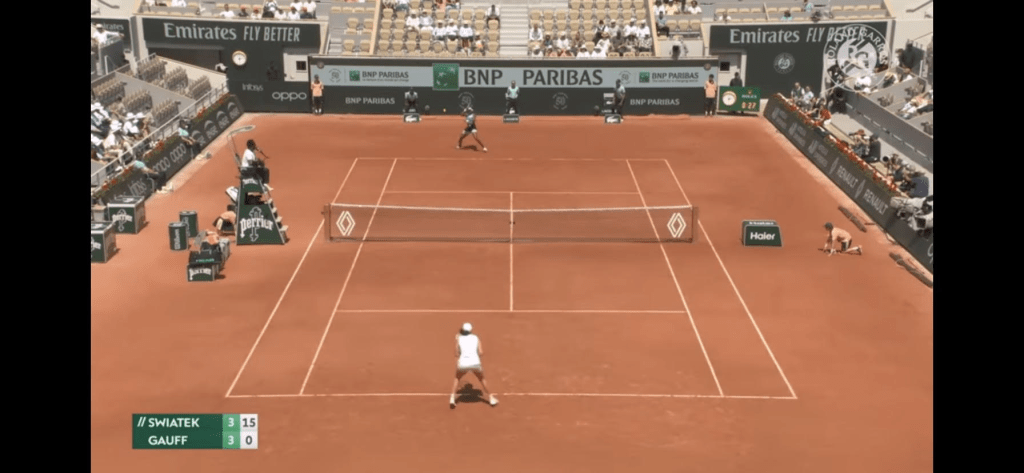


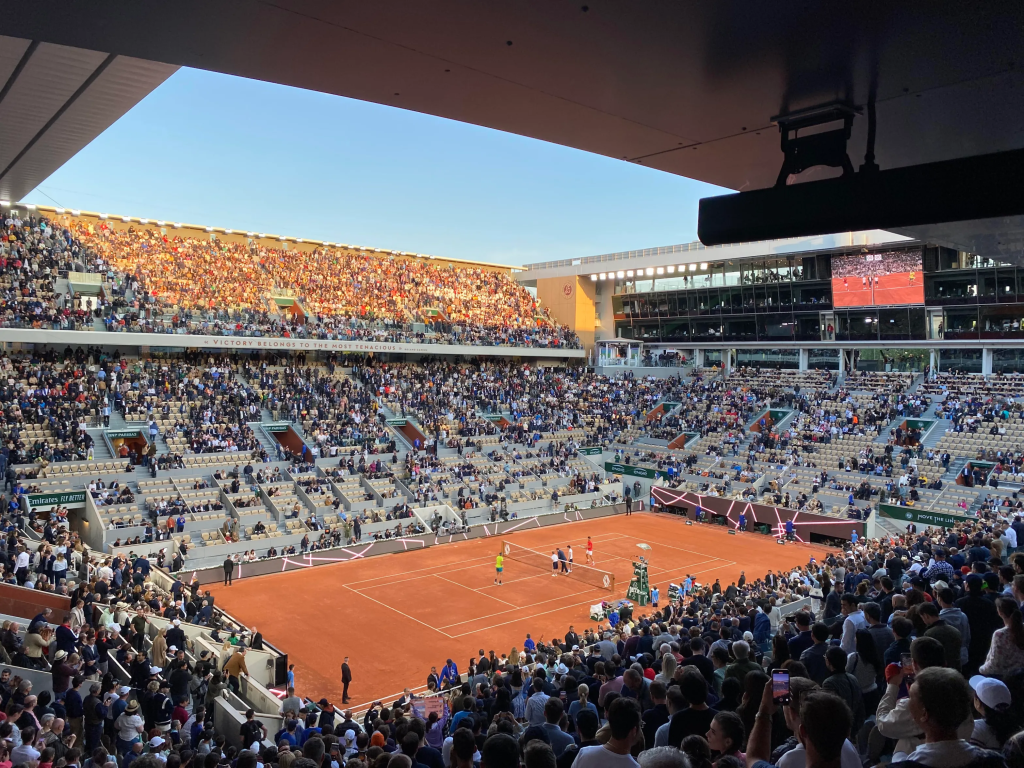
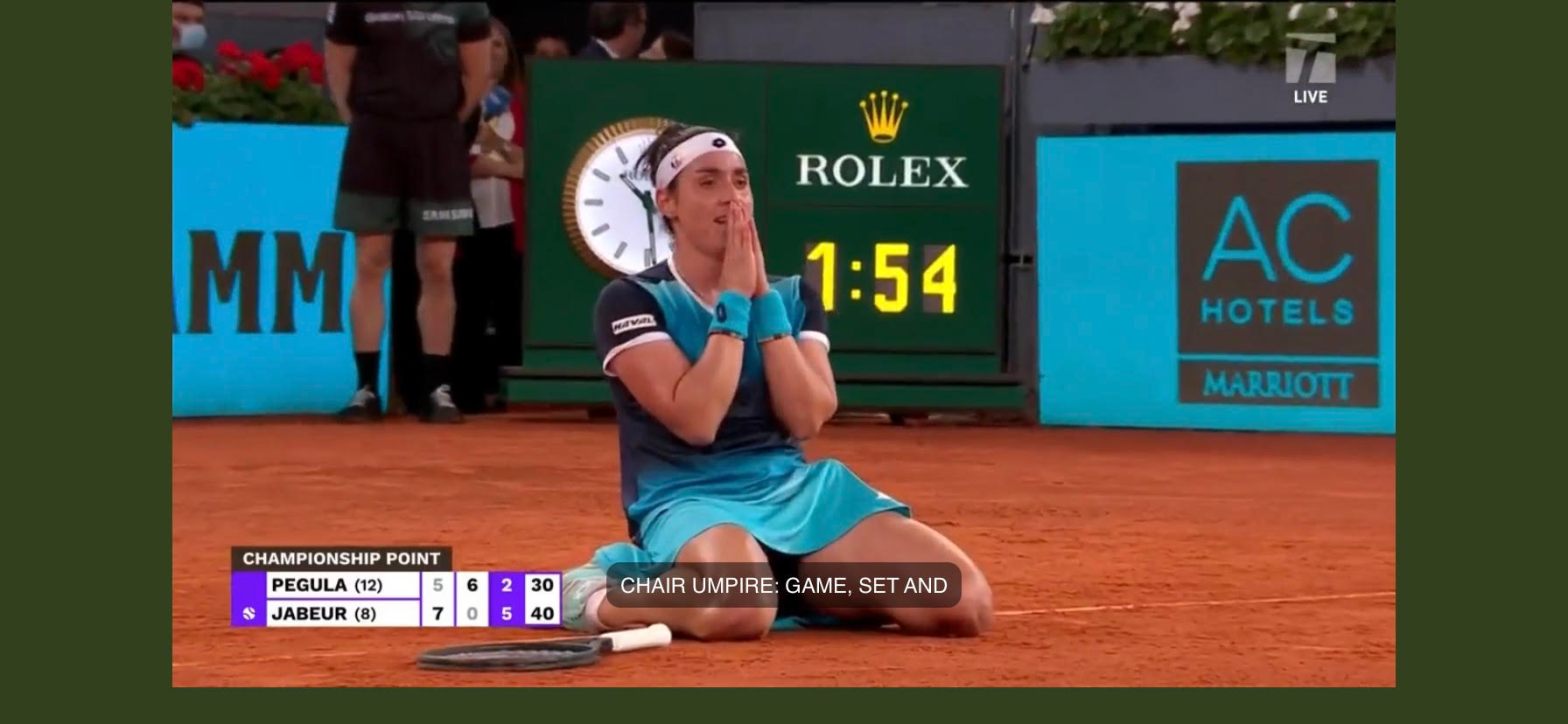


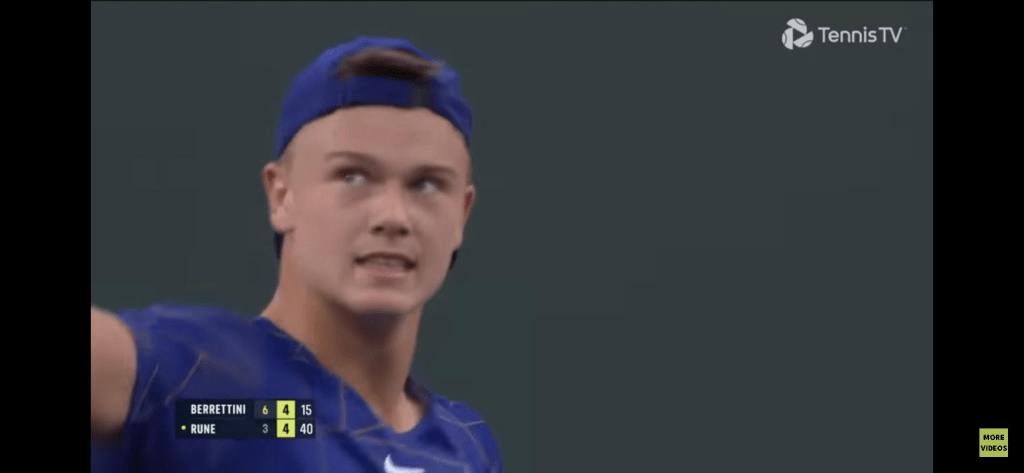
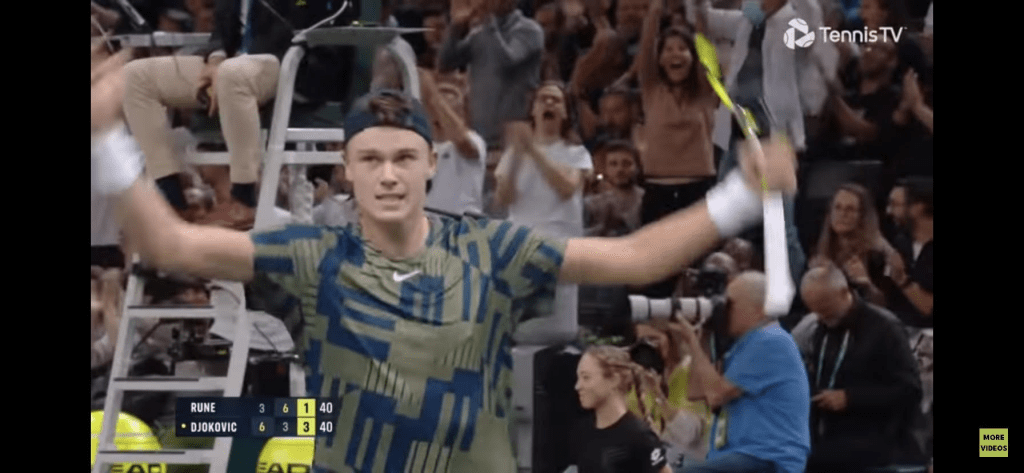
 Popcorn Tennis