As Fatboy Slim once said: We’ve come a long, long way together. Through the hard times and the good. I have to celebrate you, baby. I have to praise you like I should.
I have nothing but praise for Andy Murray following a stellar week in Stuttgart. Murray fans have been firmly strapped in for a rollercoaster ride these past few years – indeed, these past few months alone have seen us witness both the hard times (January through to April) and the good. And this week was good.
The final result may not have been what we were hoping for – and there were certainly some worrying moments in the final set of Sunday’s match against Matteo Berrettini, with Murray requiring the physio to come on court and looking like he was in obvious discomfort with what appeared to be a groin injury (and has now been revealed to be abdominal pain) – but as fans we have so much to take away from this week.
Image credit: Tennis Channel International
An incredible run to the final which saw Murray defeat Christopher O’Connell, Alexander Bublik, Stefanos Tsitsipas and Nick Kyrgios without dropping a set has to have left the Scot feeling encouraged for the rest of the grass court season. Although he was outplayed by Berrettini – a deserving champion – on the day, Murray showed his brilliance and forced the big serving Italian to play some of his best tennis. Should Murray play, a potential re-match awaits them in the second round of Queens next week – and in front of a hungry home crowd, I’m sure Andy (now ranked number 48 in the world!) will be keen to serve up his revenge.
With the dust settled (and the gin consumed), a final loss against world number 10 Matteo Berrettini – reigning Queens Club champion and last year’s Wimbledon runner-up – really hasn’t taken the gloss off what has been a spectacular week for me as a Murray fan. Yes, the title would have been the icing on the cake, but it really has been such a thrill to see him back on grass playing beautiful tennis against some truly tough opponents – and winning.
For me, the highlight of this week was his win over Tsitsipas – and not for the reason many might think (I am *over* the U.S. Open, folks) – it’s because Tsitsipas is a world-class player. He’s #5 in the world. He’s a Masters champion, a runner-up at Roland-Garros, a year-end finals winner – Stefanos Tsitsipas is not to be taken lightly. For Murray to beat him so convincingly earlier in the week highlights how far he’s come since their heated first round match at the U.S. Open last year.
That particular highlight is closely followed by his incredible fightback in the second set of his second round match against Alexander Bublik. A relatively comfortable first set win was followed by a nail-biting second set, which saw Murray trail 5-2, despite taking an early lead. I assumed the set was all but lost and we were heading for a decider when Sir Andy Murray reminded us all who he is and fought back to take it to a tiebreak, which he duly won. Game, set and match – and an extremely happy Andy in his post-match interview.
Image credit: Tennis TV
Murray hit some shots this tournament that a man with a metal hip (did you know he has a metal hip?) has absolutely no right to make – and he did it with a spring in his step and a smile on his face. He was pumped up, enjoying himself and clearly relishing being back on his favourite surface. That ab niggle in the third set of Sunday’s final was alarming to see, but his on-court post-match interview showed no signs of distress or fatigue – indeed, he didn’t even mention it in typical Murray fashion. The grass court season may be short, but Murray is ready to go deep.
This week has been a reminder to us all that Andy Murray should never be written off until the final bell has tolled. And I didn’t hear no bell.
I tend to take a while to stop thinking constantly about the most recent Djokovic-Nadal match. Their Roland-Garros semifinal last year set up camp in my brain and refused to leave until their rematch this year in the quarterfinals of the same tournament. I wrote about this match right after it happened, but after multiple rewatches, I had many more thoughts. 52 of them, to be exact.
1. The second point of this match was a 21-shot rally, with Djokovic making several absurd gets, floating the ball into the corners of the court from defensive positions. Twice, most of the crowd thought the rally was over. Nadal stayed locked in and won the point anyway.
2. Nadal was incredibly aggressive from the very first point, hitting down the line with pace from both wings. From the opponent’s perspective, this would be hell — you usually go into a match expecting to ease in after a couple games. Against Nadal on this court, you have to be ready to do corner-to-corner sprints immediately. It’s no wonder that Djokovic has gotten crushed in the last three opening sets they’ve played on Philippe-Chatrier: 6-0 in 2020, 6-3 in 2021 (he trailed 5-0), and 6-2 in this match.
3. If I were on the ATP Tour, I would not have watched this match. The amount of skills Nadal and Djokovic showcase even in the first game — defense, offense, drop shots, touch at net, weight of shot — is awesome, and featured several shots that just aren’t in most players’ repertoires. As a player, I’m not sure if I’d be able to stop myself from thinking no matter how well I play, I cannot possibly do what they are doing. Just look what Diego Schwartzman — who was in the top ten and had taken a set off Nadal in the previous round — tweeted during Djokovic-Nadal #58 last year.
Los tenistas jugamos al mismo deporte que ellos dos? 😂🎾
Rough translation: are these two playing the same sport as the rest of us?
4. On the third deuce in the first game, Djokovic hit an inside-in forehand onto the sideline, forcing Nadal to hit a backhand on the stretch. In their semifinal last year, Djokovic made Nadal do this constantly, and the Spaniard’s backhand couldn’t answer the call. On this point, Nadal jacked a hard crosscourt backhand, drawing a short ball. Two shots later, he forced an error with a forehand down the line. It felt like an early message that Djokovic wasn’t going to be able to lean on last year’s tactic.
5. When these two play, the stakes are palpable on every point, and this sense has only strengthened as their careers have gone on. There were 41 major titles on court at the same time, gang. That’s wild.
6. At 1-0, 30-all, Nadal sort of floated a backhand down the line that landed right in the corner for a winner. It felt big to me — scoring a winner with one’s weaker wing early on can generate a lot of confidence, and there was the added bonus of getting to game point instead of having to face break point. I wondered how the match would have gone on to look if Nadal had missed the shot.
7. At 1-2, love-15, Djokovic played phenomenal defense, then on the first ball he had time to put an offensive swing on, crushed a backhand down the line Nadal could barely touch. Djokovic let out a celebratory yell. It was an incredible rally, but Djokovic had been forced to sprint from sideline to sideline a few times, and his chest was heaving for quite a few seconds after the point. Djokovic won the next two points as well, so there was no immediate repercussion, but Nadal continued to move him around a lot in the first set. I’m rarely if ever worried about Djokovic’s fitness, but in the first half-hour of the match, he must have burned a thousand calories chasing down Nadal’s forehands. Watching from the stands, I did wonder if he would pay for it physically later on.
Watch the first two or three minutes of this highlight video, and just keep your eyes on Djokovic. It’s a lot of running.
8. Since the earlier years of his career, Nadal has really improved his reaction time after the serve. He dealt with Djokovic’s baseline-licking returns in this match much better than he did in 2011 or 2012, for instance.
9. This matchup is as good as any at showing the importance of…well, matchups. In the previous round, Djokovic destroyed Diego Schwartzman. Just took him to pieces. Schwartzman is an excellent player, but there’s no comparison with Nadal. Against the Spaniard, Djokovic has to defend, since Nadal’s forehand is the biggest shot on court. He has to counter heavier spin, meaner angles, better defense. Djokovic was in great form leading up to the quarterfinal with Nadal, and it’s not that any opponent can really prepare you for a Nadal match, but Serb’s prior opponents may not have been the best possible study guide.
10. Also, compare what Nadal had to do in this match to how he played in the final against Casper Ruud — the match with Djokovic was an all-court slugfest, a battle of skills and wills that required every last drop of Nadal’s best tennis. In the final, Rafa never had to do anything more than hit decent crosscourt forehands.
11. Djokovic’s forehand defense in this match was incredible. He hit squash shots, slightly del Potro-esque hammer forehands while fully outstretched…Nadal’s forehand down the line, which was firing, did less damage against Djokovic than it would have against anyone else. Unfortunately for Djokovic, his defense didn’t elicit many errors. Nadal did a great job of retaining control of points once he got the upper hand, which is much harder than it sounds.
12. There is no room to drop your level against Nadal. Serving at 1-3, 15-30, Djokovic played a beautiful, patient point in which he forced Nadal to hit what felt like 100 backhands, then finished with a sweeping crosscourt backhand winner. Jim Courier called the 25-shot rally “time capsule stuff.” Djokovic then lost the next two points to get broken for a second time. Double break, set over, thanks for coming.
13. Hitting to Nadal’s forehand is like juggling fiery sticks while doused in gasoline. If you’re skilled enough at a very specific and difficult task, you might be okay for a while. But slip a little bit, hit the ball even a tiny bit short, and you instantly go up in flames. At 1-3, 30-40 in the first set, Djokovic hit a slightly sub-optimal crosscourt backhand, and Nadal pulverized it with a forehand winner down the line.
14. A stat for you: at Roland-Garros, Nadal is 8-2 against Djokovic, 3-1 against Robin Söderling, and 101-0 against literally everyone else he’s ever played there.
15. Nadal won 8/10 points played on his second serve in the opening set. A common theme in matches between these two is that if Nadal can cruise on serve, he will win.
16. The first set took 49 minutes. Watching from the stands, I struggled to grasp the concept that the match was, at minimum, a third of the way over. By Djokovic and Nadal’s standards, the set had been a blowout, but the intensity had still been off the charts. When Djokovic’s backhand return found the net on set point, Nadal yelled “sí!” like he had just reeled in the biggest catch of his life, Old Man and the Sea-style. My head hurt. (In a good way, I think.)
17. A big difference from last year’s Djokovic-Nadal semifinal was Nadal’s level at the start of the second set. In both matches, Nadal came out of the gates in god mode, but in 2021, he made a bunch of errors to begin the second set — he even lost the first seven points. Though Nadal went on to break back after being down 2-0, Djokovic had asserted himself on the match without having to play his best. This year, Nadal piled on the pressure after winning the opener, giving Djokovic hell in an epic game and breaking on his seventh opportunity. Djokovic went on to win the second set, but it required a much higher level than last year’s second set. The effort sapped a ton of energy from the Serb, whereas last year Djokovic was able to play incredible, almost error-free tennis in a now-legendary third set.
18. The moment when I realized this match would be different from their last one: with Djokovic serving at 30-15 to begin the second set, Nadal pulverized a crosscourt backhand, then scampered to net (my mid-match note: my god, the footwork) to put away a smash. The message: you cannot relax for a moment, my friend.
19. I think playing Nadal at Roland-Garros requires a certain level of selective ignorance. You have to understand what you’re up against so you can prepare proper tactics — rush his forehand, attack his backhand — but you don’t want to know any of his stats from the tournament. You’d lose hope immediately. When Casper Ruud lost the first two sets in the final, I got the sense Ruud knew exactly the size of the mountain he had to climb, since he’d idolized Nadal for over a decade. It was no surprise that Nadal won the third set 6-0, and not just because he was playing the better tennis. Djokovic embodies this balance quite well, I think — he does what he can to neutralize Nadal’s strengths, but he never cowers in the face of them. He respects Nadal’s forehand, he doesn’t fear it.
20. An example of Djokovic’s amazing outstretched forehand defense: down break point in the first game of the second set, he got pushed wide by a good crosscourt backhand, but slapped a hard forehand back crosscourt, earning a short reply that he put away with his backhand.
21. Can we talk about Nadal’s forehand down the line? When he hits it properly, it simply cannot be dealt with the vast majority of the time. Because Nadal’s crosscourt forehand is so good, and that’s the direction he goes most of the time, his opponents always cheat to that side of the court a little bit. That means Nadal is hitting his forehand down the line into open space, at high speed, with vicious spin, close to the sideline. It’s practically invincible. No one has ever defended it better than Djokovic, and the shot still gave him fits in this match. Nadal didn’t even hit it that often, but it was devastating almost every time he did.
22. After breaking in the first game of the second set, Nadal consolidated by winning four straight points. He hit a crosscourt backhand passing shot winner after being on the defensive for the entire rally, then an ace, then a flicky-pickup of a forehand pass down the line, then a massive unreturned second serve. The impression turned out to be wrong — never count Djokovic out — but at this point, the match looked over.
23. As of 0-2 in the second set, Djokovic’s average groundstroke speeds were 80 mph on the forehand and 74 mph on the backhand to Nadal’s 75 and 73. Nadal still led the winners tally comfortably. As pointed out by Jim Courier, all the talk was about how the conditions would affect Nadal, but Djokovic was finding it more difficult to finish points, both because of Nadal’s defense and because he lacked a nuclear-grade groundstroke. Djokovic-as-ballbasher is often a very effective strategy, but it’s not the way he likes to play. (Interestingly, pre-2011, he often played Nadal on clay like this, by hitting the crap out of every ball he could.)
24. When Nadal broke a second time to go up 3-0 in the second set, the match really looked over.
25. At 3-0, 30-15 in the second set, Nadal had 25 winners and 8 unforced errors. It was somewhere around this point during the match that I wrote that Nadal’s level was better than it had been in the 2020 final.
26. Djokovic does not need much help to get into a match. The tide started turning after 3-0, 30-15, when Djokovic won five points in a row. In minutes, he had double break point to get back on serve at 3-all.
27. On the first deuce of the 3-2 game, they played a 22-shot rally, during most of which Nadal had to hit backhands from a defensive position. Late in the point, he hit an incredibly deep crosscourt forehand from miles behind the baseline, which reset Djokovic’s advantage and allowed Nadal to force an error with a forehand down the line. Nadal celebrated emphatically; the crowd roared loudly. The point felt very important.
28. Djokovic answered by thrashing a few groundstrokes on the next rally, eventually forcing Nadal to shank a forehand due to the sheer pace on the ball. On Nadal’s next ad, Djokovic mauled a 99 mph inside-out forehand winner. He eventually went on to break in an 18-minute game. So the rally on the first deuce maybe wasn’t that important.
29. Djokovic was able to win this set from 3-0 down in part because he embarked on what may have been the most dominant display of returning I have ever seen. He broke Nadal three times in this stretch, and the one time Nadal was able to hold came after a lengthy deuce battle. Nadal played 44 points on his serve across these four service games, and Djokovic won 25 of these points. That’s 56.8%. Pretty astonishing. It wasn’t like Nadal served badly — in fact, he made 32 of 44 first serves (72.7%) in this stretch. Djokovic was just all over him anyway.
30. The way Djokovic’s returning took over the match for a while was just breathtaking to watch. Nadal missed first-ball shots because he was starved of time. Nadal had to half-volley backhands off the baseline, then immediately field a barrage of Djokovic forehands. Once, Nadal tried to run around yet another return on his backhand side, but he was too ambitious and netted his forehand. For quite a while, Nadal was forced to react to what Djokovic was doing, which is shocking considering the court they were playing on.
31. By my unofficial count, this was the first time in the entire Djokovic-Nadal rivalry that one player had won a set from two breaks down. The entire time in 59 matches. In 159 sets. There are not many words for the fact that Djokovic was suddenly able to do it on Nadal’s favorite court. (On a side note, this stat shows what incredible frontrunners both guys are. For all Federer gets talked about as a great frontrunner, both Djokovic and Nadal have won a set against him from two breaks down.)
32. To show just how devastating Djokovic’s returns were, after the second set, Nadal’s win rate behind his first serve was all the way down to 58%.
33. To me, Djokovic lost this match because his level oscillated too wildly between the insanely good and the not-that-great. As outrageous as his tennis was at the end of the second set, I wasn’t surprised at Nadal taking a lead to start the third, because there was nowhere for Djokovic to go but down. What he did in the second set was otherworldly, but it wasn’t sustainable in the least, and that cost him during the crucial third set. After the second set, I wrote in my notebook that Djokovic seemed to have succeeded in making the match a war of attrition, and would therefore like his chances going forward. But Nadal’s level was far steadier, which meant that he had the advantage whenever Djokovic was not redlining successfully. That’s where you want to be in a tennis match.
34. Per Jim Courier, Nadal did not miss a single second serve return until the fourth set. His return speed average was around 80 mph (which is huge), to boot. It was a phenomenal returning performance. He broke Djokovic seven times. Djokovic is the best-ever returner of serve, but there have been matches in which Nadal wins the return of serve battle, and this was one of them.
35. This match took a significant dip in quality after the second set. Though there weren’t too many moments where both were simultaneously brilliant, Nadal was next to perfect for the first set and a half and Djokovic was next to perfect for the rest of the second set. Both stretches were euphoric. Understandably, the effort seemed to take something out of them. (The second set was 88 minutes!) Nadal won the third set while playing significantly less well than he did in the first, and the fourth set had bad patches from both.
36. Another note on the quality of the match: it wasn’t as good as their semifinal last year. Each met an individual peak that I thought was higher, but they were rarely firing simultaneously, which they were during almost the entire duration of the 2021 semifinal’s third set. It seemed odd given that Nadal had physical issues during last year’s match and none this year, but match quality is a fickle thing.
I still cannot get the 3-2, 30-40 point from the third set out of my head. I don’t think it’s ever leaving.
37. Tennis Channel showed a brief highlight from the 2012 Australian Open final after the second set. Though their Wimbledon 2018 semifinal was a far better quality match, the 2012 meat-grinder is still the signature Djokovic-Nadal in my view. They just pushed the boundaries of what was physically possible on a tennis court.
38. Djokovic missed a smash into the net with Nadal serving at 2-1, 15-all in the third set. It was not surprising, but it was costly. Nadal went on to win the next three games.
39. Crucially, when Nadal had dips, they were either smaller or shorter in duration than Djokovic’s. While the Serb went down a double break at the start of the first three sets, Nadal’s fourth set lapse cost him only a single break, which was a deficit he could make up (and he did make it up). Djokovic may have recovered to win the second set, but it required a mammoth effort and his best tennis of the match. He could not reproduce it later.
40. Djokovic lost his rhythm on the return of serve midway through the fourth set. After breaking Nadal for 2-0, he didn’t win as many as three points in a return game for the rest of the match. This may have cost him, as Nadal was able to cruise through his service games with relative ease until the tiebreak. Even when Rafa served to stay in the fourth set at 4-5 — usually danger time against Djokovic, remember the end of the second set — the feeling was always that he would hold comfortably.
Djokovic’s return performance was emblematic of his performance as a whole: he broke Nadal three times in the second set and just once in the other three sets. Too streaky.
41. The net cord was absolutely awful towards Djokovic in this match. He must have had six or seven points not go his way that involved the net cord — his shots would catch the tape and either drift wide or hang up for Nadal to destroy; Nadal’s net cords would die softly on the other side of the net. I usually hate it when players throw tantrums, but I cannot say Djokovic didn’t have reason to smack the net with his racket at 1-0 in the fourth set.
42. Djokovic failing to serve out the fourth set at 5-3 was the focal point of the match for a lot of people. He had two set points, one of which he spurned by missing a backhand from a neutral position, and the other of which he lost by getting passed by Nadal’s backhand after a sub-par approach shot. Djokovic had a crucial lapse, many said, by not closing out the fourth set. He doesn’t usually miss chances like that.
This is a tempting argument. Sitting in the stands, though, I felt that the 5-3 game was one of the best quality games in the entire fourth set. I thought Djokovic served very well for most of the game, then was put under immense pressure as soon as he started to miss first serves. Did he make crucial errors on both his set points? Absolutely. But I rewatched the game, and Djokovic hit three winners, plus an unreturnable serve, plus a forehand that forced an error. Nadal hit five winners. This was a very tense, high-quality game decided by extremely thin margins. Djokovic has played far worse service games in the past and held, even against Rafa.
43. Djokovic’s return winner to save the third match point. Jesus Christ. I know Nadal hit a terrible serve into the middle of the box, but to be able to wheel out of the way and crush that ball into the corner without a moment of hesitation? On match point? Djokovic is simply unreal, and 2011 will tell you that this shot was no fluke.
44. It was a shame Djokovic fell so far behind in the tiebreak, because his recovery from 6-1 to 6-4 was excellent. Even the match point Nadal converted had to be earned — he hit a backhand winner down the line, which is probably his least favorite shot, after a long rally. If Djokovic had snapped into his icy lockdown mode earlier, we could have had an absurdly tense tiebreak, and/or a fifth set.
45. What would have happened if Djokovic had gotten back to 5-6 in the tiebreak? He’d have served on the next point. Had he won that, he’d be oozing momentum at the changeover. Saving five consecutive match points against Nadal at Roland-Garros was a bridge too far even for Djokovic, but I would have said the same about winning a set from a double break down before Djokovic did just that. He wasn’t that far away from evening the tiebreak.
46. The way these guys can produce their best tennis against each other is amazing. It’s not like a Marin Čilić god mode performance — as much as hard work and tactics go into tennis, Čilić seems to randomly get possessed by a tennis god every now and then. He can practice as much as he wants, but minor tweaks to his game will never be as relevant as those rare times when the god agrees to hang out with him for a little bit. With Nadal and Djokovic, it’s like they produce peak performances because they have to. Nadal went into this match as the underdog, so he came out of the gates flying. Djokovic knew he would be toast if he went down two sets, so he redlined successfully to even the match. It was magic on command. This is also why their rivalry has featured so many lopsided episodes — if one player fails to fully show up, they get demolished.
47. Djokovic’s reaction after the match was unusual. To my eyes, he is usually more classy than Nadal immediately after losses, giving the Spaniard a nice cuddly handshake even after near misses. After this match, though, he gave Nadal a perfunctory handshake, then walked off the court quickly without waving. There was a lot of discussion about the crowd being bad, and I can confirm that they were indeed excessively harsh towards Djokovic, but I didn’t totally understand the argument. Djokovic has played against infinitely worse crowds before. (And come out on top virtually every time. The 2015 U.S. Open final and 2019 Wimbledon final come to mind.) Maybe the combination of the crowd and the opponent made a difference that a worse crowd and a less difficult opponent could not.
I don’t blame Djokovic for this reaction, by the way. Saša Ozmo’s exceptional interview with Goran Ivanišević indicated that days after the match, the loss was still setting in. Djokovic rarely loses close matches — when he’s not at his best, he tends to either win a close match (like the 2019 Wimbledon final) or get blown out (like the 2020 Roland-Garros final). I have little doubt that he fully expected himself to win this match, and it didn’t happen, and the historical implications are big. I also have little doubt that he will recover fully and win Wimbledon.
48. It’s hard not to think about the third member of the Big Three when the two others take the court. Devang Desai wondered if Roger Federer watched this match, and how he really feels about how things have shaken out in the past few years. The pessimistic answer is that he feels bad, because he has already been outpaced by both Djokovic and Nadal, and they have more time left to win titles than he does. As an optimist, I think Federer understands that he gave his career all he could, and that it’s not a shortcoming on his part to be exceeded by two even-more-superpowered beings. (Even if he’d won Wimbledon in 2019, Nadal would be one ahead of him.) After so many years of being the undisputed male GOAT, it might not be easy for Federer to accept that his legacy is shifting more towards “rival to the GOATs” than “the main GOAT”, but from the clips I’ve seen of him, he seems okay. Which is nice.
49. I feel like it would be malpractice not to mention the GOAT debate. There is a vocal contingent of fans and pundits who say that the debate is such an evolving thing that we should wait until everyone involved retires before making cases. To me, this is a bit of a lazy argument — sure, stuff changes, but that doesn’t mean we’re incapable of evaluating things as they are. We just have to be willing to re-evaluate, potentially after every single major. I’m more than fine with that, so let’s jump in.
Nadal now has 22 majors to Djokovic’s 20. This has been a good year for his GOAT case. He won the Australian Open, which was previously his least successful major by title count. He won Roland-Garros, beating his GOAT-rival in Djokovic along the way. A two-major lead is not nothing. I would still give the slightest of nods to Djokovic given what he’s achieved at the Masters 1000s (he’s only got two more than Nadal overall, but the fact that he’s won all of them at least twice — Nadal is title-less at two of the nine — speaks to greater surface versatility) and at the world #1 ranking spot, but Nadal is giving himself a great case. He looks increasingly likely to finish his career with the most majors.
50. Nadal is really good at not choking. Jon Wertheim and Chris Almeida talked about it a bit here. In his biggest matches, he does not roll over. He often makes things harder for himself than they need to be — maybe he’ll lose a set after being ahead, or even have match point, lose it, then have to play for another hour before winning — but he never loses matches because of a choke. His clutchness is like a key that you have to jiggle in a lock for a while (as you try not to lose your mind), but that never fails to open the door. Despite Djokovic’s push from 6-1 to 6-4 in the fourth-set tiebreak, I think there was very little doubt that Nadal would win the 6-4 point to close out the match.
51. A continuation of the last point: Nadal was better in the big moments of this match. He was 7/18 on break points, but only once had a return game in which he had a break point and didn’t break serve (3-3 in the second set). No points were bigger than the two set points Djokovic had in the fourth set, though, and while Djokovic’s play left a lot to be desired, Nadal didn’t miss and delivered a passing shot winner on the second. It feels like Nadal is the only opponent against whom Djokovic cannot count on winning most of the big points.
52. If this was the last edition of the Djokovic-Nadal rivalry (excuse me as I hold back tears), it was a great sendoff. There’s the symmetry of playing their last match in the same place (and in the same round) they played their first. It was a competitive match, featuring brilliant patches of play from both. Despite being a quarterfinal, it felt like a final, and Nadal going on to win the tournament indicates that it was a final. These two have broken each other for years, but they’ve somehow used the bone-shattering blows to become stronger rather than weaker. The highest quality tennis from this gleaming Golden Era has taken place during Djokovic-Nadal matches. If I ever write a book about tennis, it will be about this rivalry. There are 59 matches to draw from.
All that said, I would really like for them to make it 60.
As we are now in the grass court season, it’s time to address the big issue hanging over the whole thing. It was even distracting everyone during the first week of Roland-Garros. I am, of course, talking about Wimbledon having ranking points removed by every tennis authority.
The AELTC and LTA banned Russian and Belarusian players from taking part in tennis tournaments in the UK in 2022 because of the Russian invasion of Ukraine. This caused a problem for the tour organisers: the ATP, WTA and the ITF. The principle of modern tennis is that the only criteria for entry to professional tournaments is a player’s ranking and their age (i.e. not under 14 years old). This prevents tournaments from discriminating in other ways. For example, an event run in South Africa during apartheid or in the Deep South of the United States would not be allowed to have a rule preventing a player with a specific skin colour from competing. Likewise, events in Russia or the Middle East are not able to refuse entry to any players who are openly members of the LGBTQIA+ community. Not without consequences anyway. This situation is no different.
The question is not whether there should be consequences for Wimbledon’s decision, but what those consequences should be. If there are no repercussions, then other events can start doing the same thing, meaning either discrimination becomes a part of tennis or the tour organisers have one rule for some and one for others. Even if we try to look at things pragmatically, every system has some form of moral framework to it, even if it is assumed.
There is a further political dimension to this situation: the organisational structure of tennis. Like a lot of sports, tennis has competing groups who all want to grow the sport and make money, but want to get the maximum benefit for themselves. They form an uneasy alliance, working together for the most part but seizing any opportunity they can to gain a little more power within the dynamic. I would love to get a full understanding of the relationships, structures and decision-making within tennis organisations, but that might be a longer-term project to satisfy the political science nerd in me. Even if I don’t know the inner workings, I do know that these conflicts of interest are counterproductive to the sport’s progress as a whole.
For a major championship, a Grand Slam, to make a unilateral decision like this has the potential to upset the balance of power. If nothing is done, then the Grand Slam organisers will have an edge. After all, they represent tennis’ biggest markets. Most casual fans only watch majors, and even then, they’ll only really watch one taking place in their home country. Wimbledon might have the biggest edge, as it seems to have a unique status in the world of sport beyond tennis given its widely recognized tradition and history. The Grand Slams need the tours to provide players, and also to provide the support to bring them up to a standard to create a great spectacle. But it would be beneficial for the majors to dictate the terms of the relationship.
In this context, it is especially important that there are consequences for breaking a fundamental agreement within the sport, which is officially codified in the Grand Slam rulebook (https://www.itftennis.com/media/5986/grand-slam-rulebook-2022-f-2.pdf). If there are none, not only does it look like certain tournaments can get away with doing what they want because of their status within the sport or what country they are based in, but it could create a slippery slope where the very structures within tennis are changed.
The tournaments could claim force majeure in this case, that their hands were tied by national politicians. Whilst I do believe there was behind the scenes pressure from the UK government on Wimbledon and the LTA to ban Russian and Belarusian tennis players from competing, as there have been similar moves in other sports, there was no public law or directive forcing them to take such action. This is not like the Australian Open at the beginning of 2022 with Novak Djokovic and Natalia Vikhlyantseva, where the tournament made an effort to support the players in being able to compete, but it was a public government decision that meant they could not due to being deported. There is nothing in UK law preventing Russian or Belarusian people entering the country or working there. There is no statement from a British politician saying that Russian and Belarusian athletes are not welcome in the country. Wimbledon and the LTA could have stood their ground, though I suspect there would have been a significant cost to them in doing so. Anyone who is a fan of British political satire such as “Yes Minister” or “The Thick of It”, or even “House of Cards” would understand what kind of backroom discussions are had. Still, with nothing codified, the event organisers do not have anything to stand on when facing the tennis authorities.
So, the question then becomes what action should be taken to show that such a move is not acceptable. Whilst the principle is laid out in the rules, there is nothing in writing about any specific punishments, so this is where things get tricky. Let’s look at all the options: a fine aimed at the event itself or removing ranking points from the event. The tours are unable to cancel the event outright as they do not organise it, there is nothing that can stop Wimbledon going ahead, save for war or a global pandemic.
Photo: Wimbledon
Something like this has happened before. In 2009, Israeli players Shahar Peer and Andy Ram were refused entry to the Dubai Championships because of their nationality, despite their rankings being high enough to make them eligible to compete. The situation threatened to escalate to the point where both tours were on the point of pulling out of supporting all events in the UAE (https://www.theguardian.com/sport/2009/feb/17/dubai-israeli-ban-shahar-peer-andy-ram-wta-atp). This was resolved with a $300,000 fine being issued by the WTA to the Dubai Championships, and one year later Peer was allowed to compete in the event.
So, this seems fairly cut and dried. Fine the tournaments $300,000 per player banned. The thing is, because there are multiple players, how does one calculate this? We could base this on how many Russian and Belarusian players are in the top 250 currently, given they would have automatic entry to the Wimbledon main draw and qualifying draws respectively. This would be 11 players in the ATP rankings and 27 in the WTA rankings. If you were to base the fine on a set price per player, then Wimbledon would be fined $10.8 million (£8.6 million) combined by both tours. Given it made a profit of £44 million in 2021, a fine this size wouldn’t be a huge dent for the organisers (https://tennishead.net/wimbledon-report-44-million-profit-in-2021-despite-covid-19-restrictions/).
It becomes more difficult to calculate for smaller tournaments based on a per player cost, given that entry for those depends on player preferences, as there are competing events of similar worth (if not more) taking place (mostly in Germany) at the same time. The fine would be smaller for Queens and Birmingham as they are ATP and WTA events respectively, but Eastbourne is a combined event and Nottingham includes a challenger tournament on the men’s side. None of them are mandatory events. There is a scenario that no Russian or Belarusian players would choose to take part anyway. Going back to the Dubai 2009 situation, the fine for excluding Shahar Peer was equivalent to 15% of the prize pot. If you wanted to base it on just the principle of banning a nationality it would be easier to calculate. However, this becomes an issue because Wimbledon would have to be fined on the same terms, which would drop the cost for them to $6.6 million (£5.25 million). The status issue also means the smaller events have less financial stability than a big money event such as Dubai, let alone Wimbledon.
Then we get to the ranking points issue. Taking the players out of it for the moment, doing this sends a message. A fine could be seen by a major as a slap on the wrist. Removing ranking points removes some of the prestige from a tournament, and lessens the appeal to the big stars (as we have seen with Naomi Osaka’s comments in Paris). It doesn’t completely – this is still Wimbledon after all – but it sends a message that if they can’t abide by the agreed rules, they will not be supported. While this raises the question of what happens if the war continues into 2023, it’s a bridge that only needs to be crossed should Wimbledon insist on continuing its ban, as it gives the tours time to organise some competition. Taking ranking points away from the smaller tournaments, however, makes things tricky as effectively they become disenfranchised. Suddenly, there are fewer opportunities to play on the main tour as usually there’s a couple of 32-player draws taking place consecutively during a week. The question also remains of how likely these tournaments would be to survive long term. With grass court events becoming rarer nowadays, if the tours aren’t careful their actions could spell the beginning of the final end for tennis on its traditional surface.
It is clear that the tours sent a big message, to make sure that the majors cannot be seen to dominate the tennis scene. Hence why Wimbledon had ranking points removed and the others not. This decision wasn’t taken for any other reason than to make a power move. Personally, I’d have advocated for fines for all the events. The smaller events would be based on a flat rate, whilst Wimbledon would have to pay based on the total number of excluded players. This would send the same message, and gives room for escalation should this behaviour continue.
For many, this would be the fairest result for the players, who are all set under the current arrangement to lose all their points gained from Wimbledon 2021. I would agree with this, although controversially it is my view that players should not have points on their ranking still from over 12 months ago (I say this as a Federer fan, but I don’t think it’s right that he’s still in the top 50). Keeping half the 2021 Wimbledon points, as the WTA seem to be moving towards, is a reasonable compromise but my view is that if you are 60 in the world and your yearly form suggests you shouldn’t be in the top 100, this should be reflected in your ranking sooner rather than later. We saw the chaos a frozen ranking system created, and we need to move on from this and stick to the system. Again, the decision around how to deal with the player bans is about maintaining the integrity of tennis and keeping 2021 points for another year undermines a system that is (rightly) based on 12-month form.
For those who are disappointed that the tours seem to be protecting Russian players and doing very little to support Ukrainian players, this decision is not about the war, it is all about tennis. War or no war, the integrity of the sport and its organisation needs to be maintained. Again, if an event can ban an athlete based purely on their ethnicity, nationality or anything about them during a time of war, it is a slippery slope until it is done during a time of peace. The ATP, WTA and ITF are international sporting bodies, and they have sanctioned the Russian tennis authorities. The players are contractors, they work for themselves and the tennis authorities represent them too. National bans are up to national sporting authorities. No one else needs to step in. The tours are doing as much as they can to support Ukrainian players. They should only do more if Russian players are somehow shown to be a threat to their Ukrainian counterparts’ physical safety or mental wellbeing.
Ranking fairness and player nationalities are side issues though. This is about making sure that all those involved in the running of the sport are acting according to their agreed responsibilities. A response to the player bans was necessary, even if it was mishandled. We won’t know the full impact until next year, and that will depend on whether this terrible war is still raging on.
14 Roland Garros titles, and if not for his very problematic foot, I reckon he’d love to see if he could break the 20 mark.
Nadal’s foot — the infamous foot — draws a lot of attention. Some good, some bad. Some wonder what would have been of his career if his foot was healthy. Some, like me, wish it was healthy just so we could see more of Nadal in a full season, and see him retiring just because old age and more “normal” injuries. Some others don’t even believe in the foot. But we’re not here to talk about some others.
The GOAT
The Greatest of All Time. The entire world knows what this acronym means.
Every sports fan likes to chat about the GOAT. Every TV broadcasting channel likes to post fancy graphics with cool pictures of athletes to compare stats and debate who the GOAT is. Everyone on Tennis Twitter — a mere product of the social media’s algorithm to ensure people see the same content from an umbrella topic (in this case, tennis) — likes to tweet about the GOAT. Heck, we might talk more about GOATs than zoologists and vets. They probably end up on Tennis Twitter every once in a while and wonder what kind of hell hole they’ve fallen into.
I like to chat about the GOAT. It’s fun. I say why I think one player is the greatest. I disagree with someone else. We have a beer or a coffee (but most likely a beer), then we change the subject and life goes on.
And that’s what I wanted to do post-Roland Garros, when the player I personally believe has the highest peak level of all time, Rafael Nadal, won an astonishing 14th title at the event.
Screenshot: Roland-Garros
It would have been so much fun. I would be like “but Nadal has 22 Grand Slam titles, the best winning percentage of all, and has won 22 finals out of 30 played! This is unbelievable! Plus, he manages all that foot pain” and then my mates would be like “but no one is like Djokovic, and Nadal hasn’t beaten Novak on hard since God-knows-when. Djokovic also has the most weeks at no.1 and the most big titles!” And we’d have a conversation knowing that, at the end of the day, it wouldn’t matter. I’m not Nadal. They’re not Djokovic. We are just drunk and enjoying the NBA playoffs. The Warriors blew a 3–1 lead. LeBron is the actual GOAT, or whatever.
It’s the fun of sports, for me. To watch, to be entertained, try to analyze what’s going on during the match, to be amazed by how damn hard these people hit that ball and by how consistently they are doing it. To be entertained by conversation starters such as someone who just watches tennis during the Grand Slams and basically only knows Wimbledon, Roland Garros, Nadal and Federer, asking the group “but you know, who’s the best player of all time?” (We would then proceed to roast the dude who dared say Roger Federer.) We’re drunk. We’re enjoying the NBA playoffs in a bar. The Warriors blew a 3–1 lead — heck, I can’t get over this, what a freaking tragic series. LeBron might be the GOAT.
I also just love Roland-Garros. I love clay, having grown up playing on the beautiful red dirt of Northeastern Brazil, and having my absolute favourite player of all time, Gustavo Kuerten, being a Roland-Garros icon and three-time champion. So I enjoyed watching the French Open this year, as I do nearly every other year. I love tennis, so the better the matches, the more I love it. And Nadal’s level of tennis is too high for me not to enjoy it. I do wish Casper Ruud could have played the match of his life and made it a little longer and more competitive, though.
I like to talk about the GOAT, because it’s a fun, non-serious topic that keeps me engaged as I chat about the sport I love. With the right people, that is.
Pineapple on Pizza
Are you old enough to remember the time when the internet went absolutely crazy about whether pineapple should be on pizza or not?
It got intense. The memes got funny, then funnier. The roasts were unbelievably good. People were really into it, and some were truly into it, really believing that one or the other was actually the ultimate truth.
Well, I don’t actually know if everyone was just having a good time, but the internet is vast and full of surprises, so I’m fairly certain someone really believed in and was dedicated to defending their position seriously.
People still eat pineapple on pizza and are happy, and are drunk, and are now watching the NBA playoffs. None of the “meme wars of 2010” events made a difference.
What the actual f*** am I talking about now?
I have come to the conclusion that the Pineapple on Pizza and the GOAT debate are, in fact, the same in nature. I shall call all these stupid, heated discussions the “Pineapple on Pizza Summit.”
The POPS, for short, is a heated debate where people really get serious. They research and make excel sheets to prove their points, and get legitimately offended if someone simply disagrees with them. It’s also an utterly useless debate that has no bearing on how people actually engage with the topic.
Just like people still eat pineapple on pizza, Nadal now having a double career Grand Slam and 22 major titles, or Djokovic having a double career Golden Masters and being one win away from the calendar Grand Slam last year in 2021, doesn’t change that tennis is still awesome. I will still watch it when these GOATs are gone, and some people who barely watch tennis will still only know Roger Federer’s name.
Because no one cares about the conclusion. You might come to the conclusion that, actually, the GOATs are Lottie Dod and Paolo Lorenzi and that would be fine. I would forget about it tomorrow.
I simply wish people liked tennis, had heaps of fun chatting about it and watching it, got drunk or had too much coffee, then went home happy and got back to watching more the next day.
It’s simply phenomenal, and not in a good way, how much the said “GOAT debate” separates people. It’s unfortunate. It’s sad. It’s annoying.
Personally, I love pineapple on pizza. Especially with goat cheese.
I’m not necessarily a fan of yours, but I’m definitely not a hater. I thoroughly enjoy watching you play, but I’ll be honest, that wasn’t always the case.
In 2011, I didn’t like you. It was quite hard to. After all, for the previous five years you had just seemed so content being the best of the rest while playing your part in brilliant matches that often ended with a brilliant outcome for me as a fan — Rafa beat you 14 of the first 18 times you played. The player I always supported and idolized was the one who would come out on top. It was a perfect script but then you flipped it suddenly with absolutely no warning signs of what was to come.
Indian Wells was whatever, I thought. Miami hurt, because I really wanted Rafa to win in Miami and get the monkey off his back. (He was just two points away!) Madrid was annoying because, well, because you’d beaten Rafa on clay for the first time. I knew it would happen someday since you’d been so close before, especially in 2009 on the very same court. Then you did it again in Rome and it was quite scary how you managed to wrap up two titles with two wins over Rafa on clay without dropping a set, or even playing a tiebreak for that matter. Even Federer had never done that. Paris was different, and I expected Rafa to still win there. He did, but it was because you couldn’t beat Roger, which is a different story altogether. Then came Wimbledon and you really laid it on Rafa and it was like well, shit, this guy is no longer just having a good streak, he’s having a career changing year for the ages. Then you did it AGAIN in New York, and this time I watched in agony because the narrative for Nadal was quickly turning back to “he can only win on clay” despite the fact that he had been the defending champion at both Wimbledon and the U.S. Open before you took both titles from him. You put together perhaps the greatest run any man ever has between Melbourne and Flushing Meadows. It sucked, especially how the fourth set at the U.S. Open ended so fast given how epic the third set had been. You actually broke Rafa physically. You both kind of went off the rails for the rest of the year, but no one cared because the meat of the season was over. Shanghai, Paris, and the Tour Finals are important, but let’s be honest, most people will agree the season matters much less after the majors are over. Whatever comes after New York is usually the easiest to forget.
Then the year ended, and I thought well, let’s hope 2012 will be different. I made my usual and totally-sane decision to bring my sleep down to 3.5 hours a night so I could wake up and watch the Australian Open every morning at 3:00 a.m. After two weeks of watching finally came the big day, you vs. Rafa, again. I didn’t think anyone could beat Rafa seven times in a row. Surely 2011 was the anomaly, no way this happens again, Rafa was going to win his second Australian Open and then we would just need one more title in New York to get the double career grand slam. Just as I expected, Rafa won the first set — hard fought for sure, but he won it. My hopes were high, I thought only Rafa could win back-to-back marathons. And then it happened. You broke his serve, which tore up the script. Djokovic was only supposed to win the third set, when Rafa had already won the first two sets. Rafa had to get up two sets, then you could win the third and then Rafa would roll you in the fourth and the match would be done. But nope. None of it, you were absolutely having none of it in the second and the third set.
It looked all but done and then Rafa unleashed everything he had in him and he stole the fourth set from you. The two of you put on a show I can still recall even a decade years later without any problems. I remember when your shot went wide on the deuce court side on set point in the fourth and Rafa got down to his knees and celebrated in a manner that would have convinced anyone that he’d won the trophy. The match wasn’t even close to over, all he’d done was taken you to a place you’d never been before. A place where no one had emerged victorious in the past. Rafa had taken you to his den, his dungeon, the prison of attrition. The same place he’d taken Federer to in Rome in 2006, the same place Federer tried to get out of in Wimbledon in 2008 and the same place the two of you found yourselves in on the Caja Mágica in 2009. This was it, the turning point. He broke your serve, he was up 4-2. He had 30-15. Six points. Six damn points was all he needed and that would be it, the streak of losses would be over, and then he had the costliest miss of his career to date. It’s not like he lost the game with that miss, the score still said 30-30, but something changed after the miss, we all felt it. I don’t know what went through your mind at that point but something clicked. You turned the tables on Rafa in his own den. You lived through nearly six hours of suffering, you took the kitchen sink Rafa had thrown at you and returned it with a grand piano on top. You stood there in glory like a gladiator, sweat dripping, exhausted but somehow so elated, so pumped that at least for those of us watching on TV it looked like you’d be able to win another match if you started playing right now. (That of course changed when I saw how difficult it was for both you and Rafa to survive even the speech from the Kia Motors representative that felt longer than the match.)
As I walked back home from my friend’s place, I was frustrated, dejected, just generally pissed off about how that match had unfolded, how Rafa only needed six more points. I actually finally started to respect you. Not like you, respect you. You’d survived the greatest physical challenge I’d ever seen Rafa serve an opponent, and Rafa was always the benchmark of physicality. I thought again to myself that you were just on another level. You had five majors, but most of all you had beaten an existing legend seven times in a row, all seven matches in finals, on all three surfaces to boot. This just doesn’t happen, and you had made it happen.
I usually get inspired from Rafa’s defeats because of the attitude that Rafa brings to the table, which is to move on immediately and focus on doing better at the next opportunity. After the 2012 Australian Open, though, for the first time in my life I was more focused on how Rafa’s opponent had found a win as opposed to how Rafa had lost. I realized then that the respect for you was always going to be there. It was never going to change. (It also helped that after this win, Rafa would go on to beat you six times in your next seven encounters and win three major titles in the process.)
Fast forward to 2015. I had box tickets to watch the men’s final. I came in rooting for Federer to make it to 18. People had been calling for him to retire for two years, which didn’t sit well with me. As if winning a major was as easy as buttering a slice of bread (gluten free might be a little trickier. It usually crumbles more easily). I’d seen you lose the title matches to Murray and Rafa in 2012 and 2013 and also the semifinal loss to the collective effort from Nishikori and the blistering heat in 2014.
But then I finally got to see in person just how unfair the crowd actually could be to you. I hadn’t been to the semis in 2010 or 2011 when you saved match points against Federer, but in 2015 I was here in a seat as good as any sitting by the baseline watching, hearing, and most of all, feeling. I felt bad for you; everyone around me was not just rooting for Federer but rather rooting against you. This was something I’d never seen before in person for any player. In 2013 when you were playing in the final against Rafa, I actually was sitting in a section that had way more fans for you than for Rafa, and the fans were rooting for you or for Rafa, not against either any of you. As you know, there’s a fine but important distinction between those things, to root for one vs. to root against another.
That 2013 final was an amazing experience and your fans were also quite nice at the end. They congratulated me like I was the one who’d won the U.S. Open, and this changed my opinion about a few things. In 2015, though, I distinctly remember the crowd was against you as much as it was in favor of Federer. It was an experience I’ll never forget because in front of my very own eyes I saw you absorb all of that negativity and literally use it as fuel to win. The third set is still something I haven’t been able to figure out. I can’t understand how you didn’t lose that set. Federer was in every single one of your service games. The respect had grown even more at this point. After you won the third set and consolidated the break in the fourth I knew what the result was going to be, I actually walked out so I could get to my car and escape the traffic madness because I was 100% sure you wouldn’t lose the match. Then Fed broke back to make up for one of the breaks and I could hear the stadium roaring all the way from the car park closest to the 7 train. I entertained the thought of a Federer comeback for a minute but after having seen how you won the third I was pretty sure I’d still made the right decision. The rest is history. You closed it out.
Screenshot: U.S. Open
In 2016, you won a bunch more titles. At this point it was getting boring, especially after the drubbings you gave to Nadal and Federer at Doha and the Australian Open. That was a ridiculous level and perhaps your best ever. (Though I still think you played your best in 2011.) Anyway, you went on to win the French, you completed the Career Slam at last and then Sam Querrey played the match of his life to stop you from furthering your chances of winning 5 in a row.
In 2017, people wrote you off, but I thought to myself, no, this guy just doesn’t go away like that. Legends don’t just vanish into thin air. Then you lost to Chung in 2018, seemingly more proof of this endless decline. To make matters worse you failed again to make any headway in the Sunshine Double and lost early in both Monte-Carlo and Barcelona. Who knew that all you needed was another match with Rafa? Rome gave you that opportunity (what a tournament Rome has been for you!) and you lost but everything about the encounter showed a different guy than the one who had been losing to players of a lower caliber earlier in the year. What comes next we all know, one of the most critical forehand passing shots in the history of the men’s game as Rafa came in to take to the net when he had a chance to go up a break in the fifth set of possibly the greatest match of the decade (definitely the greatest on Center Court). For a forehand that doesn’t earn the respect it should, that was a heck of a time to pull it off.
To make sure the whole world remembers that it wasn’t a fluke, you then did it again the next year — saving championship point no less — which resulted in the production of not only one of the most iconic moments in all of sport but also one of the most iconic memes ever made as a result of tennis. Speaking of respect, let’s address that a little bit. You don’t get enough of it, which is why I thought of putting my thoughts down in longform to begin with. Why you of all the athletes in the world don’t get the respect that it is so clearly deserved is a question worth trying to answer. My first thought is that you’re not from a country with a large global media or cultural presence, and a country global media is not the kindest to. I grew up in Pakistan, so I can relate to this one. Pakistan hasn’t done a whole lot in the last few decades to produce a more positive image of itself to the rest of the world, but global media has done its part to make sure the trend on the outlook towards Pakistan remains downward nonetheless, Serbia seems to be in the same category. This obviously isn’t your problem or fault and in a better world it shouldn’t impact the way you are perceived, but alas, we don’t live in that world, not yet at least, and unfortunately you suffer for it.
The other problem is the alliances you may have had over the years. Like your friend who was selling his snake oil on your Instagram live, these affiliations don’t help anyone. Again, not really your fault, you’re a tennis player not a scientist and your opinions outside of tennis shouldn’t matter when you’re walking on court but since people are…well, people, we can’t separate things.
Then you refused to take the vaccine. That’s fine, it’s your right. We’re hopefully towards the end of the pandemic but I guess it didn’t help that you got lapped up by anti-vax groups as someone to look up to without you having actually ever stated that you were anti-vaccination. Anyway, you have your opinions, a lot of us have ours, we don’t always have to agree with each other, but we should still be able to be civil. But I’m not going to pretend like this did you many favors. It did the opposite and you know this by now. At the end of the day it’s okay and we need to move on. You’re not going around telling other people to not get vaccinated or deny the pandemic, you just didn’t want to take the shot yourself. You have your reasons and there’s no rule that says they have to be rational. The idea that people only make rational decisions couldn’t be further from the truth. Just ask all of us who have probably collectively wasted years of our lives on platforms like Twitter. Not much rational decision making happening there.
Then there are the alliances that you don’t get a choice in. Look, your father has made some controversial statements and given that anything he says is automatically associated with you whether you like it or not, your reputation suffers for them. It is what it is, it’s really up to the public to not respond to those things but you know what, I get where he’s coming from. You’ve never been given the respect you deserve, your father is clearly very proud of who you are, and why shouldn’t he be? He should also be proud of himself, he managed to raise all of you through a war, save you, and get you to where you are. Mathematically or logically, that’s probably not supposed to happen. You’re not supposed to survive a war as a child and extreme situations and then be able to become world number one for seven years and counting in one of the most difficult sports in the world to be successful in. It’s essentially a miraculous journey and as a new parent, my perspective on your father in particular has changed a lot. I actually hope that I’m able to do as well as he has, which is to help their child live their dreams.
All in all, what I really hoped to convey is that if you ignore the two extremes that end up being most vocal:
A. Those who agree with everything you do
B. Those who hate everything you do
You get left with what is most likely the majority of people when it comes to their opinion on you, (just don’t run a poll on Twitter, it’s nothing like the rest of the world). which are the people who watch tennis, love tennis and as a result have an abundance of respect for you because of everything that you have given tennis. The moments of magic, the down the line backhands with the extended grunt to follow as an indication of you knowing that you’ve made an incredible get that your opponent will not forget for the next few nights (or ever), saving championship points and whatnot. You are perhaps technically the most gifted player of your time. Yeah you don’t have Rafa’s biceps or Roger’s flair, but along with your technique you have this attitude that separates you from the rest.
You remind me of an eagle. Why the eagle? What an eagle does when a storm arises? It flies above the clouds using the energy from the storm. It should come as no surprise to anyone then that you are indeed the eagle of men’s tennis given all the storms you’ve navigated: the press, the crowds, the rivals, and the false perceptions. Once again, you’re going through a period of turbulence. It may be the most challenging of your career to date because it doesn’t stem from problems that you can control the root cause of, like your service motion or diet, or the problem with your overhead smash. (I like that even you have some human characteristics on court with the racket, so I’d be okay with the Djokosmash persisting.) This is a storm like you haven’t faced before, but I have no doubt in the ability of Novak Djokovic to once again be an eagle and ride straight into the storm, challenge it, and eventually rise above it. See you above the clouds.
Since her time as a junior, Iga Świątek was billed as one of the most promising talents of the future of women’s tennis. Her results spoke for themselves. She needed just one full year of playing ITF level tournaments until she was able to establish herself on the WTA Tour.
After having won three professional events as a 15-year-old, Świątek suffered an ankle injury in June 2017 that forced her to stop playing for the next 8 months. But when she came back in February 2018, and had to practically start all over again, it seemed like nothing had happened. Świątek won four ITF titles, reached the semis at Roland-Garros juniors (she also won the doubles title) and was crowned as the Wimbledon junior champion. She finished her season relatively early, in September, but was already ranked inside the top 200, having secured an entry for the Australian Open qualifying rounds for the following year.
In January 2019, Świątek played her first ever WTA level tournament, in Auckland, and never went back to the ITFs. At 17, she had already won a match at a Grand Slam event and reached a final at a WTA 250 event (it is still the only one she’s ever lost in her career; her current record in finals is 16-1). Then she had remarkable runs at Roland-Garros (reaching the fourth round), in Toronto (beating former world number one Caroline Wozniacki before losing to Naomi Osaka in two tight sets), and at the Australian Open in 2020, (reaching the fourth round again).
Although the results were there, her image never gathered as much media attention as she deserved. Just two times in her career did she receive a wildcard for events outside of Poland, and none were at WTA level, which is utterly surprising considering she was a junior Grand Slam champion already settled inside the top 200. Iga herself has said that in the wider picture, this ended up being for the best, as she was always aware of the full path she had to walk to get where she wanted to be and where she is right now, and that no one gifted her anything.
A foot injury after the 2019 U.S. Open that sent her off for four months, plus the four-month pandemic break in 2020, meant that when the tour resumed in August of that year, Świątek had only played eight tour level matches in the last year.
*****
I had already heard about Świątek for her run at the Australian Open, but never got to watch her play until the 3rd round of the 2020 U.S. Open, when she took on Victoria Azarenka. And even though a 6-4 6-2 loss sounds pretty one-sided, the reality could not have been more different. Vika had some gracious words for Iga during press, acknowledging her skills and predicting a promising future for her. She surely did not expect those predictions to become a reality just one month later, when the 19-year-old, then ranked outside the top 50, dropped just 28 games in seven matches to win Roland Garros.
It was a breakthrough of the highest order. How to live up to the expectations the following year was always going to be the biggest challenge. For some, Świątek was just going to be another member of the one-slam-wonder club, players who were never able to sustain or even come close to the level that brought them a first major title. But some others felt that a new young force was at the top of the game. Her 2021 season was definitely closer to proving the latter impression correct. She reached a career-high ranking of #4, was the most consistent player on tour in big events, being the only woman to reach the fourth round at all four majors, she won her first WTA 1000 title in Rome, with a double bagel final included (a moment of sympathy for Karolina Plíšková), and her first hard court title in just the third event of the year she played, dispelling the notion that she was just a clay court player. On top of that, she qualified for the WTA Finals, finishing inside the top 10 in just her very first full season on tour.
Expecting her to repeat her performance from her Roland-Garros title in 2020 seemed to me a naïve expectation. She did have some disappointing results and heartbreaking losses (which is almost inevitable at this stage of her career, or anyone’s, to be honest), such as losing in the quarterfinals in Paris as a defending champion, and in the second round at the Tokyo Olympics, which gave us one of the most desolating images of the year, as she did not leave the court after her match finished and stayed there crying for more than 5 minutes. That’s how much it meant for her. Maybe too much.
But establishing herself as a consistent top ranked player was the real goal for the season, and she could not have been prouder of herself for what she accomplished in that sense. That is why the criticism Świątek received despite all the milestones she reached was nothing but unfair. I’d even dare to say it was a demonstration of ignorance.
At the start of the 2022 season, the goal was probably the same in terms of consistency, but maybe going one step further, especially on hard courts, and looking to clinch a couple more big results. The surprising split with her coach from the last six years to join forces with Tomasz Wiktorowski aimed in the direction of wanting to take a big step. And just in the first two events played in Australia, there were some notorious improvements in the way she was approaching these matches.
Although she didn’t defend her title in Adelaide, a loss to Ash Barty, then the world number one, was forgivable. And then at the first Grand Slam of the year, came the two matches that probably changed the entire perspective she had of her own game and mentality. Having to come back from a set down in back-to-back matches in the fourth round against Cîrstea and in the quarterfinal against Kanepi — something she had done only three times in the entire previous year — worked as a shot of confidence for herself, showing that she did not need to be at her best to win a tennis match.
Talk about a match point!
She then lost two of her next three matches, falling to Collins and Ostapenko, who exposed some weaknesses of her game, especially her second serve. It would’ve been absolutely unrealistic to predict that, after February 16th when Świątek had just lost a third set tiebreak to Ostapenko, that she was simply not going to lose another tennis match for the next four months. Doha ended up being the turning point. In what was probably her best ever performances on hard courts, she defeated Sabalenka, Sákkari (against whom she had a previous combined record of 0-4) and Kontaveit.
Her confidence on her own shots, changing her mindset for a much more aggressive style, plus an elite level on the return of serve, made her become a much more versatile player throughout different surfaces. What has come since then is pretty well known (she just won her next 30 matches and next five tournaments). That’s why I want to focus on the mental challenge this has been for her.
We have kind of overlooked what it means that she won her second Roland-Garros title last week. As she was already the biggest favorite to win it, this was just the expected outcome, the most obvious result, right? But how many have failed from that position in the recent past? Approaching a Grand Slam knowing that anything outcome different from getting the trophy will be seen as a disappointment is probably one of the most challenging positions in the sport.
A well-deserved trophy. Screenshot: Reuters
Now, for the future, Iga Świątek has created an even bigger set of expectations for herself. The bar she’s set for her level is so high (Roland-Garros for the clay and Doha and Miami this year for hard courts) that people are already focusing more on the times in which she’s not demolishing her opponents than on the fact that she’s just winning the matches she’s supposed to win. The 4th round match at Roland-Garros against the talented 19-year-old Zheng Qinwen, for instance, was a really tough battle. It was the only match in which Świątek lost a set. And despite actually being able to make the comeback in two great final sets, the comments were already about the vulnerability shown and about losing a set ―as if that’s not something normal in this sport for anyone.
Unlike in 2020, she did lose more than 28 games and did drop a set. But considering the abysmal differences in the expectations and pressure she was facing, this last title is far more impressive and worthy of praise. When everything different from winning means you’ve failed, this kind of mental performance, actually living up to an outrageously high bar that you have set for yourself, is absolutely extraordinary.
The way in which she’s embraced her new position at the top of the women’s game these last two months, as no one else has in the last six years, indicates to me that Iga Świątek could stay there for quite a while.
It always gets to me how a tennis tournament can punish people for wearing a slight shade of orange.
How every female player is a Mrs. or Miss, but no male player is a Mr.
How the new world #1 won’t be able to play it or how the defending champion will lose his points even if he wins it.
Nice to meet you. I’m Wimbledon. Here’s a little bit about me.
I’m a Grand Slam tournament, so I’m bound to be stupid and make terrible decisions.
Remember when me and my three amigos — the U.S. Open, the Australian Open and Roland-Garros — basically trashed a twenty year old because she wouldn’t do press? Man, that was crazy.
Remember when I uploaded a controversial vintage poster on my Twitter account that featured a semi naked 18-year-old and had to apologize after?
Remember when I was the last major to offer equal prize money to women?
To me, these issues are nothing compared to an orange shoe. Sorry, GOAT, but that was simply too orange. Off with your soles.
Honestly, let’s see this situation through my lenses, a western, elitist, posh tournament.
How will *I* look when I have Medvedev or Ms. Sabalenka hitting tennis balls against our more democratic, civilized players, with this insane attack of democracy and world peace from their leader, simply due to the pride and ego of a sadistic asshole who refuses to adapt to the civilized way of the EU, destroying an innocent small country!
Oops, I do apologize. What I meant to say is: “We remain unwilling to accept success or participation at Wimbledon being used to benefit the propaganda machine of the Russian regime”. Thank you.
I don’t exactly know when I became this… intense? I’m, like, super intense. I hate colors on clothes and let’s be honest, I don’t even like people. I can’t even make proper highlights of my own matches, that’s how much I like to watch people suffer. Sometimes I tease them by uploading highlights, watching the fans’ eyes get big, then laughing as they discover the videos are two minutes long, thirty seconds of which is just the players walking on court.
Then again, I’m the only tournament with the proper grass courts, right? That should give me special privileges. Ever watched Halle? That’s some poopy grass! So yeah, I get away with dumb stuff. Always and always. I can do anything and people will still watch me, because despite being an asshole, I’m awesome and I simply look amazing on TV.
So yeah. I’m not particularly making any sense. Why do I think Andrey Rublev represents Putin? He wrote “no war please” on a camera a while ago, so I guess I have to blame it on his nationality. I like the craziness of Medvedev, but his game is so ugly, we won’t miss him. I think Karatsev may be a spy.
I’ve never done something this crazy before — banning players — so I am even surprising myself. Livin’ la vida loca. I didn’t even ban Americans when they invaded Iraq. Did you know almost 30 thousand Iraqi civilians were killed in 2006 alone? But how’s that my problem? Britain was there, remember? So I’m pretty sure we were on the right side. Banning American players would remove six American Wimbledon champions from 2003-2011, not to mention that 2009 final with Roddick. I’d have to be CRAZY to do something like that!
See you in a few weeks!
P.S. If you call me an exhibition, I will ban you as well. No one is safe.
I watched a few minutes of Rafael Nadal’s practice session yesterday. His first few rallies with longtime practice partner Marc Lopez were what you would expect from a typical warmup — soft shots, not much intensity, both players half-volleying back strokes that the other hit long. Shortly after the practice started, Nadal started to crush the ball. It was hot out, so his shots trampolined off the clay. He was wildly aggressive, destroying forehand winners Lopez didn’t get within five feet of. He missed a bunch, but the sheer violence of the ballstriking was so breathtaking that the errors seemed inconsequential. Nadal was just brute-forcing his way through rallies, not constructing points a whole lot, and yet it felt impossible that anyone could go toe-to-toe with him. He looked at ease, exchanging brief thoughts with members of his team between points.
I left midway through the session to catch some of Casper Ruud’s practice. He was rallying with a lefty who hit with heavy topspin. They played ad-court rallies, with Ruud trying to hit penetrating enough backhands to withstand the forehand barrage. It was the correct way to prepare for a final with Nadal, whose modus operandi is to break down backhands with his topspin drives. Ruud wasn’t having the best time. First, he found himself pushed way behind the baseline by the heavy forehands. His depth inevitably suffered, and his practice partner even hit a couple winners past him. Ruud then tried to glue himself to the baseline to take backhands on the rise. While his timing is good, it’s not as pure as Novak Djokovic’s, so he started to shank balls. There was a play area for the fans one court over, and loud voices streamed through the air during his practice. He looked frustrated with how things were going; I was impressed he didn’t look angrier.
The practice sessions were a tidy preview of what the actual men’s singles final ended up looking like. Rafa hit his forehand to Ruud’s backhand, and Ruud cracked under the strain. There were footnotes to the match, but it was mostly about that central dynamic. Nadal imposed his favorite pattern, as he does, and Ruud could neither hold his own in the pattern nor impose a new one. He hit his forehand to Nadal’s backhand when he had opportunities, but didn’t get nearly enough mileage out of the exchanges. Nadal was shaky for the first hour of the match. Once he clicked into gear for good, down 3-1 in the second set, he won 11 games in a row.
There he is down there, lifting the Coupe de Mousquetaires for the 14th time. Look at him.
This title, Nadal’s 14th at Roland-Garros and 22nd major overall (both record-extending on the men’s side, and the former simply record-extending), was much more about the struggle that preceded the final than the coronation itself. He limped out of Rome — usually where he emphatically stamps his presence on the tour prior to Roland-Garros — figuratively and literally. He stomped through the first rounds in Paris, but against Felix Auger-Aliassime, the first opponent he couldn’t have beaten in a wheelchair, he was pushed to five sets. He had to play one of his best sets of the tournament to escape. Nadal then had to play Djokovic, which is a matchup balanced on a knife’s edge even at the best of times for Nadal. Despite not being favored, with Djokovic having dethroned him in Paris last year, and having played the five-setter in the previous round, Nadal won in four. He had some luck in the semifinal when Alexander Zverev had a nasty, match-ending fall, but the match had already taken over three slow, sweaty, hours at that point.
It’s tempting not to talk about Nadal’s spirit, because that is what everyone jumps to after he wins something. His physicality and topspin forehands are always at least as responsible for his success. His will is an undeniable key to his career, though. He pushes himself to unbelievable lengths at times — just listen to him talk about how he could barely walk after his second-round match and required numbing injections to be able to play normally. Nadal is saying this is not a sustainable solution, but even to try it this much is risking a hit to his post-tennis quality of life.
I think you have to go back to 2009 to find the clearest example of Nadal’s force of will. He played Djokovic in the Madrid semifinals that year. You may be familiar with it. (If you aren’t, I suggest sectioning off at least half an hour of your day.) Nadal had started 2009 on fire. Having won Roland-Garros and Wimbledon the previous year, he completed the surface trifecta at the Australian Open, beating Federer in the final yet again. The tournament was exhausting — five-setters in the semis and final — but Nadal didn’t stop there. He won Indian Wells, Monte-Carlo, Rome (which, back in 2009, was before Madrid). He beat Djokovic in the finals of the latter two tournaments, in matches that were attritional but not that close. Nadal had seized a death grip of an advantage in his two biggest rivalries.
In the 2009 Australian Open semifinals, Nadal won what I consider the best tennis match ever played: a five-hour, 14-minute gauntlet against Fernando Verdasco full of defense, angles, and endurance.
In Madrid, things finally started to catch up with him. He was tired. His parents were getting a divorce, which taxed him mentally. He lost the first set of the semifinal against Djokovic. Early in the second set, he took a medical timeout.
This match, and this specific moment, reduced Nadal from his tennis to a single decision. If he retired, he could rest up for Roland-Garros, a tournament where no one had ever beaten him, where he had beaten Djokovic and Federer in straight sets just the previous year. Given that he was defending champion at Wimbledon and had surpassed Federer in the rankings, surely that title was on the table as well. Nadal had never been past the semifinals of the U.S. Open, but if he won the preceding three majors in a row, who would bet against him? It was all out there for Nadal, more titles and glory and future bullet points in a GOAT argument. He just needed to retire from the Madrid semifinal against Djokovic to save his body.
He didn’t. He played on. And he won, in spectacular fashion. The match went four hours. Nadal saved three match points.
But it broke him to do it. Fewer than 24 hours later, Nadal lost the Madrid final to Federer. He lost at Roland-Garros for the first time in his career. He didn’t even play Wimbledon. He came back at the end of the year, but his momentum was shot and he didn’t play as well. He wouldn’t win another major until Roland-Garros the following year. Federer won Roland-Garros in 2009 for the first and only time, which until Nadal surpassed him over a decade later, was a huge factor in the GOAT debate for a long time.
I go into all this history because Nadal potentially chipping away at the quality of his post-tennis life reminds me of the decision he made that fateful day in Madrid. It was a dumb decision. He may have cost himself multiple big titles to finish a match against an opponent who, at the time, he had a 13-4 head-to-head against. Getting numbing injections in his foot may be similarly damaging — it’ll help him in the very short term, but when the matches are over and the clay has dried, Nadal could pay dearly. He is damaging himself in the long term to do better at tennis in the near future. That is how much he cares. Is this advisable? No. Is it healthy? No way. But it shows how much he cares.
Nadal isn’t concerned with the GOAT debate. He’s stressed that he doesn’t prioritize winning the major titles race for years, which he’s stuck to even after taking the lead this year. So why is he doing this?
He loves tennis. More specifically, he loves competing. “Maybe,” he said this week, “I like fighting more than winning.” The final today was an easy way to see the contrast between Nadal’s love for the fight and other players’. Ruud, after losing the first two sets, tapped out. To be clear, I don’t blame him. He was up against impossible odds (literally, if you consider the opponent and the setting). But had the roles been reversed, Nadal would have gone out in a storm of vamoses and tactical shifts. He’d prefer to win than lose, obviously, but he clearly relishes when an opponent forces him to adapt.
Nadal’s career, built on adapting time and again, is among the greatest in sport. Afflicted with injuries many times over, he could have even more accolades in another universe. It’s shocking to say about someone who is already a GOAT candidate, but it’s true — he’s outright skipped 11 majors in his career, some of them during his prime years. He couldn’t play the U.S. Open in 2012 or the Australian Open in 2013. Set to win the Australian Open in 2014, he hurt his back in the warmup before the final. He had to pull out of Roland-Garros in 2016. The what-ifs are saddening if you’re a Nadal fan, and they’re scary if you’re not. He has 22 majors, now two ahead of Djokovic and Federer, and it’s easy to imagine him with 25.
I was lucky enough to watch Nadal in person a few times this tournament. Quite simply, he has attributes that one else on the ATP has, besides Djokovic. He raises his game to meet the demands of a match or an opponent as if he has a switch in his brain. He swings for his forehand like he’s trying to scythe down a fifteen-foot-tall giant. His tenacity is matched only by his skill at the game of tennis. (Victory, as they say, belongs to the most tenacious.)
After the final, Nadal said that he couldn’t and didn’t want to continue playing in his current state. He talked about possible future ways to temper his foot pain. He discussed different treatments, then a possible surgery if the treatments didn’t work. He is already thinking about the existing and potential hurdles of the future and how he can get around them if he can’t outright jump over them. The end of his career is coming, but like with his few losses on the court, you can be sure it will only arrive after he has completely exhausted every other option available to him.
Making An Impact: Marin Cilic had a very successful French Open this year. Source: French Open Youtube
By Stephen Ratte
So Marin Cilic lost his semifinal. After an improbable run to his first ever Roland Garros final four, the Croat went out not with a bang, but with a whimper. After winning the first set against Casper Ruud, he was comprehensively outplayed by the Norwegian for the remaining three. Cilic sprayed errors from the baseline, was out-served by someone half a foot shorter than him, and ultimately lost out on his best and probably only chance to ever make a French Open final. But that’s only one way to look at this past fortnight for Marin. There is another way, and I’d argue it’s the right way when you put this performance in the proper context. Because for Cilic the last four years have been a ceaseless career backslide that saw him go from perennial slam contender to an aging afterthought. In a year and in this particular French Open where we have seen one time contenders hang up their racquets for the last time, Marin Cilic showed us that it is not quite time to write him off for good.
When reminiscing about Cilic’s career, most fans remember his run to the title at the 2014 US Open where he dominated Roger Federer unexpectedly in the semis and beat a physically spent Kei Nishikori to win a maiden slam title. In the era of the big three, slam titles are hard to come by and even winning one is a monumental achievement. He went three years after that without sniffing another slam final and hovering in the rankings around tenth in the world. But in 2017, he really seemed to be putting it all together. Although he was perhaps aided by injuries hampering other top players like Djokovic and Murray, Cilic shot up the rankings to fourth in 2017 and even made a trip to the Wimbledon final. Then he took another step forward in 2018, reaching a career high of world number three and making the Australian Open final where he nearly denied Federer’s twentieth slam in a five set match. Even heading into the clay season, Cilic’s worst surface, he was making waves. He made the semis in Rome and the quarterfinals at Roland Garros where he lost to Del Potro. Before Wimbledon he even took down Djokovic in the Queen’s Club final, leading many including myself to mark him as the hardcore fan’s favorite to avenge his finals defeat in 2017 and actually go on and win the thing. Officially sports books had Cilic behind only the big four and Zverev in terms of odds to end up Wimbledon champion. But it all went horribly wrong.
Cilic’s run at Wimbledon lasted through the first round and two sets in the second. After that, the Croatian wilted and lost in the second round to Guido Pella in five. It was an unceremonious end to the slam where Cilic had probably been under the most scrutiny, leading some to question whether the spotlight had perhaps shined too brightly on him in the lead up. Still, no cause for serious alarm. Even players like Federer and Nadal had seemingly inexplicable losses on their resumes specifically at Wimbledon. He had an okay if not spectacular showing on the North American hard courts where he had previously experienced his best results. And then the real backslide began.
Cilic became a shell of his former self virtually overnight. Where he was once a menace from the back of the court, he sprayed errors wildly under any amount of pressure. Where his serve had once been amongst the best on the ATP tour, he became erratic. His first serve was unreliable, his second serve was toothless, and he was most known for how many times he would bounce the ball and adjust his footing before his serves, a sign that most people assumed came from extreme nerves and a profound discomfort at the service line. His results absolutely tanked. He started 2019 ranked 7th in the world and ended the year 39th. He went three years outside the top thirty. He went three years without a title, leaving that Queen’s victory against Djokovic a distant memory of a more promising career. He has entered twenty-three Masters 1000 events since 2018 and has reached the quarterfinals once, a run in Madrid in 2019 that ended with Cilic withdrawing from the quarterfinals due to food poisoning of all things. He was on the Croatian team that made the Davis Cup final in 2021, but he lost every match he played from the quarterfinals on. This is a dire run of form for anyone on tour, let alone a slam champion who had been a mainstay of the top ten for several years.
We’ve seen several veterans hang it up in 2022. For Del Potro it was injury that pushed him away from the game, a series of surgeries that sapped his ability and passion to play. For Tsonga injuries played a role as well as a gradual decline in the absurd athleticism that at one time marked him as one of the most dangerous players on tour. But for Cilic it was something entirely different. He was able to stay active, playing twenty tournaments in 2019 and twenty-one in 2021. His body wasn’t betraying him. He hadn’t lost his physicality. He had lost his confidence.
And that’s what brings us back to this year’s French Open and what makes it so special for Marin. For him to reach a slam semifinal, his first in over four years, is a monumental achievement for him personally, and it has to do something to stem the tide of that lost confidence. His two top ten wins at Roland Garros 2022 alone is more than he had in the four years since 2018. He became only the fifth active player to make the semifinals in all four slams along with, you guessed it, the big four. Just take a look at these betting odds:
Cilic was +15000 to win the title through the second round. Nobody saw this coming. And however disappointing the semifinal might have been for Cilic fans, it can’t be denied that his run at Roland Garros was a stunning return to form. A return to the Marin Cilic that once was. I don’t know how long this will last. I don’t know if this is a resurgence that will stick or the final throes of Cilic’s career, a last desperate grasp at glory before another inglorious drop in form leaves Cilic back where he started the year. But who’s to say that Cilic can’t be a top ten player again? I certainly won’t bet against it after seeing the peaks he can still reach even now. He’s only thirty-three, he has his health, and he appears to have his confidence back. And that’s something to be proud of for a player who has languished for this long. And if he truly has recovered mentally, who’s to say what Marin Cilic can’t do?
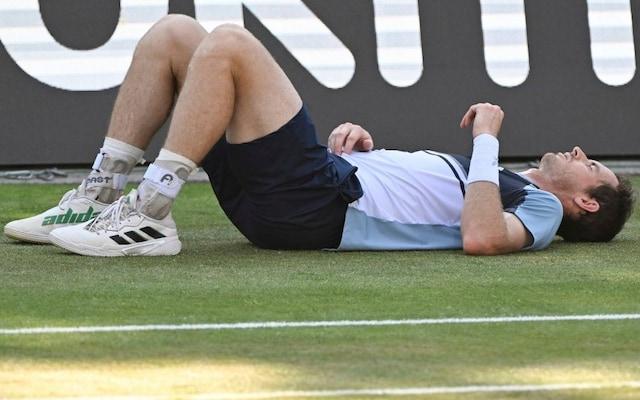
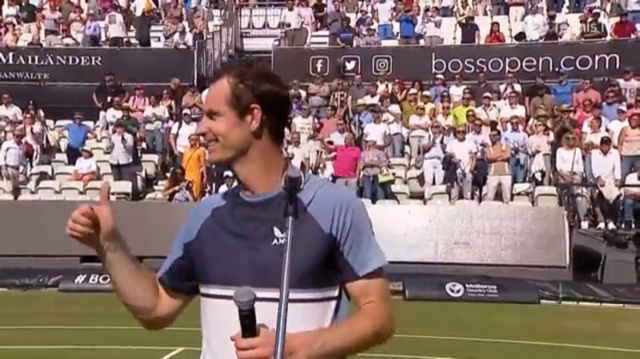
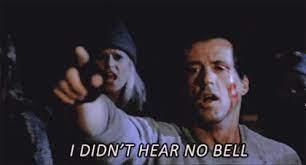


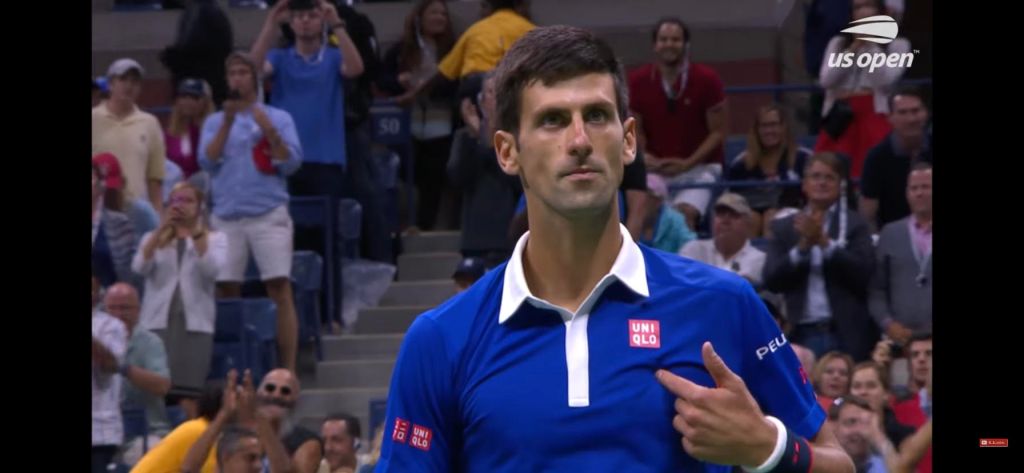
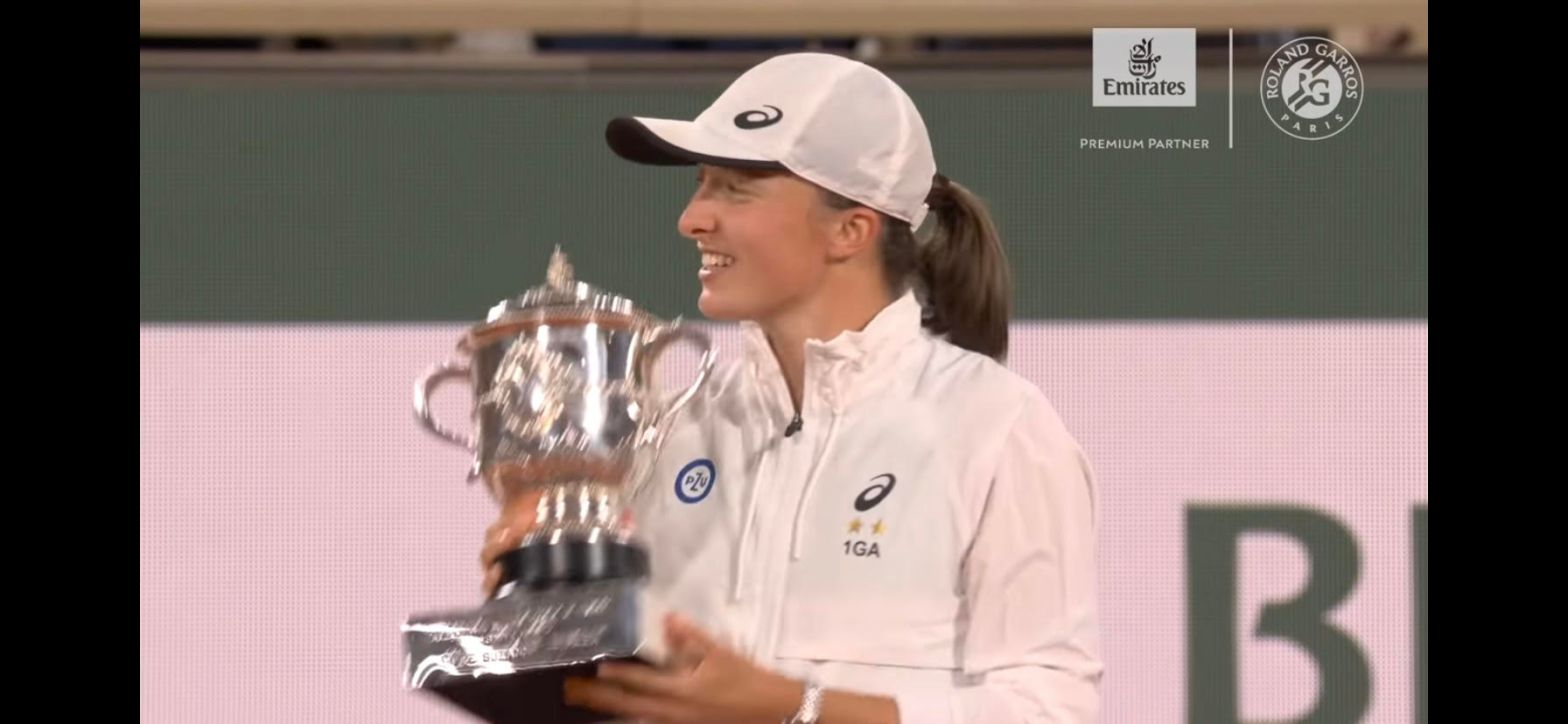


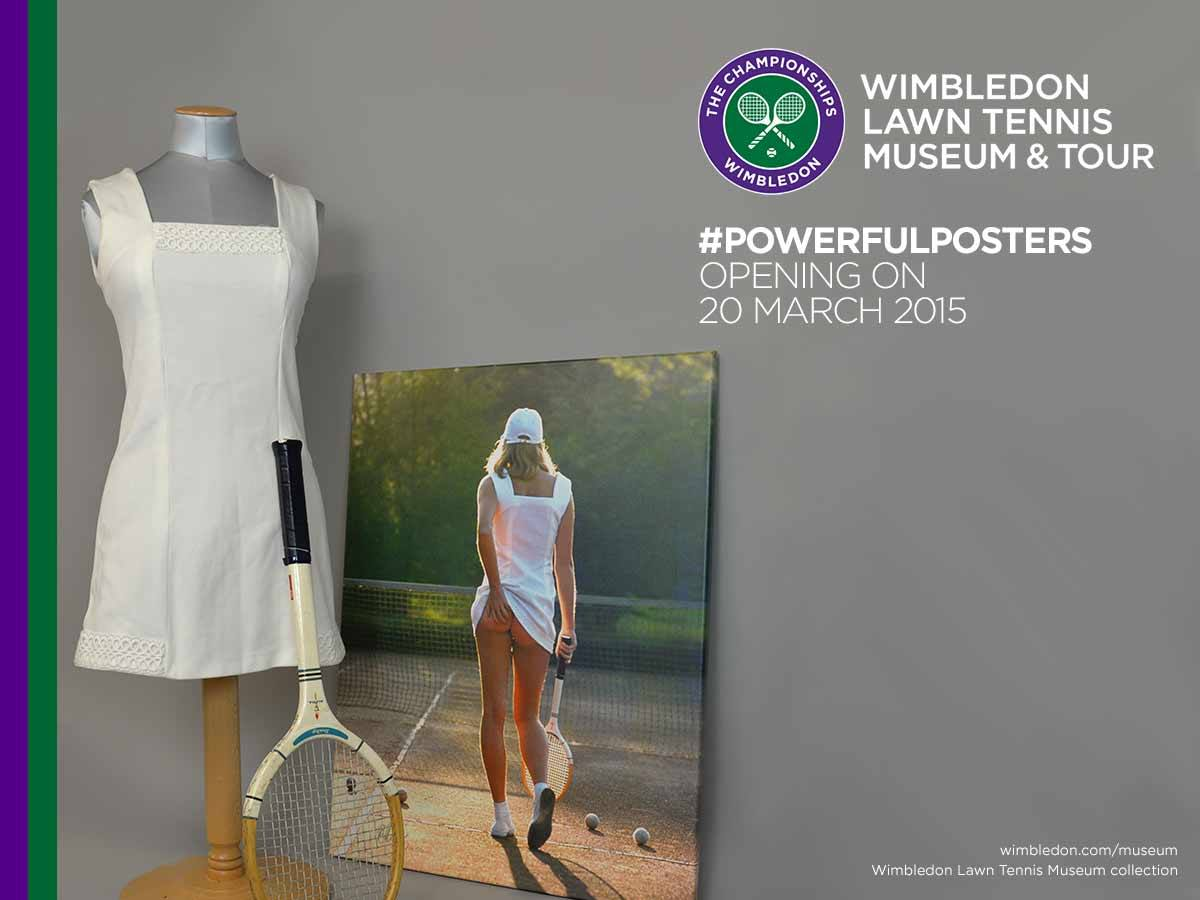
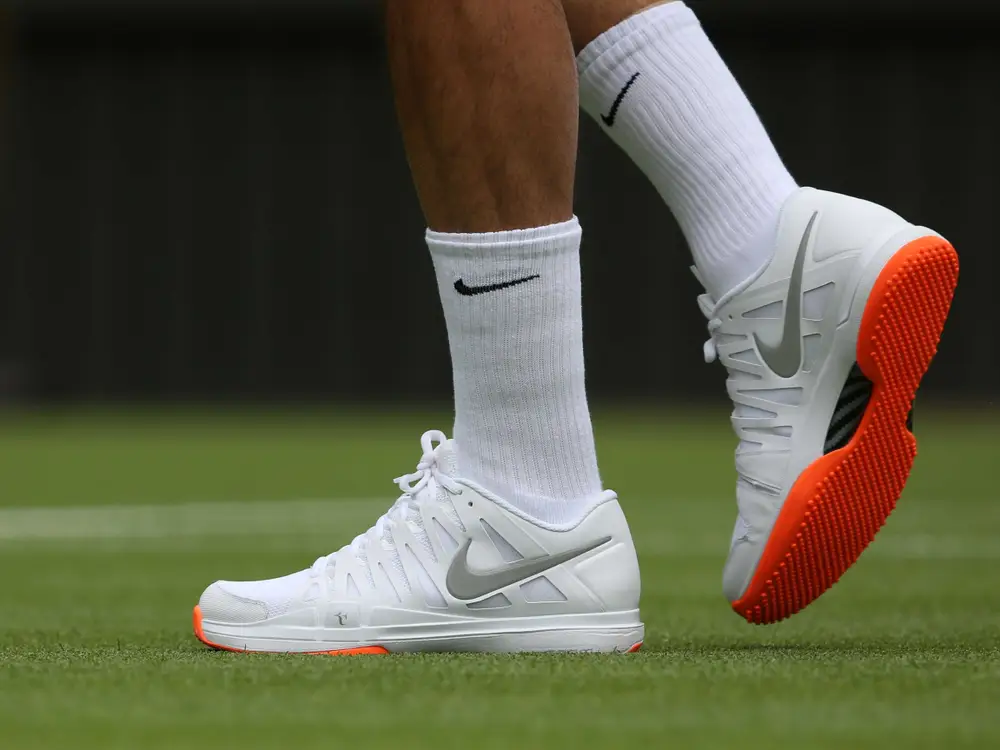

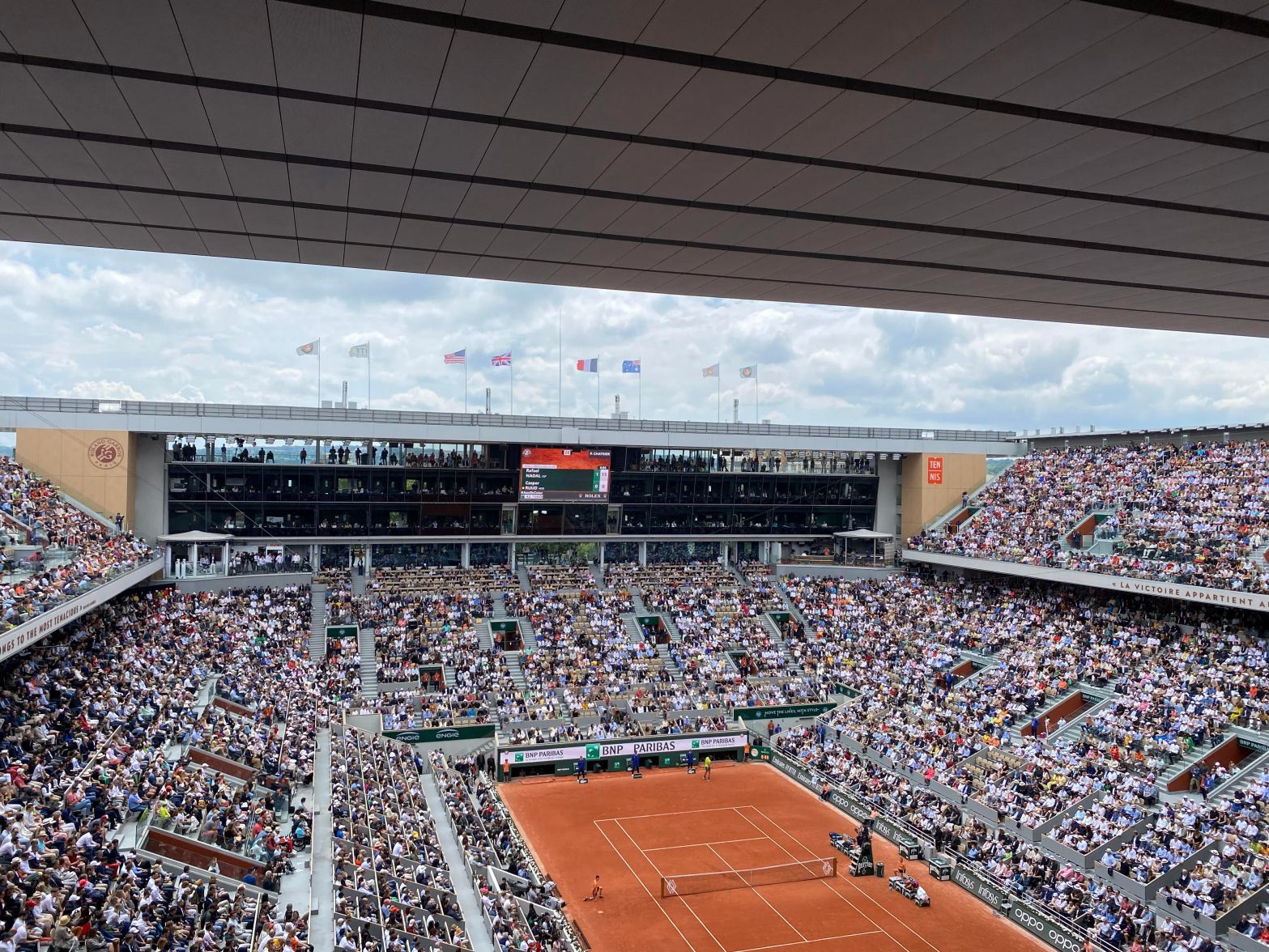
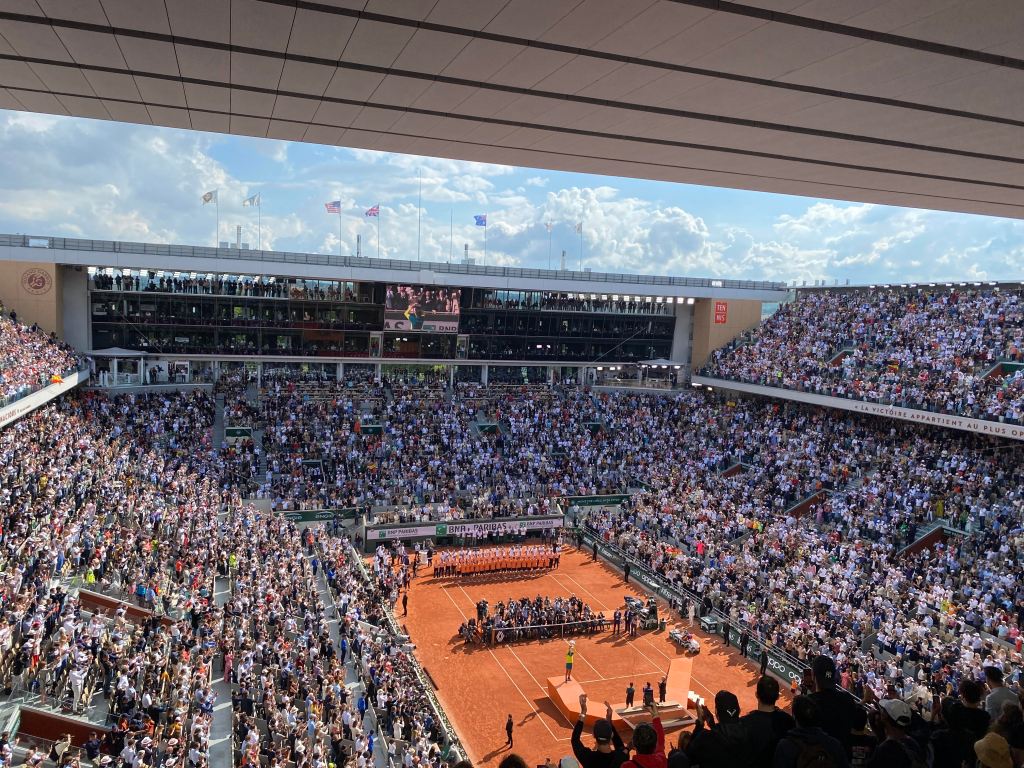

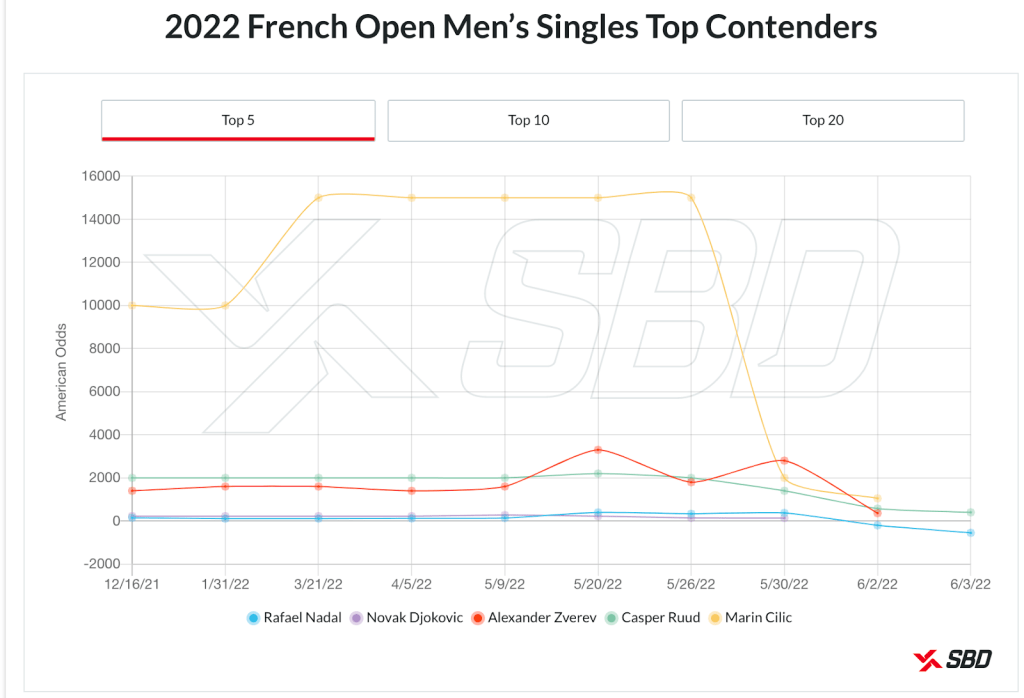
 Popcorn Tennis