Women Deserve to be the Main Event at Majors

By R95

What is the main event? In sport, we all know what it means. It’s like in boxing or mixed martial arts, there is an undercard followed by the main event. A solid supporting cast of performers who serve as the appetiser to the main event which closes the show. No-one remembers the undercard, no-one really cares, the main event is what people pay to see, it’s the main attraction. Every sports person wants to be in the main event and every sports fan wants to watch it. Tennis follows the same framework, the early rounds of a tournament are just the warm-up, the undercard, leading up to the final which is the main event.

In Grand Slam tennis, the main event is the biggest match on the final day Sunday of the tournament. This has somehow always automatically meant the men’s singles final. It seems to be the status quo; the way things have always been done but it is time to question why? Why is this always the case year after year? Why has there not been any change?

This is just a brief look at some stories and events at the different Grand Slam tournaments, make of them what you will. Let’s start with the Aussie Open.

There was much made this year about the AO and how finally there was fairness with regards to the men’s singles semi-finals schedule. In previous years, one semi-final was played on Thursday and one on the Friday, giving the player who advanced on the Thursday an extra 24 hrs rest and recovery ahead of the final. There were claims of this not being fair or right and now the tennis authorities down under have decided from 2022 that both men’s singles semi-finals will be played on the Friday.

The men’s semifinalists include Daniil Medvedev, who had this to say following a tight 4th round win after playing on the 2nd biggest court: ‘What should I do to play on centre courts in Grand Slams… because I won the last Slam’. Two of his previous three were played on Laver, and all of his subsequent matches. It is the audacity that he feels he has the right to play on Rod Laver all the time that is wrong and those comments cannot be justified. The other singles player who won the last Slam, Emma Raducanu played none of her two matches on Rod Laver, including a blockbuster of a 1st round pitting her against a former Slam champion in Sloane Stephens. That match deserved a stage like Rod Laver Arena but never got it. Did anybody hear the women complain about this?

It is not fair or right to have no women’s match on the final Sunday either, but you don’t hear the same outcry for that. The organisers, to their credit, have ensured Rod Laver Arena, the main show court at the Australian Open, has had a higher percentage of women’s matches vs. men’s matches over the last 3 years. It’s a step in the right direction and what better way to put an exclamation point on showcasing women’s tennis than introducing a women’s final on a Sunday?

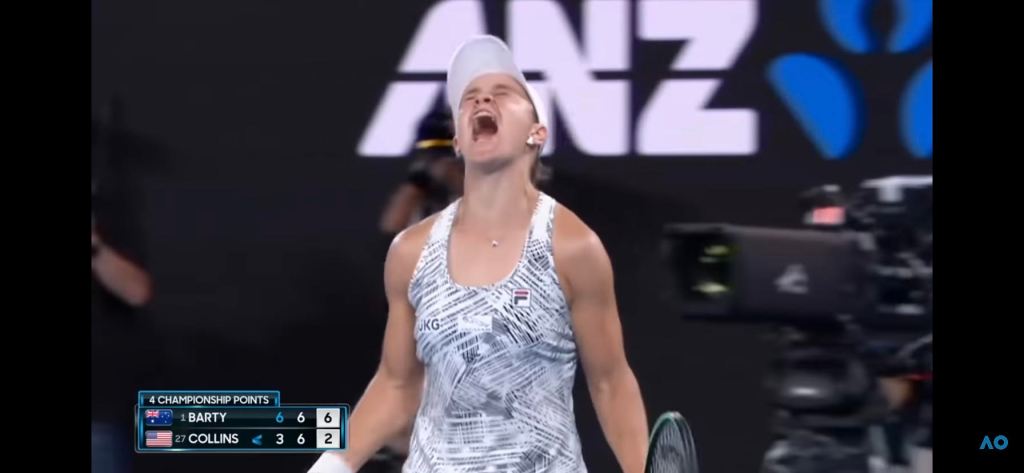
If the organisers have previously had one men’s semi-final on Thursday, which none of the other Slams do, then it would be easy enough for them to include both that day and have a Saturday final to give women the main event spot for a Sunday final. Of all the Grand Slams, the Australian Open appears the easiest to change from a scheduling point of view, but it should not even be about that, it is morally the right and fair thing to do to give women that spotlight. It just so happens that this years women’s final included their own player, world number 1 Ash Barty, looking to become the first Aussie to win their home Slam in over 40 years. Imagine a Sunday women’s final, historic, with the tantalising prospect of a home grown winner. It was the perfect storyline for the organisers to repair some of their damaged reputation.

A clear example of gender bias and a controversial incident in tennis took place at the 2019 French Open. The semi-finals stage is a very significant stage of any tournament, let alone a Grand Slam. There is no logical explanation as to why women were prevented from playing on Court Philippe Chatrier, the main show court with a capacity of 15,000 spectators, when both men’s semi-finals were played on it. Chatrier got a brand spanking new makeover that year, but it was a case of the same old thing; the last 3 years of data show most matches on that court were men’s, go further back in history and it’s likely the same.

Not only were women relegated from the main show court in 2019, but two of these players had to face the ignominy of playing the second biggest match of the tournament and quite possibly the biggest match of their careers, in front of a sparse crowd on the 3rd biggest court available. Everyone how important crowds are in sports, so who knows that would have happened had these women been able to play in front of a packed Chatrier? They earned that right, and it could have inspired their best tennis and would have completely changed the dynamics of the matches if they played on the biggest court.

Johanna Konta played what would turn out to be the last of her three Grand Slam semi-finals and has since retired from the sport. How unfortunate that one of the biggest matches of her career, was played out in front of a handful of people on Court Simonne-Mathieu. The fact most people have never even heard of that court tells you everything you need to know. The opponent who beat her to reach the final, Markéta Vondroušová never got the opportunity to play on Chatrier before she played Ashleigh Barty, in what would be both of their maiden Grand Slam singles finals. Reaching a Slam final without ever having played on the main show court. Has that ever, or would that ever happen to a male player?

For Barty, the rest is history; she went on to win, become world number 1 and win multiple Slams. It remains Vondroušová’s best result at a major. To top it all off, on the day of the final, the schedulers opted to complete a rain affected men’s semi-final ahead of the women’s final. It’s not only unfair and sickening behaviour by the organisers, its potentially career altering for the players.

The only explanation is that gender bias had taken place. Men were given preferential treatment to play on the biggest court, because they were deemed to be more important. It is extraordinary how tennis authorities get away with such behaviour, it’s despicable and they should be held to account. It was labelled a disgrace at the time by many, but attention soon turned to that upcoming Wimbledon, and the events of the French Open were swiftly forgotten.

Talking of SW19, Wimbledon likes to think of itself as the crown jewel of all the Grand Slams but if you look how they operate, it makes you think twice. History and tradition are important to All England Lawn Tennis and Croquet Club, to give them their full title. Some of their history and traditions are outdated, from a bygone era and need changing now.

The men’s singles defending champion always opens the play on Centre Court on the first Monday of the tournament, never the women’s champion. Why?

The men’s singles final is always on the last Sunday of the tournament, in the main event slot, never the women’s singles final. Why?

Wimbledon has a scoreboard on their grounds at the entrance and they display the result of the last major match on the final day and it’s always the men’s final score. They keep that scoreboard up all year, so not only do they push the men to front and centre during the tournament, but they are also on display for all to see the other 50 weeks of the year. A symbolic gesture of male favouritism by the biggest tennis tournament in the world.

If you look at Grand Slam winners, three of the four women’s singles champions receive trophies, and the runners up receive a plate/platter. Wimbledon’s famous ‘Rosewater Dish’ is given to the women’s singles champion. With all due respect, it is a glorified plate/platter that looks fancy, it’s not even a real trophy, the clue is in the name. The most sought after and prestigious prize in the women’s game looks like this.

This image has an empty alt attribute; its file name is venus-dish.jpeg
The Venus Rosewater Dish.

The saying goes that no player is bigger than the sport. Tell that to Serena Williams and Angelique Kerber who in 2018, had to start the biggest match of the year without a scheduled start time. They were put on after the conclusion of the rain affected men’s semi-final between Nadal & Djokovic. Clearly these men’s players were given preferential treatment over the women’s final and it’s not acceptable. Williams and Kerber had to wait 3 hours to play their match and the point needs to be emphasised, it is unfair, career changing and potentially history changing. Serena was going for a record-equalling 24th major title, and up to that point, when a Wimbledon final had started as scheduled, she had won seven out of nine finals. It’s all hypothetical now, but winning that match, she could have gone on to have at least 3 chances at a record breaking 25 Grand Slam titles. Tennis history could have changed from unfair scheduling and not by what happened on court, that should never come into the equation.

Wimbledon has also included Emma Raducanu, recent US Open women’s champion, as a member. This is normally only reserved for Wimbledon champions, but it was a very calculated move to capitalise on the marketability of this new British superstar because her name associated with Wimbledon would benefit them. But when have they ever, in their history, pushed the women’s game to the heights that they deserve, to the last match on the last day’s play? Never. And they need to be called out for that.

The lasting and indelible image from Grand Slams is the champion holding the trophy, posing for the photographers. Why not give women that match, and give them a real trophy to pose with? Women deserve it. That is how you inspire a generation and millions of people all around the world, it leaves a lasting impression.

From 2022, Wimbledon is playing matches on the middle Sunday, whereas in previous years that was a rest day for the tournament and made the second week very tight to schedule. This year also marks 100 years of Centre Court in its current location and over that century there has been a higher percentage of men playing on the world’s most famous court than women, it’s time to restore some balance. What better way to demonstrate Wimbledon as the most special and prestigious tournament in the sport by doing something that’s never been done before and is long overdue? Giving women the main event Sunday final.

Arthur Ashe stadium is the biggest tennis court in the world, and on the face of it, the fairest. Over the last 3 years of data, there has been a 50-50 split between men’s and women’s matches on Ashe at the US Open. This is better, progress in the right direction. The Open Era began in 1968, and ever since then men have gotten preferential treatment over women so in the interest of fairness and equality, the next 53 years should belong to the women’s game, clearly changes are needed. For many years, the US Open had ‘Super Saturday’ which included both the women’s final and the two men’s semi-finals on the same ‘super’ Saturday. Even on the day that two women’s players got to play a Slam final in front of the biggest tennis crowd in the world, it still had to be about men too. The reason Super Saturday was cancelled was not because the US Open thought the women deserved finals day to themselves, it was because they wanted to improve men’s players chances by giving them a day’s rest, playing on Friday ahead of their own showpiece Sunday final.

It almost beyond belief that these are the kinds of things that happen at the Grand Slam events, the tournaments that are the showcase and the pinnacle of the sport. It’s been going on for so long, for so many years that people just accept it. Enough is enough.

The numbers will tell you that tennis is the fairest sport of them all. It was the first major sport to introduce equal pay for men and women at the highest level, the Grand Slams. That is nothing but a facade to hide the deep-rooted problems of inequality tennis has been facing for decades.

The bottom line is this, changing a women’s Grand Slam Final to a Sunday would be historic and bigger than the sport.

The best gift that tennis can give women is the spotlight they have earned, the spotlight they deserve, on the biggest stages in the world.

Grand Slams.

Sunday Finals.

The Main Event.

If you believe in women’s tennis, please sign this petition: https://chng.it/R9k5XVxP

Together, we can change the face of the sport.

R95

@R95_Sport

This image has an empty alt attribute; its file name is finalists.jpeg
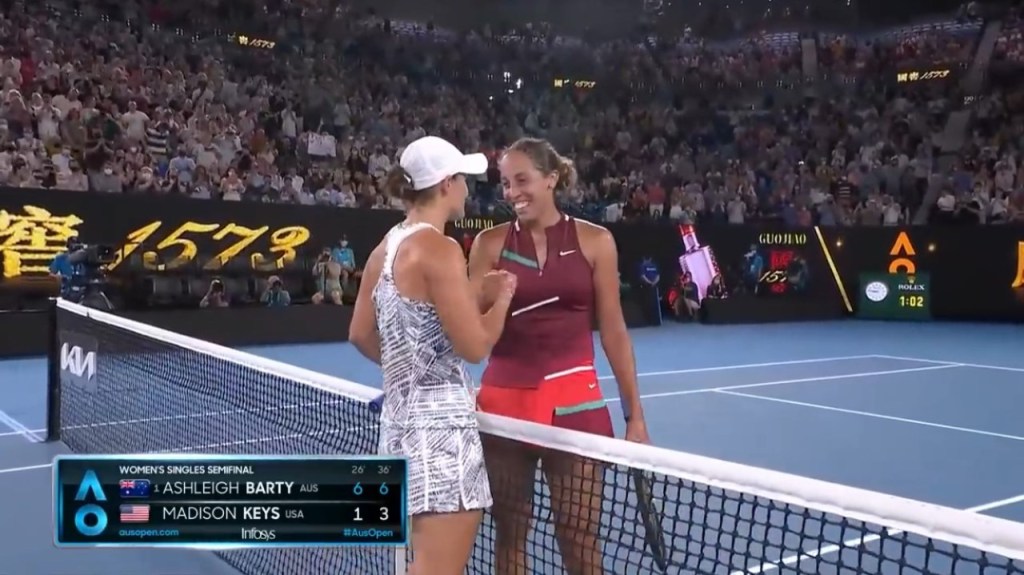
Homegrown: Ash Barty beats good friend Madison Keys to make the final of her home major.

Daniil Medvedev: Winning With Anger

Bubbles popped and fizzed as they poured across the surface of Rod Laver Arena. 

It’s the second of the men’s semifinals of the Australian Open 2022 and Daniil Medvedev has boiled over after falling a break down in the second set. It’s a tirade, leaping into his throat and out through his mouth, a diatribe that screams inner-turmoil and a willingness to feel hard-done-by. Regardless of anything else, he is certain that he’s justified in his words, derived as they are by what he knows are injustices, his opponent’s coaching team making this match all about them through hand gestures and words, signals that indicate sideline advice which is against the rules.

“His father can talk every point?! Are you stupid? His father can talk every point?! Oh my god! Oh my god, you are so bad, man! How can you be so bad in semifinals of Grand Slam?”

The umpire lets it brush across him with an air of the unbothered, only deigning to offer a few words meant to calm and a handful of sideways glances of general disapproval that all umpires have at their disposal, one of those “I’ll talk to you when you’ve calmed down a bit” looks that parents of young children will recognise instantly. This does not satisfy Medvedev, who lets loose further as he leaves the court for a toilet break five minutes later after losing the set.

“You understand, right? If you don’t (give him a coaching warning) you are – how can I say it – a small cat.”

Sherlock Holmes you need not be to deduce what he meant by this final comment…

Up until this point, the match had been finely poised, Medvedev taking the first set amidst consistent play in retaliation to a positive Tsitsipas start, Tsitsipas nabbing the second by remaining steadfast.

And now here we were, all-square with a real contest on our hands but a real temper tantrum in our midst.

To a casual observer, it would have looked like a complete loss of awareness that could well impact negatively on Medvedev, a cauldron of white hot annoyances in danger of breaking across the skills of the Russian. But what would go on to take place is something very much different.

You see, the thing with Medvedev is that when he’s angry, he seems able to actively converse with it, to come to an agreement over a coffee with it rather than simply let himself suffer beneath its wrath. It’s still there, still very much apparent, still very much vocalised but it’s also different now: they’re a team. This is an important distinction given that as a result, he’s able to avoid being distracted by bursts of extreme red and instead, feeds off it all with hardened intent.

For the purposes of the discussion of winning from scenarios like this one, it’s also important to note that it doesn’t necessarily matter if Medvedev is correct in his feelings or not. It matters only that he believes that he is. As long as that’s the case, nothing much can stop him from re-routing the temperamental energies in his system and directing them solely back into the on-court action.

The Russian isn’t alone in mastering the curious art of letting anger consume play all the way through to lay claim to positive results. 7-time major winner John McEnroe was infamous for his outbursts that at times seemed unhinged but he appeared forever capable of managing his game as a result of it and using the chaos he himself sparked to sponge every last winner from his game that he could muster. More recently, current men’s world number one Novak Djokovic operates best when he thinks that the entire world’s against him. And the blueprint for doing this is arguably the greatest player of all time, Serena Williams, who repeatedly leveraged herself to standards unmatched throughout her career by centering her emotions at the core of her play when necessary.

It’s an awareness of one’s own thoughts and senses and being able to know how to properly utilise them that often sets the great adrift from just the very good. Medvedev is well on his way to bridging that gap already, so more-or-less straightforwardly did he then go on to win the following two sets of his match against Stefanos Tsitsipas that it almost seemed unfair given how well the Greek had played to draw back level.

Indeed, the third and fourth set scorelines spared Tsitsipas only five games collectively as Medvedev walked up walls and passed through ceilings to reach additional levels, fuelled to get up there by an intense distaste for the what he felt was unfairness.

In the moment, Medvedev did only what he believed the predicament that he found himself in allowed room for. That he escaped any real admonishment for umpire verbal abuse seems lucky but given how direct a confrontation it was, you would have to believe that Jaume Campistol was not particularly bothered by the proceedings. Medvedev would later apologise for his behaviour directly to Campistol and when asked about the incident in press afterwards, suggested that he often regrets these kind of outbursts following the conclusion of matches.

Perhaps for Medvedev then, it’s an unhealthy relationship to find himself so worked up. So often does it leave him as a winner at some point down the line, so often does it leave him wishing he’d maintained better control…

Amongst the mess, however, Medvedev remains now with one match separating him from becoming the first male player in the Open Era to win his second major title directly after his first. Just one Rafael Nadal blocks his path, a figure unlikely to be shaken or flapped by antics or attitude.

It’s lucky then that Medvedev has so much more at his disposal than simply toy-out-of-pram tendencies…

Heat Of The Battle: Daniil Medvedev in full argumentative mode with the chair umpire during the semifinals of the `Australian Open 2022.

Blocked Returns

No player’s game is devoid of weaknesses. A constant battle as a professional player is to make your deficiencies as inconsequential as possible while maximizing your strengths. Lack easy power? Having great endurance is a good way to compensate. Have trouble moving quickly? Developing a powerful serve can create some balance. Interestingly, even the top players can have major weaknesses in their game. Their other shots tend to be amazing enough to make up for the weakness, but the weakness remains nonetheless. In the current era of the ATP, the most common deficiency is in the return of serve. The losing semifinalists last night, Matteo Berrettini and Stefanos Tsitsipas, have many strong attributes that have propelled them to the top of the game. Yet they share the salient characteristic of being poor returners.

Berrettini fell to Rafael Nadal 3-6, 2-6, 6-3, 3-6 in a match slightly closer than the score indicates. It should be said that Nadal is an extremely difficult matchup for Berrettini. His backhand is by far his weaker wing, and Nadal is an expert at targeting the ad court with spin, angles, or pace. It didn’t take long for his tactic to pay dividends. Berrettini started slowly — his vulnerable backhand sneezed errors into the net, seemingly every time Nadal targeted it. He took two and a half service games to win a point on his second serve. Berrettini’s backhand made all kinds of errors — he netted attempted down-the-line shots, tried to take balls on the rise and missed them badly, or got pushed out wide and again, ended up missing. On the second point of the match, Nadal hit a solid crosscourt forehand. There was a decent angle on the ball, but it was a shot he probably expected to come back. Berrettini attempted a backhand down the line, and the ball flew wildly off the strings — wide of the doubles alley and headed wider. At the time, I chalked it up to early-match rustiness, but the error ended up being a bit of an omen. 

There are times when a player’s weaker wing holds up well, so well that the fact it’s a weakness can even cease to be apparent. Unfortunately, the reverse is also possible, and a player executing shots poorly from their already-weaker wing often results in carnage. Especially when the weak wing is a backhand and it’s trading blows with Nadal’s forehand. For much of the match, Berrettini’s backhand was absolutely ripped to shreds. To be fair, it required the specific conditions of heavy spin coming from Nadal’s lefty forehand to unravel the backhand so noticeably, but the weakness was apparent every time Berrettini had to hit a ball.

Berrettini often papers over the vulnerabilities of his backhand by slicing, which he usually does quite well. Nadal, though, is probably the best player in history at attacking slices, so this was a generally unsuccessful tactic for Berrettini. Screenshot: Australian Open YouTube Channel

And yet, Berrettini’s return of serve may well have been a bigger issue than his backhand. He has now played Nadal twice, for a total of seven sets. He has broken Nadal once and produced break point in just one return game. His backhand dumped returns into the net time and again. He regularly chipped forehand returns, which Nadal feasted on. The Spaniard won 67% of points behind his second serve!

Thanks to his advantages in ad-court rallies and the return, Nadal routed Berrettini for two sets. The second set looked like it could have been a bagel. Berrettini made over 80% of his first serves in the set and still got broken twice.

Finally, after two and a half sets, Berrettini had had enough. He sprinted into his forehand corner to scorch a winner down the line as Nadal came to net. On break point at 4-3 up, he blasted a forehand winner down the line. Then he served out the set with four bombing serves. 

The fourth set had its tight moments as well — Berrettini had 15-30 at 3-all but missed a makeable forehand down the line, then had a look at a pass at 40-30 and missed that too. He had his chances, as they say.

Berrettini is 0-7 against top ten opponents at majors. He’s given them plenty of trouble — hell, six of those seven are Djokovic, Nadal, or Federer. Still, he hasn’t been able to maximize his opportunities to get into the matches. Today, he took the third set with a burst of brilliance and rode a hot streak on serve deep into the fourth. At 3-4, Berrettini saved a break point with a tactical clinic — he first targeted Nadal’s backhand, then ran down the Spaniard‘s aggressive forehands, then managed to get the ball back to Nadal’s backhand, which eventually leaked the error. Berrettini plays nothing like Djokovic, but he had managed to channel the Serb on a vital point. 

Alas, it didn’t last. Berrettini lost six of the next seven points, several with unforced errors, to lose the match. 

Berrettini played Nadal relatively evenly for the last two sets. On average, he might have even played better. The bigger problem than his lapse in the final two games was the way he played the first two sets. Nadal was bossing points like you might expect him to against a club player. Berrettini’s backhand atrophied when targeted by Nadal’s forehand, sometimes immediately. The backhand was an obvious weakness going in, but a below-average performance from that wing made it a fatal one.

Berrettini’s return of serve continued to be an issue. In seven sets against Nadal, he has broken serve all of once. 

Berrettini also largely failed to dominate with his strengths. In the second set, he made over 80% of his first serves, and was broken twice anyway. Nadal does not have the killer match-closing instinct he once did. Despite the nightmarish tactical matchup, there was a window for Berrettini to win this match. The Italian has now played Djokovic or Nadal in four consecutive majors. The matches have not gotten closer. 

Berrettini has had a fantastic Australian Open. He took Carlos Alcaraz’s best punch in the third round and edged out the Spaniard in a fifth-set tiebreak. He repeated the trick against the electrifying Gael Monfils, losing the third and fourth sets after taking the first two, and again held on to claim the fifth. Seeded seventh, he played above his ranking to make the semifinals. Yet it feels like he has left some glory on the table. The wait for Roland-Garros is long, all the more so after a disappointing loss. 

*****

Both Medvedev and Tsitsipas had their work cut out for them. Medvedev suffered through a four-hour, 48-minute quarterfinal with Felix Auger-Aliassime; Tsitsipas cruised to the semifinals but got crushed by Medvedev on Rod Laver Arena a mere 12 months earlier. I didn’t think Tsitsipas had much of a chance going into this match, but he began clinically on serve, scoring four easy holds. The problem? He couldn’t win a single point in his return games. Medvedev won his first 22 points on serve: good for five consecutive holds to love, then another to 15.

At 4-all, Medvedev opened up a love-30 lead on Tsitsipas’s serve. They then dug in for an astonishing 34-shot rally, at the end of which Medvedev somehow defended a vicious backhand down the line, then in short order opened up the court and slotted a crosscourt forehand winner into the space. Tsitsipas was visibly flagging by the end of the rally. It was brutal, and shocking, because Medvedev’s quarterfinal had been so draining in comparison to Tsitsipas’s stroll over Sinner. The Russian was supposed to be more physically taxed, yet he appeared the fitter player.

Tsitsipas ended up holding serve impressively, saving four break points. His inability to make a dent on the return of serve aside, the match felt intense and high-quality. In the tiebreak, Tsitsipas took a 4-1 lead, but even that seemed tenuous, since it was obvious he couldn’t count on getting a second mini-break. Medvedev evened the tiebreak quickly and would up sneaking it 7-5. The Russian had made two uncharacteristic backhand errors in the tiebreak, but his steadiness on serve had given him more than sufficient margin for error.

Tsitsipas won the second set, breaking twice (though Medvedev hit a trio of unforced errors in each game). When serving out the set, he was hauled back from 40-15 to deuce, but responded brilliantly to the pressure with a severely angled forehand that set up a putaway. Upon nailing the forehand winner, Tsitsipas celebrated like he had won the tournament.

That was about as good as it would get for Tsitsipas. He had a couple break points early in the third set, but Medvedev held serve, and lost just five games for the rest of the match. The fourth set was alarming. Tsitsipas held his opening service game, then found himself standing still as Medvedev swept by him, winning five straight games. Tsitsipas’s movement grew clumsier and Medvedev crushed winners past him. There was an obvious physical and technical gap by the end of the match.

The nature of the loss is more concerning to Tsitsipas than the loss itself. Take Auger-Aliassime, who has lost to Medvedev at consecutive majors. The first was a flat straight-set affair, but in dragging the Russian to the brink in the quarterfinals he made clear that he had improved, results be damned. I’m not sure the same can be said for Tsitsipas. He won 18 points on the return, fewer than half of Medvedev’s 41. He came into the match as the fresher, more in-form player, and though he took a set, the semifinal was a thrashing by the end.

It’s Tsitsipas’s loss in particular that raises some questions. The Greek has been to three Australian Open semifinals now. He’s racked up all of one set (he was two points away from another) amidst his three losses. He made a hard court Masters 1000 final in Toronto in 2018 and hasn’t repeated the achievement since. Aside from his World Tour Finals victory in 2019, Tsitsipas’s hard court development looks to be at a standstill. The reason for that is the return of serve — until that area of his game improves, he is not a top contender at the big hard court events.

Tsitsipas is obviously capable of amazing tennis on hard court. His demolition of Sinner in the quarterfinals was a sight to behold; his forehand was firing winners at will, he was covering the court with ease. But tennis is a game of matchups, and against bigger servers and/or more consistent baseliners, Tsitsipas is not where he needs to be. Berrettini looked impressive for much of the tournament, especially in holding off Alcaraz and Monfils in fifth sets, but Nadal exposed his backhand so relentlessly that people on Twitter were saying they could hit better backhands than Berrettini. If there is a slight weakness in your game, it will come out if you play a well-rounded tactician like Nadal or Medvedev.

It’s probably impossible that Tsitsipas will ever be a great returner, but it’s the lack of visible improvement that is worrying. It was a full twelve months ago when he played Medvedev in the 2021 Australian Open semifinals, lost 88% of points played on Medvedev’s first serve, then said the Russian served like John Isner after the match. It is very clear what the issue with his game is. Yet there’s been no discernable change to his approach on the return — he still takes huge cuts at fast serves, as if chipping it back to take the pace off never occurred to him.

I’m not asking him to become Djokovic here. Dominic Thiem has a very similar game and once had very similar weaknesses, but he slowly improved his slice and return. He won the U.S. Open in 2020 and got very close to winning the Australian Open, too.

Tsitsipas and Berrettini are both brilliant players. Their serves and forehands are world-class. They are mentally strong. But until their return games improve, expect them to be blocked from major finals again in the near future.

Felix Auger-Aliassime: Unbowed In Defeat

It was just past midnight in Melbourne and Felix Auger-Aliassime was in press and talking. The match he’d just lost lounged out and relaxed in his head, a behemoth just sitting there atop his brain, waiting to be unpacked and detailed out across a practice court in the weeks and months to come.

“I wish I could go back and change it but I can’t so I’ve accepted it already. It is what it is and I look at it in a very positive way… It’s unfortunate I couldn’t win but it was a good match, I showed good things. I’m going to leave Australia with my head held high and I’m going to go into the rest of this season knowing that I can play well against the best players in the world.”

His mindset was surprising, given that it would have been entirely understandable to see him a broken mess across the conference room desk in a state of loss, so close he’d come to making a major semifinal for only the second time in his career, so close he’d been to beating the second best men’s player in the world, so close he’d been, so very damn close.

Just one point in fact.

***

Coming into the match, many viewed it as a given. It would be a Daniil Medvedev walkthrough, a Russian jog that might be filled with the odd flash of Canadian surprise but one that would end with the hand-shake and post-match speech that rankings (Medvedev 2, Auger-Aliassime 9), results (Medvedev has made three major finals and won the U.S. Open; Auger-Aliassime has never made a major final) and head-to-head history (3-0 Medvedev before this match) all suggested that it would.

Jaws would soon drop, eyes soon widen, spoons soon stop enroute to mouths in response to what the following five sets would offer up but first, it seemed only like a slow start from Medvedev as he tried to find rhythm between Auger-Aliassime’s flow, a flow that curled back and forth across the baseline relentless.

Despite breaking back when most necessary, Medvedev seemed wayward, head-in-the-cloud shot selection leading him blindly into the first set tiebreaker, double-faults dart-boarding him at moments of pressure and leaking set point opportunities to his younger adversary, who needed only to be asked twice, taking the second with steady consistency.

You still didn’t sense the upset though, not really, not with Medvedev with his eye-ball bulging ball-strikes that felt only one big momentum-swinging point away from running roughshod over proceedings.

But Auger-Aliassime was there, he was the most there he’s ever been, so steadfastly alive and just absolutely resolute in his willingness to keep going and going and going until the ending drifted across the match in some form or another and if he could help it, he’d reach up and seize it from the air and cling it around his shoulders as his own.

The second set was won, a break enough to take it. 2-0, Auger-Aliassime.

***

Never let it be said that this was a match of two halves because it simply wasn’t.

Down two sets to nothing, Medvedev fine-tuned everything and focused-up, his game yielding the results that he’d been searching for but Auger-Aliassime did not budge. He kept going but was met by better in yet another tiebreaker, Medvedev escaping out and into a fourth with a gasp of a close-call scraped through.

And it was here where nobody would have particularly blamed Auger-Aliassime if he’d stalled, if he’d found his engine choking on a plethora of missed chances, his racket catching at nerves, producing mistakes where there’d once been winners.

This didn’t happen.

He would go on to be served an un-returnable while holding a match point deep in the fourth. The set itself would go with it with Medvedev reaching in and rewiring the fight, the results of which would see Auger-Aliassime ultimately lose it all in the end, a two set lead not enough to put away the player many are predicting to lift the trophy this coming Sunday.

But this was not because of a slip in his form or his commitment to the battle. He swung for the fence long after others would have switched out the lights and headed home with only the knowledge that they’d halfway tried for something.

If this match told us all anything, it’s that Felix Auger-Aliassime is no halfway man.

***

Tennis, of course, doesn’t work on nearlys and nobody knows that better than Auger-Aliassime. A win-in-the-form-of-a-loss is still a loss, empty-handedness a sign of further work in areas needed. He’ll know that.

Failure rarely seems worthwhile in the immediate wake of it but when the waves subside and the shorelines settle, improvements often brush up between the sand, plus-points to be taken and harboured and added to utility belts to make sure avoiding such a fate is a far easier task to accomplish the next time around.

Still only 21, Auger-Aliassime is unbowed going forwards, knowing that he has the ability to run with the top flight and send them scattering, scared, terrified, looking for answers.

And with a little more work, he might just be able to stop them finding any.

Smiling In Defeat: Felix Auger-Aliassime is able to laugh following a five set defeat at the hand of Daniil Medvedev in the Australian Open quarterfinals.

The Effectiveness of Barty’s Slice in Australia

By Jack Edward

Many love the unpredictability of the WTA Tour.

Others love to take a crack at its lack of consistency.

Either way it’s probably fair to say for 99% of the world’s top-100, anything can happen on any given day.

For Ash Barty however, this rule does not apply. People don’t seem to recognise the world #1’s crazy consistency…

  • Barty has won 23 of her last 25 matches.
  • She has dropped just seven sets in that time.
  • She has won 14 of her last 15 matches vs top-20 opposition.

… and of one of the most under-appreciated #1’s array of superb shots, Barty’s slice is perhaps her most under-appreciated shot.

Safety In Slice

Jessica Pegula is as basic a professional tennis player as they come. 

She doesn’t have any huge weapons in her game but she is able to hurt her opponents with nifty changes in direction and consistency from the baseline. Last year, she finished #25 on service points won and return points won within the top-50 – she is as standard as a top player comes.

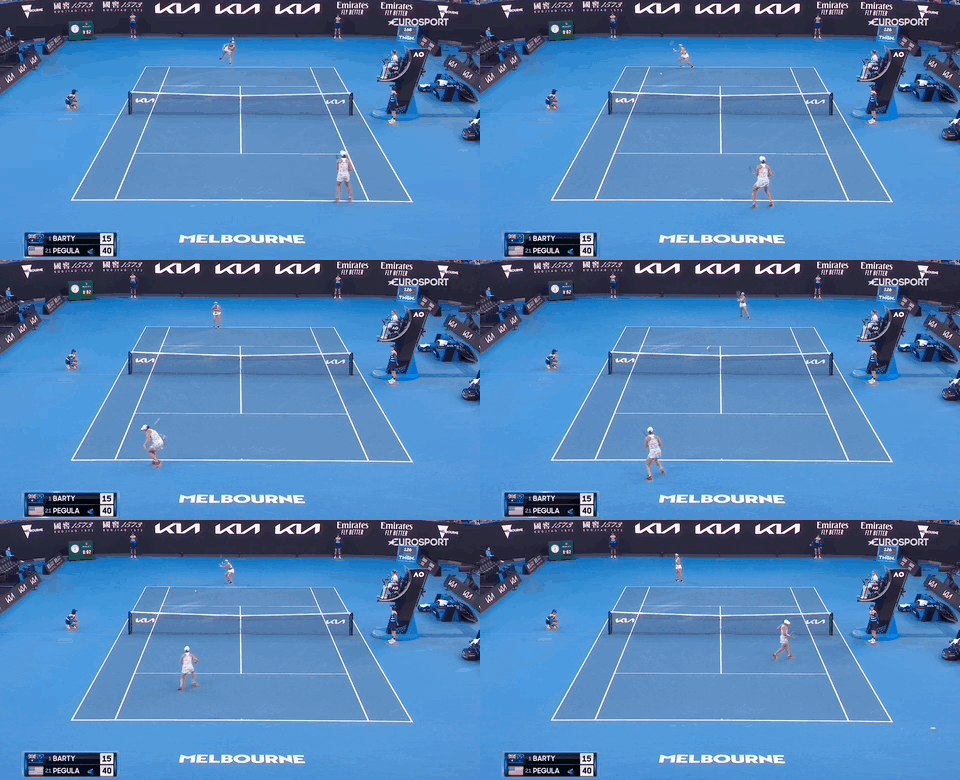
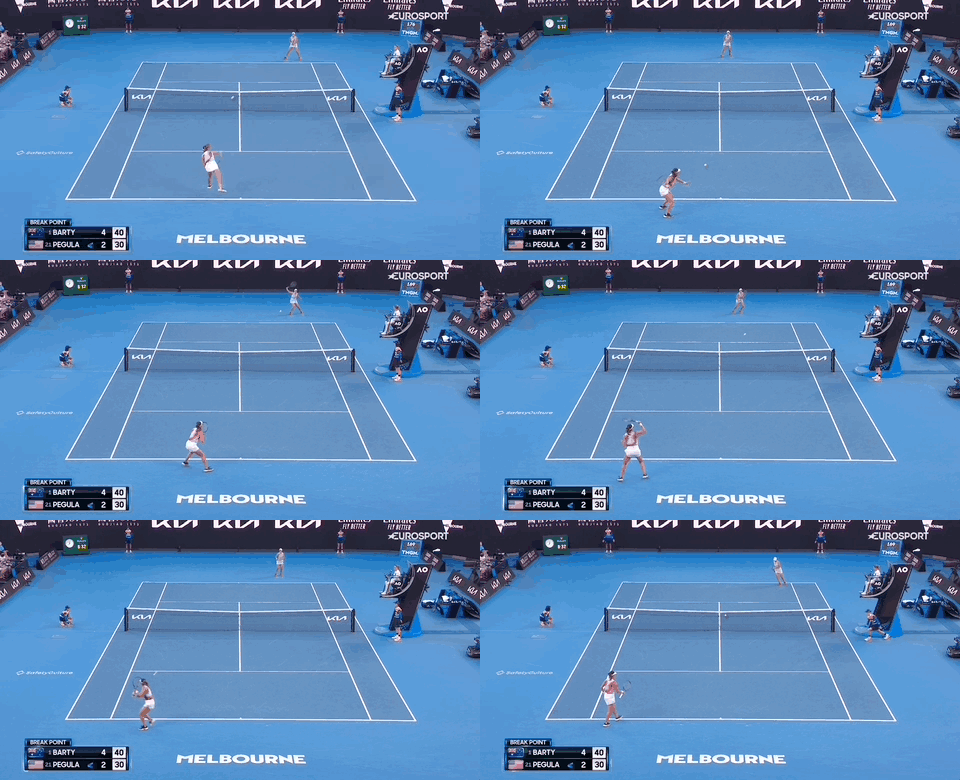
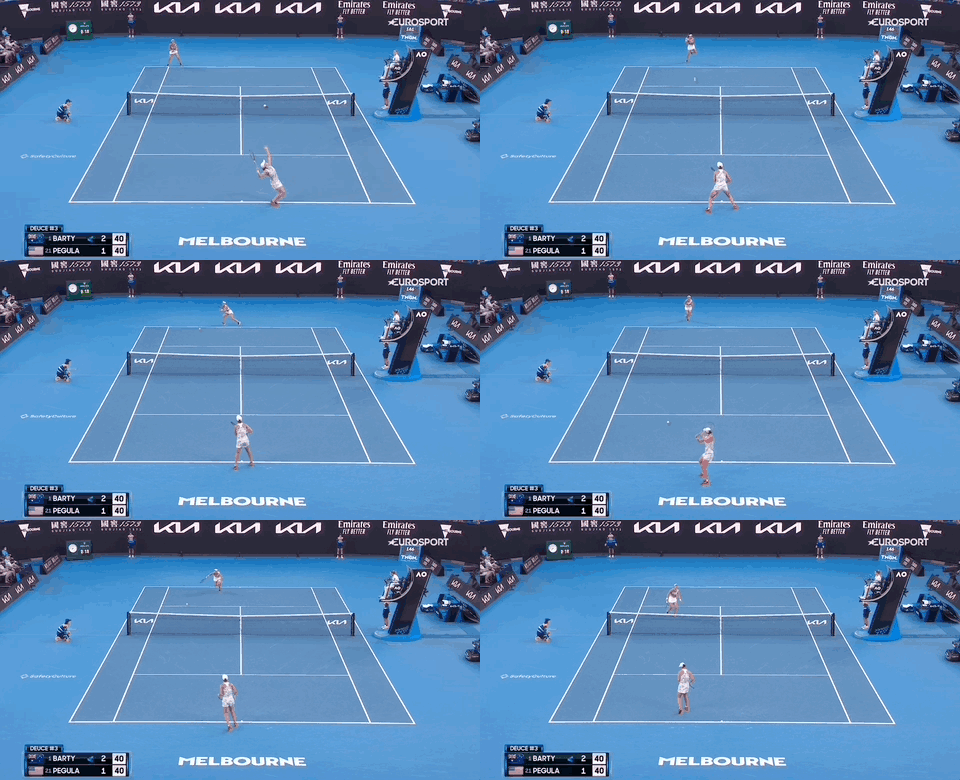
This was a pretty bad match-up for the American to say the least. Barty had many weapons at her disposal to hurt the all-rounder but so often she opted for the safest option – her backhand slice.

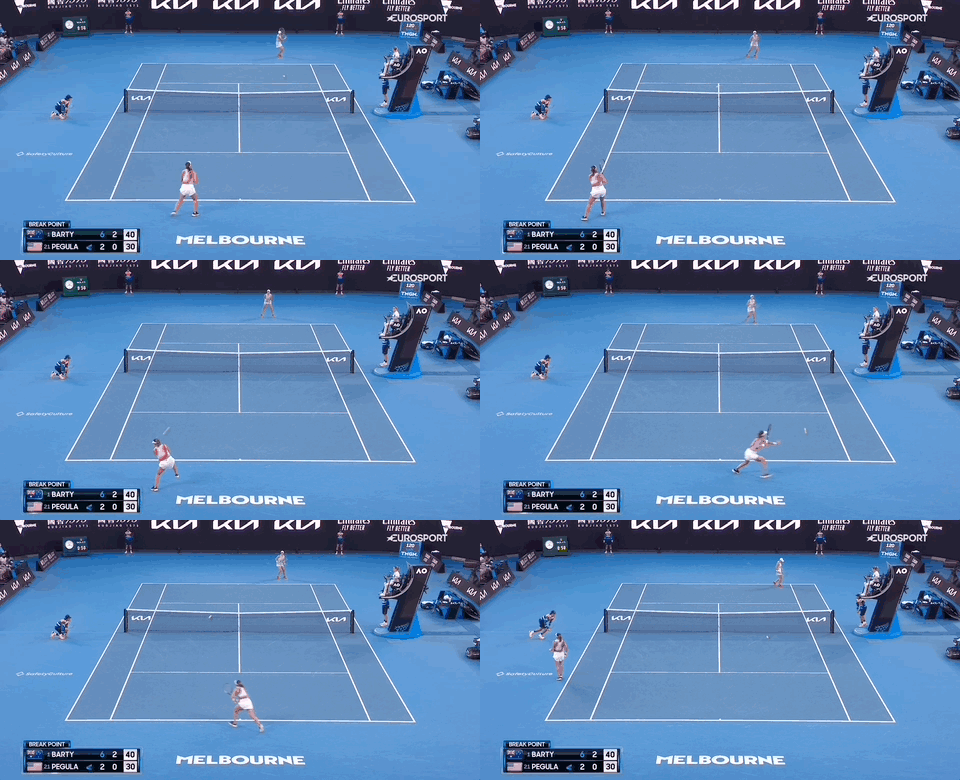
She was able to hurt Pegula by putting the slice anywhere on her side of the court. Literally all four corners. 

  • Deep in the deuce-court: Barty (bottom) approaches deep to Pegula’s (top) forehand. Notice the side-spin when hitting to the forehand to make getting around the ball incredibly tricky.
  • Short in the ad-court: A slice exhibition from Barty (top). The side-spin to the forehand puts Pegula (bottom) out of position and Barty finesses the final shot short to force the error.
  • Deep in the ad-court: Normally Barty’s (top) most frequent choice for slice direction (in this match, she spread the court pretty equally). This type of slice can prompt a central response for a proceeding forehand – you can see Barty getting ready to skip around Pegula’s (bottom) missed backhand.
This image has an empty alt attribute; its file name is 08bfbb89-3eb8-4244-8c71-d6cbb63d10ab_480x260.gif
  • Short in the deuce-court: When you slice so often, you have the advantage of disguising short balls. This one completely catches Pegula (top) off-guard who would have struggled at the net had she made the forehand.

(Keep in mind these slices were with the roof open when the balls tend to bounce a little higher.)

Barty’s slice is so unique to the tour, many players have no idea how to handle its bizarreness. More of the women on tour need to start practicing to play Barty specifically, if they don’t already (a male hitting partner would be a good idea as the amount of underspin Barty imparts on the slice is incredibly uncommon in the women’s game).

With Pegula underprepared, she was naturally sliced to shreds.

Adapting To The Conditions

It’ll be interesting to see what happens in Barty’s match against Madison Keys.

How the two players perform will be pretty dependent on the conditions but I don’t doubt she will give a full account of herself either way. She spoke about how the conditions affect the court in Oz.

“It’s a court that changes quite dramatically with the conditions, it can be really hot and bouncy when you’re outside and in the sun and sometimes at night, or if the roof is closed, it can become quite slow and dead. I think just being able to adapt to how the court is playing is a really important part of this.”

Barty is a totem of versatility, the reason she has won the two most dissimilar Slams.

I don’t think she’ll feel like she has to change anything up, though. It looks like the match will be played at night under cooler conditions. This is no guarantee the courts won’t be lively but it’s a pretty good indication at least that the longer the match goes on, the more the match will favour Barty, her slice becoming more and more lethal as the temperature drops.

Keys spoke about how difficult it is to deal with.

“The reason Ash’s slice is so good is because she’s able to hit it no matter how big the ball is that’s coming in. Which I think not a lot of other women in this era are able to do…. She does such a good job of resetting the point constantly and being able to get back to neutral off of a ball because you can’t do a ton of her slice because it comes in so low. So I think that’s obviously one of her weapons because then she can set it up to look for a forehand.”

(Keys pointed out how difficult it is to attack Barty’s backhand wing. The defensive capabilities of Barty are unreal because of this point-neutraliser – trying to break out of a slice-to-slice exchange will often result in a Barty forehand. Her defence is another aspect in which she’s underrated in my opinion.)

Barty’s played all of her matches during the day so far and she’s been able to adapt perfectly – and I think this shot is spearheading the way to easy victories for her. With her two final matches scheduled for the night and the slice likely to be even slicier, I have no doubt this insanely underrated weapon makes her the heavy favourite for the tournament.

Be afraid WTA and TT! Be very afraid…

Image

The Successor

“There’s about five times a year you wake up perfect, when you can’t lose to anybody, but it’s not those five times a year that make a tennis player.” — Brad Gilbert to Andre Agassi, Open

***

Iga Świątek’s five times in 2020 might have all happened in the same two weeks. At Roland-Garros in that year, Świątek stormed the field. Simona Halep was the favorite for the title. Świątek thrashed her in the fourth round for the loss of three games. Then just 19 years old, she won the title without dropping a set. She lost 28 games in total — essentially averaging a 6-2, 6-2 beatdown per round. It was a redlined fortnight of stunning proportions. 

Since that tournament, Świątek has been very successful. She followed up her title by making the fourth round at all three other majors in the next year. She has climbed to #9 in the world. She will be higher after this tournament. 

Świątek has also come back to Earth after her supreme Roland-Garros campaign in 2020. There’s less than zero shame in this — even the very best players have struggled to immediately consolidate their success at the highest level. After watching Świątek dismiss challengers as easily as Novak Djokovic and then Tennis Australia dismissed competence, there was a sense of surprise when she started to lose, even to top players. Her peak level wasn’t the problem — it was still sky-high — but reaching it all the time was proving difficult; other players had stronger B games. 

It was easy to forget that Świątek was still so young as she continued to exhibit consistency at the majors. She had shown she was ready, so a regression from that peak felt disappointing. In reality, the standards were too high. Besides Naomi Osaka, a player hasn’t broken the ice by winning consecutive majors in ages. Medvedev might do it this tournament, but he’s 25 and fully developed, used to the grind of the tour. 

A reality on tour is that players are at their best very infrequently. Tennis is such a volatile sport; with so much depending on the opponent and a set of constantly shifting court speeds and conditions, it’s no wonder something goes wrong in nearly every match. The best players get upset so rarely not because they overpower inferior players with top performances time and again, but because they are experts at managing days when they can’t produce a top performance. 

In the Australian Open quarterfinals against the perennially dangerous Kaia Kanepi, Świątek was definitely not having a top performance. She saved an astonishing eight set points before losing the first set, but was always playing from behind after missing a few early break points. In the second, she forged a 4-1 lead, trying to produce some momentum, but Kanepi fought back to 4-4 as Świątek continued to misfire. The 20-year-old was frustrated — she wasn’t playing well, she knew it, and time was running out in a big match. 

When Świątek double faulted for love-15 at 4-4, an implosion looked possible, but she gathered herself to take care of her serve, reaching a tiebreak. Once there, she accelerated, landing a forehand return winner on the baseline to grab a mini-break and immediately after winning one of the most draining rallies of the match to take a decisive 5-2 lead. 

It’s impossible to play well all the time. Tennis matches have peaks and valleys, even the most lopsided of blowouts. Agassi wrote that he felt Pete Sampras could play poorly for 38 minutes, then well for one and end up winning the set. And doesn’t that sound more repeatable than peaking for a sustained period, playing your best for a minute instead of all the time? A player’s floor is often more relevant than their ceiling. 

Świątek’s floor is rising. After winning the second set tiebreak, she went up an early break on Kanepi in the decider. Her ballstriking became more assertive. She broke a second time with a fierce inside-out forehand/crosscourt backhand combination. 

When serving for the match, Świątek played an extremely loose game and was broken to 15. She rebounded immediately, though, forcing her way to match point in Kanepi’s 3-5 service game. 

Kanepi landed a huge serve and immediately went on the attack, hitting to the open court. Świątek threw herself into shrieking slides, putting everything into the rally — if you win match point, you don’t have to play anymore, so you might as well exhaust yourself. Świątek returned a pair of forehands Kanepi hit from on top of the net, plus an overhead smash with a leaping, twisting stab. She finally got back a low forehand slice (and had put pressure on Kanepi to hit a perfect shot with her previous mindblowing gets) that caused Kanepi to miss a backhand. 

Świątek celebrated exuberantly. She had largely played a poor match — like Rafael Nadal the night before, she hit a career-high 11 double faults — and had won anyway. On a day when her best level was as elusive as a good Denis Shapovalov return of serve, she had managed to find it in the biggest moments. 

Świątek will play a very winnable semifinal against Danielle Collins. Ash Barty may well be her final opponent should she get that far. That match looks daunting; Barty has had Świątek’s number, even on clay. Still, this tournament has already been a big success for the 20-year-old. She has strung together consecutive wins from a set down, previously a struggle for her. She is steepening her arc of improvement, raising her floor steadily. 

Iga Świątek is one of the successors of the WTA. Her consistency already sets her apart, and the more she can win on her poor days, the fewer places her opponents will have to hide. 

Relief At Last: A topsy-turvy battle of wills sees Iga Świątek come out as a winner in the quarterfinals of the Australian Open.

How Rafael Nadal Could Knock Out Denis Shapovalov Today

By Caleb Pereira

Trigger Warning: profanity, satirical insults directed at players

Rafael Nadal, the GOAT in male singles tennis, has recently spoken about how the scaphoid bone in his foot is fractured—like, CLEAN SPLIT, none of that surfrace fracture bullshit. 

If you’re familiar with how the Spaniard has adjusted his playing style over the last decade, you will, perhaps, understand how his once-fleet-footed, cement-screeching forays, on and outside the court’s tramlines, quickly dissipated into the late 2010s. 

As he stayed put within 3 slams of Federer’s record, we saw no more of this:


Even on clay, he gives precious few examples of the open-stance defence he was once heralded for:

https://twitter.com/TheRealKela9123/status/1208726467829325824?s=20

And here we are—we are in Melbourne, 2022.

The Balearic lightning is now almost at a standstill. 

Well, to be fair, we did enjoy this on 21/01/22, vs. Khachanov:

But, as you can see, even the diehard Nadal-fan-tweeter is acutely aware of how rare these end-of-the-range shots are now, when, before, they were as common as umpire-abuses out of Kyrgios’ mouth during a John Cain Arena match.

The point being: Nadal knows that the atrophied bones and tendons in his knees and feet have rendered him into a grumpy Arsene-Wenger-esque grandma on ice compared to what he was.

He knows that big-swinging youngsters like Shapovalov not only have the sustained power to hit him off the court without suffering the anxiety of his looming and zooming defensive wizardry, but can also defend better than he can. 

Yes, Shapovalov, a guy whom you would normally not associate with giving a shit about defence, now defends better than the Spaniard who was once the greatest defender the world had seen. 

In my opinion, Nadal doesn’t go in as the favorite. 

Shapovalov’s groundstrokes are more incisive than his.

The islander minotaur used to trap unsuspecting victims in a parabolic, three-dimensional labyrinth of sidespinning and topspinning forehands and backhands, giving them the false hope of escape with his predictable crosscourt repetition, but whose precision was always so clutch, they were only reduced to spectators pulled from one side to the other, until they gave up, slowed down to a trot, to be willingly butchered by his ax.  

Precision cloaked his predictability in unpredictable colors. You knew it was coming, but you couldn’t do anything about it. The bends, corners, and lines of his tennis—that looked the same everywhere, detailed down to the inch—only sought to confuse you further as you tried to escape.  

However, as his mental comfort waned in tandem with how his knees could no longer keep up with the persistent baseline style he passed onto Djokovic and Murray (and now Zverev and Medvedev), the pressure to keep up his sideline-licking ball trajectories built inside him, and he could no longer sustain those lengthy, 10-plus-shot-rally labyrinths.

He had to find ways to end the point before his juniors wore him down.   

He lost his clutch gene. After going 14-5 in major finals until 2014.

Nadal is now closer to Shapovalov’s playing style than his younger self’s. Nadal has been forced to bastardize himself, dirty himself with a playing philosophy far removed from the “high percentage” approach of his early years. Privately, he has to lower himself to Shapovalov’s—what many think—braindead game of high-risk tennis. 

And he is only going to be second-best at that game today. 

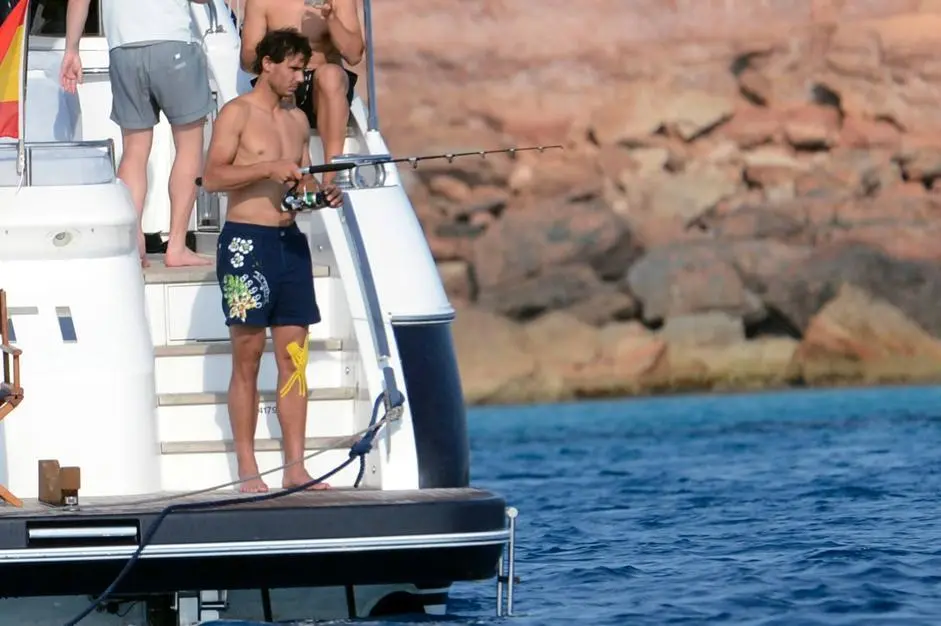
As Shapovalov takes a 2-1 lead three hours into the match, there is only one thing that might turn the tide, as the fishing-enthusiast ruminates over lost ways to bait his opponent. 

As a Nadal fan, I don’t know what he can do to overcome his matchup disadvantages.

So, in my opinion, he will have to do something un-Rafa-like.

During the post-set break, Rafa will need to kick over those two bottles that lie near his chair, demand a mic from the nearest official, and rap as only he can, to destabilize his Canadian opponent as Daniil Medvedev tried to destabilize Maxime Cressy yesterday:

*****

When yu win point, ay don’t layk your danjaros piercing screams.

They remind me of hof naughty and hurtful pterodactyl kids keeds

Gliding over colm seas, their tantrums invading ancient fish drims dreams.

How do I know this, you dirty blondie of loud words and little deeds? 

On my yacht, one day, I hear their fish-descendants say “We evolved no eyelids

Cos those flying hostia putas disturb our sleep singing like repressed pirates pirids. 

Then one happy day they go northwest and retire in recessed Canada.

We never hear from them again, Rafa, but sprinkle us some empanada.”

Image source: https://rafaelnadalfans.com/2013/07/02/game-set-and-catch-rafael-nadal-goes-fishing/

Listen, yu maple leaf paella, I no drinkid your local vocal tequila tekeela, 

And anyway your decibel games got notheeng on Dutra-Silva.

If you raise voice, I gonna chop you up and feed fid you to mai pet barracuda.

I tell yo mamma, then she be screeching like naked Nishikori in a Hitchcockian Psycho shower showah

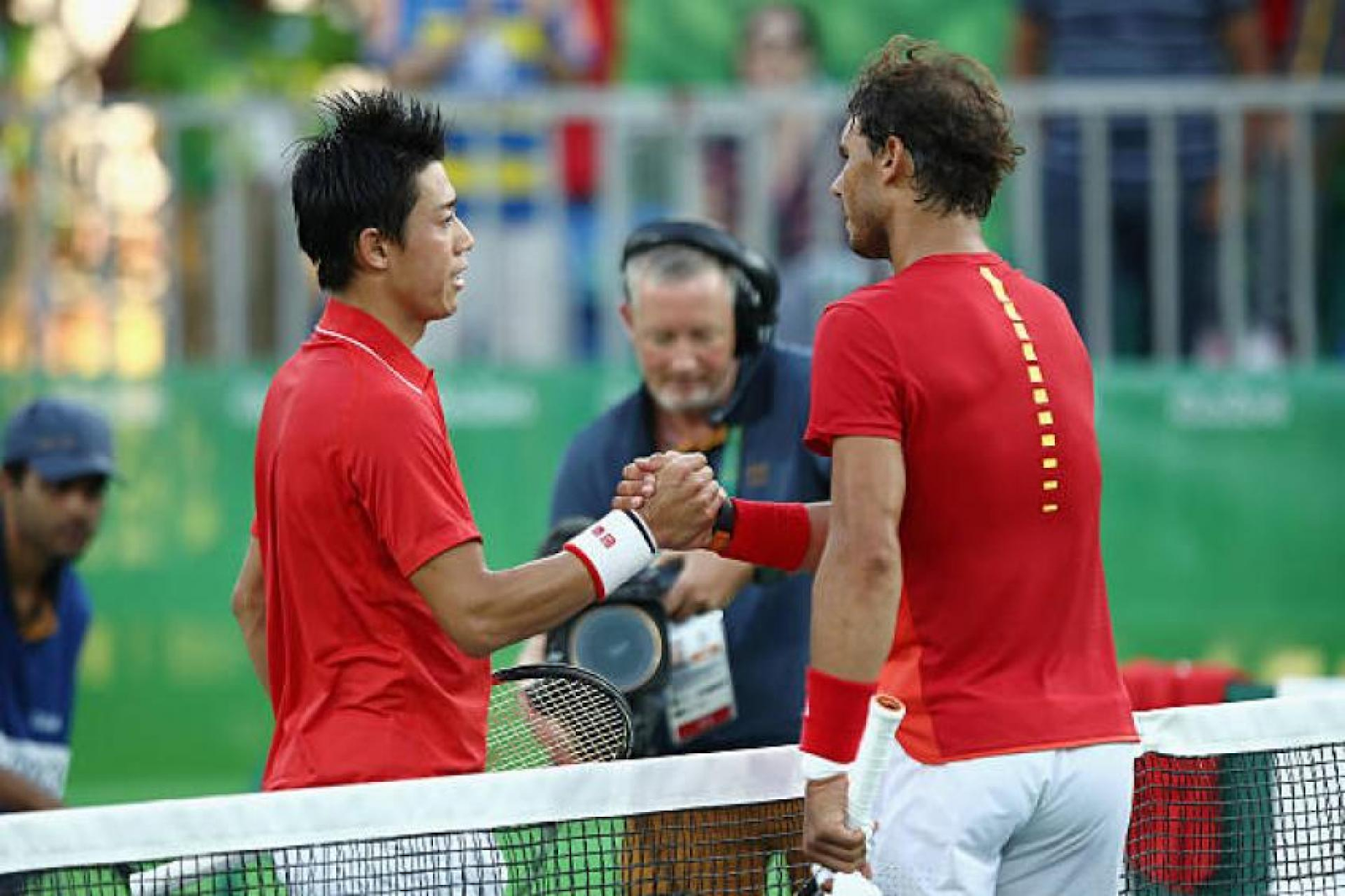
Image source: https://www.tennisworldusa.org/tennis/news/Rafael_Nadal/89686/kei-nishikori-recalls-beating-rafael-nadal-in-bronze-medal-match-at-rio-olympics-/

Evarybaady knows you a trigger-happy gangster minor who knows not his own power.

Evarybaady knows I’m a tripper-upper of kings and queens; cabron, I’m Jack Bauer. 

Take dee hands off the gun, boy, you just a Budget Boom-Boom Becker 

Thumping Penn balls like thumping pylons as a crackpot woodpecker.

You pigeon-brained fool with shameless, albatross wingspans

Like the overswings of your forehands and jumping backhands.

Daft cowboy, you’re no hero, you only herd balls straight into outlands. 

Also, your lasso-grip of language langwij is as awful as Shin-chan’s. 

When I first met you in bustling Montreal, you were a cute ballboy. 

But your ascent since has been as slow as Kyrgios reading Tolstoy.

When I met you again, you beat me with a teenager’s raw joy.

Zero wins in 5 years since, dummy, despite my knees as rusted alloy.

Image source: https://www.sportskeeda.com/tennis/5-things-you-did-not-know-about-denis-shapovalov/5

You’re winning but it’s not because your technicals are scary.

The discipline of your lines are like the architecture of Frank Gehry.

I’m just too old; of your game, your young rivals aren’t seriously wary.

You’re just a spell-blasting, mana-wasting, semifinal-choking fairy. 

Beat me, I don’t care—maach, thank you vairy.

*****

Reverse psychology for the win, Nadal fans. 

Danielle Collins: Feisty, Fierce, and Up For the Fight

By Owais Majid

Danielle Collins is one of many successful Americans on the WTA circuit. Indeed, there were four of them left in the last sixteen of the Australian Open. However, there is nobody quite like Collins. Coming through the college system – a different route to most of the others on tour – has instilled a mentality in her that is rarely seen among her peers. In her thrilling victory over Elise Mertens in three gruelling sets, she once more demonstrated all of the qualities we have come to expect of her and more. 

Collins raced to a 3-0 lead but her game then took a drastic downturn as she lost five consecutive games, and eventually the set in little under an hour. Throughout the set, she had been grabbing her back which had been appearing to cause her some pain. To further compound her discomfort, the searing heat meant conditions were extremely difficult to compete in. 

At this point, Collins would have been well within her rights to call upon the trainer. Whatever the issue with her back was, it was clearly hampering her somewhat. 

But this is where Danielle Collins comes into her own. She fights like only she knows how. She fought the intensity of the heat, she fought an inspired opponent on the other side of the net, she fought a niggle and she fought fatigue and she dug her heels in and continued through gritted teeth.

The second set started in a similar manner to the first as she went 3-0 up but this time Collins kept her foot on Mertens’ throat. 

Her face a picture of something between anguish and distress, Collins continued to showcase her durability by holding off Mertens’ attempts at a comeback. For all I’ve seen of Collins, this performance had a steeliness beyond what even she had previously produced. The normally expressive, in-your-face attitude gave way to a more zoned, quietly menacing competitor. One winner which was particularly outstanding would have been accompanied by a shout of “Come on!!!” under normal circumstances, however on this occasion, she merely fist pumped. Maybe she was simply conserving energy in such taxing conditions, maybe she knew she was in a real fight and was concentrating so hard that she barely noticed her own brilliance, or maybe, she was simply unable to replace that tortured look, such was the ordeal she was experiencing.   

Lest we forget, her opponent was also here to play. The match took another twist as serving for the set, Collins was broken back by Mertens for 5-4 as the Belgian played flawless tennis to prolong the set. 

However, yet again, adversity brought out the best in the American. Rather than relenting to a rejuvenated Mertens, not to mention everything else she was dealing with, Collins played a truly magnificent return game to immediately break Mertens again and force a decider with nearly two hours already on the clock. Teeth gritted, that pained impression still etched across her sweat drenched face, she dug in and battled on.

Both women, in spite of what they had put their bodies through, continued to display tennis of the highest quality, exchanging service holds full of breathtaking winners and snarly determination. 

Collins celebrates a vital hold of serve for 4-3 in the third. Screenshot: Australian Open YouTube Channel

The decisive moment came right at the end of the set, and if there was any downer to be put on the match, it would be the manner in which it ended. Serving to stay in the tournament at 4-5, Mertens went 15-40 down. As she saved the second of two match points with a clutch second serve, Collins replied in turn with brilliance of her own to set up a third match point. This time, Mertens had no such success with her second serve as she double faulted to hand Collins the victory. 

As Collins eventually prevailed in nearly three hours, one got the impression that she won because of her personality as much as her tennis, from which we should nevertheless take nothing away. Mertens is almost a polar opposite to Collins in this regard. Naturally far less extroverted, not nearly as expressive  and nowhere near as aggressive, Mertens seemed almost intimidated by the woman across the net who, in spite of everything, was somehow managing to produce stunning tennis. It was that aggression, that expression of emotion that saw Collins stumble over the line.

Her attitude may not be for everyone, she may not be the most popular character in the locker room, some may even consider her bordering on rude, but Danielle Collins is unapologetically herself and boy, has it worked for her thus far. Some players frustrate us because their character doesn’t do their talent justice but with Collins, her on court persona has undoubtedly enhanced her as a tennis player. Were it not for that unwavering will to compete and get the victory at any cost, she would likely not have made it to where she is now.

Having spent little over five hours on court two days prior with her combined singles and doubles court time, and another doubles match to come that same day,  it will take a superhuman effort for her to come back in two days’ time and perform to a similar level, but is anyone prepared to write her off? If anything, it is under these circumstances that Danielle Collins thrives. As she comes up against an Alizé Cornet who has a newfound exuberance about her, that match promises to be a fierce contest between two women who have overcome so much to get to where they are. A thrilling victory over Halep will certainly have boosted Cornet’s confidence, but she too has had her reserves significantly depleted by the Melbourne heat. Either way, we can be sure to expect them to fight it out to within an inch of their lives.

Reviving a Lost Art

By Archit Suresh

Graphical user interface, application

Description automatically generated
Screenshot: Australian Open YouTube Channel
  • Rod Laver
  • John Newcombe
  • John McEnroe
  • Stefan Edberg
  • Boris Becker
  • Pete Sampras

At this point in the list, tennis fans see legends and former champions of the sport, all with multiple slams to their names.

  • Pat Cash
  • Richard Krajicek
  • Patrick Rafter

Okay, perhaps these players weren’t as successful as the aforementioned, but both were great champions with major title wins and hall of fame careers.

  • Tim Henman

Now hang on a minute, Tim Henman was an exceptional player and had plenty of success in his career, but he was unfortunately never able to capture a coveted grand slam trophy. Why is he on this list?

This is where the picture becomes clearer. Looking through this list again, one realizes a common theme. It is more about the tactic than the titles. All these players went on to have extremely successful careers, thanks in large part to a heavy dosage of serve-and-volley tactics. In recent years, evolution in equipment and court surfaces, along with the arrival of the two-handed backhand effectively ended a player’s ability to rush the net after serving with consistent success. Wider, more powerful graphite rackets and slower court surfaces allow the returner more than enough time to send back a serve with interest. It was now the time of the baseline grinders. Picture Andre Agassi planting himself firmly on the baseline, or Rafael Nadal standing so far back behind the court you think he’s practicing social distancing. For all intents and purposes, this list should end here. Serve-and-volley lived a good life and already had its time at the top of the sport. Many would say the game has moved on. Apparently, no one told Maxime Cressy.

It was 2015 when Cressy, a college freshman at UCLA, was unable to crack the singles line-up and was viewed primarily as a doubles specialist. Down at number 12 in the pecking order, Cressy’s odds of making it to the professional tour were slim to none. When asked about Cressy’s time at UCLA, his former teammate Austin Rapp said the following: “I remember that he was working hard like he was going to be playing, which was a good thing. But he was definitely quite a bit behind. He had the right build obviously: 6’7”, very strong, fit. But not a lot of structure to his game at all. He had a pretty big serve, but not a lot of variety. He didn’t know how to hit a kick serve yet. He wasn’t volleying well yet. He really had no returns, so he was kind of just a big guy with not a ton behind it.” Cressy then turned to Head Coach Billy Martin to elevate his game. After spending countless hours working on court, Cressy and Martin had decoded the answer to unlocking his game – serve and volley. “I think Billy deserves the credit for that. When he fully committed to that, thinking he had a 6’7” super lightning-fast, strong, physical guy and you make that shift it was going to be really hard to beat him if he mastered that game style,” Rapp said. 

Eventually, Cressy would go on to reach the No. 1 singles position at the school and turn pro in 2019. After turning pro, he hit some bumps along the road as he adjusted to life on the tour. with some early losses at tournaments. Eventually, the tides began to turn. After getting a first Grand Slam main draw victory in New York against Jozef Kovalik, Cressy got the opportunity to play the then World No. 6, Stefanos Tsitsipas. At the 2021 Australian Open, Cressy would get another main draw first-round win, only to then run into Alexander Zverev. Later that year at the US Open, Cressy got his breakthrough win at a slam after beating Pablo Carreno Busta of Spain by coming back from 2 sets to love down. Unfortunately, Cressy was unable to back it up as he fell to Nikoloz Basilashvili in the following round. However, it really wasn’t until early 2022 that people began to take notice of Cressy and his unorthodox style of play.

At one of the lead-up tournaments in Melbourne ahead of the Australian Open, Cressy began to turn heads. After going through qualifying, he’d make a run to the final, with wins over top players like Reilly Opelka and Grigor Dimitrov along the way. His opponent in the final would be none other than 20 time Grand Slam Champion Rafael Nadal. Faced with the task of going up against a legend of the game, Cressy rose to the challenge. Though he eventually lost in two tight sets to Nadal in the final, he felt that he had competed well and could hold his head up high. “He is one of the only guys where even when relative to what he’s doing [now], he wasn’t as good, he still truly believed in himself to be able to get there. A lot of people as they climb the rankings and reach their goals, they have to readjust their goals,” Rapp said. “He always had the goals of being Top 100 and playing Rafa and all these guys at the Grand Slams even when he was not in the singles lineup at UCLA. I think that’s the thing that sets Cressy apart and allowed him to improve so much.”

Cressy pictured with Nadal at the Melbourne Summer Set trophy ceremony Screenshot: TennisTV YouTube Channel

Cressy then followed his week in Melbourne up quite nicely with a strong run at an ATP 250 in Sydney. In Sydney, he reached the quarters after back-to-back wins over Adrian Mannarino and Dušan Lajović, before losing a tight one to British No. 1 Dan Evans in an entertaining match. With a strong start to the year under his belt, the American was ready for yet another good run Down Under at the Australian Open. Boy, did he deliver! After defeating John Isner in a five-set match, in what was known as a battle of the “Servebots”, Cressy grabbed a win over qualifier Tomáš Macháč to get to the third round. Next up was hometown favorite Christopher O’Connell on Court 3, where Cressy served 28 aces to four double faults to come through in 4 sets. This was by far Cressy’s most efficient match of the tournament to reach the second week of a Slam event for the first time. His ability to fill the stat sheet with his service is unparalleled. In his first two matches, he served 32 double faults as a product of his ultra-commitment to coming on both his first and second serve. But Cressy rolls with the punches like a professional boxer to play the game on his own terms. “The mindset is to go for it. Sometimes I have good days, sometimes bad days, and I feel like on the good days it’s very difficult to beat that style of play going for both serves,” he said. Well, “going for it” is the perfect way to describe what Cressy does on the court. He is all in with serve and volley and says his mission is to be the man that can singlehandedly bring it back to the top of the game. His decision to zig while others zag shows the unwavering self-belief he possesses to be able to commit to something the way he does. In fact, Cressy believes that he can push his game all the way. He even thinks that he could one day potentially be World No. 1.

Q: Is that where you see yourself going, top 10?

Cressy: “Yeah, even No. 1, yeah, I’m very confident. My game style can beat anyone, so starting this year I’m very confident. I played Nadal and I really believe that it really put him in an uncomfortable position.”

He will need every bit of that confidence and a little more as he prepares to face the biggest test of his young career. Waiting for him in the Round of 16 is World No. 2 Daniil Medvedev, who is now the heavy favorite to win the title. Of course, the Paris-born American remains confident he has what it takes to challenge Medvedev. There is also history that shows Cressy may stand a fair chance. In the 2021 Rolex Paris Masters Final against the Russian, World No. 1 Novak Djokovic decided to switch things up by rushing the net after his serve 22 times over the course of the match. Djokovic felt that he wouldn’t be able to beat Medvedev from the back of the court, so he decided to take it to him. The strategy ultimately paid off as the Serb won the match, and the title as well.

Now, Maxime Cressy is not Novak Djokovic, nor will he try to be. He’ll approach this match the same way he approaches every match. Maybe that’s what more players need to do. I’m not saying I think Cressy will beat the Russian. Medvedev may well prove to be too good from the back of the court for the former UCLA Bruin to make his game work against the best of the best. I’m also not saying that Cressy will reach the heights he thinks he can go. However, I am predicting Cressy to do everything he can to make serve-and-volley a viable tactic again. Who knows? We might one day see many more names added to that list. IF (and that’s a big if) serve-and-volley made a comeback, its success would be due to the man racing around Rhode Island on the front of the Popcorn Tennis website.

  • Maxime Cressy

Keys Flying Under the Radar

By Brenda Parry

As some of the big names on the women’s side, most notably Garbiñe Muguruza, Naomi Osaka and Elina Svitolina, have already tumbled out of the Australian Open, Madison Keys, the likeable American with a big smile and kind heart, cruised into the quarter-finals in dominant fashion. In her fourth-round match on the Rod Laver Arena yesterday, the 26-year-old Keys, currently ranked 51 in the world, crushed No. 8 seed Paula Badosa of Spain. Badosa was considered a favourite for the title by many, but Keys ran through her 6-3, 6-1 in a little over one hour with some outrageous hitting. 

In her post-match press conference Keys summed up her win: “I’m really happy with how I played today. I think I served a lot better than I did in the last match. I think I returned well. I think overall I just started off either neutral or kind of ahead in the point. I had a lot of opportunities to try to move forward.”

She will face No. 4 seed Barbora Krejčíková, also 26, in a first-ever meeting in the final eight. Although Keys is unseeded at this year’s Australian Open, she is no stranger to the big stage, having reached her first Grand Slam event final at the US Open in 2017, losing to compatriot Sloane Stephens. Keys has been as high as No. 7 in the world. Her match against Krejčíková will be her eighth career Grand Slam quarter-final and her first in Australia since 2018. Keys is also on a nine-match winning streak since the beginning of the year, having won the warm-up tournament 2022 Adelaide International 2 in emphatic fashion.

She explains her recent surge in form on a change of mindset allowing her to enjoy competing and embrace the tough moments. She is also enjoying her time off the court in Melbourne, one of her favourite places on the tour, and knows, it seems, all the best places to eat! There is certainly a good-vibes feeling around Madison Keys and it’ll be very interesting to see where that might take her … 

Photo: Jimmie48 Photography/WTA