The Aussie Open draw has been released. I’ve had a wee gander and, as foolhardily as ever, I am trying to separate the wheat from the chaff.
Which of the top-ranked players are going to get upset in Melbourne?
Who is looking vulnerable with only four days to go until we get under way?
After a couple of weeks of tennis, here’s my (inevitably wrong) assessment…
WTA
Jessica Pegula (21st seed): Pegula had a great season last year standing on the shoulders of Plíšková to reach multiple tour-level quarterfinals, her crowning achievement was probably being a quarterfinal at the Australian Open. After three months off the court, Pegula has arrived in Australia a little flat-footed, her most recent loss to Caroline Garcia in Sydney the more worrying of her two losses (sorry Caroline). Both matches were pretty close so maybe she could grind out a few wins but an opener with Anhelina Kalinina and a potential follow-up with Ekaterina Alexandrova do not bode well.
Emma Raducanu (17th seed): Look, we know – Emma was sent to the bakery by Elena Rybakina in Sydney, big whoop… Well, yeah, it kind of is a big whoop. At best, it’s not an indication of her form and may just suggest Raducanu is not used to huge shots in fast conditions. At worst, it is an indication of her form and there may be a lot of work still to do on the practice court to generate that air of solidity she exuded in New York. I think I side with the former but am conscious either way that Sloane Stephens won’t let her ease into her first Australian Open… Maybe I’ve got it all wrong and the match v Rybakina was a false start?
Elena Rybakina beats Emma Raducanu in Sydney 6-0 6-1 – is this Emma's "Federer at the ATP Finals 2014" before having a superb season 🤔?
Sofia Kenin (11th seed): Any explanation needed? Sofia’s ranking is made up of 72% Australian Open 2020 points… under normal circumstances, she would almost be ranked outside of the world’s top-100. Her first-round opponent is Madison Keys (way lower ranked than the level she’s played this week in Adelaide) and Coco Gauff would likely be her third-round opponent (lower-ranked than Kenin but Gauff winning that would hardly be an upset)… Easy pick but had to be mentioned!
Aryna Sabalenka (2nd seed): Aryna is against Storm Sanders in the first-round possibly followed by Ann Li etc. etc… It doesn’t matter who Sabalenka plays early doors – after hitting 39 double faults combined in her two losses this season, the Belarusian is her own worst enemy.
I imagine the priority would have been to cut out the double faults by her second Adelaide outing so I see no reason why there won’t be some sort of hangover. For her mental wellbeing, I wish her the best of luck!
Photo: David Moir/Agence France-Presse — Getty Images
ATP
Nikoloz Basilashvili (21st seed): Guess who Nikoloz has got in his first-round match? Andy goes toe-to-toe with Basilashvili less than a week after he last played him. This isn’t just fan service – I genuinely believe Andy is the favourite for this one. Mon Muzzah!
Cam Norrie (12th seed): Cam has quietly found himself in a bit of a big-win dry spell over the last few months. He’s now lost 8 of his last 12 matches, wins only coming against Delbonis (not good on hard-courts), Opelka (fine), Lehecka (decent but outside the top-100) and Rinderknech (also fine). He’s been given a very difficult first-round in Sebi Korda – it’ll be sooner rather than later that the American breaks through at a Slam and he has the firepower to dismiss Cam. Good match to survive if he can find a way.
Stefanos Tsitsipas (4th seed): Stefanos came into the ATP Cup recovering from surgery and looked rusty. He still found a decent level against Diego Schwartzman even if the forehand wasn’t landing – if he is the same level of rustiness, however, I wouldn’t be surprised to see Mikhail Ymer sneak this one. If he gets through that, Sebastian Baez could avenge his countryman, Grigor Dimitrov in Australia is certainly no easy task and RBA… well RBA would have to be the favourite against the Greek. I don’t fancy Tsitsipas’s chances to say the least.
Daniil Medvedev (2nd seed): Let me set the record straight. I do not really think Daniil Medvedev is in any real danger of going out early. Not really. That said, provided Nick Kyrgios isn’t on song in the second-round and that Botic Van De Zandschulp or Ugo Humbert don’t have a fantastic third-round (tough openers to say the least), his fourth round could be a doozy. Maxime Cressy is not a nice match-up for the Russian – as we’ve seen from Novak Djokovic, Rafael Nadal and *ahem* Vasek Pospisil in the past, serve and volley is a very effective counter to Daniil’s return position. If Cressy soars into the round of 16, he will definitely be up for a battle.
Emma Raducanu’s U.S. Open victory at the end of last year was one of the most incredible tennis feats ever. An 18-year-old winning a major, after going through qualifying, winning ten straight matches without dropping a set completely shook the world. Unfortunately, commentators including Martina Navratilova and Tim Henman immediately started to project massive career accomplishments for Raducanu. At 19, Raducanu still has the vast majority of her career ahead of her, and lacks the experience of her peers on the WTA, even many of those who are younger than her. Baseline Tennis tells us why everyone, but especially tennis commentators, need to keep their expectations in check. It’s a pressure-filled world out there for tennis professionals, and they have enough to worry about without the weight of unreasonable expectation.
The Australian Open holds so many great memories for me. It’s where I first saw Roger Federer, Rafa Nadal, Gael Monfils, Serena Williams, Li Na – and of course Andy Murray – among many others, live for the first time (and, for some, the only time) – it’s where I realised that nothing can compete with watching live tennis, feeling the electric atmosphere round about you, the sound of the tennis ball hitting the racket, the cheers of joy and the cries of anguish. Watching on TV or online would never be the same again. It was at Melbourne Park in 2010 that I had my first encounter with my hero; he signed my Scotland flag and high fived me following a second round win against Marc Gicquel. It was at Melbourne Park that I saw Andy Murray put his heart and soul into reaching the final for the first time, in a thrilling four set match that had me on the edge of my seat, roaring almost as loudly as Andy did when he won *that* point.
Seven years later, the Australian Open was where I took my daughter, then age 3, to her very first tennis match. It was also where she shouted at Jamie Murray and asked him where Andy was. Maybe one day Jamie will forgive her for that. It’s the place where I queued outside of the Hisense/Melbourne/John Cain Arena in the blazing heat for six hours just to watch Andy play two sets of tennis. It’s also where Ivan Lendl essentially told me to eff off when I asked him for a photo. But even that can’t dampen my memories of the Australian Open. I plan to return in a couple of years – and to me, it’s almost like going home. Bring on AO 2022.
David Gertler
When I think about the 2021 men’s open, besides the obvious regarding Novak Djokovic, there’s two storylines that I’m looking very closely at. First, Alexander Zverev is World No. 3 and has won the 2021 ATP Finals, the Olympics, along with the Masters 1000 events in Madrid and Cincinnati. Yet, he’s never won that elusive Slam. The Australian Open surface should, theoretically, suit his game. Is this the Slam where he makes his breakthrough? Second, Andrey Rublev is World No. 5., yet has never made a Major semifinal and is yet showcased himself to be a serious contender at the biggest events of the game. Will this be the major where this changes? If you’re looking for my honest opinion, I doubt it.
On the women’s side, the hype surrounding Naomi Osaka is not nearly as much as it has been in years past. The reigning champion is down to World No. 13 and her results are not nearly what they once were. But, back on hard courts and with the pressure tone down, it’s hard to believe that Osaka won’t be making an appearance at the later stages of this tournament. I will be watching Osaka’s early-round form very closely during this tournament.
Owen Lewis
The Australian Open has been my favorite tournament since I watched it for the first time in 2017. There’s just no better experience than watching the fields (who are generally well-rested, for once) do battle on those bluer-than-blue courts. The Big Three have all won legacy-defining tournaments down under, sealing the deal with five-setters in the semifinal and final (Nadal in 2009, Djokovic in 2012, and Federer in 2017). The Happy Slam is conducive to marathon matches, like Halep’s trio of draining three-setters in 2018 — finishing 15-13, 9-7, and 6-4 in the deciding sets.
I couldn’t be happier that the Australian Open is more prestigious than it was in the 1900s. Though Wimbledon is more historic, I think winning the Australian Open is a more momentous achievement than winning the other majors. It shows promise for the rest of the year — not only does it build momentum, but there lies another hard court major later in the calendar in the form of the U.S. Open. I can’t wait to watch Sara Sorribes Tormo grind down an unfortunate opponent, to watch Daniil Medvedev make a push for a title Down Under after falling short last year. I can’t wait to push the limits on my tolerance for operating on little sleep, to watch tennis until my eyes itch from exhaustion. But most of all, I can’t wait to watch that inevitable epic night match: two players competing at their best while most of the city sleeps and the court practically glows.
Jack Edward
When the world paused in 2020, I had a lifeboat.
Every weekend from April to July, I used to cycle to a friend of mine’s grandparent’s tennis-court in the middle of the Shropshire hills – we’d play a three-hour epic, I’d make the long cycle home and I’d enjoy a beer in the evening with my partner. Whilst the world was left hungry from the empty calories of Zoom quizzes, I was living the dream.
Unfortunately (fortunately), tennis is no longer just a part of my life – tennis is my life. So this year, I’m nervous… Nervous Andy will catch COVID, nervous it’s already too late for Rafa, nervous Novak isn’t vaccinated, nervous Barty will crack open a cold one and play golf instead.
In the cold of January, with no sunny Shropshire hills to retreat to, tennis is my sinking ship and there are no lifeboats left.
Please, FS, let the Australian Open go ahead!
Brenda Parry
I’m normally buzzing with anticipation as another grand slam approaches and the Australian Open, known – somewhat ironically this year – as the Happy Slam as the players love it, is no exception. However, the drama surrounding the detainment of world No. 1 Novak Djokovic at an immigration facility in Melbourne after his visa was cancelled at border control following scrutiny of the medical exemption he had secured to compete in the Australian Open has completely overshadowed the build-up to the start of the Australian Open this year. As many tennis fans, I admit to having been totally swept up by the whirlwind of information being communicated on social media regarding this story and am intrigued to learn the outcome of the court hearing which will take place in Melbourne on Monday morning, 10 January (11 p.m. Sunday evening UK time) and Djokovic’s fate.
Had Djokovic not been denied entry to Australia this week, I wouldn’t have looked beyond him to claim his 10th Australian Open title and 21st grand slam Down Under thereby securing his place as the greatest of all time by overtaking Federer and Nadal in the grand slam count. However, given the mental strain and conditions he has been under during his detainment, even if he wins his appeal and is able to play, it would in my opinion take huge mental fortitude to win the title and I honestly can’t see it happening now. Instead he is making history for all the wrong reasons. The main contenders in Djokovic’s absence are for me last year’s Australian Open runner-up and US Open champion Daniil Medvedev and Rafael Nadal, who has successfully returned from a foot injury which curtailed his 2021 season with a first title of 2022 at the Melbourne Summer Set. Having said that, I’d love to see Andy Murray, returning to the Australian Open for the first time since 2019 and runner-up five times, Dan Evans, Pablo Carreno Busta and some of the younger generation – Matteo Berrettini and Félix Auger-Aliassime to name a few – have a good run and make it to the later stages.
On the women’s side, my firm favourite to claim the title is No. 1 Ash Barty who has just won the Adelaide International for the second time in three years. As well as a talented player with a unique style of play, she seems like a genuinely gracious and humble person and comes across well on and off the court. It’d be fantastic to see her win her home slam for the first time. Another favourite of mine – Simona Halep – has also started the 2022 season with a title in Melbourne, and I will be following her progress closely through the tournament. It will also be interesting to see how the US Open finalists – Emma Raducanu and Leylah Fernandez – fare in the first grand slam since their rise to fame in New York, although I expect stiffer competition to come from Garbiñe Muguruza and Naomi Osaka.
Once the draw is made on Thursday, I’ll start plotting which matches I want to follow and praying that my insomnia kicks in at the right times. Let the Happy Slam begin!
Nick Carter
Ah the Australian Open, the event known as the ‘Happy Slam’, and one that has a lot of happy memories for me. From watching night sessions first thing in the morning before revising for January exams to waking up and getting ready for work catching up on any shock results that happened overnight (for me in the UK). It also has some of my favourite tennis memories: the awesome 2012 final between Nadal and Djokovic, Wawrinka’s exploits in 2013 and 2014 and Federer’s surprise return to the top in a bonkers 2017 event. I think the reason I like the Australian Open so much might actually be pretty simple: it is one of the few tournaments where I can start my day with tennis. At Wimbledon, it’s usually on whilst I am at work or I have to wait for a few hours before any play starts. The US Open and any other American events are in the evening for me, so it’s something for me to relax with after work. The time zone difference with Australia means I can open my eyes on a new day and immediately think about tennis. I can catch some action before going to work, or spend a lazy Saturday morning watching. It also means I can enjoy the night matches more. Melbourne night sessions have incredible atmospheres and it’s nice to experience them whilst I am fresh. Often during evening matches at tournaments (particularly US ones where they’re after midnight), I am tired and thinking about going to sleep. So, in general, I just love the Australian Open.
So, the question is: why am I excited about the 2022 edition of the Australian Open? I’m looking forward to seeing the stories for this season get started. The Australian Open usually ends up setting the tone of so many people’s year one way or another. Let’s get a bit more specific though. I’m interested in seeing how well Rafael Nadal can do, as I have a weirdly positive feeling about him going deep this tournament. That’s strange for me, because although I respect Rafa and think he is incredible, I would never describe myself as a fan of his (I have remained loyal to Federer). However, I am also excited to potentially see a new men’s champion in Melbourne, especially if Djokovic is not allowed to play without being vaccinated. Even if the world number one plays, it will be interesting to see if he is dethroned by Medvedev, Zverev, Tsitsipas or even Nadal. The number one ranking is going to be on the line for the first time in a while, and I will be monitoring that closely. Before the Djokovic fans jump on me, if he does win, I hope achieving ten Australian Open titles is properly recognised for the incredible achievement that it would be. Similarly, Ash Barty is under threat at the top of the WTA rankings, and is also experiencing the pressure of being the home favourite. I will be curious to see if Aryna Sabalenka can break through and really challenge this year, but also I would love to see a home champion in singles for the Australian fans as they have been waiting longer than any other major now (in men’s or women’s). I’m also really hopeful that Naomi Osaka puts in a good performance. She seems to be genuinely happy to be back on a tennis court and that fills me with optimism that her mental health is in a better place. Those are some of the big stories, the obvious ones, but I am also excited to find out who else might write their own moment in tennis history.
Jake Williams
One of the fondest memories I have of the Australian Open was in 2006 when Marcos Baghdatis reached the final of the tournament, eventually losing a tightly contested match in the fourth set to Roger Federer. Baghdatis’ run to the final was incredible where he played some phenomenal tennis beating top quality players including Radek Stepanek, Andy Roddick, and Ivan Ljubicic. However, the one match that stood out to me and those who remember it would have to be his semi-final against David Nalbandian. Baghdatis, being the underdog, had the overwhelming support of the crowd. Both played some fantastic tennis but it was Baghdatis’ vibrant play which secured him the victory in five sets. This match at the Australian Open is one of many which has helped drive my passion for tennis.
Damian Kust
Qualifying tournaments for Grand Slams are basically my favorite weeks of the year, it’s like a one huge Challenger event, so what’s not to enjoy? Expecting some real quality there with plenty of younger players getting one of their first shots to fight for a spot in a Major main draw. The Australian Open is the toughest time zone for me out of all the four Slams and the cost of watching it thoroughly is becoming a walking zombie for a good couple of weeks. But I’m not gonna complain, there’s some charm to it. Being a crazy tennis fan takes sacrifices. I’m very excited for the juniors event too, which wasn’t held in 2021. Novak Djokovic’s exemption drama has been very exhausting to follow and at this point, I really don’t care how the whole thing ends. I’d rather focus on the tennis and I’m sure there’s going to be plenty of classics over the next three weeks.
Jordan Holt
On the women’s side I’m really excited to see what Ash Barty can do. Pretty much any time she has stepped on court post pandemic she’s been nearly unstoppable apart from a couple of bad days. One of those days came at her home slam last year, although she had withdrawn from the doubles too. At the same time, she’s the #1 in one of the deepest fields in memory. A qualifier won the last slam. Nobody is safe.
On the men’s side, I’m also slightly excited at the prospect of a slam without Djokovic. The whole drama about his vaccination status is not good for the sport and I would prefer him to play if I had a choice just to put it bed for once and all. However, in the event he doesn’t play, it will be fun to see a slam where you don’t feel that inevitability, watching a tournament for who’s going to be the runner-up. It’s kind of funny to watch all the young guns panic when they actually have a chance to win it too. Then there’s Murray. Last time he played in Melbourne; I was sobbing in a bathroom stall at work thinking this would be his last ever match. Whatever happens, seeing that full circle moment where he steps onto Rod Laver Arena will just be a truly symbolic representation of everything he is as a player: never willing to give up.
Josefina Gurevich and Shravya Pant
When the two of us first bonded over our shared love for professional tennis, there were a few players we both loved: Federer, Osaka, Gauff, Murray, the usual. These are the obvious picks, but there was one player, certainly a bit more obscure for us both to be fans of, who we unexpectedly loved: Alex De Minaur. Whether it be his endearing quarantine TikTok videos that frequented our text chains or laughing over his viral Un‘de’ Cover with Alex De Minaur video, the Speedy Demon was the one player who truly brought us closer under the umbrella of tennis fandom and sparked our ambitions for an ultimate tennis getaway to channel our inner Aussies.
It’s hard to dissociate our love for Demon with his Aussie-ness, so we wouldn’t at all mind taking a trip all the way “Down Under,” just to cheer him on. Other than tennis, of course there was so much more that drew us to the home of the “Happy Slam.” The accents, the unique animals, and just all around vibes have been calling our names, putting Australia at the top of our destination bucket list.
Naturally, as tennis fans, our foremost attraction to Australia is quite obvious. We’ve been going to the US Open since we were small, Wimbledon is a series of rain delays, and the French Open is, quite frankly, played on dirt. What does that leave us with? The “oh-so-glorious” Aussie Open. There’s just something about those light blue courts perfectly complementing the open Australian sky. We may not be natives ourselves, but we’d give as much Aussie spirit as anyone to cheer on the “home favorites” (which also happen to be our favorites), like Alex “Demon” De Minaur and Ashleigh “Barty Party” Barty. What’s there not to love about awesome accents, iconic opera houses, and to top it all off, one of the greatest tennis sporting events EVER?!
What’s that? Oh…it’s probably just the Australian Open calling out our names again.
PSA: We don’t support the ‘stache.
Scott Barclay
Cereal bowl left abandoned as I’m halfway out the door, late for the bus, shoes untied, hair all tangled, uncombed, underprepared, under-layered-up ahead of heading outside into the January morning brisk.
But I can’t leave. Not yet.
It’s the time-zone pain that comes alongside with being a tennis fan. Everyone has felt it and knows it, feels it deeply as they slouch over work desks or school desks, dozing in their afternoon lunches with mayonnaise staining their ties and crusting there, standing out as they embarrassingly give afternoon class talks or powerpoint presentations, mind still pure fuzz from the buzz of a match watched all the way through right beneath the stars.
For me, that tournament is the Australian Open, the Happy Slam, the Sleepy Slam, the Has-everyone-got-their-visas-sorted-properly?! Slam, the I’m-gonna’-have-to-miss-the-end-of-this-night-session Slam.
I love it.
A sunset behind Rod Laver Arena. Screenshot: Australian Open YouTube Channel.
The Australian Open has not been kind to Rafael Nadal. He’s played brilliantly there plenty of times, but has just one title to show for his exertions — injury (2010, 2011, 2013, 2018), an injury-and-Stan-Wawrinka tag team (2014), Novak Djokovic (2012, 2019), and Roger Federer (2017) have proven difficult obstacles. 2019, in retrospect, was Nadal’s last big chance to score a second title. He chewed up his first five opponents. Against Stefanos Tsitsipas in the semifinals, Nadal lost a total of six games, was never broken, and only had to face a break point one time. Tsitsipas looked so dazed after the match that by the fourth question in his press conference, a journalist remarked to him that he did, in fact, look dazed. His answers rang with demoralization.
"Honestly, I have no idea what I can take from that match...I only got six games from that match."
"In a way, it wasn't tennis so much like the other matches I've played. It felt like a different dimension of tennis completely. He [Nadal] gives you no rhythm."
Nadal had kept his legs fresh, he had handed a top-15 player something resembling an existential crisis while barely lifting a finger…things looked promising for the final, even if he hadn’t taken a set off Novak Djokovic on hard courts since 2013. Djokovic had played an equally surgical semifinal — Lucas Pouille was as helpless as a comatose patient. Djokovic hit five unforced errors in three sets. Still, Nadal’s blistering form made most project a close match in the final.
The match was not close. Djokovic mauled Nadal the way Nadal had mauled Tsitsipas two nights earlier. The score was 6-3, 6-2, 6-3, a row of numbers that was actually somewhat merciful to the Spaniard, hiding the seven times Djokovic held serve without dropping a point, the lone unconverted break point Nadal was able to produce, and the fact that Nadal hit just two winners during his return games in the entire match. Nadal lacked the trial by suffering that can often be ideal before a major final, true, but he also lacked ways to beat Djokovic on a hard court. His huge forehand was starved of time again and again, being reduced to practically a rally shot much of the time. He couldn’t read Djokovic’s serve. It was as if the surgeon had cut out his patient’s heart with a few precise, concise cuts. Nadal fought expectedly, but there was never any traction for him to work with — like a spiritual kind of cow on ice.
Nadal hasn’t had to play Djokovic at the Australian Open since 2019, but his results have been no better, falling in the quarterfinals in each of the last two years. At the 2021 tournament, Nadal got Tsitsipas in the last eight — and after an opening two sets which looked like a continuation of the 2019 beatdown, Nadal shockingly lost the next three in succession.
*****
Nadal has bled, sweated (has he ever), and cried on Rod Laver Arena. He’s poured his soul into the event for very little reward. Yet it might be the tournament that defines him, showcasing all his qualities as a tennis player, more than any other.
Okay, let’s dissect the obvious counter-answer: Roland-Garros. While Paris encapsulates much of Nadal’s legacy, while he’s done things there that had never been done before and will never be done again, it is rarely the site of one crucial element of Nadal’s being: the fight. For me, the most special thing about watching the Spaniard play is his ability to take matches to a higher plane. His opponent sets a crazy-high standard, Nadal matches it by throwing every fiber of his being into the challenge, trying to run everything down and blasting his forehand over the net at wicked angles, and the contest becomes mindblowingly incredible as a result. In Paris, it’s always Nadal setting the impossibly lofty level of play, and his opponents can never equal it. (Hence, a career total of 105 wins, three losses, and thirteen titles.)
Don’t get me wrong, watching Nadal at Roland-Garros is amazing. But there’s a sense of sameness, a drama crater. In 2013, with Nadal heading into the clay season with hopes of winning an all-time record eighth Roland-Garros title, Peter Bodo wrote a piece called “Rafatigue.” (It’s a harsh take, but even if you’re a fan of Nadal’s, you’d have to lie to yourself on some level to convince yourself he had a material chance of losing at Roland-Garros most years.) Still, can you imagine a piece like this being written in many other scenarios? It seems absurd, right? Historic dominance being boring? Yet Nadal’s fighting spirit, one of the most transcendent, fascinating things about him, gets almost entirely canceled out by the clay which he has so mastered. The Federer-Nadal rivalry at Roland-Garros might have once gripped the world — they played there six times total, including four straight years from 2005 to 2008 — but Federer is not only winless against Nadal on the Parisian terre battue, he’s never even forced a fifth set. Across the 2008 and 2019 matches, Federer won 13 games in total. In 2009, Nadal lost early at Roland-Garros for once, saving Federer from another likely final defeat. Even then, the pressure of taking his chance the one time Nadal was absent still almost caused Federer to tumble out of the tournament. (To his credit, he survived two five-setters and won the title.) It’s the Swiss’s lone title at Roland-Garros to date. In 2020, Bodo said on the Tennis and Bagels Podcast that Federer’s Coupe de Mousquetaires is asterisked due to Nadal’s absence. Again, harsh, but is he wrong; would Federer have won if Nadal was there in the final? “No” is probably a better answer than “I doubt it.”
The story is slightly different with Novak Djokovic, who recently beat a pretty good version of Nadal at Roland-Garros for the first time ever. To get there, though, Djokovic had to lose to Nadal at the tournament seven times, three times in finals. His 2015 quarterfinal win over the Spaniard is barely ever brought up since Nadal was so clearly diminished from his usual form. Djokovic’s game is practically tailor-made to blunt Nadal’s, yet it took 15 years after they first played at Roland-Garros for the Serb to take down his rival in strong form on the Parisian dirt. This, I think, was partly why the semifinal last year got such an enormous buzz — better matches were played in 2021, but the energy of the occasion (this kind of match is happening here? Against Nadal? This, this is special) was unmatched.
Again, Nadal in Paris is spectacular. When trying to describe, evaluate, or predict, though, you run out of superlatives almost immediately. It’s unbelievable, godlike, inimitable. Maybe this year his reign is looking a bit shaky, but ha, ha, who are we kidding, I’d be a fool to bet against him!Nadal to win the title for a 9463rd straight year. And…that’s pretty much it. He’s dominant, but there’s nothing complicated about his dominance. We know what’s coming, as does Nadal (even if he won’t admit it, ever), as do his poor opponents. He still fights, as always, but he doesn’t need to fight, which kind of takes the competitive magnetism out of his celebrations and efforts. He’s like an all-star team that runs up the score on a challenger team full of mortals, making you want to invoke the mercy rule to make sure the loser doesn’t quit the game forever out of sheer hopelessness. If Nadal falls behind at Roland-Garros, wondering if something is wrong with him feels as natural as appreciating the prospect of a close match. When Nadal hit a half-volleyed, bending forehand pass to break Federer for a second time in the third set of the 2019 semifinals, up two sets already, I did not think wow, Rafa is amazing. I just felt bad for Federer.
I think it’s for this reason that so often in GOAT debates, we hear people try to diminish Nadal’s case with “take away clay and…” It doesn’t take much to see how absurd this idea is. Taking away thirteen Roland-Garros titles and ten-plus titles at several other tournaments, adding up to over a decade and a half of surface dominance? Try pushing Mount Everest into the nearest ocean. Yet Nadal’s supremacy on clay, and his relative nonchalance surrounding it, have been so steady that it’s all long become one-color. The totality of his mastery has a tendency to make all his clay accomplishments seem like part of the same glorious chapter, rather than the 1,000-page novel that it actually is. If it can all be packed into the same box, it seems easier to remove, or to hide behind a curtain for a few minutes. In reality, the depth and weight of Nadal’s accomplishments on clay are nearly incomprehensible, but the consistently dominant way Nadal earned them can make it difficult to appreciate. It’s just very hard to relate to in any way. Fans love vulnerability, suspense, nuance, and the Spaniard is usually a living vacuum of these qualities at Roland-Garros.
But Nadal in Melbourne?That is nuance. He still picks apart plenty of opponents at the Australian Open, but he’s also played at least a half-dozen all-time-epic matches. He’s very mortal there, but excitingly so. His lone title there came in 2009, only after consecutive five-setters. The first, a semifinal with Fernando Verdasco, was so exhausting and dazzling and thrilling and stressful that it drove Nadal to tearsbefore he had even converted match point. (I think this is the best tennis match ever, but that, sadly, is a discussion for another day.)
This rally is surreal from start to finish, but it really explodes when Federer hits one of the best shots of the tournament: an on-the-run squash shot from deep in his forehand corner. It sends Nadal racing across the court, tailing away from him (you can hear the commentator gasp after this becomes clear. I’ve watched this point with the ESPN commentators as well, and they react the same way), and probably would have ended the point against many. Somehow, Nadal gets to the ball and slices it back deep, and the next shot Federer has to hit after his utterly brilliant squash shot is a half-volley from his weaker wing.
"I wasn't crying because I sensed defeat, or even victory, but as a response to the sheer excruciating tension of it all." - Rafael Nadal on the 2009 Australian Open semifinal with Verdasco in his autobiography Rafa
Nadal’s nearest miss in Melbourne, too, came after a physical gauntlet. After a four-hour, 23 minute quarterfinal with Berdych and a three-hour, 42 minute semifinal with Federer, Nadal had to play Djokovic in the final. At this point in time, Djokovic had beaten the Spaniard six times in a row, a streak including two straight-set wins on clay. After splitting the first two sets with Nadal in the title match, Djokovic tore him apart in the third set. He lost only two points on serve. He broke Nadal at love to seal the set. He deprived Nadal of time on his groundstrokes so reliably, so effectively, that Nadal hit a grand total of one forehand winner in the set (a pretty risky inside-out from the baseline). One. Some matches look over before they’re over. This one looked more than over. Yet Nadal refused to cave. He won the first point of the fourth set off a Djokovic unforced error — not a big deal, or a consequential point — but immediately screamed “¡Vamos!” to remind his opponent and the crowd (and maybe even himself) of his presence. He lost the second point to some exceptional Djokovic defense despite bombing shot after shot into the Serb’s forehand, who celebrated winning the 23-shot rally with a raised fist. Despite losing the epic point, Nadal’s intensity to open the set had already made the match start to seem close, even if it still wasn’t. Nadal ended up winning the fourth set 7-6 (5) despite trailing 3-4, love-40 and three times being two points away from losing the match in the tiebreak.
Nadal lost the fifth set, famously blowing an easy backhand at 4-2, 30-15 up, but the way he had fought completely transformed the match from a dominant Djokovic display into a devastating war of attrition. Kevin Mitchell of the Guardian wrote “Djokovic could not have done this without his dancing partner. Nadal confirmed Djokovic’s greatness,” in his match report. Brian Phillips wrote a brilliant piece for Grantland in which he summed up the magic of Nadal’s tenacity:
"...he carries matches to a higher plane than they have any business reaching. Djokovic could and should have won the Australian final in four sets, but Nadal refused to surrender, played lethal tennis, and took Djokovic to a place he’d never been. Instead of notching a routine victory, Djokovic had to tap into the same well of inspiration that Nadal was already drawing from."
Nadal might not win all these battles — he’s lost his fair share of them — but he does bring that divine well of inspiration into play time and again. At the 2020 Australian Open, he went down two sets to Dominic Thiem. Though Nadal wasn’t as overmatched as he’d been in the 2012 final, he was failing to win enough big points to keep the match close. But in the third, Nadal dug in and forced a netted backhand from Thiem to win the set. For just an instant, Nadal’s elated “¡Sí!” was audible, before getting lost in a sea of screaming fans, the player processing the tennis briefly before the audience. Nadal bent into a crouch, bouncing lightly, roaring unrestrainedly, then straightened up and fiercely pumped his left fist a few times. I got chills watching this live on TV, even though I knew he would probably still lose the match (and he did).
Nadal celebrates winning the third set against Dominic Thiem in the 2020 quarterfinals. He would go on to lose the fourth set 6-7 (6), and the match.
“It turns out that your relentlessness isn’t an unstoppable force,” Phillips wrote of Nadal after the 2012 final. “But — precisely because you have it — you keep going as if it is.” Ten years later, Nadal still has it and is still going, his increasingly poor chances to win the Australian Open (Djokovic is probably going to end up playing, younger challengers including Medvedev have emerged and Nadal is lacking recent match practice after a months-long layoff from his old foot injury, plus a short bout with COVID-19) notwithstanding. He’s suffered a lot of heartbreak along the way. In 2014, it seemed like the skies had finally cleared. Nadal scrapped through a couple tough matches, then waxed Federer in the semifinals. Wawrinka, not Djokovic, was waiting in the final. Nadal had never lost to the Swiss — indeed, he’d won all 26 of the sets they had played. The result of the final looked a foregone conclusion, as if the tennis gods were handing Nadal a little bit of draw luck after his devilishly difficult set of opponents in 2012. But Nadal injured his back in the warmup, and Wawrinka made matters worse by playing razor-sharp tennis from the outset. By the middle of second set, Nadal could barely serve and was crying into his towel between points. His runner-up speech was difficult to watch.
*****
"No one in sports is more imperially second than Nadal right now.
But is that any consolation? How does it feel to die at the end of the book, this many times in a row?" - Brian Phillips on Nadal after the 2012 Australian Open final
Nadal’s never really told us the answer to this question, at least not beyond the “of course, I am disappointed, no?” that has become as reliable as his lengthy pre-serve routine. Maybe he’ll give us a better response after he retires. Maybe we’ll never know. My guess, though? It hurts like hell. To try hard enough to completely transform a match, to punch the opponent hard enough to knock them out and have them come back at you anyway to knock you out more decisively, to be told your best — your most vicious forehands and elated yells, your literal buckets of sweat — isn’t good enough, must be heartbreaking. It seems that Nadal loves to fight, loves it so much that he’s okay with the inevitable harrowing losses. In 2015, he said his favorite Australian Open memory was the loss in 2012 — though things didn’t fall his way, he remarked that the match convinced him that he could hang with Djokovic after constantly falling short in 2011. His rationale makes some sense until you think of the way Nadal gritted his teeth like a wild animal who had just lost a meal it desperately needed to survive on his way to the net after losing the 2012 final. Nadal had just finished a five-hour, 53-minute final, much of which was spent sprinting into the corners to keep points alive so that he could run a little more, and he didn’t look exhausted or heartbroken, he looked pissed. The video only shows Nadal gritting his teeth for a second, but the emotion is searing, even through a screen, even ten years later. In that moment, Nadal looked, unbelievably, like he wanted to keep playing more than he wanted a different result.
How do you make sense of this? A nightmarish loss so jarring that he seemed to feel pure anger before heartbreak or exhaustion is Nadal’s favorite memory from the Australian Open? At a tournament that he won in absolutely legendary, cathartic fashion three years earlier? Explanations fail, besides perhaps the hypothesis that for Nadal, the purpose is in the eternal struggle, not the trophy ceremony. He’d obviously rather win than lose, but his most compelling moments are when he gets pinned against the wall and either tries to shoulder his way free or break through the wall into previously unseen lands. Melbourne is a canvas that displays this color of Nadal more vividly than Paris ever could.
*****
The chase has defined not just many of Nadal’s greatest matches, but his career as well. It’s fitting that he’s never held the ATP major record unequaled (neither has Djokovic, but he probably will eventually). Nadal has been second for so long, dating all the way back to 2005 — first chasing Federer, then Djokovic from 2011 on — that it seems like the fabric of the tennis world might rupture if he became first. Who would he chase? It wouldn’t be weird due to any deficiencies he has as a player, but because fighting from a deficit has been his trademark for so many years.
It’s not that Nadal doesn’t have a GOAT-level resume, because he does, but his accomplishments seem more in line with the Greatest Opponent Of All Time (a title suggested by @PusherT7 on Twitter) than the Greatest Player. Think of this: Djokovic is a — the — bad matchup for Nadal. He has the all-time-great return game to regularly punish Nadal’s serve. He has the peerless backhand to go toe-to-toe with Nadal’s forehand, suffocating it the time it needs to be menacing. His own forehand can bully Nadal’s backhand, and he’s more patient in sticking to this pattern than others with better forehands. He’s the only one out there who’s as good at defending as Nadal. It’s just very tough for the Spaniard to play his game the way he wants to, to get a tactical foothold besides “hit to the open court.” Toni Nadal told his nephew that they had a problem after watching an 18-year-old Djokovic practice exactly one time. Yet despite all this, Nadal won 14 of his first 18 matches against Djokovic (the Serb went to a new gear in 2011, but already had enough going for him to beat Nadal in their second meeting way back in 2007, so I don’t think there’s much of a gluten asterisk here). Even now, the record stands at 30-28 in favor of Djokovic — despite Nadal having all kinds of matchup issues to deal with, he still clambered his way to a nearly even head-to-head, having led until early 2016. No one else has beaten Nadal even as many as 20 times; Federer is second on that list at 16.
Nadal might be known as a big match player now, but he used to be a big match winner. After the 2014 Australian Open, he had a combined 18-5 record against Djokovic and Federer in majors. His overall record against them was 45-27 (if any of you “take away clay” folks are still here, 41 of those 72 matches — 56.9% — were on grass or hard courts). These are monstrous numbers. His resume has grown in many ways since, but it’s also lost some of the records he had in his prime, those having been steadily taken away by Djokovic in the last few years. Nadal lost the 2017 and 2019 Australian Open finals, the 2018 and 2019 Wimbledon semifinals, and the 2021 Roland-Garros semifinal. That’s as many losses in majors to his two main rivals in four and a half years as he weathered in a time period twice as big from 2005 to 2014. His big-match record doesn’t have the shine it used to, but when an earth-shattering match takes place at the top of the men’s game, more often than not, he’s still part of it. His unmatched desire to win has outlived his unmatched actual winningness.
Nadal has also always seemed more driven to win individual matches than to chase down records. When Djokovic screams in triumph mid-match, you feel it’s because he’s drawn closer to a goal he has set — he wants to win a tournament or break a record, and he can see himself moving closer to his objective. Nadal’s screams are pure competitive ecstasy. He talks about contending for tournaments rather than winning them, about fighting rather than conquering. Nadal has racked up more weeks at #2 in the world than any other player in tennis history. He’s never been able to really dominate a season. He won three majors in 2010, the one year he kind of had to himself, but he hasn’t had a year nearly as violently impressive as Federer’s 2006 (or 2004) or Djokovic’s 2015 (or 2011). On hard courts and grass, which comprise three of the four majors, he’s far more vulnerable than he is on clay — in 2011, Djokovic beat him in the Wimbledon and U.S. Open finals. He’s also been cursed with injuries dating all the way back to the start of his career, and is usually a rattling bag of bones by the end of the season. This isn’t a knock on Nadal. Dominating a season is very hard, and his body makes it no easier for him. But regarding the whole calendar, not just his beastly rule over the red clay, Nadal’s abilities are more in line with a gladiator than an emperor.
*****
I’ve watched a lot of Rafael Nadal matches. Having waded into the waters of the unhealthily obsessed tennis fan only as recently as 2018 or 2019, I wasn’t around to watch young Nadal live. I discovered Nadal’s propensity to play epic matches through highlights and old matches on the modern joy that is YouTube. I’ve come to understand what a physical beast he used to be. Watching him in his young days, on legs that could run so fast for so long they more than made up for the fact that for years, he didn’t have much of a serve or a backhand, contrasts sharply with how he plays today. Some of his most salient talents have been inverted, his serve and backhand improving as his physicality has declined. Watching young Nadal on the highlight reel as older Nadal plays in the present has created a bit of a misguided expectation for me that he will do 2009 things in 2021 or 2022. Obviously my 2022 self watching a clip of him from a decade ago doesn’t change the fact that his body is totally different now than it was then, but I can’t quite convince my brain of that. When he neglects to chase a ball now or bails out of a long rally, a small sense of surprise persists, like trying to get used to a friend’s new qualities following a life-changing experience they had. They’re still the same person. Aren’t they?
But I think I finally understand how best to appreciate Nadal in the twilight of his career. Sure, the stamina in his legs has waned, fading into the history of the sport along with the ghosts of his three-quarter pants. His desire to compete, though, is still here. He took part in several of the best men’s matches 2021 had to offer. That indescribable quality he has which allows him to elevate his level to match that of a peaking opponent, yet oddly seems to sometimes help his rivals play exceptionally well, is far from burning out. He still plays matches in which the tennis pulses with such combative rage that the participants begin to feel irrelevant, giving way to the athletic gauntlet on court. He still relishes the wins and tries to hold off the losses as if there’s a cliff on the other side of finishing second.
So, ahead of this year’s Australian Open, I will hope that Nadal helps produce yet another one of these duels, drawing the focus onto spirit and strength rather than his diminished endurance. As he leaves more rubber from his shoes and tendons from his heart on the bluer-than-blue court, I will forget that my eyes are itchy from sleep deprivation and instead shake my head in awe. I think that in the end, it won’t matter and has never really mattered whether Nadal kills or is killed as long as he gets to battle worthy adversaries. And I think, even if it’s only in the very corner of the competitive engine that is his brain, Rafa will know that too.
Margaret Court has a history of homophobic, pro-apartheid, and transphobic comments. She’s also an on-court tennis legend. How can we reconcile the two, and how should tennis view her career and life? Can tennis truly condemn Court’s views while a show court at the Australian Open bears her name? Baseline Tennis looks into Court’s complicated stain and legacy within the sport.
Click here to watch on YouTube, or you can watch the embedded clip on this page.
The ashes of a career fell through the air, breaking up into ever smaller pieces before carpeting the surface of what was back then known as Hisense Arena. They hissed there, snake-like, puffing up steam into an emotionally charged atmosphere and the crowd were all too happy to bathe in it as they listened.
The man they were enraptured by stood on court, deep in the broken shadows of a journey he’d tried desperately to prolong.
There were no tears from him here. They’d all been used up in a pre-match press conference just days before, where he’d slumped over a desk and emptied himself of his honest thoughts to the waiting world press.
Indeed, he seemed somewhat at ease in defeat now, surprising though this was given the magnitude of the match he’d just lost.
Maybe he knew then that this wasn’t really The End, although The End was intent on making its presence felt as it hung thick in the muggy Melbourne night. The End was dripping from everything that evening, oozing particularly from the big screen showing a video of his greatest rivals clumsily saying their goodbyes and wishing him safe passage into the looming darkness of unknown pastures.
He looked on awkwardly as he took it in, uncertainty clearly visible, etched into the lines of his face, wrinkling his eyes.
“Maybe I’ll be back here someday… I don’t know. We’ll see. I’ll try everything to make it happen…”
If anyone was going to leave their career in the jaws of cliff-hanger proportions, it would be the Scotsman. His dour humour and never-say-die attitude had brought him far but his unwillingness to wander freely into the goodnight of closing time brought with it more questions than answers.
Never once had the man from Dunblane uttered the word that now danced across the tongues of tennis fans everywhere – “retired?”
Anyone watching that night saw the image of a man who’d done everything and been offered nothing, hobbling blindly into a future that he’d been fighting off for so long, and leaving behind a sport that he’d long loved but that loved him back no-longer.
The lengthy arms of the finish line reached out in an action that resembled an unwanted embrace, folding, enveloping outwards and stretching after him as he limped off court after waving forlornly at a crowd that had seen so many of his almost-trophy-winning-triumphs over the years.
No glue strong enough existed to be able to avoid this final crack and Andy Murray’s heart was left in scattered glittery shards across the ground Down Under for one final time.
***
Or so we thought…
***
Three years on and three years older, his dice have fallen in slow motion, tumbling against the sides of the mug of Murray’s career and echoing as they spin there, unable to settle properly.
The Scot has spent a lot of time resuscitating his body, padding it back together with a patch-work of medical magic and surgical success.
A string of hit-and-miss injury-impacted efforts to return to form have characterised his last few seasons, the highlight of which was a title run in Antwerp at the tail end of 2019. That raised expectations but it’s been troublesome for him since, a mixed bag of solid first and second round wins enough to hold his ranking steadily out of reach of the top 100 return that he surely desperately craves.
Australia was oh-so tantalisingly close this time last year, his plane ticket booked, his wildcard accepted, before a positive Covid test filed his visa swiftly through the paper shredder. There was some cause for celebration not long after this with the arrival of his fourth child, his wife Kim Sears giving birth to a baby girl back in March.
In short, there’s been a lot going on off the court for him. Murray, though, does not deal in excuses, nor those of us that see it as our duty to make them for him. This is the man, after all, who crafted some of his biggest career moments in the immediate aftermath of many of his biggest career losses, his Olympic medals lying tangled around the handles of his Wimbledon trophies as a symbol of perseverance in the face of terrifying repeat finals failures.
***
Indeed, Murray’s relationship with the Australian Open will forever remain a temperamental one. He’s reached more tournament finishes there than at any other Major, stacking high layer upon layer of silvery runner-up plates that reflect back his abundance of obvious nearly-there talent that he forever battled hard to overcome in his victories elsewhere.
Before the big one this year are a handful of smaller warm-up events, one of which has already come and gone, finished in a blink-and-you’ll-miss-it first round stumbled defeat, a stall unneeded and eyebrow-creasing in its headache-inducing inconsistency. One more to come this week though and he’ll be demanding better of himself, the possibility a benchmark result from which he can build on going forward tempting him in.
This is an opportunity, a moment to take all that he still has and stamp it over the noticeboard of the ATP as a heads up:
“Still playing, still frightening.”
***
His return to Melbourne Park will undoubtedly be an odd one, representing what might well be the final pages of his career unfurling, dusting themselves back from the uncertainty that they would ever get the chance to be properly read.
But he won’t be there for the plaudits that’ll naturally come from people simply pleased to see his return. He’s not there for the celebrations of his fans, their pained reactions from this event three years prior already very much plaster-casted over by his mere presence on court again. He’s not there for the sympathy welcome-back, that aforementioned wave-goodbye-wait-but-it-might-not-be! video still angled memorably in the minds of those that watched it. And he’s not there for a final nostalgic last-hurrah out-of-breath end-of-the-line give-it-a-go go-around.
He’s there to try.
And he may well fail.
But he’ll damn well try.
***
Murray’s games with Gods over the years had resulted in hip deterioration, the joint wearing away and dusting, holding him permanently in a limp when walking. To be able to mail as many big titles as he did through bars severely guarded by household names took a level of stick-at-it-ability that was unmatched at his peak but brought about an injury that threatened the only thing that he’d ever really known.
He’s here now though, slowed slightly and weary but ready to take us down a pathway that not even he knows, enormous question-marks foresting up from the pavement edges, threatening to overflow and burst fourth in an all-consuming fashion and only held back from doing so by the monstrous persistence of the man passing through while searching for his perfect ending.
And what of his heart, you ask?
Well, it hangs back in his chest now, having been scooped up and taped together in a very messily-but-very-Murray fashion, his desire driving him forward to properly complete a part of his life that he isn’t yet ready to move on from.
If this is the beginning of the end however, he’s going out swinging ugly and still willing.
Moment of Murray Madness: Andy Murray takes the third set over Roberto Bautista Agut in his most recent Australian Open match back in 2019.
Déjà vu: Andy Murray takes the fourth set over Roberto Bautista Agut in his most recent Australian Open match back in 2019.
I would like to start by saying I don’t think I have a full answer to the question I am asking. I have some potential ideas that we can use to speculate, but I lack the technical knowledge and more importantly personal insight into the individuals mentioned. I genuinely would like to see some input from everyone reading this, and I look forward to any discussion that this piece generates. The other thing I want to make sure we deal with up front is that this will focus on ATP players, as you don’t really get this phenomenon on the WTA Tour.
Let’s define a ‘spectacular’ player. Essentially, what I mean is someone who regularly gets on highlight reels, who comes up with amazing shots that no one else seems to be able to do. This is despite often not having a top ten, or even top twenty ranking. Yet, because the crowds love them, they are marketed by the ATP as much as the ‘Big Four’ and the new generation of Medvedev, Zverev, Tsitsipas, Rublev and even the new guys Sinner and Alcaraz. The players that might already be coming to mind that would fit in this ‘spectacular’ category would be Gael Monfils and Nick Kyrgios.
Let’s get Kyrgios out of the way now as I know he is a controversial figure, and also the best example of a player known more for the spectacle he causes than any high level of success. His attitude on court and off court isn’t always pleasant. Though I don’t know his full story, he comes across as someone who knows how good he is, and how good he could be, which has probably inflated his ego. What is clear, however, is that his main limitation is his mentality and physical fitness, whilst his biggest tactical issue is shot selection. Kyrgios can do anything he wants with a tennis ball. He can hit brutal forehands and unreturnable serves, yet also has a deft touch that allows him to place balls at ridiculous angles. His movement is underrated and allows him to put himself in position to hit anything he wants to (although he seems to have done the ‘tweener to death now). The fact he has such a wide range of shots at his disposal means that he can almost perfectly disguise anything he does. Playing against peak Kyrgios must be frustrating, as he can either overwhelm you with power or disrupt you with variety. I don’t want to go over this too much, as Owaishas already written extensively about him.
Benoit Paire is in a similar category to Kyrgios. He is a gifted player (although possibly lacking some of the Australian’s raw talent) but his mental state is up and down, which has led to some unpleasant incidents. Paire does not have the same level of power as a lot of other players, but his incredible feel for the ball enables him to place his shots anywhere on court, be it from a lob, drop shot or ‘tweener. There are some limitations to his game. Whilst he is great at cat and mouse he can be easily outplayed by power or sheer ruthless consistency.
Someone else who is known for his (at times) less-than-professional attitude and unorthodox game is Alexander Bublik. Unlike the two other players listed, Bublik is happy enough and confident enough to rally from the baseline, but also has the ability to mix up his shot selection and disrupt an opponent’s rhythm. His bullet forehand allows him to hit screaming winners, but he does also love to use the half-volley to put the ball in awkward places. The only thing I will say is that whilst I think some of his shot selection is tactical (particularly when deploying the under-arm serve), a lot of it is his brain going “oh what the hell, let’s try it”.
This brings us back to Gael Monfils as he is someone who has, to an extent, honed that raw talent into some success (two major semi-finals, three Masters Finals, three ATP 500 titles, two year-end top ten finishes). In fact, Monfils is the first player on this list to have cracked the top ten and has also reached at least one final on tour every year since 2005. Monfils is difficult to beat due to his high-quality defensive play, his easy power and movement. He also has incredible feel, and he just tries things no one else does. Some of his shot selection is because he is trying to impress, but I think the majority are instinctive. He clearly has so much talent, as shown by his results in the Junior Majors, coming close to winning the Grand Slam in 2004. Yet he is also one of those players that needs to be mentally engaged. When he’s not then at worst he’s flat and at best he’s misfiring.
Monfils would go on to win this point. Screenshot: Tennis TV
Monfils is not the only clearly gifted player with limited success. I would say that you could almost put Grigor Dimitrov and Jo-Wilfred Tsonga in this category. Their athleticism allowed them, when at their peak, to improvise winners from anywhere on the court. Both Dimitrov and Tsonga have produced big results; Dimitrov won the ATP Finals in 2017, whilst Tsonga reached the Australian Open final in 2008. Yet, they also suffered from limitations mentally, arguably not really bringing their best when other big opportunities arose. The comparison is limited as I don’t think either have as much feel for the ball as Kyrgios or Monfils.
Looking at these players, this raises a question: do you use your talent to ensure you can do anything, or do you hone it to execute the essentials to the highest possible level? Going back to Monfils, he is one of the best retrievers on tour but Novak Djokovic, Rafael Nadal and Andy Murray defend more consistently. You can infer this by the fact that most of these players mentioned have struggled to beat the ‘Big Four’, apart from Kyrgios and Tsonga, and even then, it depends on the day. Arguably, they are better match players, preferring to be patient and work to shift momentum in their favour. This is not only because they are mentally tougher but also due to a higher level of athleticism from all three of these players. If you think about Nadal and Djokovic in particular, they are able to chase down any ball and find a way to win, which is the type of point you will typically think of their highlight reels. This is where training works together with talent, you can’t just use honed technique or even pure instinct, you need to have the athleticism to put yourself in a position to execute.
Roger Federer can also do what he wants with a tennis ball because of unbelievable racquet control. Highlight reels show him able to make almost any shot most of the time, and even able to invent new ones. He is much more mentally controlled, only really utilising this skill when he’s down in a rally or so far ahead that he can afford to toy with his opponent. Tennis is about maintaining a consistent level through a match, something Kyrgios definitely struggles with, as does Monfils to an extent. Interestingly, Federer has also struggled with this more than one would think, particularly at the beginning and latter parts of his career. However, at his peak he was one of the most ruthless match-players on tour. He is also underrated as an athlete; his court speed is very deceptive but even more so when compared to Nadal and Djokovic who have that little bit extra in their legs.
It all comes down to mental discipline in the end. It’s about not just knowing which shot to choose and when but also training to the required level to play with the best. Fortunately, Vansh has just put something up on that topic recently, so I recommend you go read that now. Raw talent isn’t enough, a player needs to have the mentality to know how and when to use it.
The drama at the yet-to-begin Australian Open over the weekend has raised a lot of questions for fans and government officials alike. Why did Novak receive an exemption? Did he really have covid-19 less than a month ago? Is it necessary to hold him in a migrant hotel? Is he really Jesus?
It’s been implied in the chaos that Craig Tiley assisted Djokovic with his exemption because Tiley felt the tournament would suffer without the world number one. His fans in Australia would not attend matches if he wasn’t there, or those viewing at home wouldn’t tune in for the final if Novak weren’t there to fight for his historic 21st Grand Slam. Even Nick Kyrgios, currently ranked 93rd, said “For the sport we need him here. He’s one of the most influential sports people probably of all time.”
I’m not here to argue Djokovic’s influence on sports or vaccines. However, if Tiley and Kyrgios think that tennis would suffer without him, I am here to say they are wrong.
I have been watching tennis since I was in the womb, having come to consciousness around 2003 when Roger Federer won his first Wimbledon. I have been hooked on the sport ever since. When I proved to have little talent for it on the court, I dedicated myself to the history and fandom, becoming something of a walking encyclopedia for vintage matches, spouting off facts and opinions on players whenever someone asked what I was interested in (and sometimes when they didn’t ask). I have not missed a grand slam final in my adult life, whether I listened on the radio while driving across the country, awoke at three in the morning on a school night to turn on the television, or propped my phone on a stack of dirty dishes so I could watch while on the clock. When Roger, my forever favourite, began to slip away from finals and from tournaments altogether, I wondered if I would still love tennis without him.
As entertaining as it is to watch the Big Three play intense match after intense match against each other and fight for GOAT status, the last few years of men’s tennis have felt a bit drab. Djokovic destroying his enemies or Nadal handily beating everyone on clay felt like a roundabout I couldn’t get out of. There’s no joy in matches that were foregone conclusions from the first set. I started to pay more attention to smaller tournaments, looking for up-and-comers, trying to find the future of tennis. Women’s tennis has been leaning that way for many years since the arrival of players like Sloane Stephens, Ash Barty, and Naomi Osaka. Women’s tennis feels impossible to bet on with a new young woman coming out of nowhere and winning a Grand Slam event every year. Though watching someone fight for history and glory above the odds is exciting, as a fan I’m ready for a change. We have seen the top players on the men’s and women’s side fight for the most of everything for the last decade. Nadal has a record 13 French Open titles; he, Federer, and Djokovic are all tied at 20 grand slam titles a piece; Serena holds 23 Grand Slam titles. There is a never-ending debate on the men’s side of who is the GOAT. We may never come to agreement on that. At this point, I don’t care who the GOAT is, I just want to watch a good match.
In the last few years, there have been small surprises on the men’s side. Dominic Thiem getting a set off Nadal in the 2019 French Open final; Berrettini gaining a set in the 2021 Wimbledon final; and Daniil Medvedev getting two sets off Nadal in the 2019 US Open final, to name a few. The Next Gen players are slowly breaking apart the Big Three club and turning themselves into real threats. The 2021 French Open final between Djokovic and Tsitsipas was a doozy, and for a minute I thought we might see Stefanos swipe the 19th title away from Novak. It was not to be, but that didn’t make the match less exciting. When Daniil Medvedev soared through the 2021 U.S. Open final and took away Novak’s chance at a calendar slam, I was pleased. Not because Novak had lost; because I thought the future had arrived.
One of the finest matches I’ve seen in the last few years, however, didn’t include Nadal or Djokovic. At the 2020 US Open, with both top players out of the way, Dominic Thiem and Sascha Zverev took the stage for a five-set match. It was everything I could have asked for in a final. The fight for the first Next Gen Grand Slam event win; a heroic comeback from two sets down; a tiebreaker in the fifth. It was incredible, and not a Big Three player in sight.
Since that match, I have found more delight in men’s tennis. I want to see younger players win. Novak, Nadal, and Federer will always be legends; they have secured their status and we may never see such stars again in the sport, but we have seen all there is to see. I am not asking them to step aside and retire, they should play for as long as they are able to. But no matter who is playing, fans just want to see a good match. There will always be people who boycott tournaments if their favourite isn’t there, but that just means they aren’t fans of the sport, they are only fans of the player. There are enough lovers of tennis to maintain viewership, and Craig Tiley should have more respect for us. Tennis CEOs and conglomerates should trust that we will show up for our sport. Novak and his fans are not holding the world of tennis together. For us, tennis is greater than any individual.
The Australian Open has produced many dramatic moments over the years. The 2017 edition arguably produced more than any other. Certainly in my lifetime, there are no Grand Slams I remember that have produced as many astonishing storylines as this one.
The narratives around each of the Big Four (recall it most definitely was a Big Four at this point, with Andy Murray ranked #1 in the world) were of quite a contrast to one another. Novak Djokovic and Murray were seen as the clear favourites for the tournament. On the other hand, Roger Federer and Rafael Nadal were just coming back after a substantial period of time away from the game so there was some uncertainty about how they would fare. Indeed, some even speculated that this could be the beginning of a farewell tour for the two older members of the crew. What unfolded over the following two weeks will probably live long in the memory of any who were lucky enough to witness it.
Djokovic had recently held all four slams simultaneously, and despite suffering a minor slump at the latter end of 2016, was still considered among the top two contenders for the title alongside the man who had become his most prominent rival over the two year prior to this tournament in Murray. After navigating a potential banana skin against Fernando Verdasco with little trouble in the first round, Djokovic’s next assignment was to face Uzbekistan’s Denis Istomin. Naturally, there was little talk about this match as it was assumed by all that Djokovic would advance, probably in three pretty comfortable sets. What ensued was beyond the imagination of anyone who had seen either of these two play tennis. The former world number one looked out of sorts as he lost the first set, however he soon levelled up at a set all before taking a two sets to one lead. At this point, it appeared that normal service would resume and Djokovic would come through this minor blip. Istomin had other ideas. He came back to take the next two sets and knock Djokovic out in one of the biggest upsets in Grand Slam event history. As we later came to know, this was the beginning of a prolonged slump for Djokovic who was a shadow of himself for the next 18 months or so. Though it was understandable that he would suffer a motivational dip after his seismic feats in 2015 and 2016, his loss to Istomin sent shockwaves through the sporting world.
With his biggest obstacle eliminated and Federer and Nadal having question marks surrounding them, it seemed that it was written in the stars that Murray would finally get his hands on the trophy that had eluded him so painstakingly so many times, having been the Australian Open runner-up five times in seven years. Murray was coming off a year in which he had finally broken through to become the world number one. After winning Wimbledon for the second time, he went on a brilliant run at the back end of that year, culminating in a victory over Djokovic at the ATP finals where he took the top spot from the Serb. For one of the first times, Murray was the favourite for a slam. He started with a straight sets victory before dealing with a very young, pre-“bweeh” Andre Rublev before coming through the third round with little difficulty. In the last 16, he faced Misha Zverev, the man who was largely unknown aside from being the elder brother of a very exciting prospect. It’s fair to say we knew more about him after the match. The elder Zverev produced a throwback performance as he serve and volleyed his way to a 4 set victory in which he very much bamboozled Murray causing yet another enormous shock. Similarly to Djokovic’s defeat, Murray’s can be viewed through a different prism with the benefit of hindsight. That run at the end of 2016 took a lot out of him and he has never truly recovered. That defeat was the beginning of a long time out for the Brit.
And so four became two, and the only members of the Big Four that remained standing were the men around whom there had been the most uncertainty. If you’d said that we’d lose 50% of the heralded quartet by the start of the second week, most would have scoffed at the idea that it would be Murray and Djokovic bowing out. Federer’s and Nadal’s fortunes in the opening two rounds mirrored each other in many ways. Both came through without a huge amount of trouble while simultaneously not playing scintillating tennis.
It was in their respective third round contests that they really grabbed the headlines, albeit for different reasons. Federer was first up on Friday. He had the night session slot against Tomáš Berdych who many predicted would get the better of Federer. As if to prove a point, Federer put on a clinical display as he brushed the Czech number one aside in resounding fashion. It was at this point that people dared to talk about Federer actually being a factor in the latter stages.
Nadal’s match on the Saturday was met with a lot of anticipation. He was playing a then nineteen-year-old Alexander Zverev. There was significant hype around the German who had been touted for a number of years by many within tennis as being a future world number one and major winner. With Nadal coming off a long layoff, it was thought that Zverev could burst onto the tennis scene by taking out the man who at the time had won fourteen grand slams. The pair went on to contest a thrilling five-setter which Nadal, as he so often does in these matches, clinched through sheer will but it felt for many that we had seen a man in Zverev who would be at the top of the sport for years to come.
Nadal then beat Gael Monfils in comfortable fashion whereas Federer had his toughest test as he beat Kei Nishikori in 5. Their quarterfinal matches followed suit. Nadal emerged victorious against Milos Raonic, who was the highest ranked player left in the draw. Federer beat the aforementioned Misha Zverev with similar ease.
As their semifinals approached, the mania surrounding the pair was as high as it had ever been in their careers. Fans of both had been resigned to the idea that their days of being forces in the sport were numbered. Yet here we were, with the pair a match away from meeting in the final of a grand slam again.
Federer was up against his compatriot Stan Wawrinka, who it was thought could bring Federer’s fairytale return to an end. After losing the first two sets, Wawrinka came back to level up at 2 sets all. Federer then went off court for a few minutes (ring any bells?) after which he bounced back to take the fifth and seal his place in the final.
There would have been a certain irony if the man once nicknamed Baby Fed denied us a Federer-Nadal final, and boy did he come close. Dimitrov played one of his best-ever matches as he pushed Nadal to five sets full of the highest quality. He had two break points to serve for the match. He played about as well as he could for as long as he could, yet Nadal, despite his layoff, despite his ailing body, did not wilt. Not for the lack of trying, Dimitrov could not make him go away. To this day, that match remains one of the best I have ever witnessed. It felt like Dimitrov had finally arrived. Even though he lost out, that match caused his stock to rise possibly more than any other before or since.
I don’t believe it’s a stretch to say that the final was one of the most anticipated sporting events in history, certainly the most anticipated tennis match. Aside from the fact that it was a superhuman effort for either to have come this far after what they had been through, many saw this as a potential sliding doors moment in the grand slam race. Federer was leading the race 17-14 going into this match. It was generally assumed that if he won, that would probably see his lead become unassailable for either Nadal or Djokovic.
Often these matches don’t live up to expectation and end up being a damp squib, but this tournament was different. It had delivered time and time again and it had one last epic for us all to savour. The two put blood, sweat and tears into five grueling, history-making sets. What made this match so special, apart from the obvious narrative, was the fact that both men brought their best tennis in the final set. Nadal went a break up and he seemed to have the momentum, but Federer, despite not having beaten Nadal in a major since 2007 and trailing the head-to-head 11-23, found another gear and did what he never had before, beating his great rival with his backhand. Federer launched eight winners off that wing in the final set. Through no fault of Nadal’s, the match was snatched from him and Federer, against the odds, emerged victorious.
It was a year for throwback finals. While Federer and Nadal were doing their thing on the men’s side, Serena and Venus Williams were developing their own story, culminating in them stepping on to the Rod Laver Arena to contest what would go on to be a historic final.
Naturally, Serena went into the tournament as one of the favourites for the title. Her most notable victory came when she defeated Johanna Konta, who at the time was one of the players seen as the biggest threat to her. There was little separating the pair in the way of odds going into that match but Williams put on a clinic to win in straight sets. She navigated the rest of the tournament with the utmost ease, not dropping a single set on her way to the encounter with her sister.
Venus’s defining moment was a thrilling victory over her fellow American CoCo Vandeweghe. Many had tipped Vandeweghe to go all the way and win the title, such was the level she had been operating at prior to this tournament. After losing the first set, Venus dug deep and came back to win, thus becoming the oldest ever player to become a grand slam finalist. In many ways, this victory was Venus’s final given who she would be facing next.
Though the showpiece itself wasn’t particularly thrilling as Serena won in two relatively straightforward sets, the occasion was about far more than a tennis match. This slam event win was Serena’s 23rd, a feat that is even more astonishing now that we know she was pregnant at the time. Little did we know then, that that could be her last major victory but five years on, it appears increasingly as if that victory over her sister may well be her last in the final of a major.
Of the numerous stories this tournament provided us with, none were as heartwarming as that of the reemergence of Marjana Lucic-Baroni. She hadn’t gone past the third round of the Australian open since 1998, she became the youngest person ever to defend a title aged just 16. She then reached the semifinals of Wimbledon the following year and was seen as one of the leading members of her generation. However, a multitude of personal problems meant that she had rarely been a factor on the tennis scene ever since. Nineteen years after that initial success, she reached the semifinals of the 2017 Australian Open, beating 6th seed Aga Radwanska along the way. Over the course of the fortnight, she won the hearts of the public more than perhaps anybody else. Her obvious joy at being back at the top of the game coupled with her fearless tennis she was showcasing was arguably the story of the tournament.
The 2017 Australian Open is one that will truly live long in the memory of many a tennis fan and will take some beating for sheer number of incredible storylines. If the 2022 addition is half as good as what was witnessed five years ago, we’ll be in for a treat.
Federer acknowledges Nadal during the trophy ceremony: “I would have been happy to lose, too, to be honest.” Still: Australian Open YouTube channelSerena to Venus: “every time you won this week, I felt like I gotta win too.” Still: Australian Open YouTube channel
Note: This piece was written before news of Djokovic’s VISA getting canceled had surfaced.
The Happy Slam. Fun Down Under. The Aussie Open. Everything pertaining to the first major of the year seems fun, chipper, upbeat – yet I’ve always felt it an underappreciated slam, often dismissed as the one with the least amount of history and gravity behind it (with players in the past often ignoring it altogether). Well, it’s my favorite slam, and I’m here – in my trademark, slightly arrogant yet amicable manner – to tell you why it is my favorite, by describing some of my favorite AO moments. Perhaps it will carry over to you. Perhaps it will lessen the tension as we await for Djokovic, the world number one, to declare if he will even play his most successful major. Perhaps it will do none of those things.
The First Slam of the Year
After the admittedly quite short hiatus tennis undergoes each year, the Aussie Open is like an awakening – everyone is fresh faced, new contenders make their claim, we get a good preview of what is and what could be. There are rarely any excuses for a bad performance at the Australian Open other than extreme heat. The time difference caused me a lot of grief in my youth (as I mentioned in my origin story, girlfriends do not appreciate you staying up through the night to watch people bash a ball at each other) – but to me even this gave it a special feeling, almost like staying up for New Year’s Eve or some other event where your parents let you stay awake past midnight.
The Djokovic Breakthrough/The 2012 Final
I lump these together because they both pertain to Djokovic, but they are quite different in what they signified. Had Djokovic burst onto the scene today, by the Australian Open, people would already be predicting multiple slams to the young Serb – but in 2008, the Federer Nadal duopoly was firmly entrenched; just the previous year they played the so-called ‘greatest match of all time’ (spoiler: it was not). When Djokovic beat Federer in the semis, most of Serbia was content with just that – he toppled the great Federer at a Slam! When Djokovic went on to win the tournament, it was the beginning of a new era in tennis, but even more so a new era of tennis in Serbia (as far as viewership).
The 2012 final was something else – fresh off the insanity that was Djokovic’s 2011, many wondered if Djokovic was not a spent force, or at the very least how he could possibly top his 2011 levels. Though in 2011 Novak proved he could match and even outlast Nadal physically (I will write on Miami 2011 soon) – doing so at any event, not to mention a Slam final, is always a daunting task at the very least. Novak’s answer to both these ‘doubts’ was a scintillating six hour crucible that, while not consistent as far as quality of tennis, had bucketloads of drama – and the sheer effort the players expended still stands as a testament to human endurance… and let’s not forget the comedy gold of the Kia Motors guy’s speech as the players were about to topple from exhaustion.
Nadal and Djokovic hunch over, completely spent, during the gratuitously long speeches by tournament officials and sponsors after the final. Photo: Greg Wood/AFP/Getty Images
The 2009 semifinal and Federer’s tears
Both of these occurred in the same year and both of these were in a way pivotal to many changing their perceptions on both Nadal and Federer as players and as personalities. The 2009 Australian Open semifinal, featuring Nadal and Verdasco, is possibly the highest consistent level tennis major tennis match ever played – a spellbinding spectacle of constant aggression and shotmaking. I distinctly remember a teary-eyed Nadal falling to the floor in triumph (he started crying before match point out of sheer stress and pressure) – and I remember thinking ‘wow…Nadal is screwed. There is no way he will recover in time for the final.’’ Well, we know how that turned out…
I feel that what Nadal did in 2009 is still not appreciated enough, especially that Australian Open. To display that level of tennis vs Verdasco and then go beat his greatest (at the time) rival Federer is an astounding feat of willpower and physicality…and thus we get to Federer’s Holy tears.
Many were treating Federer’s tears as a sign of weakness, some were even gloating – happy to see the ‘arrogant Swiss’ taken down a peg. Others saw this as a sign of humanity and fragility, something that made them warm even more to the otherwise ‘cold’ Maestro. To me, the tears were neither of these – at the time my attitudes towards Federer were changing. I went from a diehard Fed fan to being indifferent, or even slightly annoyed by Federer as it became increasingly clear his “cold but fair” personality was a facade. However, the tears Fed shed – to me – signaled that Federer himself was becoming aware his era of dominance was coming to an end. Though Federer would later go on to demonstrate astounding levels of tennis mastery and dominance (Federer had MATCH POINTS in the 2019 Wimbledon final – a mere 2.5 years ago!) – I felt this was the exact moment Federer realized he would no longer be able to function on cruise control with a few minor blips. Things had gotten serious.
*****
There are, of course, many more moments and memories to be mentioned here – some dramatic and impactful, others more a matter of zeitgeist (do you remember the great onslaught of fresh faces touted to be the NextGen? I mean, of course, Tomic, Dolgopolov and the gang!). Instead of making this text overlong, I’d rather give you a call to action: follow @Popcorn_Tennis1 over on Twitter and hit us up with your favorite Australian Open impressions, no matter how banal!
Happy New Year everyone – I look forward to you all joining me in no sleep. Till then!
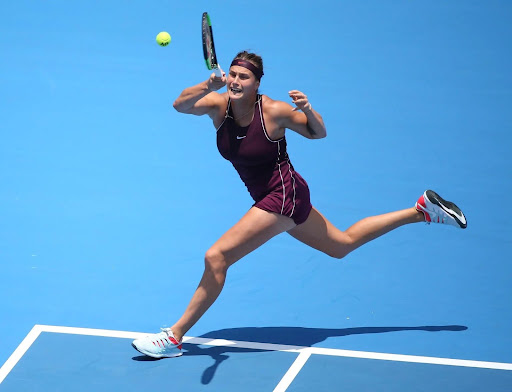

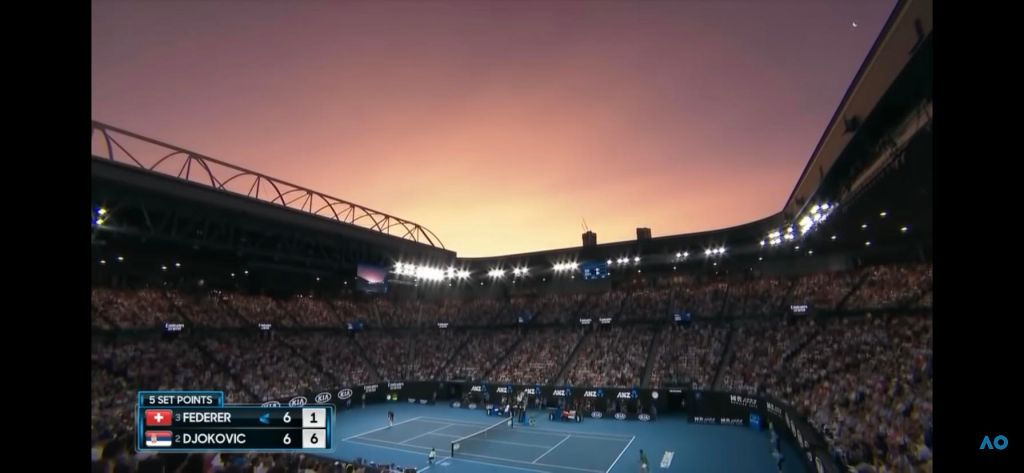
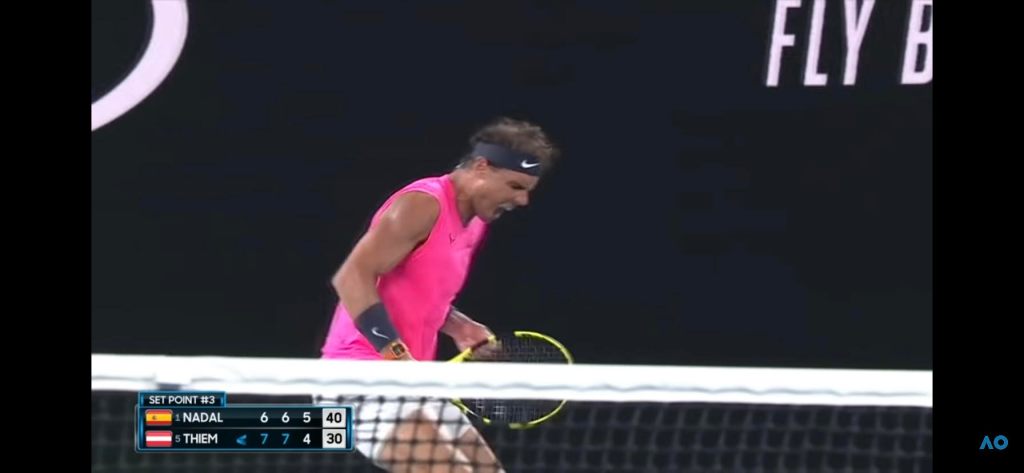


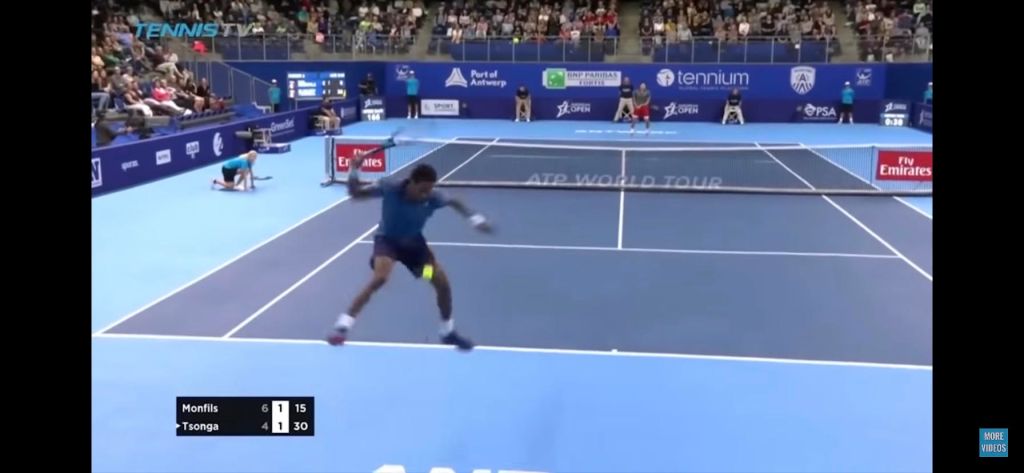


 Popcorn Tennis